The UK State Pension Increase 2026 is now fully confirmed, delivering a record triple lock rise to weekly payments alongside a genuine, legally confirmed shift in the age at which most people can claim it. Since 6 April 2026, the full new State Pension has risen 4.8%, from £230.25 to £241.30 per week (£12,547.60 a year), while the basic State Pension climbed from £176.45 to £184.90 per week.
At the same time, the State Pension age itself is genuinely moving from 66 to 67, phased in gradually for anyone born on or after 6 April 1960, completing by March 2028. Both changes are real, confirmed, and already affecting payments this year not rumours, and not identical to each other, despite frequently being confused online. We’ll be updating this article monthly as DWP confirms new rates and the ongoing State Pension age review develops.
A lot of online confusion this year has centred on whether the pension age is jumping straight to 68, or whether retirement at 67 is being scrapped entirely neither is true, but a further increase is genuinely under active government review. As of mid-2026, Treasury officials have reportedly told the Office for Budget Responsibility that proposals to bring the rise to age 68 forward from its currently legislated 2044-2046 window are being considered, which could affect everyone born after 6 April 1977 roughly five million people. No final decision has been made. Below is the complete, fact-checked breakdown of both the confirmed rate increase and the real pension age timeline.
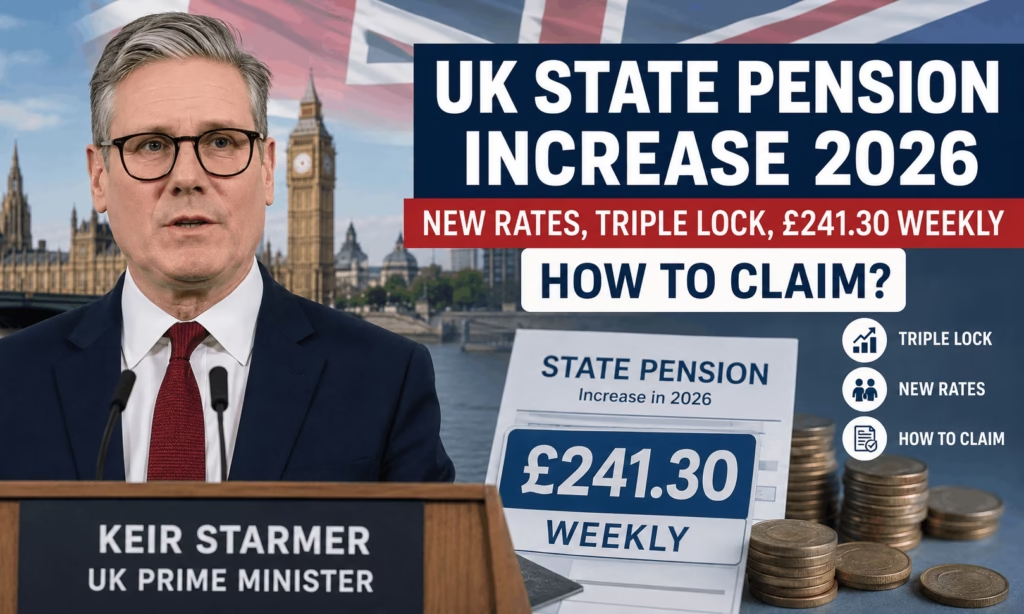
UK State Pension Increase 2026 Key Facts
| Detail | 2026/27 Confirmed Figure |
|---|---|
| Full new State Pension | £241.30/week (£12,547.60/year) |
| Full basic State Pension | £184.90/week (£9,614.80/year) |
| Triple lock increase applied | 4.8% (earnings growth, May–July 2025) |
| Effective date | 6 April 2026 |
| Current State Pension age | 66, rising to 67 by March 2028 |
| Legislated rise to 68 | 2044–2046 (under active review; could move earlier) |
| NI qualifying years for full new SP | 35 years |
| Minimum NI years for any SP | 10 years |
| Personal tax allowance (frozen) | £12,570 (frozen until April 2028) |
| Gap between new SP and tax allowance | Just £22.40 |
The Confirmed £241.30 Rate Increase, Explained
The triple lock guarantees the State Pension rises every April by whichever is highest of three benchmarks: CPI inflation (3.8% for September 2025), average earnings growth (4.8% for May–July 2025), or a 2.5% minimum floor. Because earnings growth was highest this year, it set the increase making 2026 the largest earnings-driven State Pension rise since 2019.
| Pension Type | 2025/26 Rate | 2026/27 Rate | Annual Increase |
|---|---|---|---|
| Full new State Pension | £230.25/week | £241.30/week | +£574.60 |
| Full basic State Pension | £176.45/week | £184.90/week | +£439.40 |
Since the triple lock began in 2011, the basic State Pension has risen from £102.15 to £184.90 a week over 81% growth in fifteen years, comfortably outpacing the roughly 65% rise in CPI inflation over the same period.
Fact-Checked: Is Retiring at 67 “Really Over”?
This is where genuine confusion sets in. Two separate things are happening at once, and conflating them has fuelled misleading headlines:
What is confirmed and already happening: The rise from 66 to 67 is real, legislated under the Pensions Act 2014, and already in motion for anyone born on or after 6 April 1960, completing by 2028.
What is not yet confirmed: Whether the later rise to 68 legislated for 2044-2046 will be moved earlier. A third independent State Pension age review, led by pensions specialist Dr Suzy Morrissey alongside the Government Actuary’s Department, launched in July 2025 and was recommended for publication by July 2026 to allow public debate before any final decision.
State Pension Age Timetable (Confirmed Law)
| Date of Birth | State Pension Age | Status |
|---|---|---|
| Before 6 April 1960 | 66 | Already in place |
| 6 April 1960 – 5 April 1977 | 67 | Phasing in now, complete by 2028 |
| On or after 6 April 1977 | 68 | Legislated for 2044-2046 currently under review for an earlier date |
Reports in mid-2026 indicate Treasury officials have flagged to the OBR that bringing the age-68 rise forward is being actively considered, which would affect the roughly five million people born after 6 April 1977 sooner than current law states. By law, any change must give at least ten years’ notice, so no one due to reach the current State Pension age within the next decade will see a fast-tracked increase to 68.
Why the Government Keeps Reviewing the Pension Age
Rising life expectancy, a shrinking ratio of working-age National Insurance contributors to pensioners, and mounting fiscal pressure from the triple lock itself are the core drivers. The Institute for Fiscal Studies has estimated the triple lock could add roughly £80 billion (in today’s money) to State Pension spending by the 2070s, with the Office for Budget Responsibility separately projecting the mechanism’s annual cost could reach £15.5 billion by 2030. The State Pension age is reviewed by law every six years, with the third review’s findings expected to shape whether the 68 threshold moves sooner.
Who Qualifies, and How Much You Actually Get
Eligibility depends entirely on your National Insurance (NI) record, not income or assets:
- 35 qualifying years for the full new State Pension (post-April 2016 retirees)
- 10 qualifying years minimum for any payment at all
- 30 qualifying years typically required for the full basic State Pension (pre-April 2016 retirees)
NI qualifying years build up through paid employment, self-employment contributions, or NI credits received automatically for Child Benefit claims (child under 12), Carer’s Allowance, Jobseeker’s Allowance, or Employment and Support Allowance.
Filling National Insurance Gaps
You can currently look back six tax years to fill NI gaps, reaching as far as 2020/21. Filling a missing year costs £824.20 in Class 3 voluntary contributions and adds approximately £6.89/week (about £358/year) to your eventual new State Pension the break-even point is roughly 2.3 years of claiming, meaning most people recover the cost many times over across a typical retirement. Self-employed people with profits below the Small Profits Threshold can fill gaps far more cheaply through Class 2 contributions, at just £3.65/week.
The Frozen Tax Allowance “Stealth Tax” Problem
The personal tax allowance has been frozen at £12,570 since April 2021 and stays frozen until April 2028. With the full new State Pension now at £12,547.60/year, it sits just £22.40 below that threshold meaning almost any additional income, including a small private pension or savings interest, will now push a pensioner into paying income tax. If the triple lock continues delivering increases, the full State Pension itself could exceed the personal allowance within two to three years.
Pension Credit: Still Widely Unclaimed
Pension Credit rose alongside the 4.8% triple lock increase for April 2026:
| Pension Credit Type | 2026/27 Rate |
|---|---|
| Single pensioner (minimum guarantee) | £238.00/week |
| Couple (minimum guarantee) | £363.25/week |
| Average annual value | ~£4,300/year |
An estimated 880,000 eligible households are still not claiming Pension Credit, despite it acting as a gateway to Housing Benefit, Council Tax Reduction, a free TV Licence (age 75+), and NHS help with dental costs and glasses.
How to Claim and Check Your Pension
- Check your State Pension forecast: gov.uk/check-state-pension, using your Government Gateway account
- Claim online: gov.uk/state-pension, once you receive your invitation letter roughly four months before reaching State Pension age
- Claim by phone: 0800 731 7898 (Monday-Friday, 9:30am-3:30pm)
- Missed your letter? You can still claim any time after reaching State Pension age; deferring increases your eventual payment by roughly 5.8% per year deferred
People Also Ask
What age can I get the State Pension in the UK in 2026? 66 currently, rising to 67 between 2026 and 2028 for anyone born on or after 6 April 1960; a further rise to 68 is legislated for 2044-2046 but under active review.
How much is the new State Pension per week in 2026? £241.30 per week for the full new State Pension, or £184.90 per week for the full basic State Pension.
Why does the State Pension age keep changing? Rising life expectancy and the fiscal cost of a growing pensioner population relative to working-age taxpayers are driving periodic government reviews, held every six years by law.
Can I still get NI credits without working? Yes automatic credits are available for Child Benefit claims (child under 12), Carer’s Allowance, Jobseeker’s Allowance, and Employment and Support Allowance, among other qualifying situations.
Important Links
| Check your State Pension forecast: | https://www.gov.uk/check-state-pension |
| Claim your State Pension: | https://www.gov.uk/state-pension |
| Check your exact State Pension age: | https://www.gov.uk/state-pension-age |
| Pension Credit eligibility and claim: | https://www.gov.uk/pension-credit |
| State Pension claim line: | 0800 731 7898 |
| Pension Credit claim line: | 0800 99 1234′ |
FAQs
Is the State Pension age really rising to 67 in 2026?
Yes this is confirmed under the Pensions Act 2014, phasing in gradually for anyone born on or after 6 April 1960, and completing by March 2028.
Is the rise to 68 being brought forward right now?
No final decision has been made. A third independent review is examining whether the legislated 2044-2046 timetable should move earlier, and reports suggest Treasury officials are considering an acceleration, but any change requires ten years’ notice by law.
How much is the full new State Pension in 2026/27?
£241.30 per week, or £12,547.60 per year, up 4.8% from £230.25 under the triple lock.
Will I have to pay tax on my State Pension?
The State Pension alone stays below the £12,570 personal allowance, but any additional income private pension, savings interest, or part-time earnings can now push you over the threshold, since the gap is just £22.40.
What if I have gaps in my National Insurance record?
You can fill gaps going back six tax years (to 2020/21 currently) by paying Class 3 voluntary contributions at £824.20 per year, typically adding about £6.89/week to your eventual pension.