Canada Asylum Rules 2026: Canada’s refugee system has been rewritten twice in the space of a few months, and thousands of people already inside the country are finding out what that means the hard way. Since March, a new law called Bill C-12 has made roughly 30,000 pending asylum claims eligible for rejection without a hearing, simply because of when the person entered Canada or when they filed. Now a second round of changes is working its way through, and a coalition of refugee lawyers has taken the government to Federal Court over the whole thing.
If you’re trying to understand where things actually stand right now, here’s the short version. The one-year filing deadline and the 14-day border-crossing rule are already law and already being enforced. A separate batch of proposed regulations, covering document deadlines and faster work permits, finished its public comment period on July 20 and is expected to take effect later this year. And dozens of constitutional challenges are now grouped together in Federal Court, arguing the law violates Charter rights. We’ll be updating this piece monthly as the court case and the new regulations move forward.
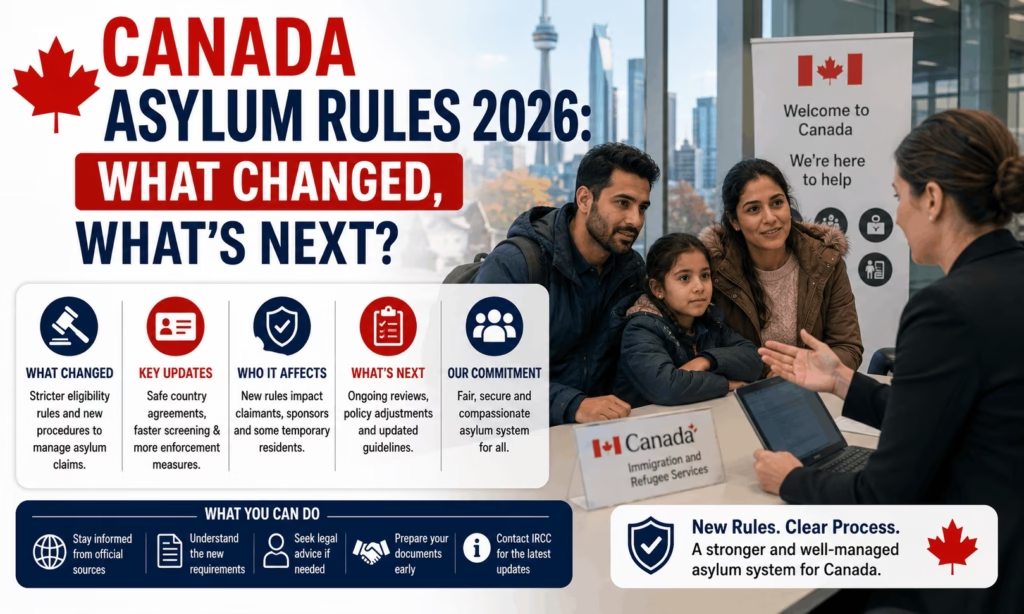
The Latest Update: Court Case Now Moving Forward
The biggest recent development isn’t a new rule, it’s a legal fight over the rules that already exist. In May, a Federal Court associate judge agreed to case-manage roughly three dozen constitutional challenges against Bill C-12, a process normally reserved for large, complicated lawsuits. The Canadian Association of Refugee Lawyers and the Canadian Immigration Lawyers Association are coordinating the effort, and in a letter to the court, they warned that as many as 28,000 refugee claims could be affected by how this case turns out.
The legal argument centers on two parts of the Charter of Rights and Freedoms. Section 7 protects the right to life, liberty, and security of the person. Section 15 protects against discrimination. Lawyers say cutting off access to an oral hearing before the Immigration and Refugee Board, and replacing it in many cases with a paper-based review by a single immigration officer, strips away basic procedural fairness for people who may be fleeing real danger. The government’s defence leans on the idea that the changes are a proportionate response to a system that had become badly backlogged and, in some cases, exploited.
Lawyers involved in the case have told reporters they expect oral hearings on the core constitutional questions within 12 to 18 months, with appeals likely regardless of which side wins at the first stage. In other words, this isn’t getting resolved quickly. For now, the law stays in force while the case works through the courts.
What Bill C-12 Actually Changed
Bill C-12, formally called the Strengthening Canada’s Immigration System and Borders Act, received royal assent on March 26. It introduced two new ways a refugee claim can be found ineligible for a full hearing, and both apply retroactively.
The first is a one-year filing rule. Anyone who first entered Canada after June 24, 2020, and waits more than a year after that entry to file an asylum claim will be found ineligible for referral to the Immigration and Refugee Board, no matter how many times they’ve left and re-entered the country since. The clock starts on the date of first arrival, not the most recent one.
The second is a 14-day rule for irregular border crossings. If someone crossed into Canada between official ports of entry along the Canada-US land border, rather than at a staffed crossing, and didn’t file a claim within 14 days of arriving, they’re also ineligible for a full IRB hearing.
Both rules apply to claims made on or after June 3, 2025, which means people who filed well over a year ago, under what they believed were the old rules, are now getting letters telling them their case may not proceed the way they expected.
What Happens Instead of a Hearing
People caught by either rule don’t lose access to Canada’s protection system entirely, but they lose the version of it most people picture when they think of a refugee hearing. Instead of an oral hearing before the IRB, where a claimant can testify and present evidence in person, they’re routed into a Pre-Removal Risk Assessment. That’s a paper-based review carried out by an immigration officer, without an oral hearing and without the right to appeal to the Refugee Appeal Division. Historically, approval rates through this process have been lower than through a full IRB hearing, which is a big part of why lawyers are pushing back so hard.
One Group Already Got an Exemption
Not everyone affected by the one-year rule is treated the same way anymore. In May, IRCC quietly introduced a temporary public policy exempting unaccompanied minors from the one-year filing bar entirely. It’s a narrow carve-out, but it’s a real one, and it shows the government has already started adjusting the policy under pressure rather than waiting for the courts to force its hand.
The Second Wave: Faster Work Permits, New Deadlines
While the court case plays out, IRCC has been working on a separate set of changes designed to speed up processing rather than restrict eligibility. On June 19, the department published proposed regulations in the Canada Gazette that would require claimants to submit their supporting documents within 60 days of their claim being referred, with the option to request a one-time 30-day extension. That’s a shift away from the current system, where documents are often due much closer to the hearing date itself.
The same package would add a mandatory security review before a claim gets referred to the IRB, and it would give eligible claimants access to a work permit sooner than they can today. The Immigration and Refugee Board separately proposed its own rule changes affecting how the Refugee Protection Division schedules hearings and handles document deadlines.
Both sets of proposed regulations were open for public comment for 30 days, and that window closed on July 20. IRCC has said it will review the feedback before finalizing anything, with implementation expected later this year. No firm date has been announced yet.
No SSI Payment in August 2026: SSI August 2026 “no payment” confusion Fact-Checked
State-by-State SNAP Food Ban 2026: What’s Banned, Status Update
Arkansas SNAP Junk Food Ban 2026: What’s Banned, Court Update, EBT Rules & Latest Status
Why Claim Numbers Have Dropped So Sharply
One number that keeps showing up in every government release on this topic is the drop in new claims. From January through April 2026, Canada saw 42 percent fewer new asylum claims than the same period in 2025, and 63 percent fewer than the same period in 2024. IRCC has pointed to this as evidence the new rules are working as intended. Refugee advocates see it differently, arguing the drop reflects fear and confusion around the new rules just as much as any change in who’s actually trying to reach Canada for safety.
Behind both interpretations is a system that had genuinely become overwhelmed. According to figures published in the Canada Gazette, the number of asylum claims waiting for an IRB decision grew from around 70,000 at the end of 2022 to nearly 300,000 by the end of 2025. That backlog is the official justification for most of what’s changed.
Who This Affects Right Now
If you’re trying to figure out whether any of this touches your situation, here’s the practical breakdown. Anyone with a claim filed on or after June 3, 2025, who first entered Canada more than a year before filing, or who crossed irregularly and waited more than 14 days to file, should assume the one-year or 14-day rule could apply to them. IRCC began mailing letters to affected claimants in April, and if you’ve received one, it’s worth getting advice from a licensed immigration lawyer or a legal aid organization quickly, since these cases often come with short response windows.
If your claim was filed within the one-year window, or you’re an unaccompanied minor, the current rules as written shouldn’t bar you from a full hearing. And if you’re waiting on a work permit tied to a pending claim, the proposed 60-day document rule and faster work permit access could eventually apply to you once the second wave of regulations is finalized, though nothing there is locked in yet.
FAQs
Is Bill C-12 still in effect right now?
Yes. It became law on March 26, 2026, and remains in force while the constitutional challenges against it work through Federal Court.
Does the one-year rule apply to me if I’ve left and re-entered Canada?
Yes. The rule counts from your first entry into Canada after June 24, 2020, regardless of any departures and returns since then.
What if I already got a letter saying my claim might be ineligible?
Speak with a licensed immigration lawyer or a legal aid clinic as soon as possible. These cases often involve tight deadlines, and a professional can tell you whether an exemption or a legal challenge applies to your situation.
Are unaccompanied minors affected by the one-year rule?
No. IRCC introduced a temporary public policy in May exempting unaccompanied minors from the one-year filing bar.
When will the new work permit and document deadline rules take effect?
The public consultation on those proposed regulations closed July 20, 2026. IRCC has said implementation is expected later this year, but no exact date has been confirmed.
Can the constitutional challenge overturn Bill C-12?
It’s possible, but not quick. Lawyers involved expect the first oral hearings on the core Charter questions within 12 to 18 months, with appeals likely afterward regardless of the outcome.
Conclusion
Canada’s asylum system is now operating under two layers of change at once: a law that’s already restricting who gets a full hearing, and a second round of regulations still being finalized that would speed up processing and expand work permit access. Both are moving forward while a major court battle over the law’s constitutionality plays out in the background. If you have a pending claim, the safest move is the same one lawyers keep repeating, get individual legal advice rather than relying on general news coverage, since your specific entry date and filing date could change everything about how these rules apply to you. We’ll keep updating this article as the court case, the new regulations, and IRCC’s guidance continue to develop.
Missouri SNAP Food Ban Delayed: What’s Banned & Latest Status
Hawaii SNAP Soda Ban Delayed to 2027: What Will Be Banned & Status
Florida SNAP Junk Food Ban 2026: What’s Banned, Court Update, EBT Rules & Latest Status
Nevada SNAP Food Ban: What’s Banned & Start Date Explained