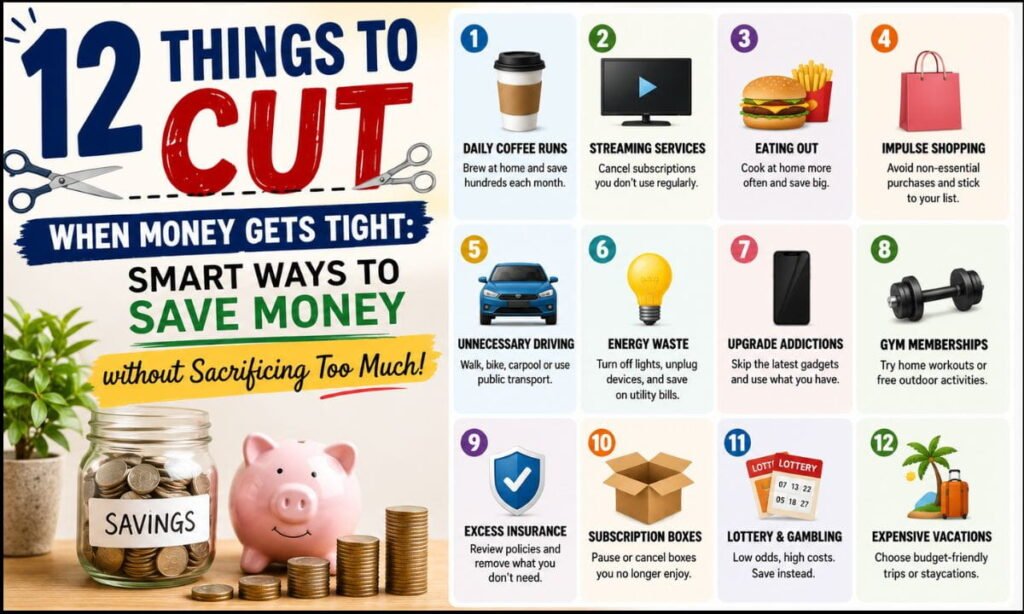
Save Money without Sacrificing Too Much: When your bank balance starts shrinking faster than your paycheck can refill it, panic is the natural first reaction. But panic doesn’t pay bills — a clear-eyed look at your spending does. The good news is that most budgets have more fat to trim than people realize. You don’t need to give up everything that makes life enjoyable, you just need to be strategic about what goes first. Here are twelve categories worth cutting, pausing, or shrinking when finances get tight and to Save Money.
1. Subscription Services
Streaming platforms, meal kits, subscription boxes, premium app tiers — these small monthly charges add up quietly because they’re designed to be forgettable. Pull up your bank statement and highlight every recurring charge under $30. Most people find they’re paying for at least two or three services they haven’t used in months. Cancel anything you can’t remember using in the last thirty days, and consider rotating the rest — subscribe to one streaming service for a month, binge what you want, then cancel and switch to another next month instead of paying for four simultaneously.
2. Dining Out and Takeout
This is usually the single biggest lever for tightening a budget. Restaurant meals cost three to five times what the same food costs made at home, and delivery fees, service charges, and tips inflate that gap further. You don’t have to swear off restaurants forever — set a hard cap, like one meal out per week, and treat grocery shopping and home cooking as the default rather than the fallback.
3. Impulse Purchases
Cutting impulse buying isn’t about willpower, it’s about removing the trigger. Unsubscribe from retail marketing emails, delete shopping apps from your phone’s home screen, and instill a personal rule: nothing non-essential gets purchased same-day. Give yourself a 48-hour waiting period on anything over $50. Most impulse urges fade well before the waiting period ends.
4. Premium Cable or Satellite TV
Traditional cable and satellite packages routinely run $80 to $150 a month once fees and bundles are factored in. If you’re already paying for internet, a $10 streaming service or a free ad-supported platform can cover most of the same content for a fraction of the cost. Even keeping just one or two streaming subscriptions is dramatically cheaper than a full cable package.
5. Gym Memberships You’re Not Using
A gym membership only Save Money if you actually go. If you’re paying $50 a month and visiting twice a year, that’s a luxury, not a fitness plan. Bodyweight routines, running, or a one-time purchase of basic home equipment can replace a membership entirely, and many gyms will let you freeze or cancel with a simple phone call.
6. Brand-Name Groceries and Household Goods
Store brands and generic products are frequently made in the same facilities as their name-brand counterparts, with the packaging being the main difference. Switching to store brands for staples like pasta, canned goods, cleaning supplies, and over-the-counter medications can cut a grocery bill by 20% or more without any real change in quality.
7. Higher-Tier Phone and Internet Plans
Carriers count on inertia. Call your phone and internet providers and ask directly what promotions or lower-tier plans are available — many will offer a discount just to keep you from switching to a competitor. If your data usage is modest, downgrading to a smaller plan or switching to a budget carrier that uses the same towers can cut this bill significantly.
8. Extra Insurance Add-Ons
Insurance is essential, but it’s easy to accumulate unnecessary riders and duplicate coverage over the years — extended warranties, rental car insurance you already have through a credit card, or life insurance policies that overlap. Review your policies once a year, shop competing quotes, and ask directly what discounts you qualify for, like bundling home and auto.
9. Convenience Fees
ATM fees, checking account maintenance fees, “convenience” charges for paying bills online or by phone, and late fees are all avoidable with small changes in habit. Switch to a bank with no monthly maintenance fee, set up autopay to dodge late charges, and use your own bank’s ATMs. None of these cuts requires sacrificing anything you enjoy — they’re pure waste elimination.
10. Vacations and Big-Ticket Travel
This doesn’t mean giving up rest or time away, but when money is tight, an expensive flight-and-resort vacation can be swapped for a road trip, a staycation, or a visit to family. Travel rewards points, off-season timing, and shorter trips closer to home can deliver the same mental reset at a fraction of the cost.
11. New Electronics and Upgrades
The urge to upgrade a phone, laptop, or TV the moment a new model launches is expensive and usually unnecessary. Most devices remain fully functional for years past their “trade-in eligible” date. Skipping a cycle or two of upgrades, or buying refurbished instead of new, can save hundreds of dollars a year without any real drop in performance.
12. Financial Products with Hidden Costs
Certain financial products quietly drain money: high-interest credit card balances, overdraft protection you didn’t ask for, high-fee investment funds, and store credit cards with steep interest rates. Prioritize paying down high-interest debt first, since that interest is often the most expensive “purchase” in a budget. Call your credit card company and ask for a lower rate — it works more often than people expect.
Making the Cuts Sustainable
None of these cuts have to be permanent or painful if approached with the right mindset to Save Money. The goal isn’t deprivation — it’s temporarily reallocating money toward stability until the tight period passes. A few principles make the process easier:
Cut in order of impact, not order of feeling. Dining out and subscriptions usually save more than skipping your daily coffee, even though coffee often gets blamed first.
Automate what you keep, not just what you cut. Redirect the money you free up straight into savings or debt repayment so it doesn’t quietly get absorbed elsewhere.
Revisit the listevery few months. Some cuts, like canceling unused subscriptions, are permanent wins. Others, like skipping vacations, are only meant to be temporary.
Give yourself something to look forward to Save Money. Total restriction rarely lasts. Keep one small, low-cost pleasure in the budget so the process feels sustainable rather than punishing.
Tight money doesn’t mean a joyless life — it means being deliberate about where your dollars go. Trim the categories above in order of impact, track the results for a month, and you’ll likely find the squeeze loosens faster than expected.