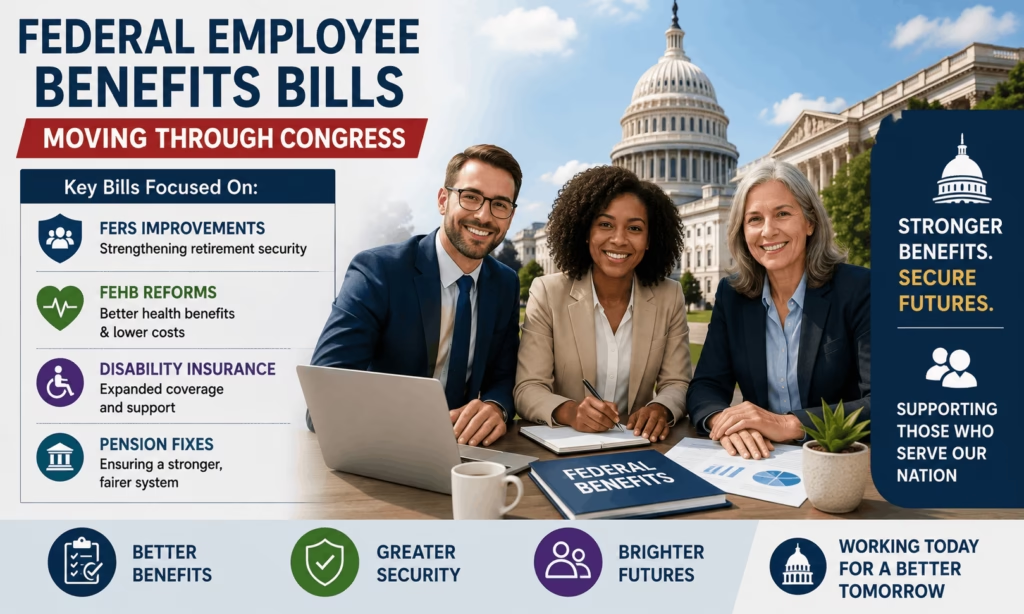
Federal Employee Benefits Bills 2026: Federal workers and retirees are watching Capitol Hill closely this year as a wave of federal employee benefits bills move through Congress, ranging from a brand-new short-term disability insurance option to fixes for pension errors tied to last fall’s government shutdown. These proposals come on the heels of sweeping changes already enacted through the One Big Beautiful Bill Act (OBBBA), which raised retirement contribution requirements for many FERS employees and restructured how new hires can choose between traditional civil service protections and at-will employment.
With several bipartisan bills introduced in recent months, including the Federal Employee Short-Term Disability Insurance Act, the Renewing Our PACT Act, and the Pensions for Retired Uniformed Servicemembers Act, federal employee unions and advocacy groups say 2026 could bring some of the most consequential benefits changes for the federal workforce in years. Below is a full breakdown of the key federal employee benefits bills currently under consideration, what each one would actually change, and how to track their progress through Congress. We’ll be updating this article monthly as these bills advance.
Federal Employee Benefits Bills 2026 Key Highlights
| Bill Name | Sponsor(s) | What It Would Do | Status |
|---|---|---|---|
| Federal Employee Short-Term Disability Insurance Act of 2026 (H.R. 8731) | Rep. Eleanor Holmes Norton (D-D.C.) | Creates voluntary short-term disability insurance for federal employees | Introduced May 11, 2026 |
| Renewing Our PACT Act | Reps. Nellie Pou, Brian Fitzpatrick, Celeste Maloy; Sen. Kirsten Gillibrand | Extends PACT Act toxic-exposure presumption to certain civilian federal employees | Introduced 2026, in committee |
| Pensions for Retired Uniformed Servicemembers Act | Reps. Jamie Raskin, Don Bacon, Maxine Dexter | Fixes pension payment loophole for NOAA and USPHS retirees during shutdowns | Introduced 2026, in committee |
| Federal Retirement Fairness Act (H.R. 1522) | Multiple sponsors | Allows temporary federal service after 1988 to count toward FERS retirement | Reintroduced, pending for years |
| Federal Workforce Early Separation Incentives Act of 2026 (H.R. 7256) | House sponsors | Permanently raises the cap on Voluntary Separation Incentive Payments (VSIPs) | Expected enactment late FY2026 |
| One Big Beautiful Bill Act (OBBBA) provisions | Congress (enacted July 2025) | Raised FERS contribution rates; ended FERS annuity supplement by January 2028 | Signed into law, phasing in through 2027-2028 |
Why Federal Employee Benefits Are Under the Spotlight in 2026
The current wave of federal employee benefits bills follows a turbulent period for the federal workforce. Under the OBBBA, signed into law in July 2025, Congress already approved several changes affecting the Federal Employees’ Retirement System (FERS), the Federal Employees Health Benefits (FEHB) program, and the Merit Systems Protection Board. Those changes are now being phased in, prompting a fresh round of legislation aimed at either building new protections or correcting unintended consequences from the earlier overhaul.
Federal employee unions, including the American Federation of Government Employees (AFGE) and the National Federation of Federal Employees (NFFE), have been actively lobbying lawmakers on several of these newer bills, arguing that the current benefits structure leaves gaps in areas like short-term disability coverage and toxic-exposure protections that private-sector and veteran counterparts already have.
Federal Employee Short-Term Disability Insurance Act: A New Benefit Option
One of the most closely watched new federal employee benefits bills is the Federal Employee Short-Term Disability Insurance Act of 2026 (H.R. 8731), introduced by Rep. Eleanor Holmes Norton on May 11, 2026. Currently, federal employees have no dedicated short-term disability insurance program, unlike many private-sector workers. This bill would change that by creating a new voluntary insurance option under a new Chapter 88 of Title 5 of the U.S. Code.
Key provisions of the bill include:
- Coverage for non-work-related disabilities, including short-term injuries, caretaking for a family member, or leave related to the birth, adoption, or fostering of a child.
- Employees would be responsible for 100% of the insurance premiums, at no direct cost to the federal government.
- Insurance carriers would be prohibited from excluding coverage or charging higher premiums based on preexisting conditions.
- Contracts with insurance carriers would be automatically renewable annually, unless proper notice of non-renewal is given.
- Coverage would generally continue as long as an employee remains in federal service or continues paying premiums.
Rep. Norton said the goal is to let federal employees “take advantage of the federal government’s purchasing power to obtain the most reasonable price for short-term disability coverage, at no cost to the federal government.” As of the most recent update, the bill remains in its early legislative stage, having been introduced and referred to committee.
PPTC-153 and US Entry Without a Visa: What It Really Means
Student Loan Changes 2026: New RAP Plan & Repayment Rules
$2400 Working Families Refund: Eligibility, Income Limits & Status
Renewing Our PACT Act: Extending Toxic Exposure Protections
Another significant proposal is the Renewing Our PACT Act, a bipartisan bill introduced by Reps. Nellie Pou, Brian Fitzpatrick, and Celeste Maloy, along with Senator Kirsten Gillibrand. This bill aims to close a gap left by the original PACT Act of 2022, which provided expanded healthcare and disability benefits to veterans exposed to toxic substances like burn pits, but did not extend the same protections to certain civilian federal employees, such as law enforcement officers and national security personnel, who may face similar toxin-related illnesses.
Under current law, these civilian workers must prove a direct link between their illness and a specific workplace exposure, a standard that lawmakers say is often “impossible to meet years later.” The Renewing Our PACT Act would extend the same presumption of exposure already guaranteed to veterans to eligible civilian federal employees, potentially making it significantly easier for affected workers to access disability and health benefits tied to toxic exposure on the job.
Pensions for Retired Uniformed Servicemembers Act: Fixing a Shutdown-Era Loophole
A third major bill, the Pensions for Retired Uniformed Servicemembers Act, led by Reps. Jamie Raskin, Don Bacon, and Maxine Dexter, addresses a narrower but financially significant problem: a pension payment loophole that affected close to 8,000 retired service members from the National Oceanic and Atmospheric Administration (NOAA) and the U.S. Public Health Service (USPHS) during the government shutdown last fall.
Under current law, most uniformed service retirees are guaranteed continued annuity payments during a federal funding lapse, but NOAA and USPHS retirees were left out of that guarantee due to a technical gap in how their pensions are funded. The bill would allow payments from the Defense Department’s Military Retirement Fund to cover these additional retired service members during any future government shutdown, ensuring their retirement payments continue uninterrupted going forward.
FERS Retirement Changes Already Underway From the OBBBA
While the newer bills above are still moving through Congress, it’s worth understanding the FERS changes already enacted under the One Big Beautiful Bill Act, since they directly affect many federal employees’ current and future benefits:
- FERS employee contribution rates for employees first hired in 2013 are being increased in phases, from 3.1% to 4.4% of pay, with the increase beginning in January 2026.
- Employees hired after the law’s enactment can choose between higher FERS contributions (9.4% of pay) or at-will employment with reduced job protections.
- The FERS annuity supplement will be eliminated starting January 2028 for individuals not already entitled to it before that date.
- Federal retirees continue to see annual adjustments to health insurance premiums, along with new earnings limits for those receiving the FERS Special Retirement Supplement while working after retirement.
The Federal Retirement Fairness Act: A Long-Pending Proposal
The Federal Retirement Fairness Act (H.R. 1522) has been reintroduced in the current Congress after years of failing to gain broad traction. The bill would allow civilian service performed in temporary federal positions after December 31, 1988, to count as creditable service under FERS, potentially boosting the retirement benefits of federal employees who spent part of their careers in temporary roles before converting to permanent positions. Despite bipartisan interest over the years, the bill has historically struggled to advance out of committee.
Voluntary Separation Incentive Payments: A Boost for Early Retirement Options
Separately, the Federal Workforce Early Separation Incentives Act of 2026 (H.R. 7256) would permanently increase the maximum value of lump-sum Voluntary Separation Incentive Payments (VSIPs) that federal agencies can offer employees as an incentive to voluntarily leave federal service. According to the Congressional Budget Office, the government’s share of health insurance premiums for each retiree averages roughly $12,000 in 2026, a figure expected to rise significantly by 2036, which factors into the cost estimates lawmakers are weighing as this bill nears expected enactment near the end of fiscal year 2026.
Trump Accounts Dell $250 Grant: Check State & ZIP Code Eligibility
Alaska PFD Payment 2026: It’s Actually $1,200, Not Just $1,000 – Here’s the Truth
Social Security Changes August 2026: SSA Announces Major Update for Retirees and Beneficiaries
How to Track These Federal Employee Benefits Bills
Because these bills are moving at different speeds through Congress, federal employees and retirees hoping to stay informed should:
- Check Congress.gov regularly using each bill’s official number (for example, H.R. 8731 or H.R. 1522) to see the latest committee actions and votes.
- Follow updates from employee unions like AFGE and NFFE, which frequently publish position statements and testimony on pending legislation.
- Monitor OPM.gov for implementation guidance on benefits changes that have already been signed into law, such as the FERS contribution increases.
- Sign up for newsletters from federal workforce-focused outlets that track legislative developments as they happen.
Official Federal Employee Benefits Resources
| Resource | Purpose | Official Link |
|---|---|---|
| Congress.gov | Track official bill status and full legislative text | https://www.congress.gov |
| U.S. Office of Personnel Management (OPM) | Official guidance on FERS, FEHB, and retirement benefits | https://www.opm.gov |
| Congressional Budget Office (CBO) | Cost estimates and analysis of pending legislation | https://www.cbo.gov |
| American Federation of Government Employees (AFGE) | Union updates and legislative advocacy | https://www.afge.org |
| National Federation of Federal Employees (NFFE) | Union updates and legislative advocacy | https://www.nffe.org |
FAQs
What is the Federal Employee Short-Term Disability Insurance Act?
It is a 2026 bill that would create a new voluntary short-term disability insurance program for federal employees, fully funded through employee premiums rather than taxpayer dollars.
Has the FERS contribution increase already taken effect?
Yes. Under the OBBBA, FERS contribution rates for many employees began increasing in phases starting January 2026, reaching higher levels by 2027.
What is the Renewing Our PACT Act?
It is a bipartisan bill that would extend the same toxic-exposure presumption currently available to veterans under the 2022 PACT Act to certain civilian federal employees, such as law enforcement and national security personnel.
Will the FERS annuity supplement be eliminated?
Yes. Under current law from the OBBBA, the FERS annuity supplement will be eliminated starting January 2028 for individuals not already entitled to it beforehand.
What does the Pensions for Retired Uniformed Servicemembers Act fix?
It closes a loophole that left roughly 8,000 NOAA and USPHS retirees without guaranteed pension payments during a government shutdown, aligning their protections with other uniformed service retirees.
Are any of these bills already law?
No. As of the most recent update, the Short-Term Disability Insurance Act, the Renewing Our PACT Act, and the Pensions for Retired Uniformed Servicemembers Act are all still moving through committee and have not yet passed Congress.
How can federal employees check the status of these bills?
The most reliable way is to search each bill by its official number on Congress.gov, which provides real-time updates on committee actions, votes, and amendments.
Does the Federal Retirement Fairness Act have a good chance of passing?
It’s uncertain. The bill has been reintroduced multiple times over the years without gaining enough broad support to advance out of committee, though it remains active in the current Congress.
Conclusion
The federal employee benefits bills working their way through Congress in 2026 reflect a mix of new protections, like short-term disability insurance and expanded toxic-exposure coverage, alongside efforts to fix unintended gaps left by last year’s sweeping retirement overhaul. While none of the newer proposals covered here have been signed into law yet, their bipartisan sponsorship and active union support suggest at least some are likely to see continued momentum through the rest of the year. Federal employees and retirees are encouraged to track these bills directly through Congress.gov and stay in contact with their employee organizations for the latest updates as votes and committee actions unfold. This article will be updated monthly as these bills progress through Congress.
Canada LMIA Processing Times Shifted Again: What Changed This Month
New Canada Banking Rules 2026: How They Protect Your Money From Fraud
25 States Sue Trump Administration Over New Tariffs on Trading Partners