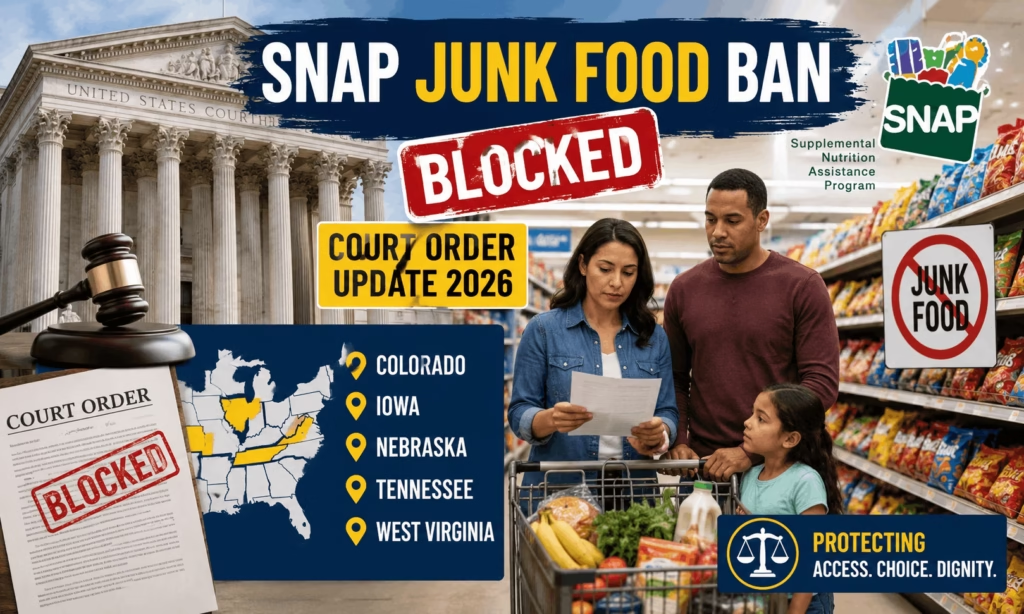
SNAP Junk Food Ban Blocked that’s the headline coming out of a federal courtroom in Washington, D.C. On June 22, 2026, a U.S. District Court judge issued a ruling that halted USDA-approved SNAP food-restriction waivers in five states: Colorado, Iowa, Nebraska, Tennessee, and West Virginia. For SNAP recipients in these states, this means the soda-and-candy restrictions that were approved (and in some cases already scheduled to begin) are not currently being enforced. This is a fast-moving legal situation, and while the court’s ruling is significant, USDA retains the option to appeal so nothing here should be read as the final word. We’ll be updating this article monthly as new filings, appeals, or USDA actions develop.
This guide breaks down exactly why the SNAP court order 2026 happened, what the judge actually ruled, and what it means state by state for the five affected jurisdictions. We’ll also cover what SNAP recipients can currently buy, whether monthly benefits are affected, and what could happen if USDA appeals or reworks its waiver process. Throughout, we’re careful to separate what the court has actually decided from what remains an open legal question this case is still capable of further developments.
Why Was the SNAP Junk Food Ban Blocked?
The federal court ruling came in a case known as Aragon v. Rollins (Case No. 1:26-cv-00861, U.S. District Court for the District of Columbia). Five SNAP recipients — one from each of the five affected states — filed suit against USDA, arguing the agency had overstepped its legal authority when it approved state-level SNAP food-restriction waivers.
The decision date: The court issued its ruling on June 22, 2026.
The legal basis for the challenge: The plaintiffs argued that USDA relied on 7 U.S.C. § 2026(b), a statutory provision intended to authorize narrow “program efficiency” demonstration pilots — not sweeping changes to what food categories SNAP benefits can purchase. They also argued USDA failed to follow the notice-and-comment rulemaking process normally required under federal administrative law before making a change of this scope.
What the court questioned about USDA’s authority: The judge examined whether Section 2026(b) actually gives USDA the power to redefine SNAP-eligible food categories at the state level, and concluded that this type of waiver fell outside what that statute was designed to permit.
Why the judge blocked implementation: Because the court found USDA’s approval process legally deficient, it vacated the waivers in the five plaintiff states rather than allowing the restrictions to proceed while the broader legal question remained unresolved.
Immediate effect of the order: In Colorado, Iowa, Nebraska, Tennessee, and West Virginia, the proposed SNAP restrictions are not currently in effect, and SNAP recipients in those states continue to purchase food under standard, pre-waiver eligibility rules.
What Did the Court Rule?
- Court findings: The court found that USDA’s approval of these waivers exceeded the agency’s statutory authority under the cited provision of federal law.
- USDA authority issue: The ruling centers on whether USDA can use a “program efficiency” waiver mechanism to restrict food categories, rather than pursuing this kind of policy change through formal rulemaking.
- Administrative law arguments: The plaintiffs’ notice-and-comment argument — that USDA needed to give the public formal opportunity to weigh in before approving this kind of change — appears to have factored into the court’s reasoning.
- Impact on approved waivers: Only the waivers for the five plaintiff states were vacated by this specific ruling. Waivers in the remaining approved states are not automatically affected, though legal analysts note the reasoning could be used in future challenges against other states.
- What remains unchanged for SNAP recipients: Total SNAP benefit amounts, EBT card functionality, and general program eligibility are untouched by this case — the dispute is specifically about which food categories can be purchased, not about SNAP benefits themselves.
Important legal caveat: This ruling can still be appealed by USDA, and further proceedings could change the outcome. Nothing in this article should be treated as a final or permanent resolution of the underlying legal dispute.
Which States Are Currently Blocked?
| State | USDA Waiver | Court Status | Current Rule | SNAP Recipients Impact |
|---|---|---|---|---|
| Colorado | Approved (2025) | Blocked (vacated June 22, 2026) | Standard federal SNAP rules apply | Soda/soft drinks purchasable again |
| Iowa | Approved (2025) | Blocked (vacated June 22, 2026) | Standard federal SNAP rules apply | Broad restricted-item list not enforced |
| Nebraska | Approved (2025) | Blocked (vacated June 22, 2026) | Standard federal SNAP rules apply | Soda/energy drinks purchasable again |
| Tennessee | Approved (Dec 2025) | Blocked (vacated June 22, 2026) | Standard federal SNAP rules apply | Soda/candy/energy drinks purchasable again |
| West Virginia | Approved (2025) | Blocked (vacated June 22, 2026) | Standard federal SNAP rules apply | Soda purchasable again |
State-Wise Court Update
Colorado
Current Legal Status: Colorado’s SNAP waiver was approved by USDA in the initial 2025 wave, with restrictions on soft drinks originally planned to begin April 30, 2026.
What the Court Order Means: The waiver was one of five vacated on June 22, 2026. Restrictions are not currently enforced in Colorado, and SNAP purchases continue under existing, pre-waiver eligible-food rules unless future legal developments change this.
Foods Affected: The proposed restriction targeted soft drinks specifically. This restriction is currently not in effect because of the court order.
What SNAP Recipients Should Know: Existing benefits continue without interruption. Recipients should watch for official updates from the state agency in case USDA appeals or Colorado pursues a revised waiver.
Official SNAP Agency: Colorado Department of Human Services (cdhs.colorado.gov) is the source for any future guidance.
Iowa
USDA Approval: Iowa’s waiver, approved in 2025, was unusual in scope — rather than naming specific categories like soda or candy, it tied SNAP eligibility to items subject to the state’s own sales tax, making it one of the broadest restricted-food definitions among all approved states.
Court Injunction: Iowa was named in Aragon v. Rollins, and its waiver was vacated in the June 22, 2026 ruling.
Current SNAP Purchase Rules: Standard federal SNAP eligibility rules currently apply in Iowa. The broad, tax-code-linked restriction is not being enforced.
Future Legal Outlook: Legal commentators have suggested Iowa’s unusually broad restricted-item definition could make it a harder waiver to defend even if USDA appeals, though this remains speculative until further proceedings occur.
State Guidance: Iowa Department of Health and Human Services (hhs.iowa.gov).
Nebraska
Waiver History: Nebraska’s waiver, approved in the 2025 wave, targeted soda and energy drinks, with implementation originally planned for January 1, 2026.
Court Decision: Nebraska was one of the five plaintiff states in Aragon v. Rollins, and its waiver was vacated on June 22, 2026. Notably, Nebraska reportedly submitted an additional waiver request while litigation was ongoing, which could add complexity to how the ruling is applied going forward.
Current Implementation Status: Restrictions are not currently active; recipients can purchase soda and energy drinks under standard SNAP rules.
Recipient Guidance: Nebraska Department of Health and Human Services (dhhs.ne.gov) is the appropriate contact for future updates, particularly given the pending additional waiver request.
Tennessee
USDA Approval: Tennessee’s waiver was approved December 10, 2025, targeting soda, energy drinks, and candy, with implementation originally scheduled for July 31, 2026.
Court Ruling: Because the June 22, 2026 ruling came before Tennessee’s scheduled effective date, the restriction never actually went live before being vacated.
Present SNAP Rules: Standard federal SNAP eligibility currently applies statewide in Tennessee.
Expected Legal Developments: No confirmed appeal has been filed as of this update; any future action from USDA or the state would determine whether Tennessee’s restrictions could still take effect later.
State Guidance: Tennessee Department of Human Services (tn.gov/humanservices).
West Virginia
Waiver Approval: West Virginia’s waiver, approved in 2025, targeted soda, with implementation originally planned for January 1, 2026.
Court Order: West Virginia was named in Aragon v. Rollins, and its waiver was vacated on June 22, 2026.
Current Legal Position: Standard federal SNAP eligibility rules currently apply; the soda restriction is not being enforced.
SNAP Recipient Impact: No change to benefit amounts. Recipients can currently purchase soda with SNAP funds in West Virginia. The state’s program is administered by the West Virginia Department of Human Services (dhs.wv.gov).
Comparison Table
| State | USDA Approved | Implementation Started? | Court Blocked | Current Status |
|---|---|---|---|---|
| Colorado | Yes | No (was scheduled April 30, 2026) | Yes | Restrictions not enforced |
| Iowa | Yes | Briefly, from Jan 1, 2026, before ruling | Yes | Restrictions not enforced |
| Nebraska | Yes | Briefly, from Jan 1, 2026, before ruling | Yes | Restrictions not enforced |
| Tennessee | Yes | No (was scheduled July 31, 2026) | Yes | Restrictions not enforced |
| West Virginia | Yes | Briefly, from Jan 1, 2026, before ruling | Yes | Restrictions not enforced |
What Foods Are NOT Currently Restricted in These States?
Because of the June 22, 2026 court order, the proposed restrictions in Colorado, Iowa, Nebraska, Tennessee, and West Virginia are currently not enforced. Categories that were part of these states’ waiver proposals — but are not currently restricted — include:
- Sugary drinks
- Soda
- Candy
- Energy drinks
Eligibility in these five states currently follows standard, nationwide SNAP rules, unless a future legal or administrative change alters this again.
Can SNAP Recipients Still Buy Soda and Candy?
Current legal status: Yes, in all five blocked states, SNAP recipients can currently purchase soda, candy, and other previously restricted items, since the waivers authorizing those restrictions have been vacated.
What changed after the court order: Before June 22, 2026, some of these restrictions were already active (Iowa, Nebraska, and West Virginia had begun enforcement on January 1, 2026), while others (Colorado, Tennessee) hadn’t yet reached their scheduled start date. After the ruling, all five states reverted to standard SNAP eligibility rules.
What recipients should expect: Unless the ruling is overturned on appeal or a new, legally corrected waiver is approved, recipients in these states should expect standard SNAP eligibility to remain the norm for the foreseeable future — though this situation is legally unresolved and could change.
Does This Affect Monthly SNAP Benefits?
No. It’s important to separate two different things:
- Monthly benefit amounts remain the same — this case has nothing to do with how much SNAP assistance a household receives
- EBT cards remain fully active in all five states, with no disruption to card function or account access
- The case concerns eligible purchases, not benefit amounts — Aragon v. Rollins is about which food categories SNAP dollars can buy, not about the size of anyone’s benefit
Could the Ban Return Later?
This remains an open question, and we avoid predicting a specific outcome. Several paths could bring restrictions back in these five states:
- Appeal — USDA could appeal the June 22, 2026 ruling to a higher federal court
- New USDA action — USDA could attempt to reissue waivers through a corrected process, such as formal notice-and-comment rulemaking
- New federal rules — USDA could pursue broader regulatory changes rather than relying on individual state waivers
- Future court decisions — Additional rulings, including from an appellate court, could reverse or uphold the current outcome
- Possible legislative action — Congress could address SNAP food-eligibility rules directly, such as through the pending Healthy SNAP Act, though this bill has seen no recent movement
Until any of these developments are confirmed, the current, active legal status is what applies in Colorado, Iowa, Nebraska, Tennessee, and West Virginia.
What Should SNAP Recipients Do Now?
- Continue following current state guidance — standard SNAP eligibility rules apply in all five states right now
- Check official SNAP notices from your state agency for any updates on the case
- Monitor state agency announcements for news of an appeal or a revised waiver submission
- Keep your EBT account information updated so you don’t miss any official communications about eligibility changes
Timeline of the Case
- State requests waiver — Colorado, Iowa, Nebraska, Tennessee, and West Virginia each submitted formal SNAP food-restriction waiver applications to USDA
- USDA approval — USDA approved each state’s waiver between 2025 and December 2025
- Lawsuit filed — Five SNAP recipients, one from each state, filed suit against USDA in Aragon v. Rollins
- Court hearing — The case proceeded through the U.S. District Court for the District of Columbia
- June 22, 2026 court order — The court ruled USDA exceeded its statutory authority and vacated the waivers in all five states
- Current status — Restrictions are not enforced in any of the five states; standard SNAP eligibility rules apply
- Future legal steps — No confirmed appeal has been announced as of this update; this section will be updated as developments occur
Difference Between Approved, Active, Pending & Blocked States
| Status | Meaning |
|---|---|
| Approved | USDA has granted the waiver, but implementation may not have started yet |
| Active | The waiver has been approved and restrictions are currently being enforced at checkout |
| Pending | The waiver is approved but the state hasn’t finalized its rollout/effective date yet |
| Blocked by Court | A court has vacated the waiver; restrictions are not currently enforced regardless of the original approval |
How Does This Compare With Other USDA Waiver States?
| Active States | Blocked States | Pending / Phased-Rollout States |
|---|---|---|
| Arkansas | Colorado | Hawaii |
| Florida | Iowa | Missouri |
| Idaho | Nebraska | North Dakota |
| Indiana | Tennessee | South Carolina |
| Louisiana | West Virginia | Virginia |
| Oklahoma | Kansas | |
| Texas | Nevada | |
| Utah | Ohio | |
| Wyoming |
State-Wise Status of All Other USDA-Approved SNAP Waiver States
The court order discussed above applies only to Colorado, Iowa, Nebraska, Tennessee, and West Virginia. The remaining 17 approved states are unaffected by this specific ruling, though legal analysts note the reasoning could be cited in future challenges. Here’s where each one currently stands.
Arkansas
Waiver Approval Status: Approved in the first 2025 wave. Current SNAP Rules: Active since July 1, 2026 — soda and candy are restricted. Impact on Recipients: No court challenge filed; restriction fully enforced. Official Guidance: Arkansas Department of Human Services (humanservices.arkansas.gov).
Florida
Waiver Approval Status: Approved in the first 2025 wave. Current SNAP Rules: Active — soda and candy restricted. Impact on Recipients: No legal challenge; enforcement ongoing statewide. Official Guidance: Florida Department of Children and Families (myflfamilies.com).
Hawaii
Waiver Approval Status: Approved December 10, 2025. Current SNAP Rules: Pending — implementation date not yet finalized. Impact on Recipients: Sugary drinks and candy remain purchasable until rollout begins. Official Guidance: Hawaii Department of Human Services (humanservices.hawaii.gov).
Idaho
Waiver Approval Status: Approved in the first 2025 wave. Current SNAP Rules: Active — soda and candy restricted. Impact on Recipients: No court challenge; enforcement proceeding normally. Official Guidance: Idaho Department of Health and Welfare (healthandwelfare.idaho.gov).
Indiana
Waiver Approval Status: Approved in the first 2025 wave. Current SNAP Rules: Active since January 1, 2026 — soft drinks and candy restricted. Impact on Recipients: No legal challenge filed. Official Guidance: Indiana Family and Social Services Administration (fssa.in.gov).
Louisiana
Waiver Approval Status: Approved in the first 2025 wave. Current SNAP Rules: Active — soda and candy restricted. Impact on Recipients: No court challenge; standard enforcement in place. Official Guidance: Louisiana Department of Children and Family Services (dcfs.louisiana.gov).
Missouri
Waiver Approval Status: Approved December 10, 2025. Current SNAP Rules: Pending — rollout details still being finalized for candy, prepared desserts, soda, and low-juice drink mixes. Impact on Recipients: No restriction currently enforced. Official Guidance: Missouri Department of Social Services (dss.mo.gov).
North Dakota
Waiver Approval Status: Approved December 10, 2025. Current SNAP Rules: Pending — no finalized effective date. Impact on Recipients: Sugary drinks and candy remain purchasable for now. Official Guidance: North Dakota Department of Health and Human Services (hhs.nd.gov).
Oklahoma
Waiver Approval Status: Approved in the first 2025 wave. Current SNAP Rules: Active — soda and candy restricted. Impact on Recipients: No court challenge; enforcement ongoing. Official Guidance: Oklahoma Department of Human Services (oklahoma.gov/okdhs).
South Carolina
Waiver Approval Status: Approved December 10, 2025. Current SNAP Rules: Phased rollout, effective August 31, 2026 — candy, energy drinks, soft drinks, and beverages with 5g+ added sugar. Impact on Recipients: No restriction enforced until the effective date. Official Guidance: South Carolina Department of Social Services (dss.sc.gov).
Texas
Waiver Approval Status: Approved in the first 2025 wave. Current SNAP Rules: Active — soda and candy restricted. Impact on Recipients: No court challenge; large-scale enforcement underway statewide. Official Guidance: Texas Health and Human Services Commission (hhs.texas.gov).
Utah
Waiver Approval Status: Approved in the first 2025 wave. Current SNAP Rules: Active since January 1, 2026 — soft drinks restricted (narrower scope, candy unaffected). Impact on Recipients: No court challenge. Official Guidance: Utah Department of Workforce Services (jobs.utah.gov).
Virginia
Waiver Approval Status: Approved December 10, 2025. Current SNAP Rules: Phased rollout, effective April 2026 — sweetened carbonated beverages only. Impact on Recipients: No court challenge; candy unaffected in Virginia’s waiver. Official Guidance: Virginia Department of Social Services (dss.virginia.gov).
Kansas
Waiver Approval Status: Approved March 4, 2026. Current SNAP Rules: Phased rollout, effective February 15, 2027 — candy and soft drinks. Impact on Recipients: No restriction currently enforced. Official Guidance: Kansas SNAP program via the state’s Department for Children and Families.
Nevada
Waiver Approval Status: Approved March 4, 2026. Current SNAP Rules: Phased rollout, effective February 1, 2028 — the longest runway of any approved state, covering candy and sugar-sweetened beverages. Impact on Recipients: No restriction currently enforced. Official Guidance: Nevada SNAP program via the state’s Division of Welfare and Supportive Services.
Ohio
Waiver Approval Status: Approved March 4, 2026. Current SNAP Rules: Phased rollout, effective October 1, 2026 — sugar-sweetened beverages. Impact on Recipients: No restriction currently enforced. Official Guidance: Ohio SNAP program via the Ohio Department of Job and Family Services.
Wyoming
Waiver Approval Status: Approved March 4, 2026. Current SNAP Rules: Phased rollout, effective February 1, 2027 — sweetened carbonated beverages. Impact on Recipients: No restriction currently enforced. Official Guidance: Wyoming SNAP program via the Wyoming Department of Family Services.
None of these 17 states has faced a court challenge as of this update. Their waivers remain legally distinct from the 5 states vacated in Aragon v. Rollins, even though several rely on similar USDA authority.
“Can I Still Buy This?” Chart
| Food | Current Status in Blocked States |
|---|---|
| Soda | Allowed — restriction not enforced |
| Candy | Allowed — restriction not enforced |
| Energy Drinks | Allowed — restriction not enforced |
| Sweet Snacks | Allowed — restriction not enforced |
| Sugary Drinks (general) | Allowed — restriction not enforced |
| Fruits, vegetables, meat, dairy, bread, baby food | Allowed — unaffected by waiver or court order either way |
State SNAP Agency Directory (5 Blocked States)
| State | SNAP Agency | Official Website |
|---|---|---|
| Colorado | Colorado Department of Human Services | cdhs.colorado.gov |
| Iowa | Iowa Department of Health and Human Services | hhs.iowa.gov |
| Nebraska | Nebraska Department of Health and Human Services | dhhs.ne.gov |
| Tennessee | Tennessee Department of Human Services | tn.gov/humanservices |
| West Virginia | West Virginia Department of Human Services | dhs.wv.gov |
Legal Questions Answered
What is USDA’s waiver authority, exactly?
USDA’s Food and Nutrition Administration can approve state demonstration-project waivers under specific statutory provisions. The core legal question in this case is whether the provision USDA used — intended for “program efficiency” pilots — actually covers broad food-eligibility restrictions like these.
What role did the federal court play?
A U.S. District Court reviewed whether USDA’s approval process complied with federal administrative law, including whether the agency needed to go through formal notice-and-comment rulemaking before making this kind of change. The court’s role was to assess USDA’s legal authority, not to weigh in on the nutrition policy itself.
What does the appeals process look like from here?
If USDA chooses to appeal, the case would move to a federal appellate court, which could uphold, reverse, or send the ruling back for further proceedings. No confirmed appeal has been filed as of this update, and any appeal timeline would depend on USDA’s own decision-making process.
FAQs
Why was the SNAP junk food ban blocked?
A federal court ruled on June 22, 2026, that USDA exceeded its legal authority when approving these waivers and skipped required rulemaking procedures, so the court vacated the waivers in five states.
Which states are affected?
Colorado, Iowa, Nebraska, Tennessee, and West Virginia.
Can I still buy soda with SNAP?
Yes, currently, in all five of these states, since the restriction is not being enforced following the court order.
Can I still buy candy?
Yes, in the states where candy was part of the proposed restriction (such as Tennessee), candy purchases are currently allowed again.
Is the USDA waiver cancelled?
The court vacated the waivers in these five states specifically. This isn’t necessarily permanent — USDA could appeal or attempt a revised waiver process.
Will the ban return?
This is currently unknown. It depends on a possible USDA appeal, a revised waiver submission, or further court proceedings — we avoid predicting the outcome.
Does this reduce my SNAP benefits?
No. This case affects which food categories are eligible for purchase, not the amount of your monthly SNAP benefit.
Is my EBT card affected?
No, your EBT card remains fully active and functional in all five states.
What did the judge decide?
The judge found that USDA exceeded its statutory authority under 7 U.S.C. § 2026(b) and failed to follow required notice-and-comment rulemaking, and vacated the waivers as a result.
What happens next?
That depends on whether USDA appeals the ruling or pursues a new, procedurally corrected waiver request. No confirmed next steps have been announced as of this update.
Key Takeaways
- 5 states are currently blocked: Colorado, Iowa, Nebraska, Tennessee, and West Virginia
- Why implementation stopped: A federal court ruled USDA exceeded its statutory authority and skipped required rulemaking when approving these waivers
- SNAP benefits are not changing — this case affects eligible purchase categories only, not benefit amounts
- Recipients can currently buy the same eligible foods they could before each state’s waiver was approved, including soda, candy, and energy drinks where applicable
- What to watch for next: any confirmed USDA appeal, a revised waiver submission, or further court rulings — this is an ongoing legal matter, not a final resolution