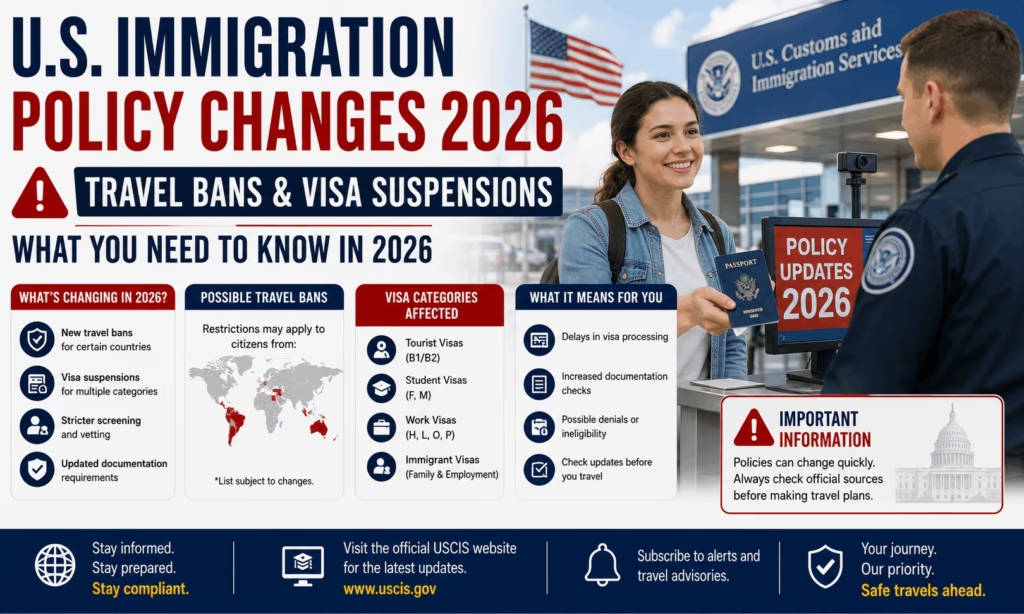
Study on Tourist Visa: Yes. A B-1 or B-2 visitor visa can be revoked if the holder studies in the United States beyond a short recreational course, because the State Department says academic study that earns credits or certificates needs an F or M student visa. Short classes with no academic credit, like a two day cooking class, are allowed.
A State Department reminder reported on November 14, 2026, put a clear line around what a visitor can do in a classroom: you can take a short recreational class while visiting, but you cannot enroll in an academic program, a school, or any course that gives credits or a US certificate. Break that line and the visa can be revoked, a later visa can become harder to get, and in some cases removal proceedings can follow. The guidance restates long standing rules rather than creating a new one, as far as the reporting shows, but it arrives at a tense moment. The State Department says it has revoked more than 300,000 visas since January 2025, and it has said most of those involved crime, public safety, fraud or immigration violations. Consular officers and border officers are paying close attention to why people say they are visiting. We’ll be updating this article monthly as rules, court rulings and official guidance change.
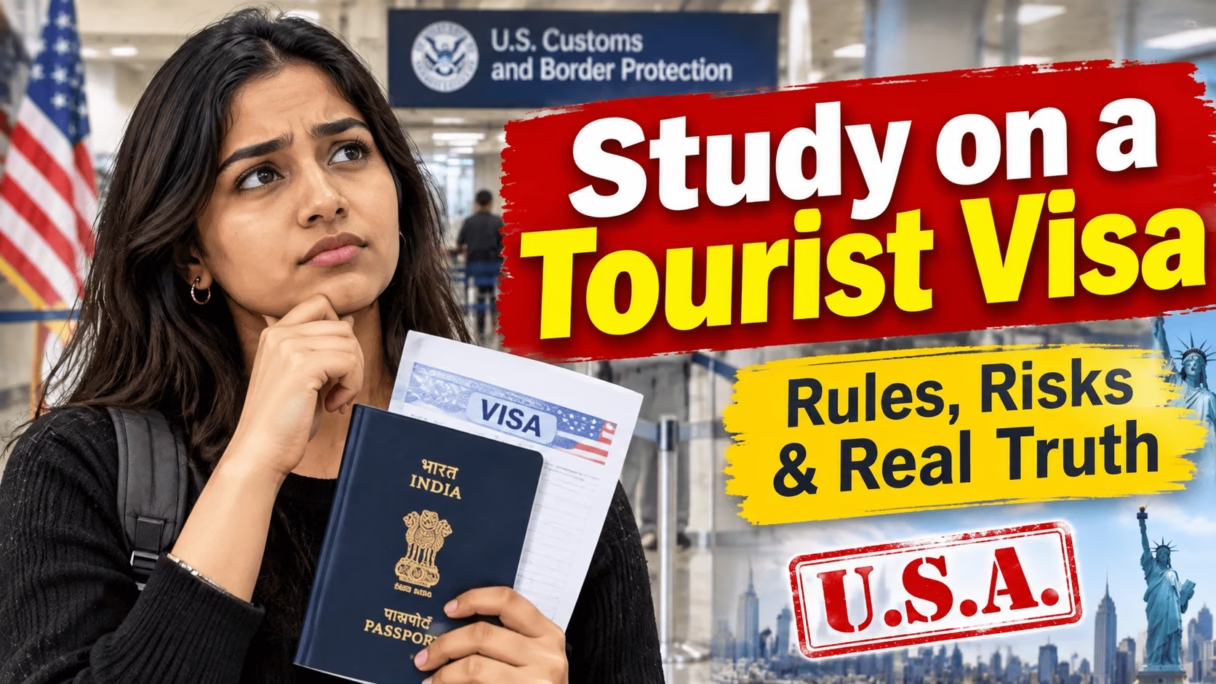
The practical risk is not the cooking class. It is the gray zone: a six week English program that issues a certificate, an evening course at a community college, a coding bootcamp that takes full days, a “visit” that quietly turns into a semester. People often drift into these situations because schools can enroll applicants without checking immigration status, and the responsibility to stay within status belongs entirely to the visitor. This guide explains what the State Department says, which activities fall on each side of the line, what revocation does and does not mean, how to apply for the right student visa, how long it takes, what it costs, and what to do if you are already in the United States on a visitor visa and want to study. Every official link is in one table near the end.
Study on Tourist Visa Key Highlights
| Question | Short answer |
|---|---|
| Can you study on a B-1 or B-2 visa | Only in a limited way, such as a short recreational class that gives no academic credit |
| Which visa covers academic study | F-1 for academic programs, M-1 for vocational programs, J-1 for some exchange programs |
| What can happen if you break the rule | Visa revocation, difficulty getting a new visa, a status violation and, in some cases, removal proceedings |
| Is this a new rule | The reporting describes a reminder of existing visa conditions, not a new regulation |
| Who decides at the border | A CBP officer makes the final entry decision, even if your visa is valid |
| Official source for visa rules | travel.state.gov |
What the State Department Said About Studying on a Visitor Visa?
The latest coverage comes from El Cronista, which reported on November 14 that the State Department’s guidance says each visa category carries its own conditions, and that failing to follow them can bring immigration consequences and affect the ability to return. An earlier report from the same outlet, published November 4, summarized the same guidance as a list of activities visitors cannot do: work without authorization, study in academic programs, perform professionally for pay, enter as ship or aircraft crew, work as foreign press or media, move to the United States permanently, or travel mainly to give birth and obtain citizenship for a child.
Two cautions are worth stating plainly. First, neither report quoted the State Department directly, and neither linked to a State Department page, so what you are reading is paraphrase. Second, the legal basis for the study limit is not new. Federal regulation 8 CFR 214.2(b)(7) has long barred visitors from enrolling in an academic course of study, and the law that governs visa revocation gives the State Department wide discretion. The Supreme Court held unanimously in Bouarfa v. Mayorkas in 2024 that visa revocations are discretionary and not open to judicial review.
What You Can and Cannot Do on a B-1 or B-2 Visa?
| Allowed on a B-1 or B-2 visa | Not allowed on a B-1 or B-2 visa |
|---|---|
| Business meetings, consulting with partners, negotiating contracts | Working or taking a paid job |
| Conferences and conventions, whether scientific, educational, professional or business | Enrolling in an academic program at a university or school |
| Tourism and vacations | Courses that give academic credits or a US certificate |
| Visits to family and friends | Paid professional performances |
| Medical treatment | Working as crew on a ship or aircraft |
| Social events with fraternal or service groups | Working in the foreign press or media |
| Unpaid amateur sports or music competitions | Moving to the United States permanently |
| Short recreational courses with no academic credit | Traveling mainly to give birth for citizenship purposes |
A visa also does not guarantee entry. A Customs and Border Protection officer makes the final decision when you arrive and can ask about your plans even if your visa is valid.
Where the Line Falls: Recreational Class or Academic Study?
The State Department example is a two day cooking class. The common sense test is whether the class is a side activity of a real visit, or the reason for the visit. Here is how that plays out in practice.
| Situation | Likely treatment |
|---|---|
| A two day cooking class during a family trip | Generally fine. It is short and recreational |
| A weekend pottery workshop | Generally fine |
| An audit only lecture at a university while visiting a friend | Gray area. Many schools treat non credit, audit only, casual study as incidental, but only if tourism or business is truly the main purpose |
| A six week English program that issues a certificate | Risky. A certificate or credits points toward academic study |
| A semester course at a community college | Not allowed on a visitor visa |
| A full time coding bootcamp | Not allowed. It is full time and career focused |
| A vocational training program of several months | Not allowed. Substantial vocational training needs an M-1 or other proper status |
One university international office describes incidental study as casual and short term, tied to a hobby or personal interest, taken for non credit or audit, not used toward a degree or certification, and not more than 18 hours a week. That is a school’s guideline, not a federal rule, and it can be stricter or looser than what a consular officer would say. The safest approach when a class is anything but clearly recreational is to ask the school’s international office, or an immigration attorney, before you enroll.
Why Visa Revocations Are Rising in 2026?
The warning about studying lands against a backdrop of sharply higher revocation numbers. According to a VisaVerge report updated November 1, the State Department had revoked more than 175,000 visas by August, more than 250,000 by the end of September and more than 300,000 by October 20, counting from January 2025. The department said the vast majority involved criminal activity, public safety concerns, immigration violations, fraud or misrepresentation, or information showing ineligibility. A spokesman said the administration had acted faster than any earlier one, and the department’s line was that a visa is a privilege, not a right.
| Metric | Reported figure |
|---|---|
| Visas revoked since January 2025, as of October 20 | More than 300,000 |
| Revoked by the end of September | More than 250,000 |
| Revoked by August | More than 175,000 |
| Revocations through the Continuous Vetting Center | More than 23,000 |
| Birth tourism revocations, as of October 20 | At least 4,000, and the task force later announced more than 6,000 |
| Proposed B-1/B-2 review for people who later sought asylum | Potentially up to 200,000 visas. This is a plan, not a completed action |
Student visas have been part of the picture before. A National Immigration Forum explainer published in June 2025 said that by May 7 of that year more than 1,600 student visas had been revoked and more than 4,700 SEVIS records terminated. That is older data, and it describes a different phase of enforcement, but it shows how quickly a record can be changed in the system that tracks students.
Visa Revoked Versus Status Ended: A Difference That Matters
Many people mix up the visa and the status. They are not the same thing.
| Item | What it is | What revocation does |
|---|---|---|
| Visa | A travel document in your passport that lets you ask to enter | A revoked visa cannot be used to travel or seek admission |
| Status | Your permission to stay, shown by your I-94 record | A visa revocation does not by itself end your authorized stay |
| SEVIS record | The system that tracks F, M and J students | Can be terminated separately for specific reasons, and ending it can stop a student from studying or working |
The National Immigration Forum explains that revoking a visa mainly affects re-entry, and that the Department of Homeland Security may treat a person whose visa was revoked as deportable under section 237(a)(1)(B) of the Immigration and Nationality Act. In other words, someone in the United States with a revoked visa may be allowed to stay for the moment, but is at risk of removal if proceedings begin. Staying beyond your authorized period is a separate trigger: overstaying can cancel a visa automatically under section 222(g).
Consequences of Studying on a Visitor Visa
The reporting lists several possible outcomes. Which one applies depends on the facts, and none is guaranteed.
| Possible consequence | How it works |
|---|---|
| Visa revocation | The visa becomes invalid for travel and for admission at a port of entry |
| Status violation | Enrolling in an academic course is a violation of B status |
| Difficulty getting a new visa | A past violation can come up at later interviews |
| Restrictions on returning | Officers may limit or deny later entry |
| Removal proceedings | Possible in some cases |
| Misrepresentation finding | If you said you would only visit but planned to study, officers can treat it as a false statement, which can lead to long term inadmissibility |
The misrepresentation issue is the one that tends to cause the most lasting harm. A person who enters as a visitor already intending to enroll in school has a hard time recovering from that fact, even if the course itself was short.
How to Apply for the Right Visa If You Want to Study in the US?
If your goal is an academic program, apply for a student visa from the start. This is the clean path and it avoids the status problems above.
- Choose a school that is approved by the Student and Exchange Visitor Program. Only approved schools can issue the form you need.
- Apply for admission. When you are accepted, the school issues a Form I-20 for F-1 or M-1 students, or a DS-2019 for J-1 exchange visitors.
- Pay the SEVIS I-901 fee. Keep the receipt, because you need it at the interview.
- Complete the DS-160 online nonimmigrant visa application and upload your photo.
- Pay the visa application fee and schedule your interview at the US embassy or consulate that serves you.
- Prepare documents: passport, I-20 or DS-2019, SEVIS receipt, financial evidence, academic records and proof of ties to your home country.
- Attend the interview and answer honestly. Officers look at your study plan, your funds and your intent to follow the rules.
- After approval, plan your travel to arrive within the time allowed before your program begins, and carry your I-20 or DS-2019.
For a short visit that includes a recreational class, you do not need a student visa. Apply for a B-2 visa, state your true plans on the DS-160, and keep any course to a short, non credit class.
Changing From B-2 Visitor Status to F-1 Student Status Inside the US
Some visitors decide to study after they arrive. The rules here are strict.
An Ohio State University guide explains that anyone in B-2 status may not be employed or enrolled until F-1 status has been approved. The process is to file Form I-539 with USCIS, include the SEVIS I-901 receipt, your most recent electronic I-94 and passport copies, and, if your B-2 visa lacks a prospective student notation, a letter explaining your request along with proof that you did not intend to study when you entered. USCIS generally denies the request if it concludes you intended to study before you entered as a visitor, and it can treat that as misrepresentation.
Two practical rules follow. Do not start classes while the request is pending, because you remain in B-2 status until USCIS approves the change. And if your plan from the beginning was to study, apply for the student visa abroad instead. The same Ohio State page notes that a federal court injunction on September 14, 2026, paused a new immigration rule and that the information can change, but it does not say which rule, so confirm current requirements on the USCIS website before filing.
Processing Time for Student Visas and Status Changes
There is no single wait time. Student visa interview waits differ by country and consulate, and the State Department posts current estimates on its travel website. Apply as soon as you have your I-20 or DS-2019, because appointment waits grow in the months before fall and spring terms.
For a change of status inside the United States, the Ohio State guide gives no processing time, and USCIS posts current estimates by form and service center. Because you cannot enroll while the request is pending, a long wait can mean missing the start of the term. That is another reason to apply abroad for the right visa when you can.
Revocation decisions have no published timetable. The department says it uses data from several sources to review travel history, so a review can reach a visa that was issued long ago.
Fees and Payment Schedule for Study Visas
| Payment | When you pay | Notes |
|---|---|---|
| SEVIS I-901 fee | Before the visa interview | Keep the receipt. Check the current amount for your category on the official SEVIS fee site |
| Visa application fee | Before scheduling the interview | The standard B-1/B-2 fee has been reported as 185 dollars. Check the State Department fee page for the F, M and J amount |
| Form I-539 fee | When you file a change of status | Check the current fee on the USCIS website |
| Extension of stay or other filing fees | When you file | Depends on the form |
| School tuition and deposits | Set by the school | Often due before you receive the I-20 |
Pay only through official channels, and be wary of anyone who offers a guaranteed visa. Reports have also mentioned a separate visa integrity fee that has been described as pending, so confirm the current status on the official fee page before you pay.
Already on an F-1 or J-1 Visa? The Four Year Rule
A separate rule affects students who are already here. In July the Department of Homeland Security finalized a rule that ends what was known as duration of status for F-1 students and J-1 exchange visitors. The final rule, published in the Federal Register on July 17 and set to take effect September 15, replaces open ended permission to stay with a fixed admission period tied to the program length, up to four years. Students who need more time have to apply for an extension and show a compelling academic reason, a documented medical condition or circumstances beyond their control. Delays caused by academic probation or suspension do not count.
Other details from the final rule include a 30 day grace period after completing a program, down from 60 for F-1 students, limits on changing programs in the first academic year, and a six month reprieve from the extension requirement for those applying for post completion optional practical training. DHS has acknowledged that enrollment of foreign students may decline because of the rule, and critics from universities and immigration law say it will add administrative burden. A court order in mid September paused a new immigration rule, according to one university guide, and it is not clear from that source whether it affects this one. Check your school’s international office for the current status.
Five Mistakes That Put a Visitor Visa at Risk
- Treating any class as harmless. A short recreational class is fine. A class that gives credits, a certificate or leads toward a degree is not.
- Letting a visit turn into a course. Schools may enroll anyone, and the responsibility to stay within status is yours.
- Hiding the plan to study. Saying you are visiting when you plan to enroll can be treated as misrepresentation.
- Starting school while a change of status is pending. You stay in B-2 status until USCIS approves the change.
- Relying on a social media post or a friend. Check travel.state.gov, uscis.gov and your school’s international office, not hearsay.
Official Resources for Visitor Visas, Student Visas and Status Changes
| Resource | What you can do | Link |
|---|---|---|
| State Department visitor visa page | Read the rules for B-1 and B-2 visas | https://travel.state.gov/content/travel/en/us-visas/tourism-visit/visitor.html |
| State Department student visa page | Steps for F, M and J visas | https://travel.state.gov/content/travel/en/us-visas/study/student-visa.html |
| DS-160 application | Complete the online visa application | https://ceac.state.gov/genniv/ |
| Check visa application status | Track a visa application | https://ceac.state.gov/CEAC/ |
| USCIS change of status | File Form I-539 and check case status | https://www.uscis.gov |
| SEVIS fee payment | Pay the I-901 fee | https://www.fmjfee.com |
| Study in the States | Official student guidance from DHS | https://studyinthestates.dhs.gov |
| Federal Register | Read the duration of status final rule, 91 FR 44976 | https://www.federalregister.gov/documents/2026/07/17/2026-14439/establishing-a-fixed-time-period-of-admission-and-an-extension-of-stay-procedure-for-nonimmigrant |
| Code of Federal Regulations | Read 8 CFR 214.2(b)(7) on visitor study limits | https://www.ecfr.gov |
| CBP | Entry rules and I-94 records | https://i94.cbp.dhs.gov |
FAQs About Studying on a Tourist Visa
Can you study on a tourist visa in the US?
Only in a limited way. Short recreational classes that give no academic credit are allowed. Academic study, credit courses and certificate programs need a student visa.
Can a B-2 visa be revoked for studying?
Yes. The State Department says a visa can be revoked when there are grounds to believe the holder no longer meets the requirements, and enrolling in academic study is a violation of visitor status.
What counts as a recreational course?
The State Department example is a two day cooking class. The key points are that it is short, non credit and not part of a degree or certificate.
Can I take a short English course on a B-2 visa?
Only if it is truly short and recreational, with no credits or certificate. A longer course that issues a certificate, or that takes up most of your time, calls for a student visa.
Do I need a student visa for a summer program?
If the program is academic, gives credit or is substantial training, yes. Ask the school’s international office what status it requires.
What happens if my visa is revoked while I am in the US?
Your visa cannot be used to enter again, but revocation does not by itself end your authorized stay. You may still face removal proceedings in some cases, so speak with an immigration attorney.
Is this a new State Department rule?
The reporting describes a reminder of existing conditions, based on long standing regulations, not a new rule.
Can I study on a B1/B2 visa?
You can take a short recreational class, but not an academic program or any course that gives credits or a US certificate.
Can I go to school in the US on a tourist visa?
No. Enrolling in school requires an F-1, M-1 or J-1 visa, or a change of status that USCIS has approved.
Can I change from a tourist visa to a student visa while in the US?
You can file Form I-539 for a change to F-1 status, but you cannot enroll until it is approved, and USCIS may deny the request if it believes you planned to study before you entered.
What happens if you study on a tourist visa?
Possible results include revocation, a status violation, difficulty getting a new visa, restrictions on returning and, in some cases, removal proceedings.
Can a tourist visa be cancelled in the USA?
Yes. A visa can be revoked, and an overstay can cancel it automatically.
Is it illegal to attend a class on a visitor visa?
A short recreational class is allowed. An academic course of study is a violation of visitor status.
Can I audit a class on a B-2 visa?
Some schools treat casual, non credit auditing as incidental if tourism or business is your main purpose. Confirm with the school’s international office before enrolling.
How many US visas has the State Department revoked in 2026?
A VisaVerge report says more than 300,000 since January 2025 as of October 20, and the State Department says most involved crime, public safety, fraud or immigration violations.
Does a revoked visa mean deportation?
Not automatically. A revocation mainly affects re-entry, but it can create removal risk if the government starts proceedings.
Conclusion
The State Department guidance reported this week is a reminder more than a rule change, but it matters because enforcement is tougher and revocations are at record levels. A visitor visa lets you take a short, casual, recreational class. It does not let you enroll in school, earn credits or complete a certificate program. If studying is your goal, apply for the right visa from the start. If your plans change after you arrive, do not start classes until USCIS approves a change of status.
Before you enroll in anything, check the rules on travel.state.gov, ask your school’s international office whether the course is permitted for your status, and speak to a licensed immigration attorney if your situation is not clear. We’ll continue refreshing this guide each month with the latest numbers and rules.