
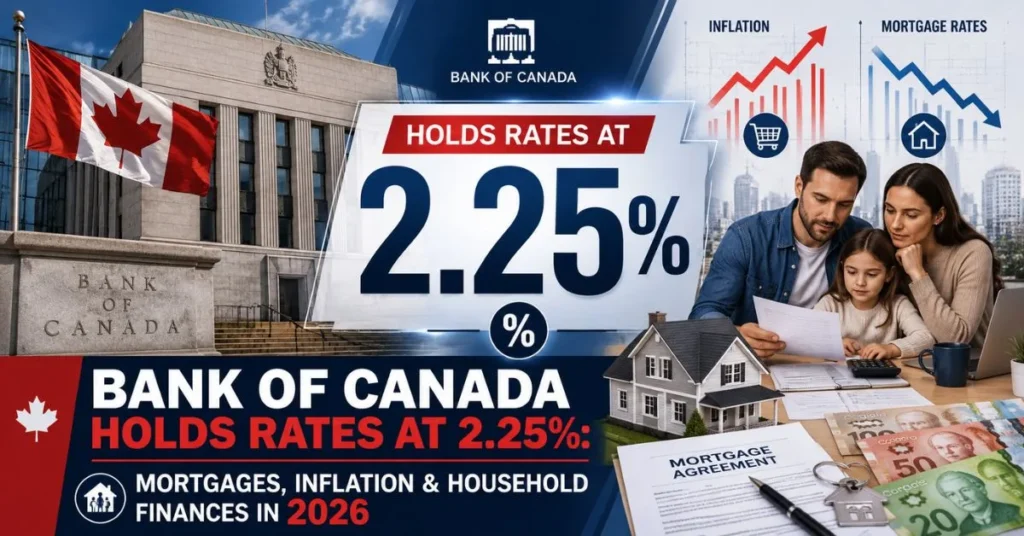
The Bank of Canada has decided to keep its benchmark interest rate unchanged at 2.25%, a move that is drawing significant attention from homeowners, borrowers, investors, and businesses across the country. As Canadians continue to navigate a challenging economic environment marked by housing affordability concerns, persistent cost-of-living pressures, and global economic uncertainty, the central bank’s latest decision offers both reassurance and new questions about the future.
Interest rates influence nearly every aspect of personal finance, from mortgage payments and credit card debt to savings accounts and investment returns. With inflation showing signs of stabilization but economic risks still present, the Bank of Canada’s decision reflects a careful balancing act between supporting growth and maintaining price stability.
This article explores what the 2.25% interest rate means for Canadians in 2026 and how it could affect mortgages, inflation, consumer spending, and household finances in the months ahead.
Why the Bank of Canada Kept Interest Rate Unchanged
The Bank of Canada uses interest rates as its primary tool to control inflation and support economic stability. When inflation rises too quickly, the central bank may increase rates to slow spending and borrowing. Conversely, when economic growth weakens, it may lower rates to encourage investment and consumer activity.
In its latest policy announcement, the Bank noted several factors supporting its decision to hold rates steady:
- Inflation remains within the central bank’s target range.
- Economic growth has slowed but has not entered recession territory.
- Labour market conditions remain relatively stable.
- Global trade uncertainties continue to pose risks.
- Household debt levels remain elevated.
By maintaining the current rate, policymakers aim to monitor how previous monetary policy decisions continue to affect the economy without introducing additional pressure on borrowers or businesses.
Impact on Canadian Mortgages
Relief for Variable-Rate Mortgage Holders
One of the most immediate effects of stable interest rates is felt by homeowners with variable-rate mortgages. When the benchmark rate rises, monthly mortgage payments often increase. By holding rates at 2.25%, the Bank of Canada is providing temporary relief for borrowers who have already faced years of fluctuating mortgage costs. For many households, this stability allows better financial planning and budgeting. Families can allocate funds toward savings, debt repayment, or essential expenses without worrying about another immediate increase in mortgage payments.
Fixed Mortgage Rates May Remain Stable
Although fixed mortgage rates are influenced more by bond market yields than the Bank of Canada’s policy rate, the central bank’s decision still affects lender expectations. Financial institutions may maintain relatively stable fixed-rate mortgage offerings if economic conditions remain unchanged. This could encourage homebuyers who have been waiting for greater certainty before entering the market. However, experts caution that fixed rates may still fluctuate due to global financial developments and changes in government bond yields.
Housing Market Implications
Housing affordability remains one of Canada’s most pressing economic challenges. In many major cities, high home prices continue to create barriers for first-time buyers despite improvements in borrowing conditions. The decision to keep rates steady may support housing demand by maintaining current financing costs.
Potential Benefits
- Improved buyer confidence.
- Greater predictability for homeowners.
- More stable housing market activity.
- Reduced risk of payment shock for borrowers.
Ongoing Challenges
Despite stable rates, affordability issues are unlikely to disappear overnight. High property values, limited housing supply, and population growth continue to put upward pressure on housing costs. As a result, many Canadians may still find it difficult to enter the housing market, particularly in urban centers where prices remain elevated.
What It Means for Inflation
Inflation has been one of the defining economic stories of recent years. After experiencing significant price increases in food, housing, transportation, and energy, Canadians have become increasingly sensitive to changes in living costs. The Bank of Canada’s inflation target remains around 2%, a level considered healthy for sustainable economic growth.
Signs of Progress
Recent data suggests inflation has moderated compared with previous peaks. While prices remain higher than many consumers would like, the pace of increases has slowed.
Key areas showing stabilization include:
- Certain grocery categories.
- Consumer goods.
- Transportation costs.
- Some housing-related expenses.
By maintaining rates, the central bank appears confident that inflation is moving in the right direction without requiring additional monetary tightening.
Risks Remain
Despite progress, inflation risks have not disappeared completely.
Several factors could reignite price pressures:
- Rising global energy prices.
- Supply chain disruptions.
- Geopolitical tensions.
- Labour shortages in specific industries.
- Increased consumer spending.
The Bank of Canada continues to monitor these developments closely before making future policy adjustments.
Impact on Household Budgets
For many Canadians, the most important question is simple: Will life become more affordable? While holding interest rates steady does not directly reduce prices, it can help prevent additional financial strain.
Borrowing Costs
Consumers with:
- Personal loans
- Lines of credit
- Home equity loans
- Variable-rate mortgages
are less likely to experience higher interest payments in the near term. This stability can provide breathing room for households already dealing with elevated costs of living.
Savings and Investments
Interest rates also affect savers. When rates remain stable, returns on savings accounts and guaranteed investment certificates (GICs) generally remain relatively unchanged. For retirees and conservative investors, predictable rates may help with financial planning and income management.
Effects on Consumer Spending
Consumer spending is a major driver of Canada’s economy. When borrowing becomes more expensive, people often reduce spending on large purchases such as vehicles, appliances, and home renovations. Stable interest rates can support consumer confidence and encourage moderate spending activity.
Areas Likely to Benefit
- Retail sales.
- Travel and tourism.
- Home improvement projects.
- Automotive purchases.
- Small business activity.
However, many households remain cautious due to ongoing affordability concerns and economic uncertainty.
Business and Employment Outlook
Businesses closely watch interest rate decisions because borrowing costs directly affect investment decisions.
Stable rates can encourage companies to:
- Expand operations.
- Hire additional workers.
- Invest in technology.
- Launch new projects.
For small and medium-sized businesses, predictable financing costs are particularly important as they continue adapting to changing economic conditions.
Employment Trends
Canada’s labour market has remained resilient despite slower economic growth. Stable rates may help preserve employment levels by supporting business activity and consumer demand.
However, employers continue facing challenges such as:
- Labour shortages.
- Wage pressures.
- Productivity concerns.
- Global competition.
What Economists Are Predicting
Economic forecasts for the remainder of 2026 remain mixed. Some analysts believe the Bank of Canada could maintain the current rate for an extended period if inflation continues to ease and economic growth remains moderate. Others argue that renewed inflation pressures could eventually require further rate increases. Several factors will influence future decisions:
Inflation Data
Monthly inflation reports remain the most important indicator guiding monetary policy.
Economic Growth
Weak growth may encourage the central bank to consider rate reductions, while stronger-than-expected growth could support tighter policy.
Global Events
International trade disputes, commodity prices, and geopolitical developments continue to influence Canada’s economic outlook.
Consumer Spending
The strength of household spending will also help determine whether current policy settings remain appropriate.
Financial Tips for Canadians in 2026
With interest rates holding steady, Canadians can take several practical steps to strengthen their financial position.
Review Mortgage Options
Homeowners should evaluate whether fixed or variable mortgage products best suit their circumstances.
Reduce High-Interest Debt
Paying down credit card balances and personal loans can improve financial flexibility and reduce interest costs.
Build Emergency Savings
A stable rate environment provides an opportunity to strengthen emergency funds and prepare for unexpected expenses.
Monitor Budgeting Habits
Although inflation has moderated, prices remain higher than before. Tracking spending and identifying savings opportunities remain important.
Diversify Investments
Investors should consider maintaining diversified portfolios aligned with their risk tolerance and long-term financial goals.
Also Read:
New Canada Groceries and Essentials Benefit (CGEB) Payments coming in July 2026
2027 Social Security COLA Forecast: Higher Inflation Could Add Up to $95 Per Month to Benefits
How Much Will Social Security Retirees Receive on July 10? Maximum and Average Payment