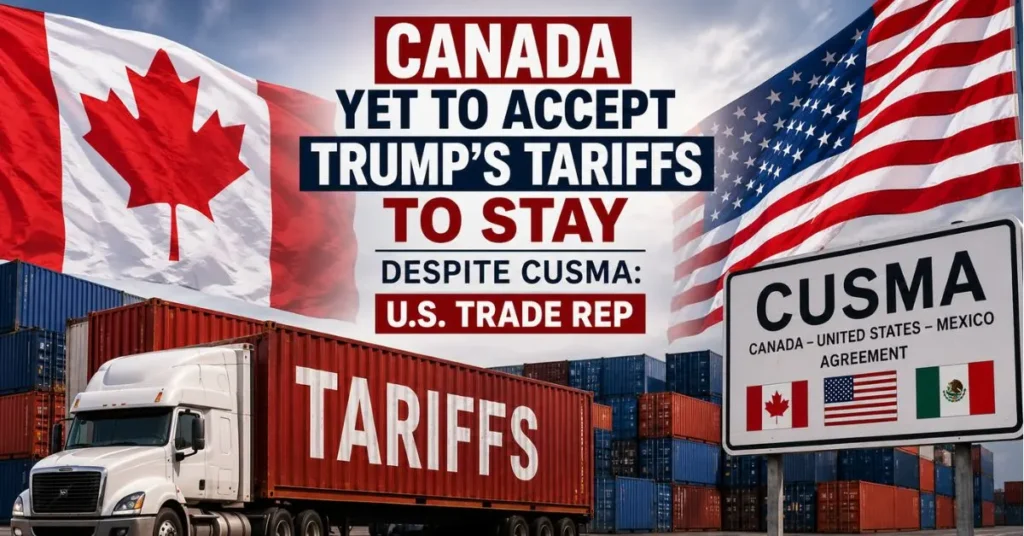
Canada-U.S. Trade Tensions Rise: Trade tensions between Canada and the United States are once again drawing international attention after a recent statement from the U.S. Trade Representative suggested that former President Donald Trump’s tariffs could remain in place despite protections under the Canada-United States-Mexico Agreement (CUSMA). The comments have raised fresh concerns among Canadian businesses, exporters, and policymakers who believed the trade pact would shield them from additional American tariffs.
The issue has reopened debates about the future of North American trade relations, the strength of CUSMA, and how political shifts in Washington could impact Canadian industries. With uncertainty growing ahead of the U.S. presidential election cycle, experts warn that trade disputes between the neighboring countries could intensify in the coming months.
What Did the U.S. Trade Representative Say?
The latest controversy began after comments from a senior U.S. trade official indicated that tariffs introduced during Donald Trump’s administration may continue even under the framework of CUSMA. According to the representative, the United States still considers tariffs a strategic economic and national security tool, especially in sectors viewed as critical to American manufacturing and supply chains.
The remarks surprised many Canadian officials because CUSMA was designed to reduce trade barriers and create stability between the three North American economies. Canada has repeatedly argued that tariffs imposed outside the agreement violate the spirit of the trade deal and hurt businesses on both sides of the border.
While no immediate new tariffs were announced, the comments signaled that Washington may continue using trade restrictions when it believes domestic industries need protection.
Understanding CUSMA and Why It Matters
CUSMA, known as USMCA in the United States, replaced the North American Free Trade Agreement (NAFTA) in 2020. The agreement was negotiated during Donald Trump’s presidency and was promoted as a modernized trade pact that would strengthen North American manufacturing while protecting jobs.
The agreement covers a wide range of industries, including:
- Automotive manufacturing
- Agriculture
- Steel and aluminum
- Digital trade
- Intellectual property
- Labor standards
- Environmental protections
For Canada, CUSMA is extremely important because the United States is its largest trading partner. Billions of dollars in goods cross the border every day, and many Canadian industries rely heavily on American markets.
Canadian officials believed the agreement would reduce the likelihood of future tariff battles. However, the recent comments from U.S. trade officials suggest that political and economic considerations may still override trade agreement protections in some cases.
Trump-Era Tariffs Continue to Influence Trade Policy
Donald Trump’s administration became known for aggressive tariff policies aimed at protecting American manufacturing. During his presidency, tariffs were imposed on steel, aluminum, and a range of Chinese imports. Canada was also affected despite being one of America’s closest allies.
At the time, the Trump administration argued that imported steel and aluminum posed a national security risk to the United States. Canada strongly rejected the claim, calling the tariffs unfair and harmful to both economies.
Although some tariffs were eventually lifted after negotiations, the broader approach toward trade protectionism continues to shape U.S. policy discussions today.
Analysts say the recent comments from the U.S. Trade Representative show that tariff tools remain politically attractive in Washington, especially during periods of economic uncertainty and election campaigns.
Canada’s Response to the Latest Trade Concerns
Canadian government officials have expressed concern over the possibility that tariffs could continue despite CUSMA commitments. Ottawa maintains that disputes should be resolved through the mechanisms outlined in the trade agreement rather than through unilateral tariff measures.
Canadian trade experts argue that using tariffs outside agreed rules weakens confidence in international trade systems and creates uncertainty for investors. Businesses need predictable conditions to make long-term investment decisions, particularly in sectors like automotive manufacturing and energy.
Some Canadian leaders are also worried that renewed tariff threats could affect employment and economic growth. Industries dependent on cross-border trade could face higher costs, supply chain disruptions, and reduced competitiveness if tariffs expand further.
Impact on Canadian Industries
Steel and Aluminum Sector
Canada’s steel and aluminum industries remain among the most vulnerable sectors. Past tariffs caused significant disruptions, leading to higher costs and uncertainty for exporters.
Many Canadian manufacturers rely on integrated North American supply chains where raw materials and finished products move across the border multiple times during production. Tariffs can increase production costs and reduce profit margins.
Industry representatives warn that continued uncertainty may discourage future investment in Canadian manufacturing facilities.
Automotive Industry
The automotive sector is another major concern. Canada and the United States share deeply connected auto supply chains, with parts crossing borders frequently during assembly.
Any new tariffs or trade restrictions could raise vehicle prices, slow production, and create challenges for automakers operating across North America.
The automotive industry has already faced pressures from inflation, supply chain shortages, and the transition toward electric vehicles. Additional trade tensions could further complicate recovery efforts.
Agriculture and Food Exports
Canadian agricultural producers are also watching developments closely. Farmers depend heavily on access to U.S. markets for products including grains, dairy, meat, and processed foods.
Trade disputes can quickly impact export volumes, commodity prices, and farm incomes. Agricultural groups are urging both governments to maintain open trade channels and avoid policies that could disrupt food supply chains.
Why Tariffs Remain Politically Popular in the U.S.
Despite criticism from economists, tariffs continue to attract political support in parts of the United States. Many American politicians argue that tariffs help protect domestic industries from unfair foreign competition and encourage companies to manufacture products within the country.
Supporters believe tariffs can:
- Protect American jobs
- Strengthen domestic manufacturing
- Reduce reliance on foreign supply chains
- Improve national security
- Increase government revenue
However, critics argue that tariffs often raise prices for consumers and businesses while triggering retaliatory measures from trading partners.
The debate is expected to become even more intense as U.S. election campaigns focus on economic nationalism and manufacturing competitiveness.
Trade Experts Warn About Economic Risks
Economists on both sides of the border warn that prolonged trade disputes could slow economic growth in North America. Canada and the United States have one of the world’s largest trading relationships, and disruptions can quickly affect businesses, workers, and consumers.
Experts say uncertainty alone can have negative consequences because companies may delay investments until trade policies become clearer.
Some analysts also warn that repeated use of tariffs outside formal trade agreements could undermine confidence in international trade systems globally.
Businesses generally prefer stable and predictable rules because sudden policy changes increase financial risk.
Could Canada Challenge Future Tariffs?
If new tariffs are introduced or existing measures remain in place, Canada could potentially challenge them through CUSMA dispute resolution mechanisms or international trade organizations.
Canada has previously used legal channels to contest U.S. tariffs and has achieved mixed results. While dispute panels sometimes rule in Canada’s favor, political negotiations often play a major role in final outcomes.
Trade lawyers note that even successful legal challenges can take years, during which industries continue facing uncertainty and financial pressure.
Growing Uncertainty Ahead of U.S. Elections
Political uncertainty in the United States is adding another layer of concern for Canadian policymakers. Trade policy could shift significantly depending on the outcome of upcoming elections and future administration priorities. Donald Trump has continued advocating for strong tariff policies and economic nationalism. Other American political figures have also expressed support for tougher trade measures aimed at protecting domestic industries. As a result, Canadian businesses are preparing for the possibility that trade disputes may remain a recurring challenge regardless of which party controls Washington.
Importance of the Canada-U.S. Economic Relationship
Despite occasional disputes, the economic relationship between Canada and the United States remains one of the closest in the world. Many experts believe maintaining stable trade relations is essential for the economic health of both countries. Business groups in Canada and the United States continue urging governments to avoid unnecessary trade conflicts and focus on cooperation instead.
Key facts about the partnership include:
- Hundreds of billions of dollars in annual trade
- Millions of jobs supported by cross-border commerce
- Shared manufacturing supply chains
- Deep energy cooperation
- Strong agricultural trade ties
What Happens Next?
At this stage, no major new tariff announcement has been officially confirmed, but the comments from the U.S. Trade Representative have clearly increased concern among Canadian industries and policymakers. The coming months could prove critical as both countries navigate economic pressures, political changes, and ongoing debates about manufacturing competitiveness.
Canadian officials are expected to continue pushing for full respect of CUSMA commitments while monitoring developments in Washington closely. For businesses and investors, the biggest challenge may be dealing with uncertainty. Even without immediate policy changes, concerns over future tariffs can influence investment decisions, supply chain planning, and economic forecasts.
Also Read:
Social Security SSI June 2026 Payment Date Confirmed by SSA- Check Full Schedule here
Canada’s Latest Federal Benefit Payments 2026 Begin Rolling Out This Week
Canada Grocery Rebate 2026 Full Schedule – Amount & Payment Status
Millions of Canadians Set to Receive Multiple Government Benefit Payments in June 2026