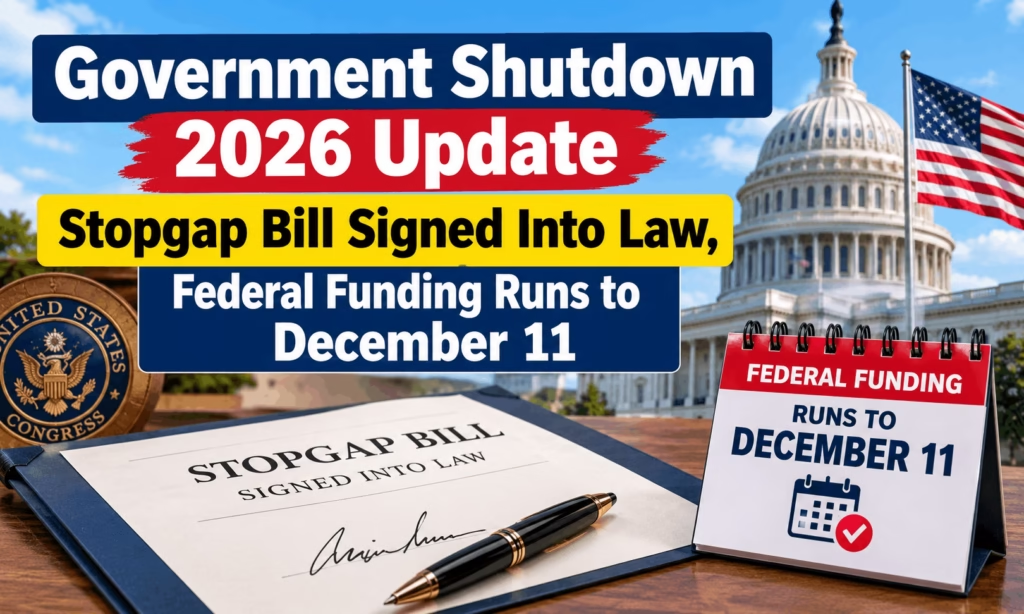
Government Shutdown 2026 Update: A government shutdown that had been building toward an October 1 deadline was called off this month after President Trump signed a stopgap funding bill into law, keeping federal agencies open at current spending levels through December 11, 2026. The bill, formally called the Continuing Appropriations and Extensions Act, 2027, passed the House 370 to 48 and had already cleared the Senate 90 to 6 weeks earlier, a lopsided margin that stood out after a year defined by bitter funding fights.
For federal workers, contractors, and anyone who depends on federal benefit programs, the signing means daily operations continue without interruption for now. But it does not resolve the underlying disagreements that triggered two separate shutdowns earlier in 2026, it simply pushes that fight past the November midterm elections. Lawmakers on both sides have been open about the timing, with neither party wanting a repeat of this year’s lengthy funding lapses right before voters go to the polls. We’ll be updating this article monthly as the December 11 deadline approaches and Congress works toward full-year spending bills.
What Just Happened: The Stopgap Bill, Explained
A continuing resolution (CR) is a temporary funding measure that keeps government agencies operating at existing spending levels when Congress hasn’t finished passing its full-year appropriations bills. Rather than setting new budget numbers, it simply extends what’s already in place for a set period of time, in this case through December 11, 2026.
The bill cleared the Senate first, on August 8, 2026, by a vote of 90 to 6, and the House followed on September 1 with a 370 to 48 vote. President Trump signed it into law on September 2, 2026, avoiding a lapse that would have begun at the start of the new fiscal year on October 1.
Nineteen House Republicans voted against the measure, largely over objections to provisions the Senate had added during negotiations, including a short-term delay of a ban on intoxicating hemp products. House Appropriations Committee Chair Tom Cole argued that avoiding a shutdown ahead of the midterms took priority over those disagreements.
2027 VA Disability COLA Increase: How Much Could Benefits Rise Under the Latest Projection
Social Security COLA 2027 Officially Announcement: New Payment Amounts Revealed
Medicare Part D Premium 2027 New Rates Announced, How Much Will You Pay?
Government Shutdown 2026 Update Key Facts
| Detail | Information |
|---|---|
| Bill name | Continuing Appropriations and Extensions Act, 2027 |
| Signed into law | September 2, 2026 |
| Funding runs through | December 11, 2026 |
| House vote | 370-48 (September 1, 2026) |
| Senate vote | 90-6 (August 8, 2026) |
| Shutdown deadline avoided | October 1, 2026 |
| Next funding deadline | December 11, 2026 |
| Type of measure | Continuing resolution (CR), current-level funding |
Why This Mattered: A Year of Shutdown Fights
To understand why this signing was such a relief in Washington, it helps to look back at what came before it. The federal government has already gone through two major funding lapses in 2026. A brief shutdown began January 31 and lasted until February 3, after lawmakers reached a partial agreement covering several appropriations bills but hit a snag getting a Department of Homeland Security bill through in time. A second, far longer shutdown began February 14 after Senate Democrats withdrew support for the DHS funding bill following the killing of Alex Pretti by Customs and Border Protection agents, a shutdown that stretched on for weeks before a deal was eventually reached.
Those disputes came on the heels of a record-setting 43-day shutdown in the fall of 2025, tied to a fight over expired Affordable Care Act premium subsidies, at the time the longest shutdown in U.S. history. Taken together, federal employees spent a significant stretch of the past year cycling through funding uncertainty, furloughs, and delayed paychecks, which is part of why this month’s overwhelming bipartisan vote landed as such a notable shift in tone.
What Happens During a Government Shutdown
For readers unfamiliar with the mechanics, a shutdown doesn’t mean every part of the federal government stops. Agencies are legally required to determine which employees and functions are “essential” and which are not.
- Essential employees, including active-duty military, air traffic controllers, and law enforcement personnel, continue working through a shutdown, though their paychecks can be delayed until funding is restored.
- Non-essential federal employees are furloughed, meaning they’re placed on unpaid leave until Congress acts, though back pay is typically issued retroactively once funding resumes, under a law passed after the 2018-2019 shutdown.
- Mandatory spending programs, including Social Security and Medicare benefit payments, generally continue during a shutdown because their funding isn’t tied to the annual appropriations process, though customer service and processing times can slow down.
- National parks, passport processing, and some regulatory functions are among the services most commonly affected or slowed during a lapse in funding.
How This Affects Federal Benefits and Programs
One of the most common questions during any funding standoff is whether SNAP, WIC, Social Security, or other federal benefit payments will be interrupted. With this stopgap bill now signed, the picture for the next several months is largely one of continuity:
- SNAP benefit deposits continue on each state’s normal monthly EBT schedule, since the continuing resolution keeps that program’s funding stream intact.
- WIC benefit issuance continues on standard state and local distribution schedules under the same funding continuation.
- Social Security and Medicare payments are not affected by this measure, since those are mandatory spending programs that operate outside the annual appropriations fight.
- Federal employee paychecks continue on the normal payroll schedule as long as the government stays funded through December 11.
Should Congress fail to reach an agreement again before that date, the same shutdown mechanics that produced furloughs and payment delays earlier this year could resurface, which is why the new deadline is worth tracking rather than treating as a formality.
3 Benefits at Risk This Fall: Shutdown, ACA Subsidies & SNAP — And What to Do Now
Full List of Canada Benefit Payments September 2026: CPP, OAS, CCB, GST Credit and More
The Next Deadline: What Happens After December 11
Passing a continuing resolution buys time, but it does not resolve the deeper disagreement over full-year spending levels for fiscal year 2027. Congress will need to either pass all twelve annual appropriations bills, negotiate another continuing resolution, or risk another lapse in funding when the current measure expires on December 11, 2026.
Lawmakers now face that task heading into the holiday season, a timing pattern that has repeated for several years running, with Congress historically waiting until close to a December deadline to finalize spending decisions. The outcome of the November 3 midterm elections is expected to shape how much leverage either party has heading into those December negotiations, since control of the House and Senate will influence who sets the terms of any full-year spending deal.
Reaction From Washington
House Speaker Mike Johnson framed the earlier shutdowns as politically motivated, writing that Democrats had “shut down the government” over immigration enforcement disputes and put federal security at risk. Democratic leaders, for their part, ultimately backed the September stopgap bill after months of pushing for changes tied to health care subsidies and immigration enforcement oversight, a shift that gave Johnson the votes he needed despite holding a narrow House majority.
Within the House Republican conference, the vote also exposed continued friction, with 19 Republicans opposing the bill largely over unrelated provisions added in the Senate, an early signal that keeping the conference unified through the December deadline may not be straightforward.
How Federal Contractors and Small Businesses Are Affected
Unlike federal employees, government contractors aren’t automatically covered by back-pay guarantees when a shutdown occurs, since their pay depends on their contract terms with the agency they work for rather than direct federal employment. During the earlier 2026 shutdowns, contracting firms working on paused projects often had to furlough their own staff or shift them to other work, and many never recovered that lost revenue even after funding resumed. With this stopgap bill now in place, agencies can continue issuing task orders and processing existing contracts on a normal schedule through December 11, which gives contractors a more predictable planning window heading into the fourth quarter.
Small businesses that rely on federal loan programs, including Small Business Administration lending, also benefit from continued funding, since SBA loan processing and disbursements are among the government functions that typically slow significantly during a lapse in appropriations.
Impact on IRS Operations and Tax Filing Season
Because this continuing resolution keeps IRS funding intact, taxpayer services, refund processing, and other agency functions continue without the disruptions seen during past shutdowns. During previous funding lapses, the IRS has had to furlough large portions of its workforce, which slowed everything from phone support to paper return processing. With funding secured through December 11, the agency is expected to continue normal operations through the busiest part of its planning period for the coming filing season, though any further funding lapse in December could again affect staffing and processing timelines depending on how close it falls to the start of tax season.
Immigration and Visa Processing During the Funding Period
Immigration processing at agencies like U.S. Citizenship and Immigration Services largely continues during shutdowns because much of that agency’s budget comes from application fees rather than annual appropriations. However, related functions at the State Department, including passport and visa issuance, and enforcement operations tied to Department of Homeland Security funding, have been more directly affected during this year’s earlier lapses, particularly the DHS-related shutdown that began in February. With DHS funding now continued under this stopgap measure, visa interview scheduling, passport processing, and related consular services are expected to continue on their normal timelines through the December deadline.
How to Track Government Funding Status and Payment Schedules
For anyone trying to stay ahead of the next deadline rather than being caught off guard by it, a few official channels are the most reliable way to check current funding status:
- Congress.gov publishes the text and status of every appropriations bill and continuing resolution as it moves through the House and Senate
- OPM.gov issues official guidance for federal employees, including furlough and pay guidance if funding lapses again
- Agency-specific websites, such as SSA.gov for Social Security or fns.usda.gov for SNAP, post service-specific updates if a shutdown affects their operations
- The Congressional Budget Office and Committee for a Responsible Federal Budget track appropriations progress and publish plain-language explainers as deadlines approach
Checking these sources directly, rather than relying on secondhand summaries, is the most reliable way to know your specific payment or service schedule if another funding lapse becomes likely closer to December 11.
Comparing the 2026 Funding Lapses
Looking at all three episodes side by side helps explain why this month’s bipartisan vote felt different from what came before it.
| Funding Lapse | Dates | Approximate Length | Main Dispute |
|---|---|---|---|
| Fall 2025 shutdown | October to November 2025 | 43 days (record-setting at the time) | Expired Affordable Care Act premium subsidies |
| First 2026 shutdown | January 31 to February 3, 2026 | 4 days | Partial appropriations disagreement, DHS bill delay |
| Second 2026 shutdown | February 14 to spring 2026 | Roughly 76 days | DHS funding withdrawn after the killing of Alex Pretti by CBP agents |
| Stopgap bill (this update) | Signed September 2, 2026 | Funds government through December 11, 2026 | Avoided a fourth lapse ahead of the October 1 deadline |
The scale of that gap, from a 76-day standoff earlier in the year to a stopgap bill clearing the House by more than 300 votes just months later, illustrates how much the approaching midterm elections shifted the political calculus for both parties.
What to Watch as the December Deadline Approaches
With the immediate crisis averted, attention in Washington is expected to shift toward the appropriations process itself over the coming weeks. A few things worth tracking as December 11 approaches:
- Whether House and Senate appropriators can agree on twelve full-year spending bills rather than relying on another short-term patch
- How the outcome of the November 3 midterm elections affects each party’s negotiating position heading into December
- Whether unresolved disputes from earlier in the year, including health care subsidies and immigration enforcement funding, resurface as sticking points again
- Statements from agency leadership, including OPM and OMB, about contingency planning in case another lapse occurs during the holiday season
DSCR Loan: The New Loan Type Sweeping the Country, See Rates, Risks & Calculator
GOP Convention Fact-Check: What Independent Reviewers Found True, False, or Missing Context
Government Shutdown Deadline & Furlough Pay Calculator
FEDERAL FUNDING · UNITED STATES
Government Shutdown Deadline & Furlough Pay Calculator
Track the current funding deadline and estimate back pay for a hypothetical furlough period. Figures are estimates for planning purposes only, not official payroll calculations.
CURRENT FUNDING DEADLINE
— days
Government funded through December 11, 2026 under the current continuing resolution
ESTIMATED DELAYED PAY DURING THE PERIOD
$0
Under the Government Employee Fair Treatment Act of 2019, both furloughed and essential federal employees are entitled to full back pay once funding is restored. This is not a permanent loss of income, only a delay.
Official Government Shutdown Resources
| Resource | Link |
|---|---|
| Congress.gov bill tracker | congress.gov |
| White House official statements | whitehouse.gov |
| Office of Personnel Management (federal employee guidance) | opm.gov |
| USA.gov shutdown information | usa.gov |
| USDA SNAP program updates | fns.usda.gov/snap |
| Social Security Administration | ssa.gov |
FAQs
Is the government shutdown over in 2026?
Yes. President Trump signed a stopgap funding bill into law on September 2, 2026, funding the government at current levels through December 11, 2026, and avoiding the shutdown that would have otherwise begun on October 1.
What is a continuing resolution?
A continuing resolution is a temporary spending bill that keeps federal agencies funded at existing levels when Congress hasn't finished passing its full-year appropriations bills, avoiding a lapse in funding while lawmakers keep negotiating.
When is the next government shutdown deadline?
The next funding deadline is December 11, 2026, when the current continuing resolution expires and Congress must pass either full-year spending bills or another stopgap measure.
Will federal employees get back pay if there's another shutdown?
Yes, under federal law passed after the 2018-2019 shutdown, both essential and furloughed federal employees are guaranteed back pay once funding is restored, though furloughed workers don't receive paychecks during the lapse itself.
Does this bill affect Social Security or Medicare payments?
No. Social Security and Medicare are mandatory spending programs funded outside the annual appropriations process, so they continue regardless of a shutdown or continuing resolution.
Will SNAP and WIC benefits be affected by the new funding deadline?
Under the current continuing resolution, SNAP and WIC benefits continue on their normal state distribution schedules. That could change if Congress fails to reach a new funding agreement by December 11.
How many government shutdowns have there been in 2026?
There were two separate federal funding lapses earlier in 2026, a short shutdown from January 31 to February 3, and a longer shutdown beginning February 14 tied to a dispute over Department of Homeland Security funding.
Why did some Republicans vote against the stopgap bill?
Nineteen House Republicans opposed the bill primarily over Senate-added provisions they disagreed with, including a short-term delay of a ban on intoxicating hemp products, even though the bill ultimately passed by a wide margin.
Will there be another government shutdown in December 2026?
That depends on whether Congress passes full-year appropriations bills or another continuing resolution before the current funding expires on December 11, 2026. Given the pattern of prior years, negotiations are likely to continue close to that deadline.
Are federal contractors covered by back pay during a shutdown?
Generally no. Back pay guarantees under federal law apply to federal employees, not private contractors, whose compensation depends on the terms of their individual contracts with the government.
Does the stopgap bill affect passport and visa processing?
Passport and visa services are expected to continue on normal timelines through December 11, since the bill maintains funding for the State Department and Department of Homeland Security functions tied to those services.
What is the difference between a shutdown and a continuing resolution?
A continuing resolution is a funding bill that prevents a shutdown by extending current spending levels, while a shutdown occurs when Congress fails to pass either a continuing resolution or full-year appropriations bills before funding expires.
Conclusion
The signing of this stopgap funding bill closes out a volatile year for federal budgeting, but it's a pause rather than a resolution. Federal agencies, employees, and benefit programs are funded on a predictable schedule through December 11, 2026, giving Congress room to negotiate without the pressure of an immediate deadline. Whether lawmakers use that time to pass full-year appropriations bills or end up back at the brink of another shutdown will depend heavily on how the November midterm elections reshape the political landscape in Washington. We'll be updating this article monthly as the next funding deadline approaches.
Social Security 2027 COLA Update: September 16 Payment Arrives as Estimates Climb to 3.5%
HOME-ARP Housing Assistance Program 2026 Funding, Deadlines and Eligibility