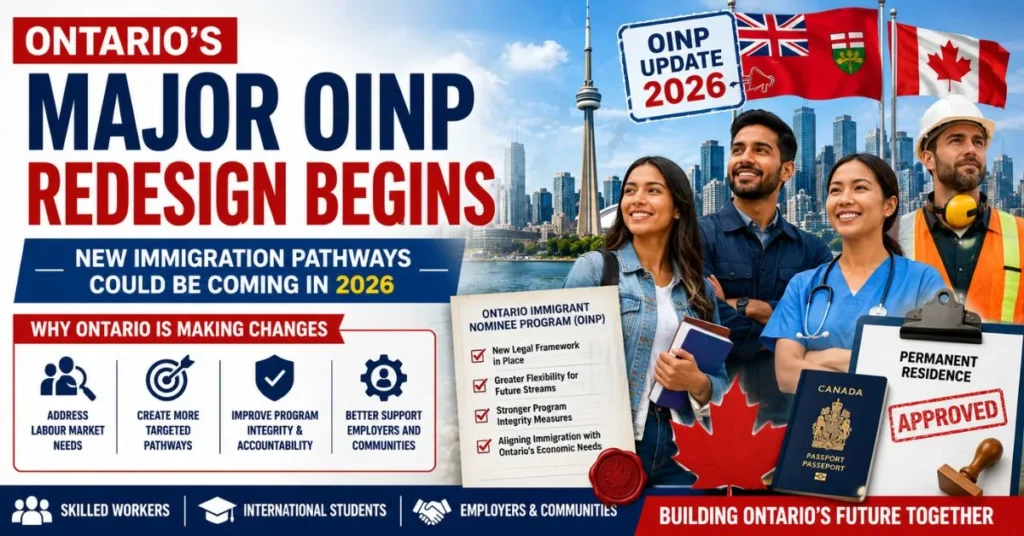
OINP Redesign 2026: Ontario is taking a major step toward reshaping how it selects newcomers, and the changes could eventually affect thousands of people hoping to live and work in Canada’s largest province. The Ontario government has officially established the legal framework needed for a significant redesign of the Ontario Immigrant Nominee Program (OINP), creating new flexibility to adapt immigration pathways to the province’s changing economic and labour market needs.
While current immigration streams remain in place, the move signals that Ontario is preparing for a new era of provincial immigration one that could place greater emphasis on in-demand occupations, employer needs, and workforce shortages. For international students, skilled workers, temporary foreign workers, and prospective immigrants around the world, this announcement is worth paying attention to.
OINP Redesign 2026
Ontario remains Canada’s most popular destination for newcomers. Every year, tens of thousands of immigrants choose the province because of its strong economy, diverse communities, and employment opportunities. However, Ontario’s labour market is changing rapidly.
Many industries continue to struggle with worker shortages, particularly in sectors such as:
- Healthcare
- Skilled trades
- Construction
- Technology
- Manufacturing
- Early childhood education
- Transportation
At the same time, federal immigration policies have evolved, giving provinces more opportunities to target candidates who meet specific labour market needs. Ontario says the new legal framework will allow the province to respond more quickly to economic challenges and workforce demands. In simple terms, the government wants more flexibility to create immigration pathways that directly address labour shortages across the province.
Latest Update in OINP 2026
One of the biggest misconceptions surrounding this announcement is that Ontario has already replaced the OINP. That is not the case. The recent regulatory amendments do not immediately create new immigration streams or eliminate existing ones. Instead, they establish the legal authority needed for future reforms. Think of it as building the foundation before constructing the house.
The framework allows Ontario to:
- Create new immigration streams
- Modify existing streams
- Remove outdated pathways
- Adjust eligibility requirements
- Introduce targeted selection categories
- Respond more quickly to labour market needs
This flexibility could become increasingly important as economic conditions evolve.
Current OINP Streams Remain Active
For applicants who are already in the immigration process, there is good news. Current OINP streams remain operational.
This means individuals applying through programs such as:
- Human Capital Priorities
- Employer Job Offer Streams
- Masters Graduate Stream
- PhD Graduate Stream
- Entrepreneur Stream
can continue with their applications under existing rules. Ontario has indicated that ongoing applications will continue to be assessed based on the requirements that were in place when they were submitted. For now, prospective immigrants should continue using current pathways while monitoring future updates.
Why This Matters for International Students
Ontario is home to some of Canada’s most popular colleges and universities, attracting students from around the world. Many international students choose Ontario with the long-term goal of becoming permanent residents. The upcoming redesign could have significant implications for graduates.
Future immigration streams may place a stronger emphasis on:
- Occupations experiencing shortages
- Labour market outcomes
- Employer-supported applications
- Regional workforce needs
Graduates in high-demand fields may benefit from more targeted immigration opportunities. However, students should also be prepared for increased competition and potentially stricter selection criteria. Building Canadian work experience during and after studies may become even more valuable.
Opportunities for Skilled Workers
For skilled workers, the redesign could create new opportunities. Ontario has consistently highlighted shortages in critical sectors, particularly healthcare and skilled trades. Potential future pathways may focus on:
Healthcare Workers
Ontario continues to face shortages of:
- Registered nurses
- Personal support workers
- Medical laboratory professionals
- Physicians
- Healthcare technicians
Targeted immigration streams could help address these gaps.
Skilled Trades
Trades workers remain in high demand across the province.
Potential priority occupations include:
- Electricians
- Plumbers
- Welders
- Carpenters
- Heavy equipment operators
Technology Professionals
Ontario’s technology sector continues to expand, creating demand for:
- Software developers
- Cybersecurity specialists
- Data analysts
- Artificial intelligence professionals
A redesigned OINP could make it easier for these workers to obtain provincial nominations.
A Shift Toward Targeted Immigration
Canada’s immigration system has increasingly moved toward targeted selection. The federal government now conducts category-based Express Entry draws aimed at filling labour shortages. Ontario appears to be following a similar approach.
Instead of relying primarily on broad selection criteria, future immigration streams may focus on:
- Specific occupations
- Priority industries
- Geographic needs
- Economic objectives
This approach could improve the province’s ability to address workforce shortages more efficiently.
Stronger Program Integrity Measures
Alongside the redesign framework, Ontario has introduced measures intended to strengthen program integrity. These changes aim to reduce fraud, misrepresentation, and misuse of immigration programs. The province has expanded its ability to impose administrative penalties for non-compliance and inaccurate information. Officials say these measures will help maintain public confidence in Ontario’s immigration system while protecting legitimate applicants. For genuine candidates, the message is simple: ensure all application information is accurate, complete, and up to date.
What Future Applicants Should Do
Although major changes have not yet been announced, prospective immigrants can begin preparing now.
Keep Immigration Profiles Updated
Ensure language test results, education credentials, and work experience records remain current.
Focus on In-Demand Occupations
Candidates working in sectors experiencing shortages may benefit from future targeted pathways.
Gain Canadian Work Experience
Canadian employment remains one of the strongest factors supporting successful immigration outcomes.
Follow Official Announcements
Future OINP updates could introduce new streams and eligibility requirements with little notice. Remaining informed will help applicants respond quickly to new opportunities.
What Happens Next?
The legal framework is now in place, but Ontario has not yet revealed the full details of its redesigned immigration system. Over the coming months, the province is expected to consult stakeholders, evaluate labour market needs, and announce additional reforms.
Immigration professionals expect future changes to focus on:
- Workforce shortages
- Economic growth
- Regional labour demands
- Faster program adjustments
- Targeted immigration selection
While uncertainty remains, one thing is clear: Ontario is positioning itself to play a more active role in shaping the types of newcomers it welcomes in the years ahead.
Fact Check
Ontario has implemented regulatory changes that provide the legal authority for future reforms to the Ontario Immigrant Nominee Program (OINP). As of June 2026, existing immigration streams remain active, and no immediate replacement of the current OINP system has occurred. Applicants should rely on official Ontario government announcements for updates regarding future immigration pathway changes.
Disclaimer
This article is intended for informational purposes only and should not be considered legal, immigration, or professional advice. Immigration regulations, eligibility criteria, and provincial nomination programs may change without notice. Readers should consult official Ontario government resources or a licensed immigration consultant before making immigration-related decisions.