The R370 SRD Grant Extension is now backed by an actual confirmed budget line, not just a policy promise. While Finance Minister Enoch Godongwana first flagged the extension in the November 2025 Medium-Term Budget Policy Statement, the 2026/27 National Budget has since locked it in with a dedicated R36.4 billion allocation, securing the Social Relief of Distress (SRD) grant through 31 March 2027. This confirms the grant will keep paying R370 per month to eligible unemployed South Africans aged 18 to 59 for a third consecutive year without a rand increase — even as seven of South Africa’s eight permanent SASSA grant types received an above-inflation 3.5% increase from 1 April 2026. Total social grant spending for the 2026/27 financial year now stands at R292.8 billion, supporting more than 26.5 million beneficiaries across all grant categories combined. We’ll be updating this article monthly as new SASSA and National Treasury guidance is released.
Originally launched in May 2020 as a temporary Covid-era safety net, the SRD grant has now been extended repeatedly for over five years, reflecting the reality that South Africa’s unemployment rate has not fallen fast enough to make the program unnecessary. What’s different about the March 2027 extension compared to earlier renewals is the scale of the funding commitment and the accompanying policy signal: government has confirmed it is drafting a Basic Income Support (BIS) framework intended to eventually replace the SRD grant with a more permanent income-support structure, though no BIS legislation has been passed as of mid-2026. For the roughly 9 million South Africans who rely on the R370 payment monthly, understanding exactly what has been confirmed, what remains under discussion, and how to keep a payment active is essential — this guide breaks down the latest verified numbers, the current eligibility rules, and the official channels to check your status.
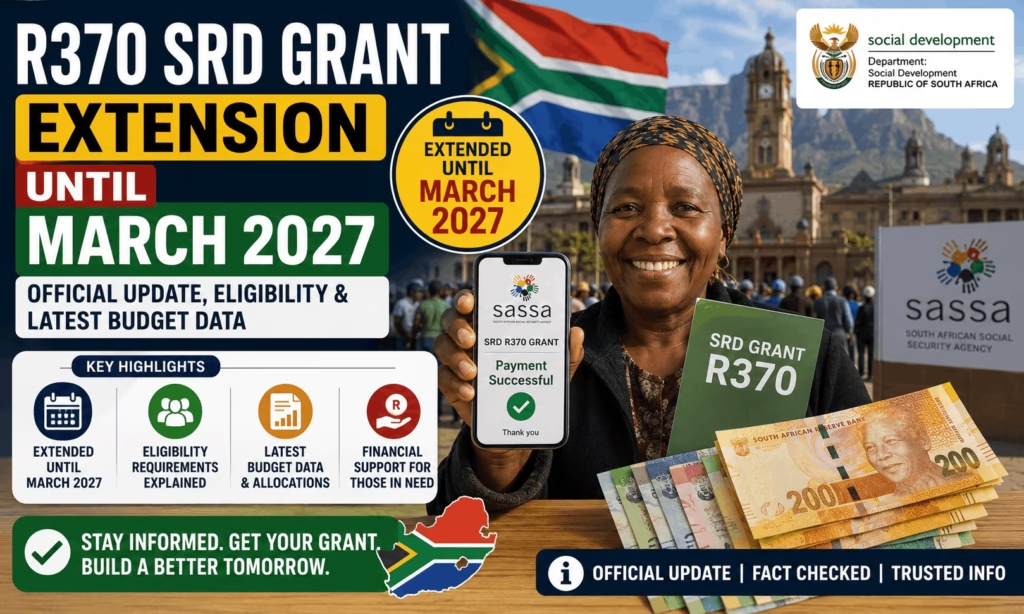
R370 SRD Grant Extension Key Facts
| Detail | Confirmed Information |
|---|---|
| Grant Name | Social Relief of Distress (SRD) Grant |
| Monthly Amount | R370 (unchanged since 2022; frozen for 3rd consecutive year) |
| Extended Until | 31 March 2027 |
| Budget Allocation (2026/27) | R36.4 billion (dedicated to SRD) |
| Total Social Grant Spending (2026/27) | R292.8 billion |
| Total SASSA Beneficiaries (all grants) | Over 26.5 million |
| SRD-Specific Beneficiaries | Approx. 9 million |
| Age Eligibility | 18 to 59 years |
| Income Threshold | Under R624/month from any source |
| Other Grants’ 2026/27 Increase | 3.5% (effective 1 April 2026) |
| Long-Term Replacement Plan | Basic Income Support (BIS) — white paper expected by end of 2026 |
Why the March 2027 Extension Is Different From Previous Renewals
Earlier SRD extensions were often announced as short-term stopgaps — the grant was extended to March 2026 in a May 2025 announcement, for instance, with limited multi-year budget certainty attached. The current extension to March 2027 is different because it comes with a specific, itemized R36.4 billion allocation inside the formally passed 2026/27 National Budget, rather than a policy statement awaiting confirmation. This distinction matters for beneficiaries: budget-backed extensions carry far less risk of being reversed mid-year compared to MTBPS-stage announcements, which are proposals subject to change before the actual budget is tabled.
R370 SRD Grant vs Other SASSA Grants: 2026/27 Comparison
| Grant Type | Monthly Amount (Post-April 2026) | Increase Applied |
|---|---|---|
| Older Persons Grant | R2,400 | +3.5% |
| Disability Grant | R2,400 | +3.5% |
| Care Dependency Grant | R2,400 | +3.5% |
| Foster Child Grant | R1,290 | +3.5% |
| Child Support Grant | R580 | +3.5% |
| Grant-in-Aid | Adjusted proportionally | +3.5% |
| SRD R370 Grant | R370 | 0% (frozen, 3rd year running) |
This gap has become a flashpoint for advocacy groups, who argue that freezing the SRD amount while other grants rise with inflation effectively represents a real-terms cut for SRD recipients, since R370 buys less every year it stays unchanged.
SRD Grant Eligibility Criteria 2026 Rules
To qualify for the R370 SRD grant, applicants must meet all of the following:
- Age: Between 18 and 59 years old.
- Citizenship/Residency: South African citizen, permanent resident, or recognised refugee.
- Income: Must earn less than R624 per month from any source.
- No other grants or income support: Not receiving any other SASSA grant, UIF payment, or NSFAS bursary/stipend.
- Bank/database verification: Must pass SASSA’s monthly cross-check against SARS, UIF, NSFAS, and banking databases.
Because eligibility is re-verified every single month, a beneficiary can be approved one month and declined the next purely based on updated income data — this is not necessarily an error and does not always require a fresh application.
Canada Work Permit for Provincial Nominees 2026: Eligibility, Benefits and Application Process
Trump’s $100000 H-1B Visa Fee: What Happened and Why It Faced a Legal Challenge
How to Apply and Check Your SRD Grant Status
- Visit the official SRD portal and select “Apply.”
- Enter your South African ID number (or special permit number for refugees).
- Provide a valid cellphone number and email address.
- Choose your preferred payment method — direct bank deposit, Postbank card, or retail CashSend.
- Submit your application; SASSA verifies it automatically against government and financial databases.
- Check your monthly status online, via WhatsApp, or via USSD — no need to reapply each month if you remain eligible.
- If declined, you may appeal within 90 days through the official appeals portal, especially if the decline was based on outdated income records.
Official Links for the R370 SRD Grant
| Official SRD Application & Status Portal: | https://srd.sassa.gov.za/ |
| Official SASSA Website: | https://www.sassa.gov.za/ |
| SASSA Toll-Free Helpline: | 0800 60 10 11 |
| National Treasury Budget Documents (2026/27): | https://www.treasury.gov.za/ |
| Home Page | https://govtschemes.org/ |
The Road to Basic Income Support: What’s Actually Confirmed
Government has repeatedly signaled its intention to eventually move beyond the SRD grant’s temporary, month-to-month structure toward a Basic Income Support (BIS) framework — a more permanent form of income assistance that would tie support to skills development and job-seeking programs under a broader Active Labour Market Programme. As of mid-2026:
- No BIS legislation has been passed.
- A white paper on Basic Income Support is expected before the end of 2026, which will outline the proposed long-term structure.
- Until BIS legislation is finalized, the SRD grant continues on its existing month-by-month basis within the confirmed extension period.
- Discussions include linking future support to a job-seeker allowance model rather than unconditional cash transfers.
Fraud Prevention and Verification Measures
As the SRD grant program has grown, so has scrutiny over its integrity. SASSA has intensified verification measures, including:
- Stricter monthly income cross-checks against SARS, UIF, and NSFAS records.
- Increased scrutiny of banking details to prevent duplicate or fraudulent payments.
- A recommendation that all beneficiaries keep their cellphone numbers and banking information current, since outdated details are among the most common causes of delayed or missed payments.
Social and Economic Impact of the SRD Grant
With roughly 9 million South Africans relying on the SRD grant as either a primary or supplementary income source, the program continues to play a measurable role in reducing extreme poverty and hunger, particularly against a backdrop of persistently high unemployment. Economists have also pointed to the grant’s role in supporting local consumer spending, since recipients typically spend the full amount quickly on essential goods, indirectly supporting small retailers and local economies.
FAQs
Is the R370 SRD grant confirmed until March 2027?
Yes. The 2026/27 National Budget confirmed a dedicated R36.4 billion allocation to fund the SRD grant through 31 March 2027.
Will the SRD grant amount increase above R370?
No increase has been announced as of mid-2026. The grant has remained at R370 per month since 2022, marking a third consecutive year without an increase, even as other SASSA grants rose 3.5% in April 2026.
Who is eligible for the R370 SRD grant?
South African citizens, permanent residents, or recognised refugees aged 18–59, earning under R624/month, and not receiving any other social grant, UIF payment, or NSFAS support.
Do I need to reapply for the SRD grant every month?
No. Existing beneficiaries do not need to reapply, but SASSA re-verifies eligibility monthly using income and database checks, so approval status can change month to month.
What happens if my SRD grant application is declined?
You can appeal within 90 days through the official SRD appeals portal, particularly if the decline resulted from outdated income data.
Will the SRD grant be replaced by a permanent income grant?
Government is developing a Basic Income Support framework as a potential long-term replacement, with a white paper expected by the end of 2026, but no legislation has been passed yet.
Where can I check my SRD grant payment status?
Directly on the official SRD portal at srd.sassa.gov.za, or via SASSA’s WhatsApp and USSD status-check channels.
People Also Ask
Is SASSA giving R370 in 2026? Yes, the SRD grant continues to pay R370 per month in 2026, and this has been confirmed through 31 March 2027 under the latest national budget.
Why has the SRD grant not increased like other SASSA grants? Government has cited fiscal constraints and the intention to eventually transition SRD recipients into a broader Basic Income Support and labour-market program, rather than continuing indefinite cash increases to a temporary relief grant.
How many people receive the SASSA SRD grant? Approximately 9 million South Africans currently receive the R370 SRD grant, according to recent government figures.
What is replacing the SASSA SRD grant? The government is developing a Basic Income Support (BIS) framework intended to eventually replace the SRD grant, though it remains under policy development with no confirmed launch date.
Conclusion
The R370 SRD Grant Extension to March 2027 is now on considerably firmer footing than earlier renewals, backed by a specific R36.4 billion line item in the confirmed 2026/27 National Budget rather than a preliminary policy statement. For the millions of South Africans depending on this monthly support, the practical takeaway is straightforward: the R370 payment will continue at its current rate through March 2027, monthly re-verification remains mandatory, and the long-term shift toward Basic Income Support is still in development rather than imminent. Beneficiaries should keep their contact and banking details updated and monitor the official SRD portal for status changes.