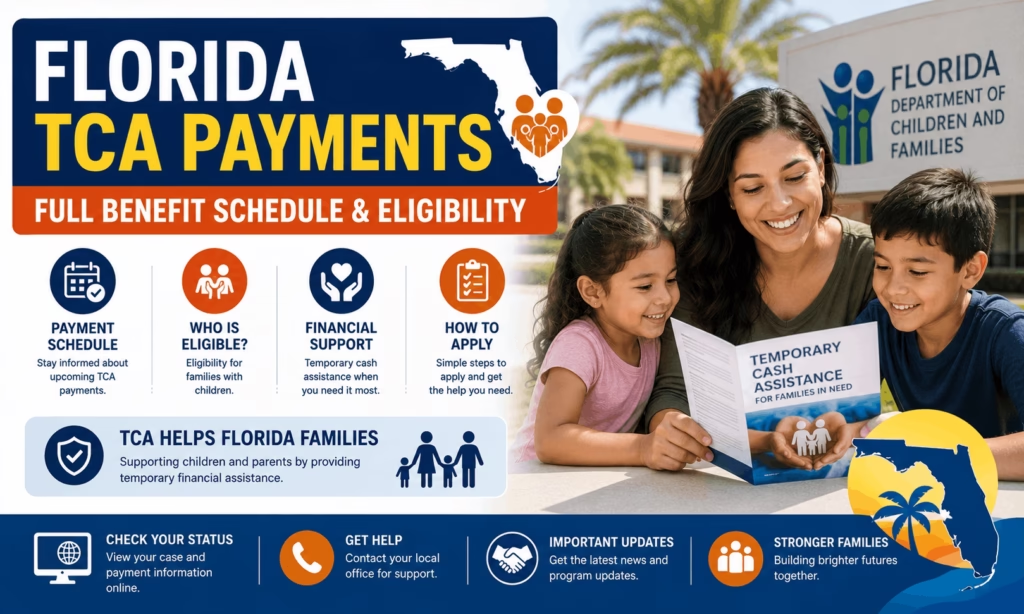
Florida TCA Payments August 2026: Families across Florida who rely on Florida TCA Payments August 2026 are checking their EBT cards this month to confirm exactly when their Temporary Cash Assistance benefit will be loaded. TCA is Florida’s version of the federal TANF program, administered by the Florida Department of Children and Families (DCF), and it provides monthly cash support to eligible families with children under 18, as well as pregnant women in specific circumstances. Unlike Florida’s SNAP food benefits, which spread out across nearly the entire month, TCA cash assistance deposits are compressed into just the first three days of the month, making it easier for most households to predict their deposit date.
This guide covers the full Florida TCA payment schedule for August 2026, current benefit amounts, eligibility rules, required documents, the 48-month lifetime limit, and what to do if your payment does not arrive on time. We have also included an official resources table with direct links for login, application, and status check through the ACCESS Florida system. We’ll be updating this article monthly so you always have the latest verified Florida TCA payment schedule.
Because Florida caps the maximum monthly TCA benefit for a family of three at just $303, a figure that has remained unchanged since 1992, many households also rely on SNAP food assistance and other support programs alongside their TCA cash benefit. Your exact August 2026 deposit date depends on the last digit of your 10-digit case number, and DCF issues all TCA payments within the first three business days of the month, unlike the much longer SNAP distribution window that runs through the 28th.
What Is Florida TCA (Temporary Cash Assistance)?
Temporary Cash Assistance is Florida’s state-administered version of the federal Temporary Assistance for Needy Families (TANF) program. It provides monthly cash support to low income families with children under age 18, and to pregnant women in their last trimester who are unable to work. The program is designed to help families become self-supporting while allowing children to remain in their own homes, and most work-eligible adults must participate in Florida’s Welfare Transition Program as a condition of continued eligibility.
Florida TCA Payments August 2026 Key Highlights
| Detail | Information |
|---|---|
| Program name | Temporary Cash Assistance (TCA), Florida’s TANF program |
| Administered by | Florida Department of Children and Families (DCF) |
| August 2026 deposit window | First 3 days of the month |
| Deposit basis | Last digit of your 10-digit case number |
| Maximum benefit, family of 3 | $303 per month (unchanged since 1992) |
| Minimum monthly grant | $10 |
| Lifetime limit | 48 months as an adult (no limit for child-only cases) |
| Asset limit | $2,000 per household |
| Vehicle exemption | Combined value up to $8,500 for work-required members |
| Income limit | Gross income below 185% of the Federal Poverty Level |
| Earned income deduction | $90 from gross earned income |
| Up-front cash diversion option | One-time payment of up to $1,000 in place of ongoing TCA |
Florida TCA Payment Schedule August 2026 by Case Number
DCF issues Florida TCA cash assistance within the first three days of the month, based on the last digit of your case number. Confirm your exact date through your MyACCESS account, since digit ranges can occasionally be adjusted.
| Case Number Last Digit | August 2026 Deposit Date |
|---|---|
| 1, 2, 3 | August 1 |
| 4, 5, 6 | August 2 |
| 7, 8, 9, 0 | August 3 |
Note: This is a much shorter window than Florida’s SNAP food assistance schedule, which spreads deposits across the entire month using the 9th and 8th digits of the case number. If you receive both TCA and SNAP, expect two separate deposit dates on your EBT card.
$3000 Stimulus Payment August 2026: Full Fact-Check & Current Status
Florida TCA Benefit Amounts in 2026
The TCA payment amount a household receives depends on family size, countable income, and shelter costs, using a prospective budgeting system based on the Department’s estimate of the household’s circumstances for that month. The maximum monthly benefit for a family of three, the average assistance unit size in Florida, has remained fixed at $303 since 1992, making it one of the lowest maximum TANF benefit levels of any state. The minimum monthly grant is $10; households eligible for less than that do not receive an ongoing TCA payment but may still qualify for Medicaid and food assistance coverage as TCA recipients. Families facing a sudden emergency may instead qualify for an up-front cash diversion payment of up to $1,000, issued as a one-time payment in place of ongoing monthly TCA, provided they agree not to apply for regular TCA for three months except in an emergency.
Who Is Eligible for Florida TCA in 2026
To qualify for Florida Temporary Cash Assistance, applicants generally must meet the following conditions:
- Be a U.S. citizen, legal immigrant, or qualified alien
- Be a Florida resident
- Have a child under age 19 living in the home (18-year-olds must be full-time high school students)
- Be unemployed, working part time, or earning a very modest income
- Have gross income below 185% of the Federal Poverty Level, with countable income not exceeding the payment standard for household size
- Have countable assets of $2,000 or less, with an $8,500 vehicle value exemption for work-required members
- Provide a Social Security number or proof of application for one
- Cooperate with child support enforcement requirements
- Ensure children under age 5 are up to date on required immunizations
- Comply with Learnfare requirements for school-age children between 6 and 18
Pregnant women may also qualify for TCA during their ninth month of pregnancy, or earlier in the third trimester if a licensed physician verifies they are unable to work.
Florida TCA Work Requirements and Time Limits
Most work-eligible TCA recipients must participate in Florida’s Welfare Transition Program, which connects participants with job search assistance, training, and work activities through Regional Workforce Boards. Individuals who claim a medical incapacity or have a pending SSI or SSDI application or appeal must still meet program requirements based on their medical ability to comply, though limited exceptions exist for outpatient mental health or substance abuse treatment. Florida limits cash assistance to a lifetime total of 48 months as an adult, though child-only cases where no adult receives benefits are not subject to this limit. Families nearing their time limit may request a hardship extension review if they meet diligent participation criteria, including no more than one work sanction in the prior 18 months.
Documents Required for a Florida TCA Application
Before applying for TCA cash assistance, gather the following documents to avoid delays:
- Proof of identity for all household members
- Proof of Florida residency
- Proof of income, including pay stubs or self employment records
- Social Security numbers, or proof of application, for all household members
- Birth certificates for dependent children
- Proof of citizenship or immigration status
- Immunization records for children under age 5
- Proof of child support cooperation efforts, where applicable
How to Apply for Florida TCA
Applications for Temporary Cash Assistance are submitted through the ACCESS Florida system, either online, by mail, or in person at a local DCF service center. Most applicants complete the ACCESS Florida Web Application electronically, after which a caseworker schedules an interview to verify eligibility. Standard applications are typically processed within 30 days, though households facing an emergency may qualify for expedited review.
TANF Cash Assistance August 2026: Full Deposit Schedule and Payment Dates, Latest Updates!
Social Security 2026 Benefit Payment: Full Payment Schedule 2026-27, COLA & Fact Check!
What to Do If Your Florida TCA Payment Is Late
If your TCA August 2026 deposit has not appeared by your scheduled date within the first three days of the month, take these steps:
- Log in to your MyACCESS account to confirm your case status and deposit history.
- Double check that your case number’s last digit matches the schedule above.
- Call the ACCESS Florida Customer Call Center to verify whether a system-wide delay affected your deposit.
- Contact your local DCF office if your case was recently recertified or changed.
- Ask about emergency assistance if your household has no funds remaining while the issue is resolved.
Official Resources: Login, Application and Status Check Links
| Purpose | Official Link |
|---|---|
| Florida DCF Temporary Cash Assistance program page | https://www.myflfamilies.com/services/public-assistance/temporary-cash-assistance |
| ACCESS Florida login, application and case status | https://www.myflorida.com/accessflorida |
| ACCESS Florida Customer Call Center | 1-866-762-2237 |
| Find your local DCF service center | https://www.myflfamilies.com/about-us/contact-us |
| Florida Law Help TCA Fact Sheet | https://www.floridalawhelp.org/documents/temporary-cash-assistance-fact-sheet |
Florida TCA vs SNAP: Key Differences
Many Florida households receive both TCA and SNAP, but the two programs follow very different rules. TCA cash assistance deposits within the first three days of the month based on your case number’s last digit, while SNAP food benefits are spread across the entire month, from the 1st through the 28th, based on the 9th and 8th digits of your case number read from right to left. TCA is also subject to a strict 48-month lifetime limit and mandatory work participation, while SNAP eligibility does not carry the same lifetime cap for most adult recipients.
FAQs
How much is Florida TCA cash assistance in 2026?
The maximum monthly benefit for a family of three, Florida’s average assistance unit size, is $303, a figure that has not changed since 1992. Actual payments vary based on income and household size.
What day does Florida TCA deposit in August 2026?
Florida TCA deposits within the first three days of the month, with your exact date determined by the last digit of your case number.
Is Florida TCA the same as TANF?
Yes, TCA is Florida’s official name for its state-administered Temporary Assistance for Needy Families (TANF) program.
How long can you receive Florida TCA benefits?
Adults are limited to a lifetime total of 48 months of TCA benefits, though child-only cases where no adult receives assistance are not subject to this limit.
Can I get TCA and SNAP at the same time in Florida?
Yes, many households qualify for both, though the two programs follow separate deposit schedules and different income and asset rules.
What is the up-front cash diversion payment in Florida?
It is a one-time payment of up to $1,000 offered to TCA-eligible families facing an emergency, given in place of ongoing monthly TCA benefits, provided the family agrees not to apply for regular TCA for three months except in an emergency.
How do I check my Florida TCA case status?
You can check your case status anytime by logging into your MyACCESS account or by calling the ACCESS Florida Customer Call Center at 1-866-762-2237.
Conclusion
Florida TCA Payments August 2026 continue to follow the state’s compressed first-three-days deposit schedule, based on the last digit of each recipient’s case number, while the maximum monthly benefit for a family of three remains fixed at $303. With a strict 48-month lifetime limit, mandatory work participation rules, and a $2,000 asset test, Florida’s Temporary Cash Assistance program remains one of the more limited state TANF programs nationally, making it especially important for eligible families to also apply for SNAP, Medicaid, and other available support. Use the official ACCESS Florida links and resource table above to confirm your exact deposit date, check your case status, or reach your local DCF office if a payment is delayed. This article will continue to be refreshed every month with the latest verified Florida TCA payment information.
Also Read
CRA Benefit Payments August 2026 Dates, Amounts & Eligibility!
CRA Grocery Rebate 2026: Eligibility, Newcomer Application & How to Claim Guide!