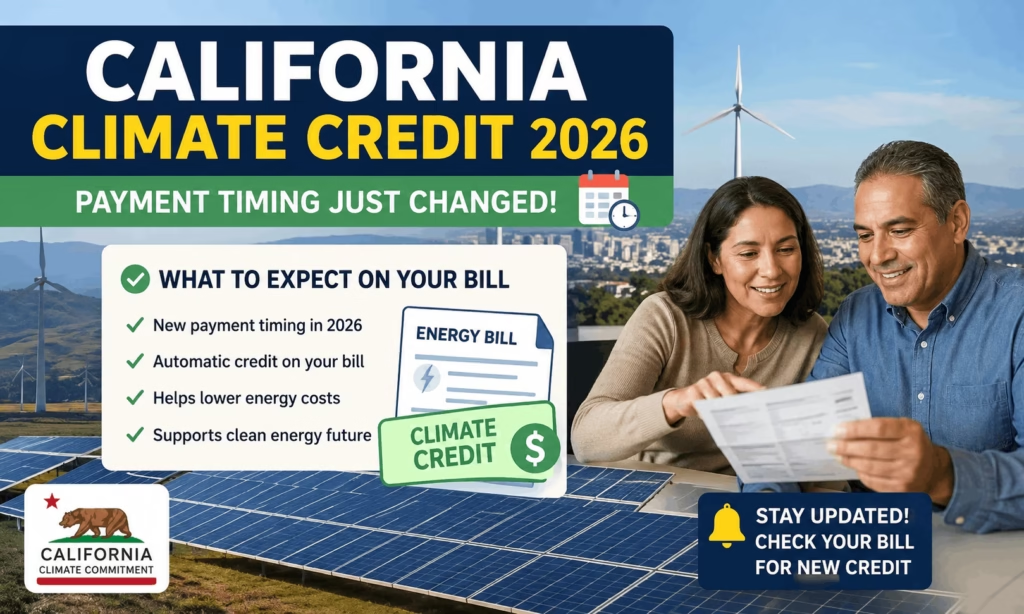
California Climate Credit 2026: Millions of California households are about to see their electricity bill credit show up at a different time of year than they are used to. The California Public Utilities Commission voted on April 30, 2026, to move the residential electric Climate Credit away from its traditional April and October schedule, shifting it instead to August and September for customers of the state’s three largest utilities. The change means the credit that used to arrive when energy use was lower will now land during the peak summer months, when air conditioning use pushes bills to their highest point of the year. We’ll be updating this article monthly as utilities confirm final amounts and as later phases of this reform move through the CPUC.
For a program that has quietly appeared as a line item on California utility bills since 2015, this is one of the most significant changes to how the Climate Credit works. The dollar amount households receive is not going down, state regulators have been clear that the total value of the credit stays the same, only the timing is moving. But for a household budgeting around when relief typically arrives, that shift from spring and fall to late summer matters, especially for anyone who has come to expect an April credit and might be confused when it does not show up this year.
What Is the California Climate Credit?
The California Climate Credit is a state mandated bill credit that returns money to residential and small business utility customers every year. It is funded through California’s Cap and Invest Program, which requires power plants, fuel providers, and large industrial facilities that emit greenhouse gases to purchase carbon pollution allowances. A portion of the revenue collected from those allowance sales is returned directly to utility customers as this credit, while the rest funds broader state programs aimed at cutting emissions and expanding clean energy.
Households do not need to apply for the credit or take any action to receive it. If a home is served by one of California’s investor owned utilities, meaning a for-profit utility rather than a municipal one, the credit is applied automatically to the account.
Not every California utility customer receives this specific credit. Municipal utilities such as the Los Angeles Department of Water and Power, the Sacramento Municipal Utility District, and the Imperial Irrigation District are not regulated by the CPUC and do not collect the carbon allowance revenue that funds the program, so their customers are not part of this particular credit.
What Changed in 2026
Under Decision 26-04-036, the CPUC directed California’s three large investor owned electric utilities, Pacific Gas and Electric, Southern California Edison, and San Diego Gas and Electric, to deliver the residential electric Climate Credit in August and September starting this year, rather than the traditional April and October split. The change implements provisions of Assembly Bill 1207, signed in 2025, which extends the Cap and Invest Program through 2045 and specifically directs Climate Credits to be paid out during high bill months to maximize the relief households feel.
The natural gas Climate Credit is handled separately and was not affected by this particular decision. The 2026 residential natural gas credit was already distributed in April as usual, and starting in 2027, the CPUC has proposed moving that gas credit to February.
Small business Climate Credits and California Industry Assistance credits are also unaffected by this change and continue on their existing April and October, and April only, schedules respectively.
Climate Credit Payment Schedule 2026
| Utility | Customer Type | Old Schedule | New 2026 Schedule |
|---|---|---|---|
| PG&E | Residential electric | April and October | August and September |
| Southern California Edison | Residential electric | April and October | August and September |
| San Diego Gas and Electric | Residential electric | April and October | August and September |
| Bear Valley Electric | Residential electric | April and October (proposed) | April and November for 2026 |
| Liberty Utilities | Residential electric | April and October (proposed) | April and November for 2026 |
| Pacific Power | Residential electric | April and October (proposed) | April and November for 2026 |
| All large utilities | Residential natural gas | April | April for 2026, shifting to February in 2027 |
| All utilities | Small business electric | April and October | Unchanged, April and October |
| All utilities | California Industry Assistance | April | Unchanged, April |
How Much Is the Climate Credit Worth
Credit amounts vary by utility because they are tied to each company’s share of allowance revenue and its customer base, not a single statewide flat rate. Based on figures released for the 2026 cycle, residential electric customers of the major utilities can expect roughly the following combined annual amounts, delivered across the two payment months.
| Utility | Approximate 2026 Residential Electric Credit |
|---|---|
| PG&E | Around $36 per payment period |
| Southern California Edison | Around $36 per payment period |
| San Diego Gas and Electric | Around $49 per payment period |
| Bear Valley Electric | Around $18 per payment period |
| Liberty Utilities | Around $72 per payment period, pending approval |
| Pacific Power | Around $112 per payment period |
These figures represent the amount credited in each of the two payment periods, not a combined annual total, and utilities note that exact figures can shift slightly if regulators make final adjustments before payments go out.
H-1B Visa Ban Texas Schools: Abbott Wants Exactly Zero Foreign Workers, What Indians Should Know
Trump Halts 50 Percent Tariffs Canada: What the Last Minute Deal With Ottawa Means
Green Card Rule Changes: New Public Charge Test to Assess Age, Health, Family Status and Finances
Why the Timing Change Matters
California regulators framed this shift specifically around affordability. Electricity bills in the state’s large utility territories typically peak during summer months as air conditioning use rises, and the CPUC’s stated goal was to align the Climate Credit with the months households feel the most financial pressure, rather than spreading it across a lower usage month like April and a moderate usage month like October.
The change is officially labeled Phase 1A of a broader reform effort. The CPUC has indicated that a Phase 1B proceeding is expected to consider additional changes to strengthen the program further and expand affordability benefits, meaning this may not be the last adjustment to how and when the credit is delivered.
What to Do If You Do Not See the Credit
Because this is the first year the residential electric credit is not appearing on an April bill for major utility customers, some households may search their billing history looking for a credit that has simply been rescheduled rather than removed. If a residential electric customer of PG&E, Southern California Edison, or San Diego Gas and Electric does not see a Climate Credit line item in April 2026, that is expected under the new schedule, the credit for these customers is now appearing in August and September instead.
Customers of Bear Valley, Liberty Utilities, or Pacific Power should continue to look for their credit in April, with a second payment in November under the 2026 transition schedule for these smaller utilities.
Anyone who believes they qualify for the credit but does not see it appear during their utility’s designated months should contact their utility provider directly or check the CPUC’s official Climate Credit page for utility-specific confirmation.
Official Resources
| Resource | Purpose | Official Link |
|---|---|---|
| CPUC Climate Credit Page | Official program details, amounts, and schedule by utility | cpuc.ca.gov/climatecredit |
| PG&E Climate Credit Info | PG&E specific credit amounts and billing details | pge.com, search California Climate Credit |
| Southern California Edison Climate Credit Info | SCE specific credit amounts and billing details | sce.com, search California Climate Credit |
| San Diego Gas and Electric Climate Credit Info | SDG&E specific credit amounts and billing details | sdge.com, search California Climate Credit |
| Energy Upgrade California | General information on the Climate Credit program | energyupgradeca.org/climate-credit |
Conclusion
The California Climate Credit is not disappearing in 2026, it is simply arriving at a different point in the year for most residential electric customers. Households served by PG&E, Southern California Edison, and San Diego Gas and Electric should now expect their credit in August and September rather than April and October, while customers of the state’s smaller electric utilities will see a modified April and November schedule this year. The total value of the credit has not been reduced, and no application or action is required to receive it. This article will be updated monthly as utilities finalize exact dollar amounts and as the CPUC’s next phase of Climate Credit reform develops.
State Farm Dividend: Who Qualifies to Receive Part of the $5 Billion Payout
Social Security Phone Claims New Process in 2026: What Changed and New Process Explained
Trump Accounts Dell $250 Grant: Check State & ZIP Code Eligibility
FAQs
Why did my California Climate Credit not show up in April 2026?
For residential electric customers of PG&E, Southern California Edison, and San Diego Gas and Electric, the credit was moved to August and September in 2026, so an April payment is not expected for these customers this year.
Do I need to apply for the California Climate Credit?
No, the credit is applied automatically to eligible utility accounts, no application, enrollment, or request is required.
Is the California Climate Credit going away?
No, state regulators have confirmed the total value of the credit remains the same, only the timing of the payment has changed for most residential electric customers.
How much is the California Climate Credit worth in 2026?
The amount varies by utility, with major utilities crediting roughly $36 to $49 per payment period for residential electric customers, and smaller utilities crediting different amounts based on their customer base and allowance revenue.
Does the natural gas Climate Credit follow the same new schedule as electric?
No, the residential natural gas Climate Credit was distributed in April 2026 as usual and is expected to shift to February starting in 2027, on a separate timeline from the electric credit change.
Why do some California customers not receive the Climate Credit at all?
Customers of municipal utilities, such as the Los Angeles Department of Water and Power or the Sacramento Municipal Utility District, are not regulated by the CPUC and do not participate in the allowance revenue that funds this credit.
What is Assembly Bill 1207 and how does it relate to the Climate Credit?
Assembly Bill 1207, signed in 2025, extends California’s Cap and Invest Program through 2045 and specifically directs that Climate Credits be distributed during higher bill months to increase affordability for residents.
Will small business Climate Credits also move to new months?
No, Small Business Climate Credit and California Industry Assistance payments remain on their existing April and October, and April only, schedules and were not affected by this change.
Chapter 33 VA Benefits Housing Allowance: How Much Can You Get Per Month
Colorado TABOR Refund and PTC Rebate 2026: Who Qualifies and How Much You Can Get
2027 Social Security COLA: 3.6% Estimate Beats Medicare Hike