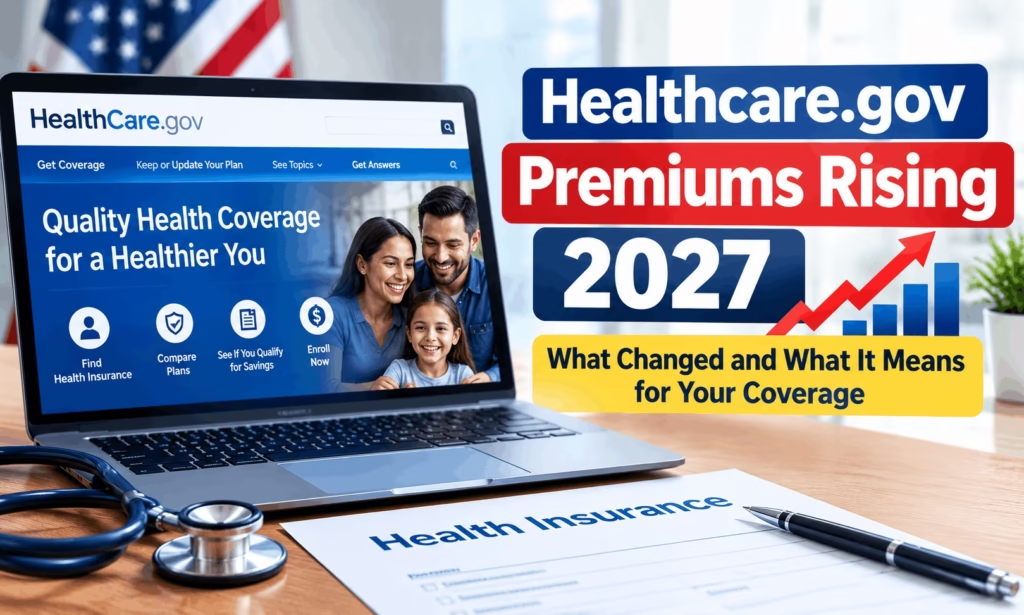
Shoppers logging into Healthcare.gov for the 2027 plan year are running into a marketplace that looks noticeably different from the one they used last fall, and the sticker prices are not the only thing that changed. Insurers have filed preliminary 2027 rate requests averaging roughly 14 to 15 percent higher nationally, layered on top of steep increases enrollees already absorbed in 2026, while federal regulators have simultaneously rewritten how long you have to shop, how often you must reverify your income, and who is even allowed to enroll. Together, these shifts mean that Healthcare.gov premiums rising in 2027 is only part of the story, the rules governing who gets help paying those premiums, and how easily you can sign up in the first place, have also been overhauled.
The most consequential change is a new federal rule, finalized by the Department of Health and Human Services in May 2026, that shrinks the annual shopping window, tightens income verification, and ends several enrollment protections that made it easy for low income households to sign up outside the normal calendar. A federal court has already blocked part of that rule for 2027, adding a layer of legal uncertainty on top of the financial one. We’ll be updating this article monthly as CMS, HealthCare.gov, and the courts finalize the remaining pieces of this rollout.
Key Highlights: What Changed on Healthcare.gov for 2027
| Detail | Information |
|---|---|
| Average premium increase already seen (2026) | Subsidized enrollees’ payments more than doubled on average |
| 2027 insurer rate filings | Roughly 14 to 15 percent higher nationally, preliminary |
| CBO’s 2027 benchmark premium projection | About 7.7 percent increase |
| New federal exchange open enrollment window | November 1 to December 15, 2026 (shortened from the previous January 15 cutoff) |
| Rule that created these changes | 2027 Notice of Benefit Payment Parameters, finalized May 18, 2026 |
| Estimated enrollment drop from the new rule | Up to 2 million fewer enrollees nationally, per HHS estimate |
| Cost to implement new verification rules | Estimated $1.34 billion per year, per HHS |
| Court action on the rule | Federal court stayed the special enrollment period pre-verification requirement for 2027 in late July 2026 |
| Auto-reenrollment penalty | $5 per month charge for unconfirmed $0 premium plans in some circumstances |
| Subsidy cliff | Returned at 400 percent of the Federal Poverty Level after enhanced subsidies expired |
What Changed for 2027: The Biggest Healthcare.gov Rule Updates
Regulators have made more changes to the ACA marketplace over the past year than in any single stretch since the exchanges first launched. Here is what is actually different heading into the 2027 plan year, broken down one rule at a time.
1. Open Enrollment Is Shorter This Year
For years, HealthCare.gov ran open enrollment from November 1 through January 15, giving shoppers roughly two and a half months to compare plans. Starting with the 2027 plan year, the federally facilitated exchange runs open enrollment from November 1 to December 15, a full month shorter. State-run exchanges can set their own dates but must start by November 1 and finish no later than December 31, and cannot run longer than nine weeks total. If you miss the new December 15 deadline on the federal exchange, you will generally need to qualify for a special enrollment period to sign up later, rather than having an extra month of cushion the way enrollees did in past years.
ACA Subsidy Cliff 2027: Premiums Could Double, Calculator Inside
SNAP Maximum Benefit 2026 Family of Four: Full $994 Payment Chart
Social Security Government Shutdown 2026: Will Your Check Still Arrive?
2. Stricter Income and Eligibility Verification
The days of quietly letting your plan auto-renew without checking in are ending. Under the new rules, marketplace enrollees increasingly have to actively confirm their income and household details each year rather than relying on automatic renewal, and a related provision in the 2025 federal tax and spending law formally ends automatic reenrollment for subsidized consumers starting with the 2028 plan year, meaning 2027 functions as something of a transition year where verification requirements are already tightening. HHS itself has projected that this heavier documentation burden will cause up to 2 million fewer people to have marketplace coverage in 2027 simply because of the added friction, separate from anyone who loses coverage due to cost.
3. A $5 Fee for Unconfirmed Free Plans
Enrollees who are automatically reenrolled into a fully subsidized, $0 premium plan without actively confirming their information now owe a small monthly charge, currently set at $5, until they log back into their account and verify their details. Once you update your information, the marketplace recalculates your correct advance premium tax credit and the fee goes away, but the change means the once-common $0 premium experience for very low income households is no longer automatic.
4. Special Enrollment Period Changes, Partly Blocked by Courts
The same rule package eliminated a monthly special enrollment period that had allowed people earning under 150 percent of the poverty line to sign up for coverage any time during the year, and it would have required marketplaces to verify eligibility for at least 75 percent of new special enrollment period sign-ups before coverage could start. That verification requirement, however, ran into a legal roadblock. A federal court found in late July 2026 that HHS had not adequately justified the added burden and issued a stay blocking that specific provision for 2027, though other parts of the broader rule remain in effect. This split outcome means the special enrollment landscape for 2027 is genuinely more complicated than in past years, and enrollees relying on a qualifying life event to sign up outside the normal window should confirm their exact requirements directly with HealthCare.gov rather than assuming last year’s rules still apply.
5. Narrower Eligibility and Coverage Rules
The rule also removed Deferred Action for Childhood Arrivals recipients from the definition of lawfully present immigrants for marketplace purposes, ending their eligibility for subsidized coverage. Separately, the rule dropped certain gender-affirming procedures from the list of required essential health benefits, meaning plans are no longer mandated to cover them, though individual states retain the option to require the coverage themselves as long as the state absorbs the added cost. Insurers were also given more flexibility on the actuarial value ranges for Bronze and other lower tier plans, which in practice can mean skinnier coverage with higher out of pocket costs even when the monthly premium looks similar to before.
How Much Are Healthcare.gov Premiums Actually Rising in 2027?
Strip away the regulatory changes and the underlying dollar figures are still the headline for most families. The Congressional Budget Office projects benchmark plan premiums will rise roughly 7.7 percent in 2027 on top of already elevated 2026 pricing, while insurers’ own preliminary rate filings for next year are running closer to 14 to 15 percent higher in many states. That follows a 2026 plan year in which the average subsidized enrollee’s payment more than doubled, from about $888 to roughly $1,904 annually, once enhanced pandemic-era subsidies expired and the original, stricter subsidy formula returned.
The combined effect compounds each year rather than resetting. Someone who paid a modest subsidized premium in 2025 could be looking at a payment three to four times higher by the time 2027 coverage begins, depending on their income, age, and state, even before accounting for the possibility that their income now places them above the 400 percent poverty line subsidy cliff entirely.
Republican Convention 2026: Trump’s Biggest Asset or Obstacle for the GOP?
Government Shutdown October 2026 Averted — Funding Runs to Dec 11
ACA Open Enrollment 2027 Dates: Deadlines, New Rates and Subsidy Calculator
2027 Premium Increase Calculator
Estimate Your 2027 Healthcare.gov Premium
Estimate Your 2027 Healthcare.gov Premium
Enter your household size, estimated 2027 income, and what you currently pay each month for your plan to get a rough estimate of your 2027 premium and whether you are likely to remain subsidy eligible.
This estimate applies the average preliminary 2027 insurer rate increase (14.5 percent) to your current premium and checks your income against the 400 percent Federal Poverty Level cliff using 2026 HHS poverty guidelines. It does not reflect your specific plan, county, or insurer, and actual 2027 rates vary widely by state. Confirm your exact premium using the official calculator at HealthCare.gov.
Why Are Premiums Rising So Much on Healthcare.gov?
Three forces are compounding at once. First, the expiration of enhanced premium subsidies at the end of 2025 shifted a much larger share of the sticker price back onto enrollees, since the federal government is no longer capping everyone’s contribution at 8.5 percent of income regardless of earnings. Second, insurers are raising their underlying, pre-subsidy rates to account for a smaller and somewhat sicker risk pool, since healthier, lower cost enrollees are statistically more likely to drop coverage entirely when prices rise, leaving a proportionally costlier group of remaining policyholders for insurers to cover. Third, the new verification and enrollment rules are expected to shrink the total number of people enrolled by up to 2 million, according to HHS’s own estimate, which insurers have partly factored into their 2027 pricing since a smaller, more concentrated risk pool tends to be more expensive to insure per person.
How to Apply for or Update Coverage on Healthcare.gov for 2027
Applying for 2027 coverage follows a familiar process, but the shortened calendar means acting earlier matters more than in past years.
Online registration and login, visit HealthCare.gov, or your state’s own exchange if you live in a state that runs one, and create or log into your marketplace account. Returning enrollees should not assume their coverage will simply roll over unchanged, since the marketplace increasingly requires you to actively confirm your income and household information rather than relying on auto-renewal.
By phone, the federal marketplace call center remains available for enrollment help, plan comparisons, and application status questions, with multilingual support and TTY service for those who need it.
In person, certified navigators and licensed brokers in your community can walk you through plan options at no charge, which can be especially useful this year given how many eligibility rules have shifted at once.
Whichever method you use, the key date to remember is December 15, 2026, the new federal exchange cutoff for coverage that starts January 1, 2027. Missing it generally means waiting for a qualifying life event before you can enroll again.
Processing Time and Payment Schedule for 2027 Coverage
Once you submit a complete application with all required verification documents, HealthCare.gov typically processes eligibility determinations within a matter of days, and coverage can begin as early as January 1, 2027 for anyone who enrolls and pays their first premium before the applicable cutoff. Your premium tax credit, if you qualify for one, is applied automatically each month to reduce your bill directly rather than arriving as a separate payment, so you generally pay only your after-subsidy share to your insurer on whatever billing schedule that insurer uses.
At tax time the following year, your advance premium tax credit gets reconciled against your actual 2027 income on IRS Form 8962. If you underestimated your income and received too much subsidy, you will owe the difference back with no cap on the repayment amount, a change that took effect starting with 2026 income. If you overestimated your income, you may receive an additional credit as part of your refund.
How to Check Your Application or Subsidy Status
You can track your application any time by logging into your HealthCare.gov account and viewing your eligibility notice, which shows your approved subsidy amount and any documents still needed. The marketplace call center can also confirm your status over the phone if you provide your application ID. If you submitted income or identity documents to resolve a data matching issue, processing typically takes several weeks, and the marketplace will notify you by mail and through your online account once a decision is made.
Do These Changes Apply the Same Way in Every State?
Not entirely. The federal government runs HealthCare.gov for roughly 30 states, and it is those states where the new November 1 to December 15 deadline and the bulk of the 2027 rule changes apply first and most directly. States that operate their own exchanges, including California’s Covered California, New York State of Health, and Pennsylvania’s Pennie, have more flexibility to set their own open enrollment dates and, in some cases, their own state-funded subsidy programs that can soften the impact of the federal subsidy cliff. If you live in one of these states, check your state exchange’s own announcements rather than assuming the federal December 15 deadline applies to you, since several state-run marketplaces have opted to keep a longer shopping window for 2027.
Who feels the combined effect of rising premiums and the new rules the hardest also varies by circumstance. Middle income households whose earnings sit just above the 400 percent poverty cliff lose subsidy eligibility entirely rather than gradually, making them especially sensitive to even modest income changes. Self-employed workers and gig workers with variable income face a harder task estimating eligibility accurately under the new verification requirements. And low income enrollees who previously relied on the monthly special enrollment period to sign up whenever their circumstances changed now have a narrower window to act, since that year-round option was eliminated as part of the same rule package.
Diesel Prices Impact on Food Stamps: How $6-a-Gallon Fuel Is Quietly Shrinking SNAP Benefits
$994 SNAP Benefit for a Family of 4 in 2026 — Calculate Your Exact Amount
FAQs About Healthcare.gov Premiums
Why are Healthcare.gov premiums rising in 2027?
A combination of factors is driving the increase: enhanced subsidies expired at the end of 2025, insurers raised their underlying rates by an average of roughly 14 to 15 percent for 2027, and new federal rules are expected to shrink the risk pool, which insurers have partly priced into their 2027 rates.
What is the new open enrollment deadline for 2027 coverage?
On the federal exchange, open enrollment runs November 1 through December 15, 2026, a month shorter than in previous years. State-run exchanges may differ slightly but must start by November 1 and finish by December 31.
Will my plan automatically renew for 2027?
Not in the same way it used to. You are now expected to actively confirm your income and household details each year. If you are automatically reenrolled into a fully subsidized plan without verifying your information, you may be charged a small monthly fee until you update your account.
Did a court block any of the 2027 marketplace changes?
Yes. A federal court stayed the requirement that marketplaces pre-verify at least 75 percent of new special enrollment period sign-ups before coverage begins, ruling in late July 2026 that HHS had not adequately justified the burden. Other provisions of the rule remain in effect.
How much will my premium actually go up?
It depends heavily on your income, age, and state, but preliminary 2027 insurer filings average 14 to 15 percent higher nationally, on top of premiums that already more than doubled for many subsidized enrollees in 2026.
Are DACA recipients still eligible for marketplace subsidies?
No. The 2027 marketplace rule removed Deferred Action for Childhood Arrivals recipients from the definition of lawfully present immigrants for ACA purposes, ending their eligibility for subsidized coverage.
What happens if I miss the new December 15 deadline?
You will generally need to qualify for a special enrollment period, triggered by an event like losing other coverage, moving, or having a baby, to enroll in marketplace coverage outside the standard window.
Can I still get a $0 premium plan in 2027?
It is possible if your income qualifies, but you now need to actively confirm your eligibility each year rather than relying on auto-renewal, or you may be charged a small monthly fee until you do.
How do I check my 2027 subsidy amount before enrolling?
Log into your HealthCare.gov account and browse plans, which will show your estimated premium tax credit based on your reported income, or use the official subsidy calculator linked in the resources table below for a quick estimate before you apply.
Is Congress going to change any of these rules before 2027?
It is possible but not guaranteed. Lawmakers have discussed extending subsidies and revisiting parts of the marketplace rule, but as of this writing no legislation addressing the 2027 changes described here has passed both chambers of Congress.
Official Resources and Where to Apply
| Resource | Purpose | Link |
|---|---|---|
| HealthCare.gov | Apply, browse plans, and enroll for 2027 coverage | healthcare.gov |
| HealthCare.gov Login and Registration | Create or access your marketplace account | healthcare.gov/log-in-create-account |
| Check Application Status | View your eligibility notice and required documents | healthcare.gov/glossary/eligibility-notice |
| Find Local Help / Navigators | Locate free certified enrollment assistance near you | localhelp.healthcare.gov |
| Official Subsidy Calculator (KFF) | Estimate your exact 2027 premium tax credit | kff.org/interactive/subsidy-calculator |
| CMS Marketplace Rule (2027 NBPP) | Official text of the finalized 2027 marketplace rule | cms.gov/newsroom |
| IRS Form 8962 | Reconcile your advance premium tax credit on your federal return | irs.gov/forms-pubs/about-form-8962 |
Conclusion
Healthcare.gov premiums rising for 2027 is only the most visible piece of a marketplace that has been substantially rewritten over the past year. Between a shorter shopping window, tougher income verification, a partly court-blocked special enrollment overhaul, and pricing that keeps climbing on top of last year’s steep increases, enrollees have more homework to do before December 15 than in any recent open enrollment period. The single most useful step you can take right now is logging into your account early, confirming your income and household details rather than assuming auto-renewal will carry you through, and using the calculator above alongside the official tools linked here to get ahead of any surprises. We will continue updating this page every month as CMS, the courts, and Congress finalize the remaining pieces of the 2027 marketplace rules.
Social Security Government Shutdown 2026: Will Your Check Still Arrive?
Federal Employees Back Pay Shutdown 2026: Are You Guaranteed to Get Paid?