Three of the most important days on this year’s money calendar land back to back, the Federal Reserve decides on interest rates on December 9, the Bureau of Labor Statistics releases November inflation on December 10, and federal funding runs out at the end of December 11. Futures markets put the odds of a Fed rate increase on December 9 at roughly 85% to 89% after October prices came in hotter than expected, with about an 11% chance of a half-point move. Governor Christopher Waller said this week that a bigger hike deserves a look, and Dallas Fed President Lorie Logan has called for at least two more quarter-point increases. Meanwhile, lawmakers returned on November 9 for a five-week lame-duck session with no deal yet to keep the government open past December 11. Without a bill, parts of the government would begin shutting down on December 12. We’ll be updating this article monthly.
For households, the order of events matters as much as the dates. The jobs report on December 4 gives the Fed its last major labor reading, the rate decision on December 9 sets borrowing costs for cards and credit lines, and the inflation report arrives the very next morning, after the Fed has already voted. Add Medicare open enrollment closing on December 7, the HealthCare.gov deadline for January 1 coverage on December 15, and early payments for Supplemental Security Income on December 31, and the next three weeks are crowded. This guide puts every date in one place, explains what each event could mean for your bills, savings and benefits, and includes a free calculator with a live countdown, a Social Security payment date finder and a Fed decision cost estimator.
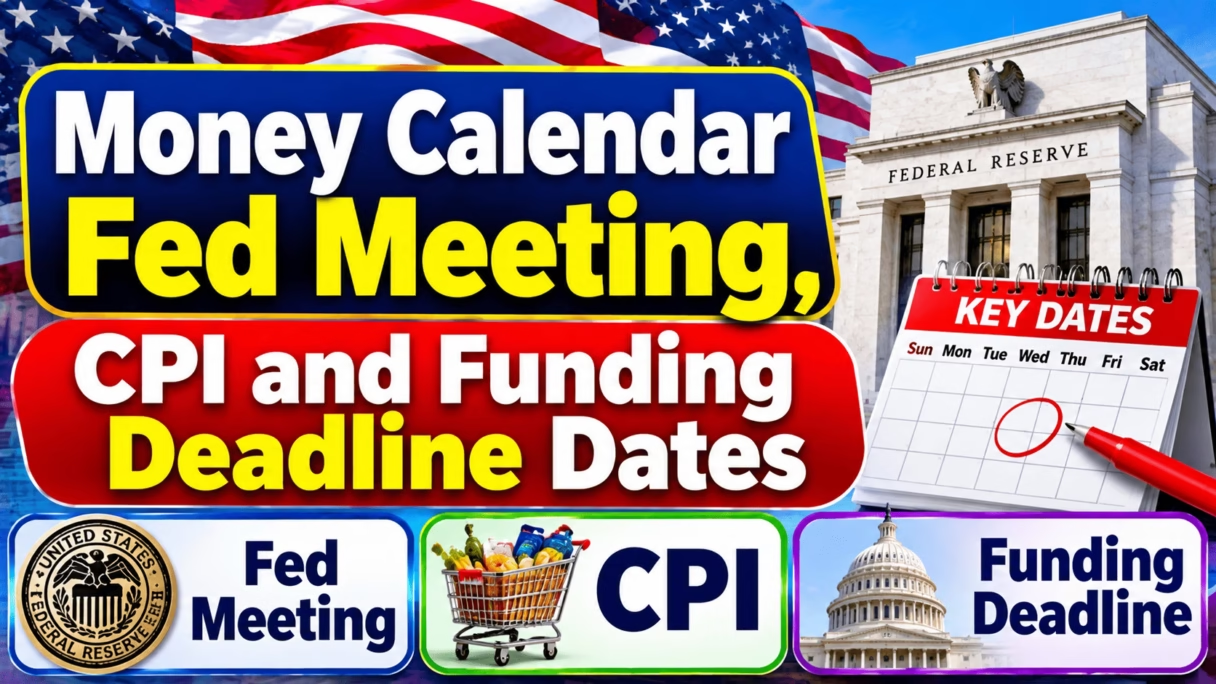
Money Calendar Key Dates Before the Holidays
| Date | Event | Why it matters |
|---|---|---|
| Friday, December 4 | November jobs report, 8:30 a.m. ET | Last big labor reading before the Fed votes |
| Monday, December 7 | Medicare open enrollment ends | Final day to change Medicare Advantage or Part D plans |
| December 8 to 9 | Federal Reserve meeting | Decision and new projections on Wednesday, December 9 |
| Thursday, December 10 | November CPI and Real Earnings, 8:30 a.m. ET | Inflation data lands one day after the Fed decision |
| Friday, December 11 | Government funding deadline | Current stopgap bill expires; shutdown risk starts December 12 |
| Tuesday, December 15 | PPI report and HealthCare.gov deadline | Wholesale prices; last day to enroll for January 1 coverage |
| Wednesday, December 16 and 23 | Social Security payments by birthday | Third and fourth Wednesday groups |
| Thursday, December 31 | SSI and early Social Security payments | January money arrives early; Community Health Center Fund expires |
Money Calendar Calculator: Countdown, Payment Dates and Fed Estimate
Money Calendar Calculator: Countdown, Payment Dates and Fed Cost Estimate
Three tools for the busiest stretch of the year: a live countdown, a Social Security payment date finder and a quick Fed decision cost estimator.
1. Countdown to the key dates
| Date | Event | Time left |
|---|
2. Social Security payment date finder
3. Fed decision cost estimator
Dates reflect official schedules as of November 11, 2026 and can change if Congress or an agency reschedules. The Fed estimator starts from a 3.75% to 4.00% range and a 7.00% prime rate, and uses simple interest. Always confirm payment dates in your my Social Security account. This is not financial advice.
Fed Meeting December 9: What to Expect From the Rate Decision
The Federal Open Market Committee holds its final meeting of 2026 on December 8 and 9, with the decision and a statement due on Wednesday afternoon. The target range sits at 3.75% to 4.00% after a quarter-point increase in September, the first in more than two years. The committee held in October on a 10 to 2 vote, with Governor Lisa Cook and Cleveland Fed President Beth Hammack preferring another hike right away.
Since then, the mood has tilted further toward tightening. Waller told a conference in London on November 10 that he would back a quarter-point increase in December even if inflation improved a little, and that he would consider a half-point move if core prices rose 0.3% or more. October core CPI came in at exactly 0.3%, the third month in a row. Waller argued that a smaller move could put the Fed’s credibility at risk. Logan separately pushed for at least two more quarter-point hikes.
Not everyone agrees that a bigger hike is warranted. Economist Robin Brooks wrote that October’s inflation report reflects an earlier spike in oil prices and is already stale, which would make a case for 50 basis points hard to build. Fed Chair Kevin Warsh has declined to pre-announce his plans, calling October and December the decisive meetings, and most officials projected in September that at least one more increase would come before year-end.
The December meeting also brings a fresh Summary of Economic Projections. That release, which includes the closely watched dot plot, will show how many hikes officials now expect in 2027. Pay attention to the median rate path, the inflation forecasts and the number of dissents. A split vote can move markets as much as the decision itself.
How a December Fed Rate Hike Could Change Your Bills and Savings
Variable-rate debt reacts first. Most banks set the prime rate three points above the top of the Fed’s range, so prime is 7.00% today and would rise to 7.25% after a quarter-point hike or 7.50% after a half-point move. Credit cards and home equity lines usually follow within a billing cycle or two. On a $5,000 balance, a quarter-point increase adds about $12.50 a year in interest, and a half-point increase adds about $25. The amounts are small for any single month, but they are a reminder to pay down balances before the next change.
Mortgages are a different story. Lenders price 30-year loans off the 10-year Treasury yield, which was about 4.87% on November 6. Freddie Mac’s weekly average stood at 7.18% on November 5, down from 7.24% the week before, and a year ago it was 6.22%. A hawkish Fed can lift yields, but mortgage rates often move before the meeting, because traders have already priced in the likely outcome. If you are locking a loan, ask your lender what happens to your rate if the closing date slips.
Savers can benefit, although banks decide how much to pass on. Online banks and credit unions tend to raise rates faster than large branch banks. The two-year Treasury yield was 4.52% on November 6, which gives you a benchmark for comparing certificates of deposit and Treasury bills.
November CPI Report December 10: What Economists Will Watch
The Bureau of Labor Statistics will publish the November Consumer Price Index at 8:30 a.m. Eastern on Thursday, December 10, along with the Real Earnings report. That timing is awkward for the Fed, because the committee votes the afternoon before. Policymakers will be working from the October report, which showed prices up 0.4% for the month and core prices up 0.3%, both above forecasts of 0.3% and 0.2%.
The details behind October explain the worry. Shelter rose 0.3% and supplied more than 30% of the monthly gain. Energy rose 0.7% after a 5.2% jump in September, and food rose 0.5%. The Fed’s preferred gauge, personal consumption expenditures, ran at 3.7% in September, with the core measure at 3.1%. A quirk from the 2025 government shutdown meant BLS did not publish an annual October rate because comparable data from a year earlier was missing, so many analysts have leaned on monthly changes.
For November, three things are worth watching. First, whether core CPI cools below 0.3% or stays stuck. Second, whether energy prices fall back, as the oil-spike argument suggests. Third, whether services inflation outside of housing eases, since more than 70% of core PCE services components were running above 3% over twelve months. The Producer Price Index follows on December 15, and it can show whether cost pressures are still building upstream.
A hot November number would not change the December 9 decision, but it would shape the 2027 conversation, including pressure on mortgage rates and the odds of another hike early in the year. A soft number could take some heat out of those bets.
Government Funding Deadline December 11: Will There Be a Shutdown?
Federal funding is covered by a stopgap bill, H.R. 6500, which President Trump signed on September 2. It passed the House 370 to 48 and the Senate 90 to 6, which was unusually early, and it keeps agencies running at current levels through December 11. The measure also protects the IRS from further cuts to its remaining Inflation Reduction Act money while it is in effect.
Lawmakers returned on November 9 for a lame-duck period of about five weeks before Democrats take control of both chambers on January 3. They have a short list: pass full-year spending bills or another stopgap, finish the annual defense authorization, and deal with expiring programs including surveillance authority under FISA Section 702 and the farm bill. The House has passed only three of the 12 appropriations bills, and Senate appropriators have been deadlocked over spending levels.
Several lawmakers in both parties have said another short-term extension is likely if the work is not finished and that shutdown odds are low. Representative Nancy Mace said Congress has made a tradition of passing a Christmas omnibus or stopgap. But the politics are tricky: Democrats are unlikely to settle a full year of funding now when their larger majorities could give them more leverage in January, and any bill needs 60 votes in the Senate. The risk lies in a standoff over timing, not a lack of will to avoid a lapse.
Further out, Goldman Sachs estimates the debt ceiling will need to be addressed by October 2027, and a year-end package could also carry health provisions, since the Community Health Center Fund expires on December 31.
What Happens If the Government Shuts Down on December 12
If Congress fails to act, funding would lapse after December 11 and a partial shutdown would begin on December 12. In past shutdowns, Social Security and Medicare benefit payments have continued, although some agency services slowed. Federal employees deemed essential work without pay during a lapse, and furloughed workers have been paid back after earlier shutdowns, so check your agency’s guidance.
One practical risk is data. The 2025 shutdown left BLS unable to publish an October 2025 jobs report or CPI, and gaps like that still show up in annual comparisons today. A new lapse right after the Fed’s December meeting could again delay releases that policymakers and investors rely on. If you are planning around a specific report, watch the BLS release calendar for changes.
November Jobs Report December 4: The Last Big Clue Before the Fed
The Employment Situation report for November arrives on Friday, December 4, five days before the Fed votes. The October report was strong: employers added 165,000 jobs against a forecast of 59,000, unemployment slipped to 4.1% and average hourly earnings rose 0.4% for the month and 3.1% from a year earlier. Revisions lifted August to 186,000 and September to 60,000. Another solid report would strengthen the case for a hike, while a sharp slowdown could revive debate about the pace. Remember that the first estimate is often revised, so look at the three-month trend rather than a single month.
Other December Money Deadlines to Mark Now
Medicare open enrollment runs from October 15 through December 7. If your drug costs or doctors have changed, this is the last chance to switch plans for 2027. The Part D deductible rises to $700 and the out-of-pocket cap to $2,400 next year, so compare plans carefully.
On HealthCare.gov, open enrollment for 2027 coverage runs from November 1 to January 15, but the deadline to enroll for coverage that starts January 1 is December 15. Plans chosen from December 16 through January 15 start on February 1. A federal rule that would have ended open enrollment on December 15 was blocked by a court in June and is under appeal, so confirm current dates on HealthCare.gov. State-run marketplaces set their own deadlines.
At the end of the month, SSI payments for January arrive on Thursday, December 31, because January 1 is a federal holiday. People paid on the third of the month also receive their January Social Security payment that day. Anyone who takes required minimum distributions or makes year-end contributions to retirement or health accounts should check deadlines with their plan administrator.
Social Security Payment Schedule for December and January
Most beneficiaries are paid on the second, third or fourth Wednesday of the month, based on birth date. December has Wednesdays on the 2nd, 9th, 16th, 23rd and 30th, so the groups fall on the 9th, 16th and 23rd.
| Who you are | December 2026 payment | January 2027 payment |
|---|---|---|
| Birthday on the 1st to 10th | Wednesday, December 9 | Wednesday, January 13 |
| Birthday on the 11th to 20th | Wednesday, December 16 | Wednesday, January 20 |
| Birthday on the 21st to 31st | Wednesday, December 23 | Wednesday, January 27 |
| Benefits began before May 1997, or you get Social Security and SSI | Thursday, December 3 | Thursday, December 31 (paid early) |
| SSI only | Tuesday, December 1 | Thursday, December 31 (paid early) |
SSDI follows the birthday schedule. Your exact date appears in your my Social Security account, and that is the date that counts. The new 3.6% cost-of-living adjustment first appears in the January payments.
How to Follow Each Release Live and Set Alerts
You do not need a trading screen to keep up. Each agency posts its own schedule and data on a public site, and most let you sign up for email alerts. The table below shows a simple routine for the next three weeks.
- Add the BLS release calendar to your phone so you see the 8:30 a.m. ET jobs and CPI releases.
- Bookmark the Federal Reserve calendar and check the statement at 2 p.m. ET on December 9.
- Check CME FedWatch before and after each data release to see how expectations move.
- Follow Congress.gov and your chamber’s floor schedule for the funding vote.
- Sign in to my Social Security to confirm your payment date and direct deposit details.
Processing Time: How Fast Each Event Reaches Your Money
Different events work on different clocks. A Fed decision moves prime almost immediately, usually the next business day, and variable APRs follow according to your agreement, often within one or two billing cycles. Mortgage quotes can change the same day, since they follow Treasury yields. Savings rates change at the bank’s discretion, from days to weeks. An inflation report moves markets within minutes but affects benefits much later, because the Social Security adjustment for 2027 is already set at 3.6%. A funding lapse would reach households in different ways, with some services slowing within days and others, such as data releases, delayed immediately. HealthCare.gov coverage starts on the first of the month after your enrollment and first payment, so the December 15 cutoff is strict.
What to Do Before December 11
Start with debt. List every balance that has a variable rate, check the APR on your latest statement and decide whether you can pay down the highest ones before the Fed meets. If you are shopping for a mortgage, get quotes from at least two or three lenders and ask about rate locks that cover your closing date. Next, look at savings: if your bank pays much less than Treasury yields, a move to a higher-yielding account or short-term certificate could help.
Then handle the paperwork. Review your Medicare plan before December 7, choose your health plan by December 15 if you need coverage on January 1, and confirm your Social Security payment date. If you are a federal employee or contractor, read your agency’s shutdown guidance now, and keep an emergency cushion for a possible delay in pay. Finally, keep expectations realistic. Calendars tell you when news will arrive, not what it will say, so build a plan that works under more than one outcome.
Official Money Calendar Resources and Links
| Resource | What you can check | Link |
|---|---|---|
| Federal Reserve FOMC calendar | Meeting dates, statements, minutes and projections | federalreserve.gov/monetarypolicy/fomccalendars.htm |
| BLS release calendar | Jobs, CPI and PPI release dates and times | bls.gov/schedule/news_release |
| BLS Consumer Price Index | November CPI release and data tables | bls.gov/cpi |
| BLS Employment Situation | Monthly jobs report | bls.gov/news.release/empsit.nr0.htm |
| CME FedWatch Tool | Live rate decision probabilities | cmegroup.com/markets/interest-rates/cme-fedwatch-tool.html |
| Congress.gov | Track funding bills and floor votes | congress.gov |
| House Appropriations Committee | Status of the 12 spending bills | appropriations.house.gov |
| my Social Security (login and registration) | Confirm payment dates and direct deposit | ssa.gov/myaccount |
| SSA payment schedule | Official payment dates by birthday | ssa.gov/pubs/EN-05-10031.pdf |
| HealthCare.gov (login and application) | Enroll or change a 2027 marketplace plan | healthcare.gov |
| Medicare.gov | Compare plans before December 7 | medicare.gov |
| Freddie Mac mortgage survey | Weekly mortgage rate averages | freddiemac.com/pmms |
| US Office of Personnel Management | Federal employee shutdown guidance | opm.gov |
Money Calendar FAQs
When is the next Fed meeting?
The Federal Reserve meets on December 8 and 9, 2026. The rate decision and statement come out on Wednesday, December 9, and it is the last meeting of the year.
Will the Fed raise rates on December 9?
Markets say a hike is very likely. After the October CPI report, futures priced roughly an 85% to 89% chance of a 25 basis point increase and about 11% for 50 basis points. Nothing is final until the committee votes.
When is the November CPI report released?
The Bureau of Labor Statistics will publish the November Consumer Price Index at 8:30 a.m. Eastern on Thursday, December 10, 2026, one day after the Fed decision.
When is the government funding deadline?
Current funding expires after December 11, 2026. If Congress does not pass a new spending bill or another stopgap, a partial shutdown would begin on December 12.
Is a government shutdown likely in December?
Lawmakers in both parties have said the odds are low and that another short-term extension is likely if full-year bills are not finished. Still, no deal had been announced as of November 11, so the risk is not zero.
Will Social Security checks stop during a shutdown?
In past shutdowns, Social Security and Medicare benefit payments have continued, although some services slowed. Check ssa.gov for official updates if a lapse occurs.
What is the deadline to enroll in ACA coverage for January 1?
On HealthCare.gov, you must enroll by December 15, 2026 for coverage that starts January 1, 2027. Open enrollment continues through January 15, with February 1 coverage for later sign-ups.
Is the money calendar calculator accurate?
The countdown and payment dates follow official schedules as of November 11, 2026. The Fed estimator uses simple interest and your own inputs, so treat it as a planning tool.
What happens to interest rates after the Fed meeting?
If the Fed hikes, prime rises by the same amount, and variable-rate cards and credit lines follow within a billing cycle or two. Mortgage rates depend more on the 10-year Treasury yield.
Why does the CPI report come out after the Fed meeting?
The schedules are set separately. BLS publishes CPI roughly two weeks after a month ends, and the Fed calendar is set a year ahead, so the December CPI falls one day after the decision.
What is the prime rate right now?
By the usual bank convention, prime is 7.00%, three points above the top of the Fed’s 3.75% to 4.00% range.
When are Social Security payments in December 2026?
Birthday groups are paid on December 9, 16 and 23. SSI is paid December 1, and people paid on the third receive theirs December 3.
Why is SSI paid on December 31?
January 1 is a federal holiday, so SSI for January is paid on the last business day of December. The same applies to the third-of-month Social Security group.
What is a continuing resolution?
A continuing resolution is a temporary spending bill that keeps agencies funded at current levels while Congress finishes full-year appropriations.
When does Medicare open enrollment end?
Medicare open enrollment ends on December 7, 2026. It started on October 15.
How do I track the jobs report?
The November jobs report is released at 8:30 a.m. Eastern on Friday, December 4. You can read it on the BLS website, where the full tables are free.
Conclusion: How to Use This Money Calendar
The next three weeks pack a rate decision, an inflation report and a spending deadline into a single stretch, and each one can affect your wallet in a different way. The Fed meeting on December 9 is likely to bring a hike, the November CPI on December 10 will shape the story for 2027, and the funding deadline on December 11 will test whether Congress can avoid a holiday shutdown. Beyond the headlines, personal deadlines matter just as much: Medicare enrollment on December 7, HealthCare.gov on December 15, and the early SSI payments on December 31. Use the calculator to see how many days you have left, confirm your payment dates and test what a hike could mean for your debt and savings. We’ll keep this guide current as the dates arrive and the outcomes become clear.