Social Security Payments November 2026 Update: If you opened your bank app at the end of October and saw a Social Security deposit that wasn’t supposed to land until November, you weren’t imagining things. And if you’re still waiting on a November check, you probably have a date circled on the calendar and a question about whether the holiday week is going to mess with it.
This month’s schedule has a few quirks. Some people were paid before November even started. One group was paid a day ahead of its usual Wednesday. Another group sits right before Thanksgiving and may have wondered whether their money would be late. None of it means anything is wrong. It’s just how the Social Security Administration (SSA) handles weekends and federal holidays, and 2026 happens to stack a few of those rules together. In this article we will go through what happened, why, and what’s coming down the road in December and January 2027.
Highlight
Two things made headlines about “early” Social Security payments in November 2026:
- Supplemental Security Income (SSI) recipients got their November payment on Friday, October 30, because November 1 landed on a Sunday.
- Retirees and others born on the 1st through the 10th got paid on Tuesday, November 10, instead of the usual second Wednesday, because Wednesday, November 11 is Veterans Day.
That’s it. Nobody got a bonus, and nobody lost a payment. The money simply moved up a day or two on the calendar.
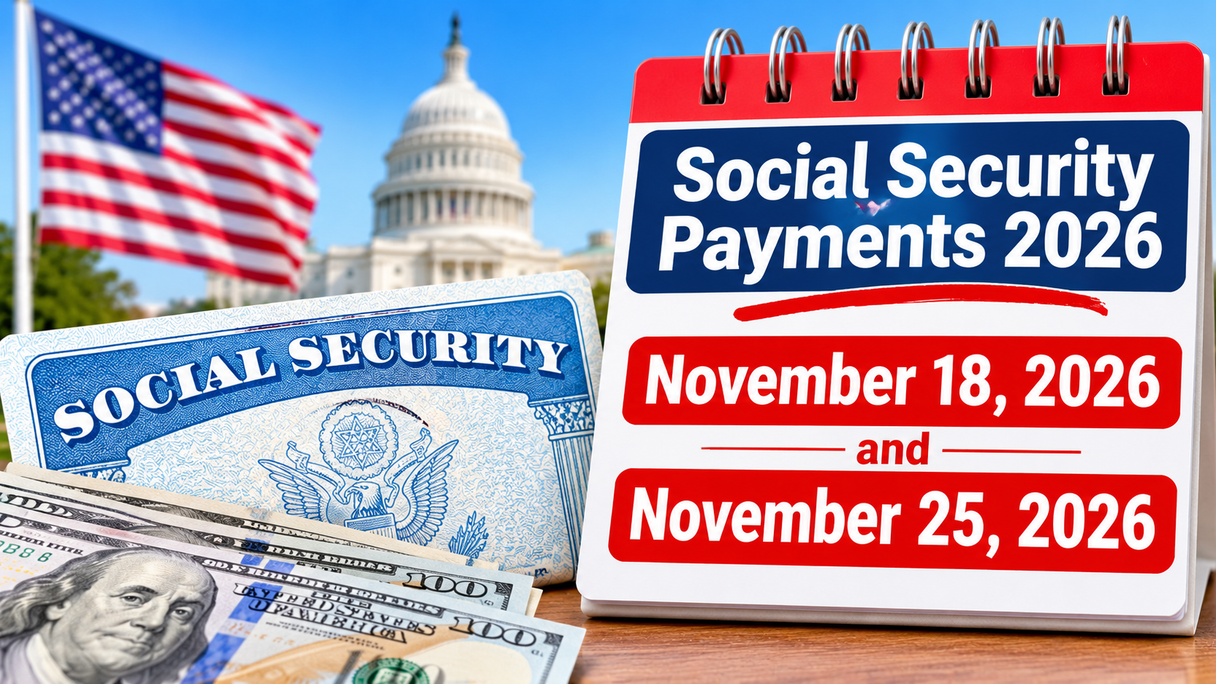
The full November 2026 payment calendar
This Table shows the payment for full month. Since today is November 16, the first two dates have already passed, so the ones still ahead of you are November 18 and November 25.
| Date | Who gets paid |
|---|---|
| Friday, Oct. 30 | SSI recipients (their November payment, paid early) |
| Tuesday, Nov. 3 | People who started collecting Social Security before May 1997, and people who get both Social Security and SSI |
| Tuesday, Nov. 10 | Birthdays on the 1st through the 10th (moved up from Nov. 11) |
| Wednesday, Nov. 18 | Birthdays on the 11th through the 20th |
| Wednesday, Nov. 25 | Birthdays on the 21st through the 31st |
The birthday system applies to retirement, survivor, and Social Security Disability Insurance (SSDI) benefits for most people. It’s your birth date, not your Social Security number or the month you retired, that decides which group you’re in.
Why SSI came early: the weekend rule
SSI works differently from regular Social Security. It’s a needs-based program for older adults, people with disabilities, and blind individuals who have limited income and resources. Instead of a birthday schedule, SSI is normally paid on the first of the month.
The catch is what happens when the first falls on a weekend or a federal holiday. The SSA doesn’t push the payment later. It pays on the last business day before. November 1, 2026 is a Sunday, so the money went out on Friday, October 30.
If you’re an SSI recipient, this has a side effect that confuses people every time it happens. Your bank statement for November will show no SSI deposit at all. The November payment was dated in October, and your next one arrives December 1. Roughly 7 million people receive SSI, and a good number of them budget around the first of the month, so it’s worth noticing that the “gap” is only on paper.
Why the 1st-to-10th group moved up a day
For everyone else, the Wednesday system works like this. Birthdays on the 1st through the 10th are paid on the second Wednesday of the month. The 11th through the 20th get the third Wednesday, and the 21st through the 31st get the fourth.
This November, the second Wednesday is the 11th, which is Veterans Day, a federal holiday. Federal payments don’t go out on federal holidays, so the SSA moved that group’s deposit to the day before, Tuesday, November 10.
It’s a small shift, but it matters if you have automatic bills set to draft the day after your usual deposit. A rent payment or a utility draft that normally clears on a Thursday could have bounced if your balance was thin and you were counting on Wednesday’s money. If that happened, the deposit was on time. It was your bills that were counting on the wrong day.
What about the Thanksgiving week group?
This is the one people worry about unnecessarily. The fourth Wednesday of November 2026 is the 25th, the day before Thanksgiving. Because Wednesday isn’t a federal holiday, nothing moves. If your birthday falls between the 21st and the 31st, your payment is scheduled for Wednesday, November 25, as normal.
Some headlines this month have made it sound like Thanksgiving week payments are “early.” They’re not. They’re on the regular date. The only reason it feels early is that the holiday happens to come the next day, and banks are closed Thursday.
One practical tip for this group: if you’re hosting dinner or traveling, remember that the deposit lands before the long weekend, but any transfers you initiate on Wednesday afternoon may not post until Friday or Monday. Plan around that.
Does your November check cover November?
Not exactly. For retirement, survivor, and disability benefits, Social Security pays one month behind. The check you get in November is for October. That’s a quirk of how the program has always worked, and it’s the reason your very first payment arrives a month later than you’d expect when you start benefits.
SSI is the exception. Your SSI payment covers the month it’s meant for, which is why a payment on October 30 is really for November.
This also explains why the 3.6% raise coming in 2027 shows up in a January payment even though it applies to December benefits. We’ll get to that.
If your payment doesn’t show up
First, check the date. A surprising number of “missing” payments are just people looking at the wrong week, especially in a month where some groups got paid on odd days. Look at your birthday group and your benefit type, then compare it to the table above.
Second, give it a few days. The SSA’s general advice is to wait three business days after your scheduled date before reaching out. Bank processing times vary, and a deposit can take a little while to appear.
If it still hasn’t arrived, you can call the SSA at 1-800-772-1213, visit your local office, or log into your online my Social Security account to check your payment history. Have your bank details handy. And be careful about anyone who contacts you first about a missing payment. The SSA doesn’t text or email people threatening to cut off benefits, and scammers love to take advantage of confusing payment months like this one.
If you recently changed banks, double-check that your direct deposit information was updated. That’s a more common cause of a missed payment than any scheduling quirk.
December 2026: another early payment is coming
Since we’re on the subject of calendar oddities, December has one too.
- Tuesday, Dec. 1: SSI payment for December
- Thursday, Dec. 3: People who started before May 1997, and people who get both Social Security and SSI
- Wednesday, Dec. 9: Birthdays 1st through 10th
- Wednesday, Dec. 16: Birthdays 11th through 20th
- Wednesday, Dec. 23: Birthdays 21st through 31st
- Thursday, Dec. 31: SSI payment for January 2027, paid early because January 1 is a holiday
So the SSI crowd goes from zero payments dated in November to two in December. The December 31 deposit is for January, not a bonus, and it means a long wait in the new year before the next SSI payment arrives on February 1. Anyone on SSI should plan their spending across those two deposits so January doesn’t feel thin.
Regular Social Security recipients don’t get anything unusual in December. Your payments follow the normal birthday-Wednesday pattern.
The 2027 raise: 3.6%
The biggest Social Security story of the fall wasn’t about payment dates at all. On October 14, the SSA announced a 3.6% cost-of-living adjustment (COLA) for 2027. That’s up from 2.8% this year and the largest increase in a few years.
Some of the numbers worth knowing:
- The SSA says the average retired worker will see about $75 more per month starting in 2027, which puts the average benefit at roughly $2,170 by the agency’s estimate.
- About 76 million people will get a bigger payment, including nearly 72 million Social Security beneficiaries and around 7.3 million people on SSI.
- SSI recipients see their increase first, in the payment on December 31, 2026.
- Everyone else sees it in their January 2027 payment, which reflects December benefits.
- The maximum amount of earnings subject to the Social Security payroll tax rises to $192,300, up from $184,500.
The COLA is calculated from a measure of consumer prices (the CPI-W) averaged over July, August, and September, compared with the same quarter a year earlier. When prices climb, benefits are adjusted to try to keep up.
Not everyone is cheering. Policy analyst Mary Johnson noted that for most people the real increase will come to around $76 or less a month, which she described as roughly one tank of gas. And polling of older Americans has shown that many don’t think a raise in this range is enough to keep up with what they’re actually paying for groceries, insurance, and housing. A national average inflation number doesn’t always match what retirees buy.
How to see your new amount
You don’t need to do anything to receive the raise. It’s automatic. But if you want to see your exact new benefit before it arrives, the SSA says you need a my Social Security account and must enroll in paperless notices by November 18, which is this Wednesday, to get your COLA notice online. If you’re not signed up, a paper notice comes in the mail in December.
People enrolled in Medicare get a little extra wait. Their 2027 benefit amount, after Medicare premiums come out, shows up in the account’s Message Center starting in late November.
The Medicare Part B premium
That last point leads to the part of the COLA story that doesn’t get enough attention. For most people on Medicare, the Part B premium comes straight out of the Social Security check. So a bigger monthly benefit doesn’t mean a bigger deposit by the same amount.
In 2026, the standard Part B premium is $202.90, up sharply from $185 in 2025. For 2027, the Medicare trustees’ June report projected about $209.50. That’s a projection, not an official number. The Centers for Medicare & Medicaid Services typically announces the real figure in the fall, often in November, along with the deductible and income-based surcharges. Some private forecasters have guessed higher, in the $216 to $219 range. Check Medicare.gov or the CMS announcement for the final number if it’s out by the time you read this.
There’s a protection called the hold-harmless rule. It generally keeps a Part B increase from shrinking your Social Security check below what you got the year before. If the premium rise is modest compared with your COLA, which looks likely this year, you’ll probably come out ahead. Higher earners who pay income-related surcharges should look at their own notices, since those can behave differently.
Conclusion
November 2026’s “early” Social Security payments come down to two calendar quirks: a Sunday on the first of the month and a Wednesday that happens to be Veterans Day. SSI recipients were paid October 30, the 1st-to-10th birthday group was paid November 10, and the remaining groups are on schedule for November 18 and November 25, including the one right before Thanksgiving.
Nothing in the November schedule affects how much you’re owed. The bigger news for your wallet is the 3.6% COLA arriving next year, balanced against whatever Medicare decides to charge for Part B. Keep an eye out for your notice, check the date on your own birthday group, and if something looks off, start with the SSA’s own tools before anything else.
Sources
- Social Security Administration: 2027 COLA announcement
- Social Security Administration: Cost-of-living adjustment information
- Social Security Administration: Schedule of Social Security Benefit Payments, 2026
- Medicare: Medicare.gov