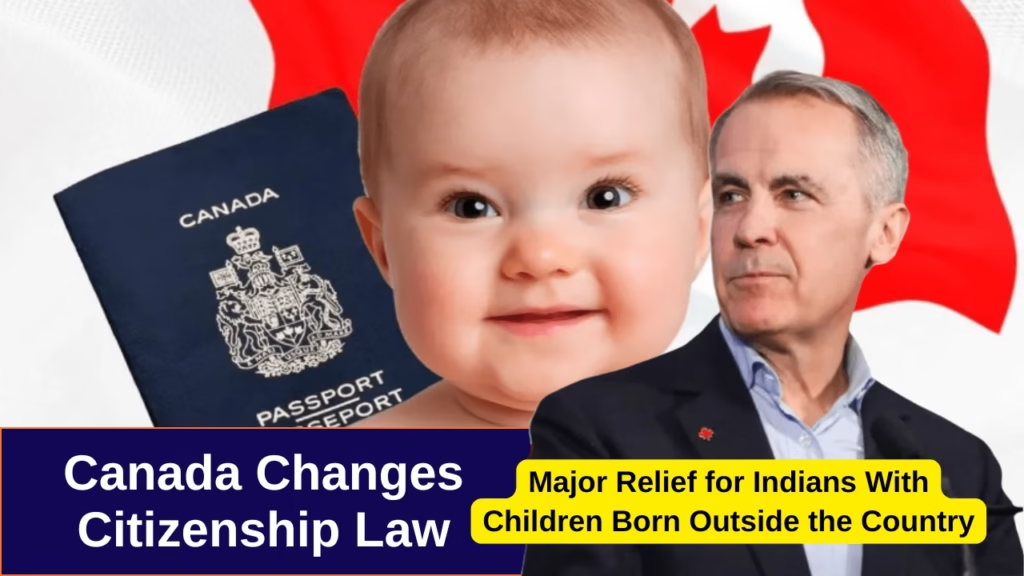
Canada Changes Citizenship Law: Think of your children who were not born in Canada and could not have the Canadian citizenship due to the bewildering old laws. That was a genuine issue to thousands of Indians-origin Canadians abroad, many of whom ended up as a lost Canadians with undefined rights. Canada has now made a large step to do so. The new law of Canada C-3, which is a modification of Citizenship Act, straightens out the processes of citizenship and enables diaspora parents to confer Canadian citizenship on their own children with foreign parents born or adopted outside the country.
This action will deliver equity, ease, and tranquility to the lives of a number of families around the globe. Here’s what you need to know.
What Is Bill C-3?
Bill C-3 is a critical change made to the Citizenship Act in Canada aimed at addressing a loophole by a law of 2009. The former rule was restrictive of the citizenship transmission of Canadians to a single generation that was born outside the country. This made a lot of children born outside Canada stateless, which formed a group of so-called lost Canadians, who included a large number of children of the parents of Indian origin born in Canada. The Canadian government is committed to the modernization of citizenship regulations and ensuring that it has rectified past omissions in the rules of citizenship, which Bill C-3 achieved through the royal assent.
How Does the New Law Work?
Under the Bill C-3, children born outside of Canada may now become citizens of their parents who were also born outside of Canada provided that they demonstrate a substantive connection to Canada. Such a relationship requires that the parent should have resided in Canada at least 1,095 days which is three years and counts cumulatively and not necessarily consecutively. This accrual counting conforms to the nature of the naturalization requirements in the contemporary world.
What Is So Important to Indian-Origin Canadians?
A significant number of the Canadian citizens who are of Indian origin, work, study, or live out of the country particularly in such countries as the US, UK and India itself. The new law implies that these diaspora families can easily transfer Canadian citizenship on their children born or adopted outside Canada. It removes confusion and suffering that the families experienced under the old regulations that rendered the children stateless or lacked full citizenship rights.
What’s Next for Bill C-3?
Bill C-3 awaits a cabinet order to declare its official commencement date, which is projected to be by January 2026 after being affirmed by the courts. This schedule will allow administrators the chance to build mechanisms and practices that will facilitate smooth execution. Immigration Minister Lena Metlege Diab highlighted that the reform is more powerful and ensures the Canadian citizenship because it reflects the real family dynamics. It brings a more conservative approach to the future generation, eliminating the issues of migration and family formation in the current day because Canadians abroad should not be deprived of their rights.
How to Prepare and Be Informed?
Being a Canadian of Indian descent and living or intending to live abroad as an employee, I would ensure that I remain in touch with the official Canadian government sources in order to have the most up-to-date information. Obtain a written evidence of the physical presence in Canada of at least three years. Immigration professionals should be consulted to know how Bill C-3 affects your family and application process after it is fully enacted.
Bill C-3 will be a very significant change in the Canadian citizenship laws since it will right the wrongs of discriminatory policies that have been experienced by many children born outside the country, particularly the Indian diaspora. It offers a more equal and easier way to citizenship without disrupted family ties. It will provide hope and assurance to thousands of people with the implementation beginning in early 2026, as they will have the chance to leave the Canadian heritage to the next generation.