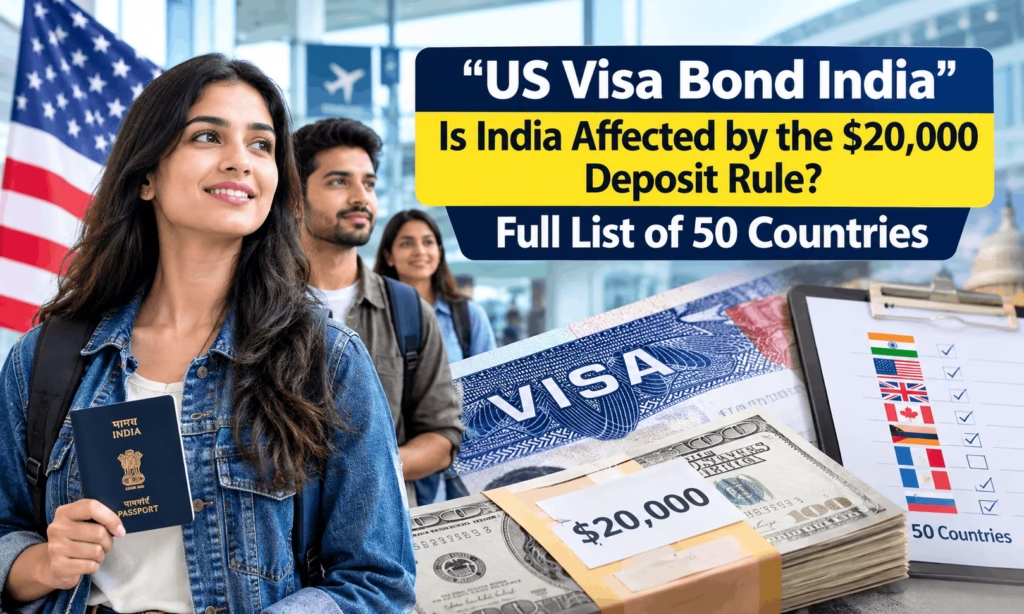
US Visa Bond India: Indian travelers can relax on one point: India is not on the new US visa bond list. The State Department published a revised list on Friday, October 2, naming 50 countries whose passport holders may have to post a refundable bond of $10,000, $15,000 or $20,000 before a B-1 business or B-2 tourist visa is issued. India is outside that group, so an Indian citizen applying on an Indian passport follows the normal visitor visa process with no bond. Bangladesh, Bhutan and Nepal are on the list, which makes the question a live one for families and employers across South Asia. The bond is now a permanent program under a final rule dated August 3, 2026, and the old $5,000 tier is gone. A consular officer sets the amount at the interview. We’ll be updating this article monthly.
The headline number is what makes this story travel fast. A $20,000 deposit is large for almost any family, and it is held in US dollars, so the person who posts it carries the exchange rate risk. The money comes back automatically if the traveler follows the visa rules, including leaving on time and using an approved commercial airport. It is lost if the traveler overstays or breaks the bond terms. Paying does not guarantee a visa. Applicants are told to submit Form I-352 only when a consular officer directs them to, and never through a third party that asks for money in advance. Below you will find the complete country list with start dates, a plain explanation of how the bond works, a checker and cost calculator, the steps, the refund rules and the official links, all reviewed on October 3, 2026.
US Visa Bond India Key Highlights
| Item | Confirmed detail |
|---|---|
| Is India affected? | No. India is not on the 50-country list |
| Bond amounts now | $10,000, $15,000 or $20,000, set by a consular officer |
| Visas covered | B-1 business and B-2 tourist visas |
| Countries on the list | 50 |
| South Asian countries on the list | Bangladesh, Bhutan, Nepal |
| Legal basis | Section 221(g)(3) of the Immigration and Nationality Act |
| Permanent rule date | August 3, 2026 |
| Updated list released | Friday, October 2, 2026 |
| How the bond is posted | DHS Form I-352 through Pay.gov, only after a consular officer says so |
| Is the bond refundable? | Yes, if all bond and visa terms are met |
Is India Affected by the US Visa Bond?
No. Indian passport holders are not subject to the bond requirement under the list released on October 2. The State Department says the program is aimed at nationalities identified through overstay data in the Department of Homeland Security’s Entry/Exit Overstay Report, and India does not appear among them. That is a statement about the bond only. An Indian applicant still has to complete the DS-160 form, pay the visa fee, attend an interview and show that they qualify. A consular officer can still refuse a visa for reasons that have nothing to do with a bond.
Two details are easy to miss. First, the rule follows the passport, not the person’s heritage or where they live. A person of Indian origin who holds a passport from a listed country is covered, and an Indian citizen who lives abroad is not. Second, the list can change. The State Department has said more countries may be added, and during the original pilot it promised at least 15 days of notice before a new country took effect. The agency has not announced any plan to add India.
NY POWER Rebate Check: Who Gets $100 to $200 and When?
Social Security Changes October 2026: 4 Updates That Could Affect Your Benefits
US Visa Bond Countries List 2026: All 50 Countries and Start Dates
The table below follows the State Department’s published list with each country’s start date. Mali was in the first expansion in late 2025 but was removed within days, so it does not appear. Several of these nationalities are also covered by the separate travel ban, which means a B visa may be unavailable to them even if they could afford a bond.
| Country | Bond required from |
|---|---|
| Algeria | January 21, 2026 |
| Angola | January 21, 2026 |
| Antigua and Barbuda | January 21, 2026 |
| Bangladesh | January 21, 2026 |
| Benin | January 21, 2026 |
| Bhutan | January 1, 2026 |
| Botswana | January 1, 2026 |
| Burundi | January 21, 2026 |
| Cabo Verde | January 21, 2026 |
| Cambodia | April 2, 2026 |
| Central African Republic | January 1, 2026 |
| Cote d’Ivoire | January 21, 2026 |
| Cuba | January 21, 2026 |
| Djibouti | January 21, 2026 |
| Dominica | January 21, 2026 |
| Ethiopia | April 2, 2026 |
| Fiji | January 21, 2026 |
| Gabon | January 21, 2026 |
| The Gambia | October 11, 2025 |
| Georgia | April 2, 2026 |
| Grenada | April 2, 2026 |
| Guinea | January 1, 2026 |
| Guinea-Bissau | January 1, 2026 |
| Kyrgyz Republic | January 21, 2026 |
| Lesotho | April 2, 2026 |
| Malawi | August 20, 2025 |
| Mauritania | October 23, 2025 |
| Mauritius | April 2, 2026 |
| Mongolia | April 2, 2026 |
| Mozambique | April 2, 2026 |
| Namibia | January 1, 2026 |
| Nepal | January 21, 2026 |
| Nicaragua | April 2, 2026 |
| Nigeria | January 21, 2026 |
| Papua New Guinea | April 2, 2026 |
| Sao Tome and Principe | October 23, 2025 |
| Senegal | January 21, 2026 |
| Seychelles | April 2, 2026 |
| Tajikistan | January 21, 2026 |
| Tanzania | October 23, 2025 |
| Togo | January 21, 2026 |
| Tonga | January 21, 2026 |
| Tunisia | April 2, 2026 |
| Turkmenistan | January 1, 2026 |
| Tuvalu | January 21, 2026 |
| Uganda | January 21, 2026 |
| Vanuatu | January 21, 2026 |
| Venezuela | January 21, 2026 |
| Zambia | August 20, 2025 |
| Zimbabwe | January 21, 2026 |
One caution on sources. Some news summaries of the October 2 list name only 49 countries because they leave out Dominica, which the State Department’s own list shows with a January 21 start. The table above includes it, which brings the total to 50.
US Visa Bond South Asia: Where India, Nepal, Bangladesh and Bhutan Stand
| Country | On the visa bond list? | Start date |
|---|---|---|
| India | No | Not applicable |
| Nepal | Yes | January 21, 2026 |
| Bangladesh | Yes | January 21, 2026 |
| Bhutan | Yes | January 1, 2026 |
| Pakistan, Sri Lanka, Maldives, Afghanistan | Not on the published list | Not applicable |
For Indians, the practical link is family and business. Many Indian households have relatives in Nepal or Bhutan, and Indian companies send partners and clients from those countries to US events. Those visitors may be asked for a bond even though the Indian host is not. The person who pays can be a friend, relative or business associate, in India or elsewhere, which makes the Indian host a possible payer. The person named on Form I-352 as the obligor is the one who gets the refund, and the name on the form must match the name of whoever pays.
Permanent US Visa Bond Rule 2026: What Changed From the Pilot
| Feature | Pilot (August 2025 to August 2026) | Permanent rule (from August 3, 2026) |
|---|---|---|
| Bond tiers | $5,000, $10,000, $15,000 | $10,000, $15,000, $20,000 |
| Status | Temporary, 12 months | Permanent final rule |
| Visas covered | B-1 and B-2 | B-1 and B-2 on the current list |
| Countries at launch | 2 (Malawi and Zambia) | 50 by October 2026 |
| Basis for choosing countries | Overstay rates, screening gaps, citizenship by investment concerns | B-1/B-2 overstay rates from the DHS report |
The pilot was announced in early August 2025 and began on August 20, 2025, covering only Malawi and Zambia. It grew in steps: The Gambia in October 2025, a group of four more later that month, thirteen in January, a further twenty-five on January 21, and twelve on April 2. The State Department said it concluded the pilot helped reduce overstays and made the program permanent. The removal of the $5,000 tier is the clearest change to what an applicant faces, because the floor is now double what it was.
SNAP Benefits Changes: Who Is Losing Food Aid Now
Medicare Open Enrollment 2026: What to Check Before December 7
Trump $5000 Dividend Check: Is It Real, Who Would Qualify and When Could Payments Start?
How the US Visa Bond Works?
- Apply for a B-1 or B-2 visa in the usual way: DS-160 form, fee, appointment and interview.
- If your passport is from a listed country and you are otherwise eligible, the consular officer tells you that a bond is required and states the amount.
- You receive a direct link to pay through Pay.gov and submit DHS Form I-352 to accept the bond terms. Do this only after being told to.
- The US government confirms the payment, and then the officer completes the visa decision. The officer can still refuse the visa.
- Travel using the approved entry and exit points. Under the current rules these are commercial air ports of entry, including US preclearance locations abroad. Charter flights, private aircraft, land borders and seaports are not allowed.
- Leave on or before the date you are authorized to stay. The bond is then cancelled and refunded to the person named on the form.
The applicant can pay the bond, or a third party can. The bond is paid and refunded in US dollars, so any exchange rate movement is the payer’s gain or loss. Applicants who pay before an officer directs them to will not get a refund, which is why unofficial agents who ask for the deposit early are a red flag.
US Visa Bond Payment Schedule and Refund Rules
The bond is a single payment made before the visa is issued. There is no installment plan. The refund is automatic in the situations the State Department lists, and you do not need to file a claim.
| Situation | Outcome |
|---|---|
| Visa expires and you never traveled to the US | Bond cancelled and returned |
| You left the US through a commercial airport and complied with all conditions | Bond cancelled and returned |
| You left on time after the visa expired during a lawful stay | Bond cancelled and returned |
| Border officers find you inadmissible and cancel the visa at the port of entry | Bond cancelled and returned |
| You left on time before the end of an approved extension or change of status | Bond cancelled and returned |
| You overstay or break bond terms, including using a non-approved entry or exit point | Referred to USCIS for review; bond may be forfeited |
| You file a late extension or change of status request, or apply for asylum on Form I-589 | Treated as a possible breach |
The agencies have not published a firm refund timeline in the sources reviewed for this article. Read the terms on Form I-352 and keep your travel records, boarding passes and passport stamps until the refund is confirmed.
US Visa Bond Processing Time: What to Expect
There is no separate bond processing queue that applicants can book. The bond is requested at the end of an interview that has already been approved in principle, and the visa is issued after the payment is confirmed. So the real timing risk sits in getting an interview slot. Nationals of listed countries can apply from any consulate, because the requirement attaches to the passport and not to the place of application. Check appointment wait times for your chosen post on the official site before you plan travel, and avoid booking non-refundable flights until the visa is in hand.
US Visa Bond Calculator: Check Your Country and Estimate the Cost
Use this tool to check whether a passport is on the list and to estimate what the deposit would cost in rupees, including the cost of having the money tied up. It does not know your consular decision, so pick the tier an officer actually states. The result is an estimate for planning, not official guidance.
US Visa Bond Calculator
Check if your passport country is on the US B-1/B-2 visa bond list and estimate the refundable bond.
- Applies only to B-1/B-2 (business/tourist) visas, not other visa types.
- The bond is refundable if you follow visa rules and leave on time. The exact amount ($10,000, $15,000 or $20,000) is decided at your visa interview.
- Visa fees and other costs are separate and not included here.
If the passport is Indian, the tool says that no bond applies. For listed countries, it shows the start date, the rupee value of the deposit, the income given up while the money is held, and what a 5 percent move in the exchange rate would do to the rupee value at refund time.
Why India Is Not on the US Visa Bond List?
The State Department says it picks countries using B-1/B-2 overstay rates from the DHS Entry/Exit Overstay Report. The key word is rate. India sends one of the largest groups of visitors to the US, so its raw number of overstays can look big, but the share of travelers who stay beyond their authorized time is small. A table reproduced by Gulf News from World Population Review, based on DHS figures, showed roughly 12,900 overstays against about one million expected departures for India, which works out to about 1.3 percent. Those are secondary-source numbers and the report year is not clear, so treat them as context and not as proof. The State Department has not published a country-by-country explanation of why any nation is or is not listed.
What Indian Travelers and Families Should Do Now
- Apply for a B-1/B-2 visa normally. No bond, no Form I-352.
- Do not pay anyone who says they can reserve or pre-pay a bond for you. Only a consular officer can direct a bond, and payment goes through Pay.gov.
- If you are hosting a visitor from Nepal, Bhutan or Bangladesh, tell them to expect a possible bond request and to budget for $10,000 to $20,000.
- If you hold two passports, apply on the passport you intend to travel on, and check whether that country is on the list.
- Keep an eye on the official list. Countries have been added several times and one, Mali, was removed.
The bond does not apply to student visas, work visas or green cards under the current list, which covers only B-1 and B-2. An Indian student on an F-1 visa or a worker on an H-1B petition is outside this rule.
Federal Pay Freeze 2027: Who Gets No Raise and Who Gets 3.8%
Social Security COLA by State: Which Retirees Get the Biggest 2027 Raise and Why?
Scam Warning: Fake Visa Bond Payment Requests
The State Department says an applicant should submit Form I-352 only after a consular officer directs them to do so, and the payment link comes directly from the officer. Messages that ask you to wire money, buy gift cards or pay an agent to hold a bond slot are fraud. If in doubt, stop and check with the embassy or consulate using the contact details on its official website.
Official Websites and Links for the US Visa Bond
| Resource | Use | Link |
|---|---|---|
| Countries subject to visa bonds | Official country list with dates | travel.state.gov bond list |
| Visitor visa information | B-1 and B-2 requirements | Visitor visas |
| DS-160 online application | Start or retrieve your visa application | CEAC DS-160 |
| Visa application status check | Check status with your application ID | CEAC status tracker |
| Visa appointments for India | Schedule or reschedule interviews | US visa scheduling |
| Pay.gov | Official payment platform used for the bond | Pay.gov |
| Form I-352 | DHS immigration bond form | USCIS Form I-352 |
| US Embassy and Consulates in India | Local visa news and contacts | in.usembassy.gov |
| Travel.State.Gov home | Visas, alerts and bulletins | travel.state.gov |
US Visa Bond FAQs
Is India on the US visa bond list?
No. India is not among the 50 countries listed on October 2, 2026.
How much is the US visa bond now?
A consular officer can require $10,000, $15,000 or $20,000. The old $5,000 option was removed under the permanent rule.
Which visas need a bond?
Currently B-1 business and B-2 tourist visas for nationals of listed countries.
Do I pay the bond before my interview?
No. Pay only after a consular officer tells you to and sends you the Pay.gov link.
Do I get my money back?
Yes, automatically, if you follow the visa and bond conditions and leave on time.
Can someone else pay the bond for me?
Yes. A friend, relative or business associate can pay, inside or outside your country. The name on Form I-352 must match the payer.
Does paying guarantee a visa?
No. The bond is a condition of issuance and the officer can still refuse the visa.
Which airports can I use?
Commercial air ports of entry, including preclearance locations. Charter flights, land borders and seaports are not allowed.
Will India be added to the visa bond list?
There is no announcement. The State Department says the list can change, so check the official page before you travel.
Do Indians with an F-1 or H-1B visa need a bond?
No. The current rule covers B-1 and B-2 visas for listed nationalities only.
What happens if I overstay with a visa bond?
Possible violations are referred to USCIS to decide whether the bond has been breached, and the money can be lost.
Does the visa bond apply to Nepal and Bhutan?
Yes. Bhutan has been covered since January 1, 2026 and Nepal since January 21, 2026.
Is the visa bond a fee?
No. It is a refundable deposit, separate from the visa application fee.
Can a person from a listed country apply at an Indian consulate?
Yes, but the bond still applies, because it follows the passport and not the place of application.
Conclusion: What the US Visa Bond Means for India
For Indian citizens, the US visa bond is a news story, not a new cost. India is not among the 50 countries on the October 2 list, and nothing in the published rule changes the usual B-1/B-2 process for Indian passport holders. The story matters more for neighbors and for Indian families and employers who host visitors from Nepal, Bhutan or Bangladesh. If you are in that position, plan for a possible $10,000 to $20,000 deposit, a dollar-denominated refund and strict entry and exit rules. Use the calculator for a quick estimate, verify the list on travel.state.gov before you commit to travel, and ignore anyone who asks for bond money before an officer does. This page will be revised monthly as the State Department updates the list or the rule.
Medicare Part D Changes 2027: $2,400 Cap, $700 Deductible
FEHB Open Season 2027 Dates: November 9 to December 14, Premiums Up 10.9% and What to Do Now