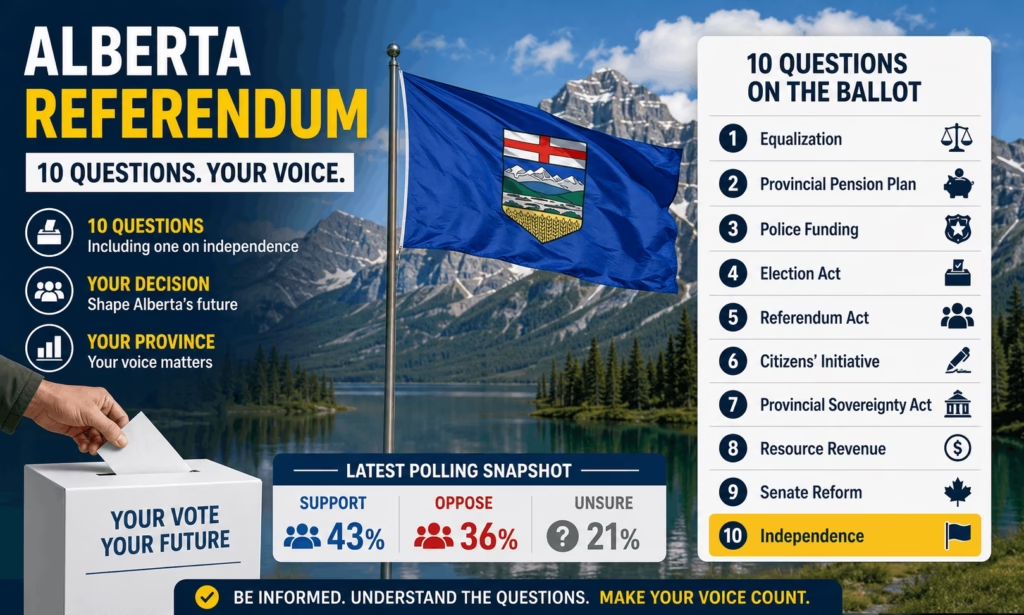
Alberta Referendum On October 19, 2026: Albertans are now nine weeks away from one of the most consequential votes in the province’s history, and the latest polling suggests the outcome may not be nearly as close as the surrounding political noise has made it seem. An update published August 14, 2026 by pollster Éric Grenier’s Alberta Referendum Poll Tracker shows nearly two-thirds of Albertans say they would vote to remain in Canada, while less than a third say they would support starting the legal process toward a binding independence referendum. That gap has actually widened slightly since July, even though a newer Angus Reid Institute poll showing somewhat higher independence support shifted the overall polling average toward separation on the surface.
On October 19, 2026, Albertans will face 10 separate referendum questions on a single ballot, covering everything from immigration policy to equalization payments to the province’s constitutional relationship with Ottawa, alongside the headline question on whether Alberta should begin the legal process to eventually hold a binding vote on leaving Canada altogether. Premier Danielle Smith has repeatedly said she personally wants Alberta to remain part of Canada, even as she agreed to add the independence question to the ballot after pressure from a vocal separatist wing within her own party. We’ll be updating this article monthly as new polling data is released and as the October 19 vote approaches.
What Is the Alberta Referendum and Why Is It Happening?
The 2026 Alberta referendum traces back to the Alberta Next Panel, a government-appointed body that spent months in 2025 holding town halls across the province to gather input on the relationship between Alberta and the federal government. On February 19, 2026, Premier Danielle Smith announced nine referendum questions would appear on an October 19, 2026 ballot, drawn largely from the panel’s recommendations. Two Orders in Council, O.C. 109/2026 and O.C. 110/2026, formally authorized the referendum on March 31, 2026.
The list grew to 10 questions on May 21, 2026, when Smith announced during a televised provincial address that a separate question on Alberta independence would be added, a move confirmed through a third Order in Council, O.C. 160/2026, on May 28, 2026. Smith framed the addition as a matter of obligation rather than personal preference, telling Albertans that hundreds of thousands of residents had engaged with the separation debate through petition campaigns and citizen movements, and that they deserved a formal say.
Canada 50% Tariff 2026: 700 US Goods Hit With Tariffs Up to 50% From September 8
Social Security Changes September 2026: SSA Announces Major Update for Retirees and Beneficiaries
Key Dates in the 2026 Alberta Referendum
| Date | Event |
|---|---|
| February 19, 2026 | Premier Smith announces nine referendum questions |
| March 31, 2026 | Orders in Council O.C. 109/2026 and O.C. 110/2026 formally set the referendum date |
| May 21, 2026 | Smith announces a tenth question on Alberta independence |
| May 28, 2026 | Order in Council O.C. 160/2026 formally adds the independence question |
| October 19, 2026 | Referendum day; Albertans vote on all 10 questions |
| Within 48 hours of polls closing | Elections Alberta required to report unofficial results |
All 10 Questions on the Alberta Referendum Ballot
The ballot splits roughly into two categories, non-constitutional policy questions and constitutional questions seeking changes to Alberta’s relationship with the rest of Canada.
| Question Topic | Type | What a Yes Vote Would Mean |
|---|---|---|
| Provincial control over immigration | Non-constitutional | Alberta pursues authority to reduce immigration levels and prioritize Albertans for new jobs |
| Restricting public services to citizens, permanent residents, and approved immigrants | Non-constitutional | Alberta limits access to certain provincially funded services based on immigration status |
| Election security measures | Non-constitutional | Alberta adopts stricter voter identification and election integrity rules |
| Additional non-constitutional questions on provincial policy | Non-constitutional | Vary by specific question; results are not binding on government |
| Equalization payments | Constitutional | Alberta seeks a constitutional amendment eliminating equalization payments |
| Additional constitutional questions on federal-provincial power | Constitutional | Alberta seeks a broader rebalancing of powers between Ottawa and the provinces |
| Alberta independence process | Constitutional (added later) | Alberta’s government begins the legal process required to eventually hold a binding separation referendum |
Only Question 5, dealing specifically with a matter fully within provincial jurisdiction, is capable of producing an outcome the Alberta government can implement entirely on its own authority. The remaining questions, including every question touching federal jurisdiction or the Canadian Constitution, would require either federal cooperation, a formal constitutional amendment process, or would likely face legal and Charter challenges even with a strong Yes result, according to independent legal analysis of the ballot published ahead of the vote.
The Exact Wording of the Independence Question
The question drawing by far the most national attention is not phrased as a direct up-or-down vote on separation itself. Instead, it asks Albertans to decide whether the province should take the first procedural step toward a future binding vote. The official wording reads: Should Alberta remain a province of Canada or should the Government of Alberta commence the legal process required under the Canadian Constitution to hold a binding provincial referendum on whether or not Alberta should separate from Canada.
This two-step structure matters enormously for how the results should be interpreted. Even a Yes result on this question would not itself separate Alberta from Canada, or even guarantee that a future binding referendum takes place. It would formally direct the Alberta government to begin the legal steps required to eventually hold that second vote, a process that would still need to satisfy constitutional requirements that legal experts describe as extraordinarily difficult to meet.
What the Threshold for a Binding Result Actually Requires
Alberta’s Referendum Act sets a specific bar for results to carry binding weight, though that threshold only applies in a meaningful way to questions within full provincial control. According to independent analysis of the referendum rules, roughly 88,867 Yes votes, equivalent to about 3.0 percent of eligible Albertans, represents the minimum threshold tied to binding outcomes under the applicable legislation. For questions touching federal jurisdiction, a strong result carries significant political weight and public pressure even without automatically triggering any legal obligation on Ottawa.
Trump Accounts Dell $250 Grant: Did Deposits Actually Start Monday? Here’s Who’s Actually Been Paid
Latest Polling on the Alberta Independence Question
Public polling throughout 2026 has consistently shown a majority of Albertans opposed to pursuing independence, though the size of that majority has fluctuated somewhat depending on the pollster and the exact question wording used. According to the most recent update from the Alberta Referendum Poll Tracker, published August 14, 2026, nearly two-thirds of Albertans currently say they would vote to remain in Canada, with less than one-third supporting the move to begin the legal process toward a binding separation referendum.
The tracker noted a modest shift in the overall polling average toward the independence side since its July update, but attributed that shift specifically to the inclusion of a newer Angus Reid Institute poll that recorded somewhat higher separatist support than other recent surveys. Notably, when compared against the Angus Reid Institute’s own previous survey, the newest data actually suggested a three-point swing back toward Albertans wanting to remain in Canada, meaning the apparent shift in the aggregate average reflects which pollster most recently published data as much as it reflects genuine movement in public opinion.
Where Danielle Smith Stands on the Vote
Premier Smith’s public position throughout the campaign has remained consistent even as it has drawn criticism from multiple directions. In her provincial address announcing the independence question, Smith told viewers directly that now is not the time to give up hope in the country, closing her remarks by reaffirming that she and her government want Alberta to remain part of Canada. At the same time, Smith has framed her willingness to place the question on the ballot as a democratic obligation rather than an endorsement of separation itself, pointing to sustained citizen petition activity as the reason she felt compelled to act.
Opposition politicians, including members of the Alberta NDP, have characterized this position as contradictory, arguing Smith is attempting to satisfy separatist-leaning members of her own party’s base while simultaneously campaigning publicly to keep the province in Canada in order to avoid alienating more centrist voters ahead of future elections.
How and When Albertans Can Vote
Elections Alberta, the independent body overseeing the referendum, has confirmed multiple voting options will be available ahead of and on October 19, 2026, including advance voting periods, standard election day voting, and special ballot provisions for Albertans unable to vote in person. Chief Electoral Officer Gordon McClure has said the agency will continue releasing detailed voter information on its website in the months leading up to the vote, covering everything from ballot design to how unofficial results will be reported within 48 hours of polls closing.
Official Alberta Referendum Resources
| Resource | Purpose | Link |
|---|---|---|
| Elections Alberta, Referendum Information | Official voting locations, ballot details, and results reporting | https://www.elections.ab.ca/elections/referendum/ |
| Government of Alberta Referendum Page | Official ballot questions and background information | https://www.alberta.ca/referendum-2026 |
| Referendum Act and Regulations | Full legal text governing the referendum process | https://www.qp.alberta.ca |
The October 19, 2026 Alberta referendum has grown from a nine-question policy vote into a ten-question ballot carrying genuine national significance, anchored by a carefully worded independence question that asks Albertans to take a first procedural step rather than cast a direct vote on leaving the country. Current polling suggests most Albertans are not inclined to take that step, even as the underlying separatist sentiment driving the question onto the ballot in the first place remains a real and organized political force within the province. With just weeks remaining before voting begins, the gap between public polling and political rhetoric around the vote is likely to remain one of the defining storylines of Alberta politics through the fall. We’ll be updating this article monthly as new polling emerges and as Elections Alberta releases further details ahead of October 19.
FAQs on Alberta Referendum Oct 2026
How many questions are on the Alberta referendum ballot?
Albertans will vote on 10 separate questions on October 19, 2026, covering immigration policy, public service eligibility, election security, equalization payments, broader constitutional powers, and a question on whether to begin the legal process toward a binding independence referendum.
Is the Alberta independence question a direct vote on separation?
No. The question asks whether Alberta should remain a province of Canada or whether the government should begin the legal process required to eventually hold a second, binding referendum specifically on separation. A Yes result would not itself separate Alberta from Canada.
What do the latest polls say about Alberta independence?
As of the August 14, 2026 update from the Alberta Referendum Poll Tracker, roughly two-thirds of Albertans say they would vote to remain in Canada, while less than one-third support beginning the process toward a binding separation referendum.
Does Premier Danielle Smith support Alberta separation?
No. Smith has publicly and repeatedly said she wants Alberta to remain part of Canada, while framing her decision to place the independence question on the ballot as a response to sustained public petition activity rather than a personal endorsement of separation.
Which referendum questions could Alberta actually implement on its own?
Of the 10 questions, only one deals with a matter fully within Alberta’s own jurisdiction and could be implemented without federal cooperation. The remaining questions touch federal authority or the Canadian Constitution and would require either Ottawa’s cooperation, a formal constitutional amendment process, or would likely face legal challenges even with a strong Yes result.
When will referendum results be available?
Elections Alberta is required under the Referendum General Regulation to report unofficial results within 48 hours of polls closing on October 19, 2026.
What triggered the addition of the independence question to the ballot?
Premier Smith announced the tenth question on Alberta independence during a televised provincial address on May 21, 2026, citing sustained citizen petition campaigns and pressure from separatist-leaning members within her own party as the reason for adding it.
Also Read:-
2027 VA Disability COLA Increase: How Much Could Benefits Rise Under the Latest Projection
Ohio SNAP Food Ban starts October 1, 2026: What’s Banned, Court Update & Rules
$400 Inflation Refund Checks 2026: New York’s Real Program, Fact-Checked
$2000 Stimulus Payment September 2026 Fact-Check: Is It Really Coming?