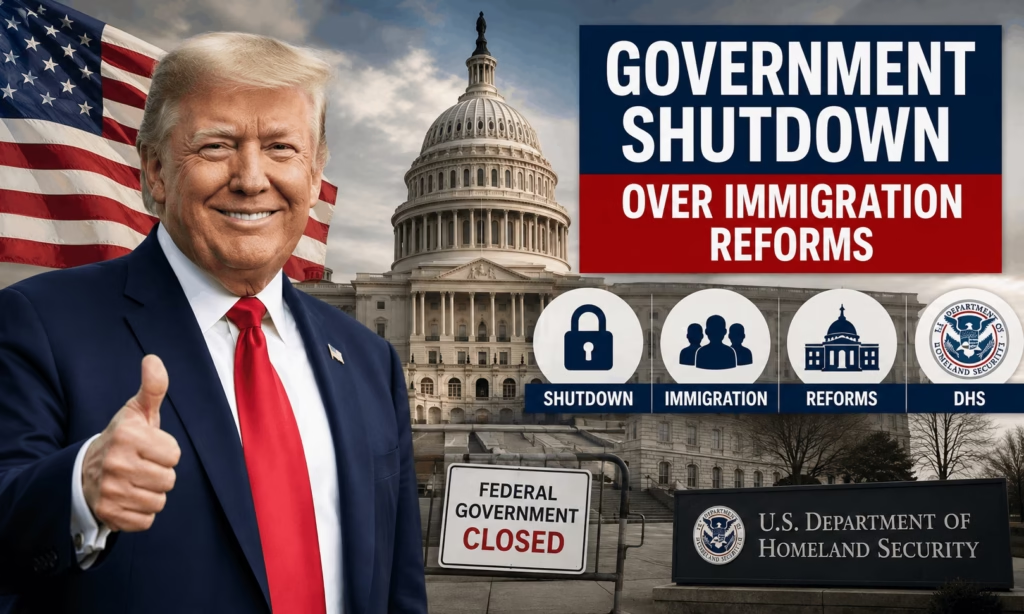
Federal Government Shutdowns 2026 stand out as the longest and most disruptive funding lapses in modern US history, and both trace back to the same unresolved fight over immigration enforcement reforms. The first shutdown ran from January 31 to February 3, a brief four day lapse that hit roughly half of federal agencies before lawmakers patched things together. The second, far more damaging shutdown targeted the Department of Homeland Security specifically and stretched from February 14 all the way to April 30, a record 76 days that left hundreds of thousands of federal workers, including Border Patrol agents and Transportation Security Administration officers, without regular paychecks. We will be updating this article monthly as Congress continues to navigate funding fights tied to this same underlying dispute, so check back for the latest developments.
Both shutdowns share a single root cause. After Customs and Border Protection agents killed a man named Alex Pretti during an enforcement operation in late January, Senate Democrats pulled their support for a Department of Homeland Security funding bill that had already cleared the House. They demanded binding reforms to how Immigration and Customs Enforcement and CBP agents operate in the field before agreeing to fund the agency for the rest of the fiscal year. Republicans refused to attach enforcement restrictions to a funding bill, and that standoff produced back to back shutdowns within a span of just over two weeks, followed by a marathon standoff that did not break until the very end of April.
Timeline Of The Two 2026 Shutdowns
The trouble started on January 22, when the House passed the final six of twelve annual appropriations bills needed to keep the government funded for the year. Two days later, CBP agents killed Alex Pretti, and separately, immigration agents were involved in the deaths of two people during an enforcement operation in Minneapolis. Senate Democrats responded by withdrawing support for the Homeland Security funding bill, which covers CBP alongside ICE, arguing that Congress could not simply write a blank check to an agency in the middle of a public outcry over how its agents use force.
With no deal in place, the government entered its first shutdown at midnight on January 31, after the Senate passed a stopgap package by a vote of 71 to 29 but the House, which was out on recess, could not act before the deadline. That first lapse touched about half of all federal departments and lasted only four days, ending on February 3 once the House returned and approved the agreement. As part of that deal, lawmakers bought two more weeks for DHS specifically through a short continuing resolution, hoping that window would be enough time to negotiate real reforms.
It was not enough. Negotiations over ICE and CBP oversight stalled completely, and DHS funding lapsed again at midnight on February 14. This time the shutdown did not touch the rest of the federal government, but it hit DHS hard and did not end until April 30, when President Trump signed a funding bill the House had just passed. That 76 day stretch became the longest shutdown of any single federal department since the modern budget process began in 1974. A later Congressional Research Service review found that funding for CBP and ICE specifically remained unresolved even longer, stretching to 116 days through June 10, because those two enforcement agencies were treated separately from the rest of DHS in the final funding arrangement.
Why Immigration Enforcement Reforms Became The Sticking Point
At the center of both shutdowns sat a demand from dozens of Senate Democrats for concrete changes to how ICE and CBP conduct enforcement operations. Their proposal, which barely shifted between January and April, called for equipping agents with body cameras, placing limits on enforcement actions at sensitive locations such as schools, hospitals, and churches, increasing independent oversight of federal detention facilities, and requiring agents to clearly identify themselves during operations. The White House’s counteroffer during the standoff included as much as 100 million dollars for body camera funding but stopped well short of the binding operational limits Democrats wanted written into law.
Republicans, including Senate Majority Leader John Thune, argued that Democrats were using a routine funding bill to force policy changes that belonged in separate legislation, not as a condition for keeping the government open. House Appropriations Committee Republicans went further, accusing Democrats of deliberately shutting down the government to disrupt border security and deportation operations, even though ICE and CBP had separate reserve funding available from an earlier reconciliation law that kept much of their work running during the lapse. Democrats countered that the funding fight was the only real point of leverage they had to force a conversation about accountability inside two agencies that had, in their view, gone unchecked for too long.
New $20,000 Visa Bond Program: What It Means for Travelers Entering the U.S.
VA Health and Benefits App: Every Feature You Can Use From Your Phone
How The Shutdown Actually Affected Federal Operations
Despite the length of the DHS shutdown, the practical disruption looked different from a typical government shutdown. Around 85 percent of the department’s workforce, close to 200,000 employees, kept working throughout the lapse because DHS falls under a mix of essential personnel designations and separate funding streams. The Trump administration tapped roughly 10 billion dollars in multi-year reconciliation funding, originally appropriated for border security missions, to keep paying salaries for about 70,000 law enforcement personnel across Border Patrol, ICE, the Secret Service, and TSA air marshals. Government watchdog groups argued that stretching border security funds to cover TSA airport screeners and other domestic security roles ran afoul of federal law limiting how appropriated money can be spent, since the Antideficiency Act restricts agencies from repurposing funds outside their original legal purpose.
Travelers noticed longer security lines at airports at various points during the shutdown, since TSA was among the affected divisions and many of its officers went unpaid even while continuing to work. FEMA and the Coast Guard also operated without regular appropriations for the full 76 day stretch, raising concerns among emergency management officials about disaster response readiness heading into hurricane season. ICE and CBP, by contrast, largely maintained their enforcement pace because of the separate reserve funding, which is part of why Democrats argued the shutdown strategy was not actually slowing deportation operations the way they had hoped.
Key Dates And Details
| Item | Detail |
|---|---|
| First shutdown dates | January 31 to February 3, 2026, four days |
| Second shutdown dates | February 14 to April 30, 2026, 76 days |
| CBP and ICE specific funding lapse | Extended to June 10, 2026, 116 days |
| Root cause | Congressional dispute over ICE and CBP enforcement reforms |
| Triggering event | Killing of Alex Pretti by CBP agents in late January 2026 |
| DHS workforce affected | Approximately 235,000 employees, about 200,000 working without regular pay |
| Reserve funding used during shutdown | Roughly 10 billion dollars from FY2025 reconciliation law |
| Longest single-department shutdown since | 1974, when the modern federal budget process began |
What Changed Once The Shutdown Ended
The bill President Trump signed on April 30 funded most of DHS for approximately five months but notably did not include full-year funding for ICE and CBP specifically, leaving those two enforcement divisions to rely on separate legal funding streams for weeks longer, until early June. The final agreement did not include the binding body camera mandate or the sensitive location restrictions that Senate Democrats had pushed for throughout the standoff, meaning the underlying policy dispute that triggered both shutdowns was never fully resolved through legislation. Instead, lawmakers effectively agreed to fund the department while continuing to argue over enforcement oversight through separate channels, including committee hearings and individual bills introduced by both parties.
That unfinished business is part of why the Senate moved so quickly and so early on the most recent short-term funding bill in early August, passing a measure through December 11 by an overwhelming 90 to 6 vote. Senators from both parties pointed directly to the two historic shutdowns earlier in the year as the reason they wanted funding certainty locked in well before the November midterm elections, rather than risking a third standoff over the same unresolved immigration enforcement questions.
Official Resources For Tracking Government Funding Status
| Resource | What it is used for | Official link |
|---|---|---|
| Congress.gov | Full legislative text and status of funding bills | congress.gov |
| Congressional Budget Office | Analysis of appropriations and shutdown impact | cbo.gov |
| Office of Personnel Management | Shutdown guidance for federal employees | opm.gov |
| Department of Homeland Security | Official DHS operational updates | dhs.gov |
| House Appropriations Committee | Committee statements and funding bill tracking | appropriations.house.gov |
| Senate Appropriations Committee | Senate-side funding bill tracking | appropriations.senate.gov |
FAQs
What caused the 2026 government shutdowns?
Both shutdowns stemmed from a congressional dispute over immigration enforcement reforms after CBP agents killed Alex Pretti and immigration agents were involved in two deaths during an operation in Minneapolis. Senate Democrats withheld support for Department of Homeland Security funding until Republicans agreed to binding oversight measures for ICE and CBP, and that impasse produced two separate funding lapses.
How long did the DHS shutdown actually last?
Most of DHS was shut down for 76 days, from February 14 to April 30, 2026, making it the longest single-department shutdown since the modern budget process began in 1974. Funding for CBP and ICE specifically remained unresolved even longer, extending to 116 days through June 10.
Did federal workers get paid during the shutdown?
Most DHS employees, roughly 200,000 people, continued working during the shutdown but many went without regular paychecks for extended periods. The administration used about 10 billion dollars in reserve reconciliation funding to pay salaries for tens of thousands of law enforcement personnel, though watchdog groups questioned whether that funding could legally be stretched to cover roles like TSA screening.
Were the immigration enforcement reforms Democrats wanted ever passed?
No. The funding bill that ended the shutdown on April 30 did not include the binding body camera requirements or sensitive location restrictions that Senate Democrats had pushed for since January. The policy dispute remains unresolved even though the funding lapse itself ended.
Could another government shutdown happen later in 2026?
It remains possible. The short-term funding bill passed in early August only extends funding through December 11, and it still requires House approval before the September 30 deadline. Lawmakers cited the two earlier 2026 shutdowns as a direct reason for trying to lock in funding certainty well ahead of the fall deadline.
Conclusion
The two federal government shutdowns of 2026 were not separate accidents of the calendar but two chapters of the same unresolved argument over how ICE and CBP should operate in the field after the killing of Alex Pretti and the deaths in Minneapolis. A brief four day lapse in late January gave way to a record 76 day shutdown at the Department of Homeland Security, disrupting pay for hundreds of thousands of workers even as core enforcement operations kept running on separate reserve funds. The funding fight ended in April without the reforms Democrats had demanded, leaving the underlying dispute open and shaping how cautiously both parties have approached every funding deadline since, including the short-term bill passed this August to avoid a third shutdown before the midterm elections.
Social Security Compassionate Allowances List: 14 Conditions Added
IRS Business Tax Account New Features Give Small Businesses More Ways to Skip the Phone Line
SSA Payroll Information Exchange and New SSI Improvement Office: What the Report Actually Changes