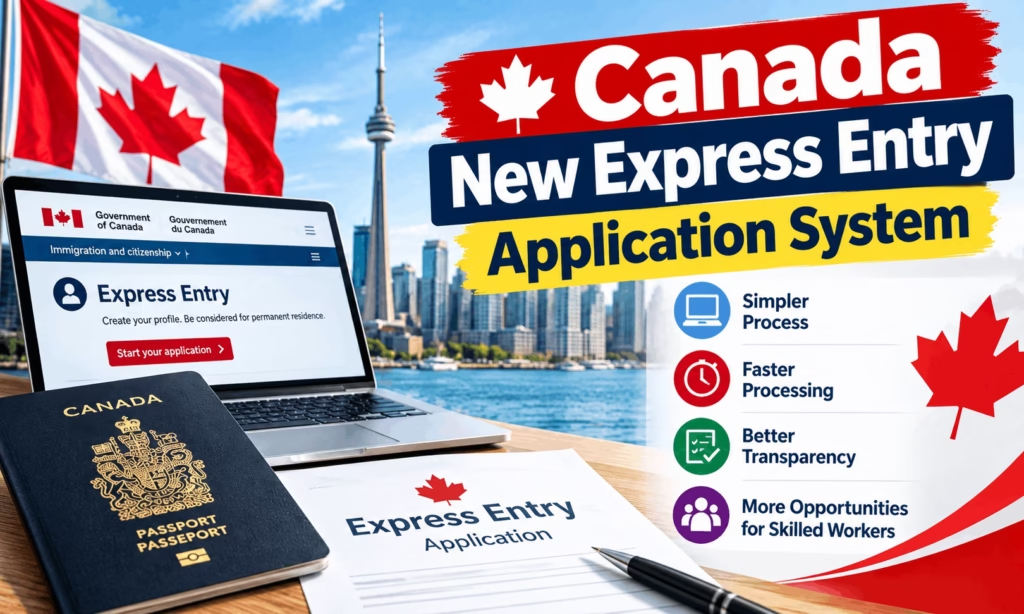
Canada New Express Entry Application System: Canada is developing a new Express Entry application system, and the first solid details are now public. Immigration, Refugees and Citizenship Canada says the first release of its new case management platform will deliver a new Expression of Interest system to run Express Entry, replacing technology that officials have described as complex and fragile. The plan appears in IRCC’s 2026 Deputy Minister transition binder, and it arrives while the department is also weighing a bigger policy overhaul. Here is what matters today: IRCC has not set a launch date, has not announced a new CRS, and has not told anyone with a live profile to start over. The pool held 226,793 candidates as of September 13, and IRCC had already issued 126,156 invitations this year through September 4, more than the 117,998 it issued in all of 2025. We’ll be updating this article monthly.
The distinction matters because headlines are running ahead of the facts. Rebuilding the software behind Express Entry is not the same as replacing Express Entry. A separate regulatory track would fold the Federal Skilled Worker Class, the Canadian Experience Class and the Federal Skilled Trades Class into a single federal high-skilled class. IRCC ran consultations on that idea from April 23 to May 24, 2026, and immigration firms expect proposed regulations in the Canada Gazette later, with final rules in 2027 or after. Meanwhile, draws continue. A Canadian Experience Class round on September 15 invited 2,000 candidates at a score of 519, and a French-language round on August 19 cleared at 382. This guide separates confirmed facts from speculation, lists the latest cutoffs, and includes a calculator that shows where your score stands.
Key Highlights: New Express Entry Application System
| Item | Latest detail |
|---|---|
| What is being built | A new Expression of Interest system for Express Entry, part of IRCC’s Digital Platform Modernization |
| Launch date | Not announced |
| Impact on the CRS | No change announced |
| Existing profiles | No instruction to recreate them |
| Separate reform proposal | One federal high-skilled class to replace FSWC, CEC and FSTC |
| Consultation period | April 23 to May 24, 2026 |
| Latest draw | September 16, 2026: senior managers, 250 invitations, CRS 389 |
| Latest CEC draw | September 15, 2026: 2,000 invitations, CRS 519 |
| Time to apply after an invitation | 60 calendar days |
| Service standard for processing | 6 months |
Child Tax Credit Calculator: See Who Qualifies And How Much You Can Claim
US Visa Online Background Vetting From October 1: 3 New Groups Must Go Public
Replace Social Security Card Online for Free: Who Qualifies, Steps, Limits and How Long It Takes
What Is Canada’s New Express Entry Application System?
It is a new piece of software, not a new immigration program. IRCC is replacing the aging technology that manages permanent residence files with a modern case management platform. Express Entry is an early focus, and the first release is meant to deliver a new Expression of Interest system, the part that holds candidate profiles, ranks them and produces invitations. In plain terms, the way you enter the pool and receive an invitation may eventually look different on screen, while the rules that decide who gets invited have not been changed by this project.
What IRCC Has Confirmed and What It Has Not
| Confirmed by IRCC | Not announced |
|---|---|
| The first release of the new case management platform will deliver a new Expression of Interest system for Express Entry | A launch date for the new system |
| Express Entry is an early focus of the second phase of modernization | A new CRS or new eligibility rules linked to the technology |
| The new online account is live for visitor visa and passport renewal clients, with Express Entry clients targeted next | A requirement to rebuild existing profiles |
| Legacy client portals will be consolidated into the new account | Any change to the 60-day window after an invitation |
| The platform will support more automation of clear-cut cases and integrated AI to help decision-makers | New fees tied to the system change |
The last row on the left deserves a closer look. IRCC says automation is meant for straightforward files, with officers still making decisions. That is the department’s stated design, and candidates should expect updates to arrive in phases rather than as one switch-over day.
Why IRCC Is Replacing Its Old Immigration Software
The current backbone is the Global Case Management System, known as GCMS, which has operated for more than two decades. Officials describe it as hard to maintain and slow to adapt when the government changes immigration priorities. That has real consequences. When Ottawa introduced new draw categories or removed job offer points in 2025, IRCC had to work around what the old system could handle. A modern platform is supposed to let policy teams adjust rules faster and give clients a single online window instead of several legacy portals.
Money and procurement show this is not just talk. IRCC’s own briefing material put total Digital Platform Modernization funding for 2025 to 2026 at $172.1 million, including $85.7 million for the second phase covering Express Entry and visitor programs. The timeline below shows how the work has advanced.
| Date | Milestone |
|---|---|
| 2022 | Digital Platform Modernization formally launched |
| July 2023 | New front-end client experience platform procured |
| June 2024 | New online account launched for visitor visa clients |
| September 2024 | New case management platform procured |
| 2025 to 2026 | Second phase funded, with Express Entry among the first programs to move |
| 2026 | Deputy Minister transition binder names the Expression of Interest system as the first release |
| To be announced | Rollout of the new Express Entry system to candidates |
Federal High-Skilled Class: The Bigger Policy Change Running in Parallel
The software project and the policy proposal are different things, though they may eventually meet. IRCC’s Forward Regulatory Plan for 2026 to 2028 proposes repealing the three classes that feed the Express Entry pool and replacing them with one class that has simpler entry requirements. IRCC has argued that the current criteria were designed around the labour market of 2014 and 2015, and have become minimum thresholds rather than real measures of fit.
Immigration firms that reviewed the consultation materials describe possible features such as a minimum language level of CLB 6 and one year of skilled work in TEER 0 to 3 occupations. Treat those details as reported ideas, not final rules. Any actual change requires amendments to the Immigration and Refugee Protection Regulations, published for comment in the Canada Gazette. The table gives the timeline most firms are using.
| Stage | Timing | Status |
|---|---|---|
| Proposal appears in Forward Regulatory Plan | April 2026 | Confirmed |
| Public consultation | April 23 to May 24, 2026 | Closed |
| Proposed regulations in Canada Gazette, Part I | Late 2026 or early 2027 | Estimate, not confirmed |
| Final regulations | 2027 | Estimate, not confirmed |
| First invitations to the new class | Late 2027 to 2028 | Estimate, not confirmed |
One promise appears consistently in expert summaries: people who receive an invitation before any new class takes effect would be processed under current rules. Even so, wait for IRCC’s own transition notice before assuming anything.
Social Security COLA 2027 by State: These 10 States Could See the Biggest Dollar Increase
Latest Express Entry Draw Results: September 2026 Cutoffs
Whatever happens to the software, draws still set your odds today. IRCC has held dozens of rounds this year, with category-based invitations making up a large share. Sixteen Canadian Experience Class rounds took place between January and mid-September. The most recent results, compiled from IRCC’s published rounds, are below.
| Date | Round type | Invitations | CRS cutoff |
|---|---|---|---|
| September 16 | Senior managers with Canadian experience | 250 | 389 |
| September 15 | Canadian Experience Class | 2,000 | 519 |
| September 14 | Provincial Nominee Program | 576 | 734 |
| September 4 | Healthcare and social services | 3,500 | 475 |
| September 3 | Physicians with Canadian experience | 229 | 198 |
| September 1 | Canadian Experience Class | 2,000 | 521 |
| August 31 | Provincial Nominee Program | 562 | 697 |
| August 19 | French-language proficiency | 5,000 | 382 |
Two patterns stand out. CEC cutoffs have eased for two consecutive rounds, from 523 on August 18 to 521 and then 519. And the French-language draw on August 19 set a 2026 low of 382 for that category. Candidates who cannot reach a general score above 500 should study which category fits their work history, since those rounds routinely clear well below the general threshold.
Express Entry CRS Score Calculator and Draw Match Tool
The calculator below does two jobs. It adds the main bonus points to the score you already have from IRCC’s official tool, then compares the result with recent draw cutoffs. It also calculates your 60-day deadline after an invitation. The tool does not verify eligibility, so confirm every detail with IRCC’s own CRS tool before acting.
Express Entry Draw Match Calculator
Express Entry Draw Match Calculator
Enter your CRS score and see which recent draws you would have cleared.
Bar = your score on a 0–800 scale. Black marker = the draw’s minimum CRS.
Add or update a draw
Draw data is compiled from public draw trackers up to 15 Sep 2026. Always confirm against IRCC’s official draw page before making decisions.
Matching a cutoff does not mean you qualify: category draws need eligible work experience or language skills, and PNP cutoffs include the 600 nomination points.
A score exactly equal to the cutoff is decided by the tie-break timestamp (profile creation date).
Will the New Express Entry System Change Your CRS Score?
Not by itself. The Comprehensive Ranking System still awards points for age, education, official language ability, Canadian and foreign work experience, and a few bonuses. A provincial nomination adds 600 points. French-language ability adds 25 or 50, a sibling in Canada adds 15, and a Canadian credential adds 15 or 30. Points for arranged employment were removed in March 2025.
What could change is the weighting, but through policy, not software. Consultation summaries floated ideas such as recognizing high-wage occupations and reviewing the weaker bonuses. Some CRS adjustments can be made through ministerial instructions well before regulations are finished, so any change may be announced with little warning. Keep checking IRCC’s own pages rather than relying on social media rumours.
What Express Entry Candidates Should Do Now
- Keep your profile active. A profile is valid for 12 months, and you can resubmit if it expires.
- Watch language test dates. Results are valid for two years, and an expired test can remove your ability to be invited.
- Check your educational credential assessment if you studied abroad. Reports are accepted for five years from the issue date.
- Review your category options. Healthcare, French, trades, physicians, researchers, senior managers and transport occupations each have their own rules.
- Collect police certificates, employment letters and proof of funds early, so a 60-day invitation window does not catch you unprepared.
- Do not pay anyone for early access to a new portal. None has been announced.
How to Apply for Express Entry?
The process today is the one that will remain in place until IRCC says otherwise.
- Check eligibility for the Federal Skilled Worker Program, the Canadian Experience Class or the Federal Skilled Trades Program using IRCC’s Come to Canada tool.
- Take an approved language test and, if needed, get an educational credential assessment.
- Create an IRCC secure account and complete your Express Entry profile. Creating a profile is free.
- Enter the pool and receive your CRS score. Improve it with better language results, a provincial nomination or eligible bonuses.
- Wait for an invitation to apply. You then have 60 calendar days to submit.
- Upload documents, medical exam results, police certificates and biometrics, and pay the fees.
- Track your file until you receive a decision and confirmation of permanent residence.
Express Entry Processing Time in 2026
IRCC’s service standard for Express Entry applications is six months, counted from when it receives a complete application, not from your invitation. Published estimates in 2026 have hovered between six and seven months for the Canadian Experience Class and the Federal Skilled Worker Program, based on how long it took to finalize 80% of recent cases. IRCC does not publish a figure for the Federal Skilled Trades Program because volumes are too low. Your own file can run longer if it needs extra documents, background checks or verification of foreign work history.
The wait to be invited matters just as much. High scorers and category candidates may be invited within weeks of entering the pool, while others wait months. Add the time to collect documents, and many organized applicants finish the entire journey in roughly a year. Use IRCC’s processing times tool for your exact program, since numbers update monthly and can differ from what blogs report.
$100000 Social Security Benefits Per Year: How Married Couples Actually Reach It in 2026
Medicare Part D Premium 2027 New Rates Announced, How Much Will You Pay?
2027 Social Security COLA Forecast: Latest 3.6% Estimate and How Much Retirees Could Get
Express Entry Fees and Payment Schedule
Government fees are paid when you submit your application, not when you create a profile. The amounts below reflect the fees generally quoted for adults in 2026, so verify them on IRCC’s fee list before paying.
| Stage | Cost | When you pay |
|---|---|---|
| Create an Express Entry profile | Free | At profile creation |
| Language test | Varies by test provider | Before entering the pool |
| Educational credential assessment | Varies by organization | Before entering the pool, if needed |
| Processing fee (per adult) | About $950 | When you submit your application |
| Right of permanent residence fee | About $575 | With your application, and refundable if you are refused or withdraw before approval |
| Biometrics | Per IRCC fee list | After your application is submitted |
Who Is Most Affected by the New Express Entry System?
Candidates in the pool feel it first, but the ripple extends further. Provincial nominees depend on Express Entry to receive the 600-point boost, so any rebuild must handle nominations cleanly. Employers who sponsor foreign workers will watch whether the new class values wages and job history differently. International students, who currently gain a small bonus for Canadian credentials, face the biggest policy uncertainty, and French speakers have been the biggest winners in 2026 draws. Immigration lawyers and consultants also expect transition rules, which is why official notices matter more than commentary.
Beware of Fake New Express Entry Portals
Whenever Canada announces a system change, scammers move quickly. Watch for websites that claim to offer early access to the new Expression of Interest system, messages that promise an invitation for a fee, and requests to pay through gift cards or crypto. IRCC’s website ends in canada.ca, and it never asks you to pay a third party to receive an invitation. Report suspicious offers through the government’s fraud resources and check any representative’s licence before you hire one.
Official Express Entry and IRCC Websites
| Resource | What you can do | Link |
|---|---|---|
| Express Entry overview | Programs, eligibility and how the system works | canada.ca Express Entry |
| IRCC secure account (sign in and registration) | Create a profile, submit your application, upload documents | IRCC account |
| Check application status | Track your application after submission | Check status |
| Check processing times | Current estimates by program | Processing times |
| Rounds of invitations | Every draw with dates, invitations and cutoffs | Rounds of invitations |
| Category-based selection | Current categories and requirements | Category rules |
| Come to Canada tool | Find which program fits you | Come to Canada |
| CRS tool | Official score calculator | CRS grid |
| Digital Platform Modernization | IRCC’s plan for the new system | Modernization page |
| IRCC fee list | Official application fees | Fee list |
| Canada Gazette | Where proposed regulations are published | gazette.gc.ca |
| Protect yourself from fraud | Scam warnings and reporting | Fraud protection |
| Client support | Speak with IRCC | 1-888-242-2100 |
FAQs About the New Express Entry System
What is the new Express Entry application system?
It is a new Expression of Interest platform IRCC is building to manage Express Entry profiles, rankings and invitations. It is part of a wider effort to replace older immigration software.
Is Express Entry being replaced in 2026?
No. The system continues as normal, and draws are still being held. A separate proposal would merge three federal programs into one class, but that process is not finished.
When will the new Express Entry system launch?
IRCC has not announced a date. Anyone quoting an exact launch day is guessing.
Do I need to create a new Express Entry profile?
IRCC has not said so. Keep your current profile active and wait for an official notice.
What CRS score is needed for Express Entry in September 2026?
It depends on the round. Recent cutoffs were 519 for the Canadian Experience Class, 475 for healthcare and 382 for French-language candidates.
How long does an Express Entry application take in 2026?
The service standard is six months after IRCC receives a complete application. Published estimates have run six to seven months this year.
Will the new system change my CRS score?
The technology project does not. Points could change only if IRCC announces new scoring rules, and none tied to this system have been published.
What happens to my invitation if the classes change?
Expert summaries say invitations issued before the new class begins would be processed under the current rules. IRCC’s official transition notice is the final word.
How do I check my Express Entry application status?
Sign in to your IRCC secure account, or use the status tool linked in the table above. Keep your application number handy.
Are websites offering early access to the new portal real?
Treat them as suspicious. IRCC has not opened any new portal for candidates, and legitimate access will come only through canada.ca.
Can I still improve my score while IRCC modernizes?
Yes. Better language results, a provincial nomination, French skills and extra Canadian work experience all raise your score under today’s rules.
Conclusion
Canada’s new Express Entry application system is real, funded and under construction, but it is a technology rebuild, not a rewrite of the rules. IRCC has confirmed that a new Expression of Interest system will be the first release of its new platform, and it has not set a launch date or announced a new CRS. The larger reform, a single federal high-skilled class, is still in the regulatory process with final rules unlikely before 2027. In the meantime, draws continue, with the latest cutoffs at 519 for CEC, 475 for healthcare and 382 for French. Keep your profile current, track official announcements and use the calculator to see where you stand. We’ll keep this page updated as IRCC publishes new details.
- Why Some SSI Recipients Get Two Payments in October 2026?
- $2400 Social Security Increase: What the Proposed $200 Monthly Boost Really Means
- Social Security Payment Dates October 2026: Full Schedule By Birthday, SSI Quirk and COLA Update
- 2027 COLA: How Much Will Your Social Security Check Increase?
- Social Security October 2026 Payments: Why SSI Gets Two Checks?
- $255 Social Security Death Benefit: Who Actually Qualifies and How to Apply?