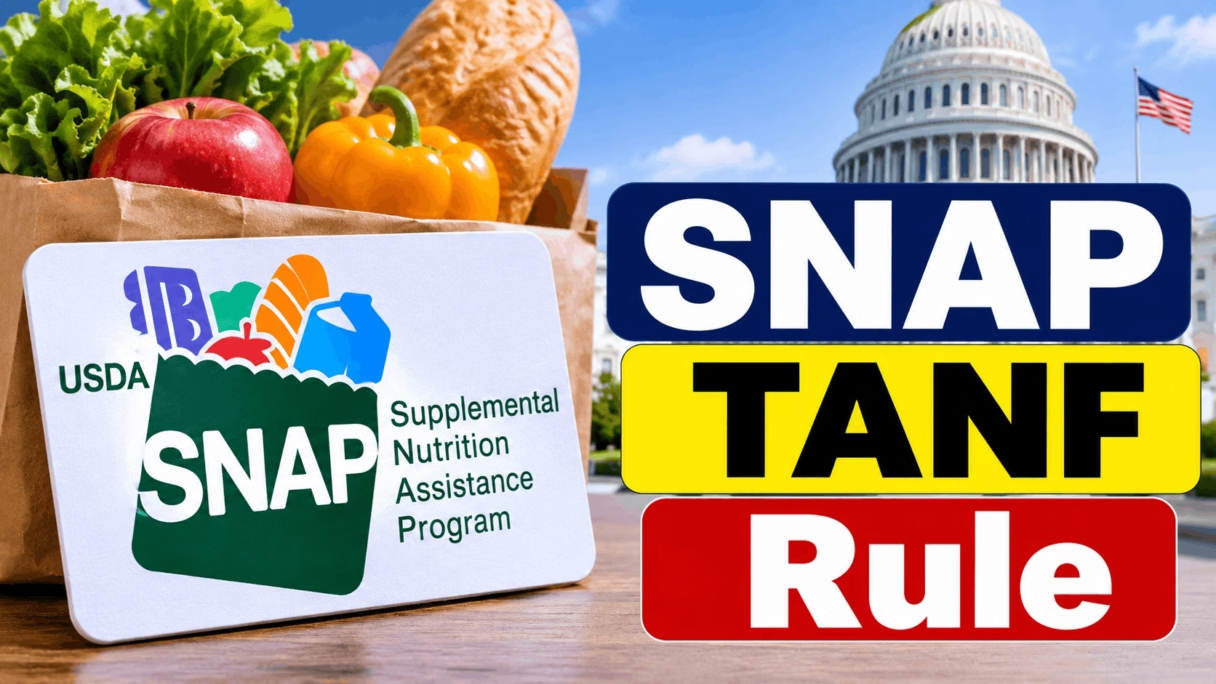
The proposed SNAP TANF rule would end a state shortcut called broad-based categorical eligibility (BBCE). USDA estimates that about 3.2 million households, or 6.3 million people, would lose automatic SNAP eligibility. The rule is only a proposal and is not in effect. Comments are open until December 10, 2026.
The U.S. Department of Agriculture published its proposed rule, “Reforming Categorical Eligibility,” in the Federal Register on November 10, 2026. It targets the way many states connect SNAP, the food assistance program, to TANF, the Temporary Assistance for Needy Families program. Today, a household can be treated as eligible for SNAP after receiving even a small TANF-funded service, such as a brochure, a hotline referral, or a child care or job training benefit. Under the proposal, that route would close for most households. Only families receiving regular TANF cash assistance would keep automatic eligibility. Everyone else would have to pass the standard SNAP income and asset checks. USDA says the change would end what it calls a loophole. Anti-hunger groups say it would hit working families hardest.
The proposal arrives at a tense moment for food assistance. SNAP enrollment has already been falling in many states because of earlier law changes, and the Trump administration released a second proposal on the same day that would tighten SNAP work requirements. A similar attempt to limit categorical eligibility was made in 2019 but was never finalized and was withdrawn in 2021. This time, USDA says the full effect would not arrive until fiscal year 2029, so nobody loses benefits because of this proposal today. Still, the 30-day comment window is the only formal chance for the public, states and food banks to respond before USDA decides how to proceed. Below is what the rule says, who is affected, what it costs, and what you can do right now. We’ll be updating this article monthly.
SNAP TANF Rule Key Dates and Numbers
| Item | Details |
|---|---|
| Rule name | Supplemental Nutrition Assistance Program: Reforming Categorical Eligibility |
| Agency | USDA Food and Nutrition Service |
| Posted for public inspection | November 9, 2026 |
| Published in the Federal Register | November 10, 2026 (91 FR 72454) |
| Public comment deadline | December 10, 2026 |
| Status | Proposed rule, not in effect |
| Expected full effect if finalized | Fiscal year 2029 |
| Households that would lose automatic eligibility | About 3.2 million |
| People that would lose automatic eligibility | About 6.3 million |
| Children who could lose automatic free school meals | About 1.8 million |
| Projected savings (USDA estimate) | About $44.6 billion over five years, fiscal years 2027 to 2031 |
| States using BBCE | 46, per USDA’s June 2026 chart |
What Is the SNAP TANF Rule and What Does It Change?
The rule is about categorical eligibility. Congress created it so that households already screened for another needs-based program would not need a second full review for SNAP. For decades, that mostly meant families receiving TANF cash assistance.
Over time, states widened the idea. Under broad-based categorical eligibility, a state can treat a household as SNAP eligible when it receives any TANF-funded benefit or service, including noncash items. Many states then set a higher income cutoff and drop the asset test. The standard federal gross income limit is 130 percent of the poverty line, but BBCE states often allow more, and some go as high as 200 percent.
The USDA proposal would roll that back. If it is finalized as written:
- Automatic SNAP eligibility would apply only to households receiving traditional TANF cash assistance.
- Noncash TANF-funded services, such as information pamphlets, hotline access, child care help or job training, would no longer qualify a household on their own.
- Households above the normal SNAP income limit, or over the federal asset limit, would generally lose the shortcut and have to qualify under regular rules.
- State agencies would need to check income and assets for many more cases.
USDA argues the policy has been stretched far beyond its original purpose. A department spokesperson said it has allowed states to take shortcuts and let households with income and assets far above federal limits receive benefits. The department has pointed to rare cases of wealthy households receiving SNAP as proof that the system needs tighter guardrails.
SNAP Time Limit Rule: What USDA’s New Proposal Means for Your Benefits
Who Is Affected by the SNAP TANF Rule?
The people most likely to be affected are households that qualify today only because of BBCE. They are usually not the poorest families, since very low income households generally pass the regular tests anyway. They are households just above the cutoff, or households with savings or a vehicle that push them over the asset limit.
Working families just above the income line
Michigan’s Save My SNAP coalition has warned that families sitting just over 130 percent of the poverty line stand to lose help. Advocates in several states describe the same group: low-wage workers such as direct care workers, retail cashiers and teacher assistants, who earn too much for the standard test but still struggle to afford groceries.
Households with savings or assets
Because many BBCE states do not apply the asset test, families with modest savings can receive SNAP. Under the proposal, they would face the federal resource limit again. Under federal rules, that limit has been about $3,000 for most households and about $4,500 when a member is elderly or disabled, adjusted from time to time.
Seniors and people with disabilities
Representative Angie Craig of Minnesota, the top Democrat on the House Agriculture Committee, said the move would take food assistance from millions more elderly Americans and children. Older adults on fixed incomes with small savings are one group states watch closely.
Children and school meals
Children in SNAP households receive free school breakfast and lunch without a separate application. USDA estimates about 1.8 million children could lose that automatic eligibility if their households leave SNAP. A separate estimate says about 42,000 children could lose Summer EBT beginning in 2029. Schools could also see effects on federal Title I funding formulas that rely on free and reduced price meal counts, as legislators in some states have warned in the past.
Who is not affected
Households receiving TANF cash assistance would still be categorically eligible. People who already qualify under standard income and asset rules would not be affected by this rule, though other SNAP changes may still apply. Territories without TANF, such as the Northern Mariana Islands, were not affected by the earlier 2019 version of the idea, and readers there should check local guidance.
SNAP TANF Rule by State: Where BBCE Is Used
USDA’s June 2026 BBCE chart lists 46 states, including all ten states where counties administer SNAP. An Associated Press report cited an earlier USDA study that counted 41 states and the District of Columbia using some form of broad-based eligibility. The difference reflects how the policy is counted and when, so check your own state’s agency for the current rule.
Anti-hunger groups say states with the most generous BBCE settings would feel the biggest changes. Food banks also warn about a ripple effect. In Nevada, advocates noted that for every meal a food bank distributes, SNAP provides nine, so losing SNAP households would push more people toward emergency food lines that are already stretched.
USDA also estimates that state administrative costs would rise by nearly $930 million, since caseworkers would have to verify income and assets for many more households. Some state officials worry that added complexity could raise payment error rates, which can carry financial penalties for states.
Cost, Savings and the Debate Over the Rule
USDA says the rule would save about $44.6 billion over fiscal years 2027 to 2031. Reporting on the proposal says federal spending would fall by nearly $45 billion and state spending by about $5.2 billion over five years. Another report put the drop in SNAP enrollment at about 17 percent, or nearly one in five recipients.
Supporters, including USDA, argue that:
- SNAP should go to households that meet clear, uniform income and asset tests nationwide.
- BBCE lets states bypass federal limits through very small TANF-funded services.
- Lower error rates and tighter integrity would protect taxpayer money.
Opponents, including the Food Research and Action Center, say eliminating BBCE does nothing to reduce hunger and does not improve program integrity. Their key points are:
- Most affected people are working households with low wages.
- The rule adds paperwork and cost for states, retailers and families.
- Children could lose school meal access as a knock-on effect.
- The proposal comes on top of earlier SNAP cuts from the 2025 budget law.
The Heritage Foundation’s Project 2025 blueprint listed BBCE as a target, which shows the idea has long been a conservative priority.
Companion Proposal: SNAP Work Requirements
On the same day, USDA filed a second proposed rule that would write the work requirement changes from the One Big Beautiful Bill Act of 2025 into regulation. According to coverage of the filing, it would:
- Extend the three-month time limit for adults who do not meet work rules to people up to age 64, instead of 55.
- Exempt parents only when a child is under 14, rather than under 18.
- End temporary exceptions for homeless adults, veterans and young adults who aged out of foster care.
This second proposal also has a 30-day comment period. Taken together, the two proposals could change who qualifies and how long benefits last, so households should watch both.
SNAP Eligibility Rule: USDA Proposal Could Cut Off 6.3 Million People, and Here Is Who Is at Risk
Is the SNAP TANF Rule in Effect? Timeline
No. As of mid-November 2026, this is a proposed rule. After the comment period closes on December 10, USDA must review the comments, may revise the text, and would then need to publish a final rule. Even then, USDA’s own projections point to full implementation in fiscal year 2029. Legal challenges are possible, as are changes in Congress. Your current SNAP benefits, your state’s BBCE policy and your recertification dates are not changed by this proposal today.
| Step | Status |
|---|---|
| Proposed rule published | Done, November 10, 2026 |
| Public comment period | Open until December 10, 2026 |
| Agency review of comments | Next |
| Final rule | Not yet issued |
| Full implementation | Projected for fiscal year 2029 |
How to Apply for SNAP Under Current Rules?
Nothing in the proposal changes how you apply today. Applications go through your state or county SNAP agency, not directly through USDA.
- Find your state agency on the USDA SNAP state directory at https://www.fns.usda.gov/snap/state-directory.
- Apply online through your state portal, in person at a local office, or by mail or fax where offered. Many states also accept phone applications for people who need help.
- Gather proof of identity, household size, income, rent and utility costs, and, where required, assets.
- Complete the interview, usually by phone.
- Respond quickly to any request for more documents.
You can also screen yourself on Benefits.gov at https://www.benefits.gov before applying.
SNAP Processing Time
Under federal rules, states must process a standard SNAP application within 30 days. Households with very little income and cash, or high housing costs compared with income, may qualify for expedited service, which means benefits within 7 days. These timelines are not changed by the proposed rule. If the rule is finalized, case reviews could take longer in states that now rely on BBCE, because caseworkers would have more income and asset checks to complete.
SNAP Payment Schedule
SNAP benefits are loaded onto your EBT card once a month. States set their own issuance dates and often stagger them across the month by case number, last name or birth date. Your payment date does not change because of this proposal. For your exact deposit date, check your state SNAP agency website or your EBT account.
Check Your Risk: SNAP TANF Rule Calculator
This simple tool gives a rough indication of whether your household could be affected if the proposal is finalized. It is informational only and not a benefit determination. Get your gross monthly income limit from your state agency or the USDA income chart.
SNAP TANF Rule Impact Checker
Answer four questions to see how the proposed rule could apply to your household. This is a rough guide, not an official decision.
The proposed rule is not in effect. Final rules and state policies may differ.
How to Comment on the SNAP TANF Rule?
Anyone can submit a public comment. Comments must be received on or before December 10, 2026.
- Open the rule on Regulations.gov using the Federal Register link in the table below.
- Select the comment option and write your own words.
- Explain how the change would affect your household, school, food bank or state agency. Specific facts carry more weight than form letters.
- Submit before the deadline and keep your tracking number.
Official Resources: Links and Tools
| Resource | Use | Link |
|---|---|---|
| Federal Register, Reforming Categorical Eligibility | Read the full proposed rule | https://www.federalregister.gov/documents/2026/11/10/2026-22936/supplemental-nutrition-assistance-program-reforming-categorical-eligibility |
| Regulations.gov | Submit a public comment | https://www.regulations.gov |
| USDA SNAP | Program rules and eligibility | https://www.fns.usda.gov/snap |
| SNAP state directory | Find your state agency, apply, check status | https://www.fns.usda.gov/snap/state-directory |
| Benefits.gov | Screen for benefits | https://www.benefits.gov |
| Office of Family Assistance (TANF) | TANF program information | https://www.acf.hhs.gov/ofa |
SNAP TANF Rule FAQs
What is the SNAP TANF rule?
It is a USDA proposed rule that would end broad-based categorical eligibility. States could no longer treat a household as SNAP eligible just because it receives a noncash TANF-funded service.
Is the SNAP TANF rule in effect?
No. It was published as a proposal on November 10, 2026. USDA must review comments and issue a final rule before anything changes.
When would the SNAP TANF rule take effect?
USDA’s estimates point to full effect in fiscal year 2029 if the rule is finalized.
How many people would lose SNAP benefits?
USDA estimates about 6.3 million people in 3.2 million households would lose automatic eligibility. That is an estimate of potential impact, not a confirmed number of people who will lose benefits, since some would still qualify under regular rules.
Will I lose my SNAP benefits right now?
No. Your current benefits and recertification dates are not changed by the proposal.
Which states would be affected?
USDA’s June 2026 chart lists 46 states as using BBCE. Ask your state agency how your state applies it.
Will children lose free school meals?
USDA estimates about 1.8 million children could lose automatic eligibility for free school meals if their households leave SNAP. Families can still apply for school meals directly.
How do I submit a comment?
Use Regulations.gov before December 10, 2026.
What is broad-based categorical eligibility in SNAP?
It is a state option that lets households qualify for SNAP by receiving a TANF-funded benefit or service, often with higher income limits and no asset test.
Does TANF automatically qualify you for SNAP?
Today, in most states, yes, even for some noncash TANF-funded services. Under the proposal, only TANF cash assistance would do that.
Who would lose SNAP under the new rule?
Mainly working households just above the income limit and households with assets over the federal limit that now qualify through BBCE.
Is the Trump administration ending SNAP for millions?
The administration has proposed a rule that USDA says would remove automatic eligibility for about 6.3 million people. It does not end SNAP, and people can still qualify under regular rules.
Can I still get SNAP if I get TANF cash assistance?
Yes. Households receiving TANF cash assistance would keep automatic eligibility under the proposal.
How long does SNAP take to process?
Up to 30 days for a standard application, and 7 days for expedited cases.
What is the SNAP income limit?
The standard federal gross limit is 130 percent of the poverty line, and the exact dollar amount depends on household size and is updated each year. Check your state agency for the current figure.
Did a similar rule happen before?
Yes. The first Trump administration proposed a similar rule in 2019. It was never finalized and the Biden administration withdrew it in 2021.
Conclusion
The SNAP TANF rule is one of the most significant food assistance proposals in years, but it is still a proposal. USDA says it wants to close a loophole and save about $44.6 billion over five years. Critics say it would remove automatic SNAP and school meal access for millions of working families and add cost to state agencies. For now, nothing changes for current SNAP households. The practical steps are to keep your case information up to date, watch your state agency for guidance, and use the comment period if you want your voice on the record before December 10, 2026. We will update this article as USDA reviews comments, issues a final rule, or states announce their plans.