
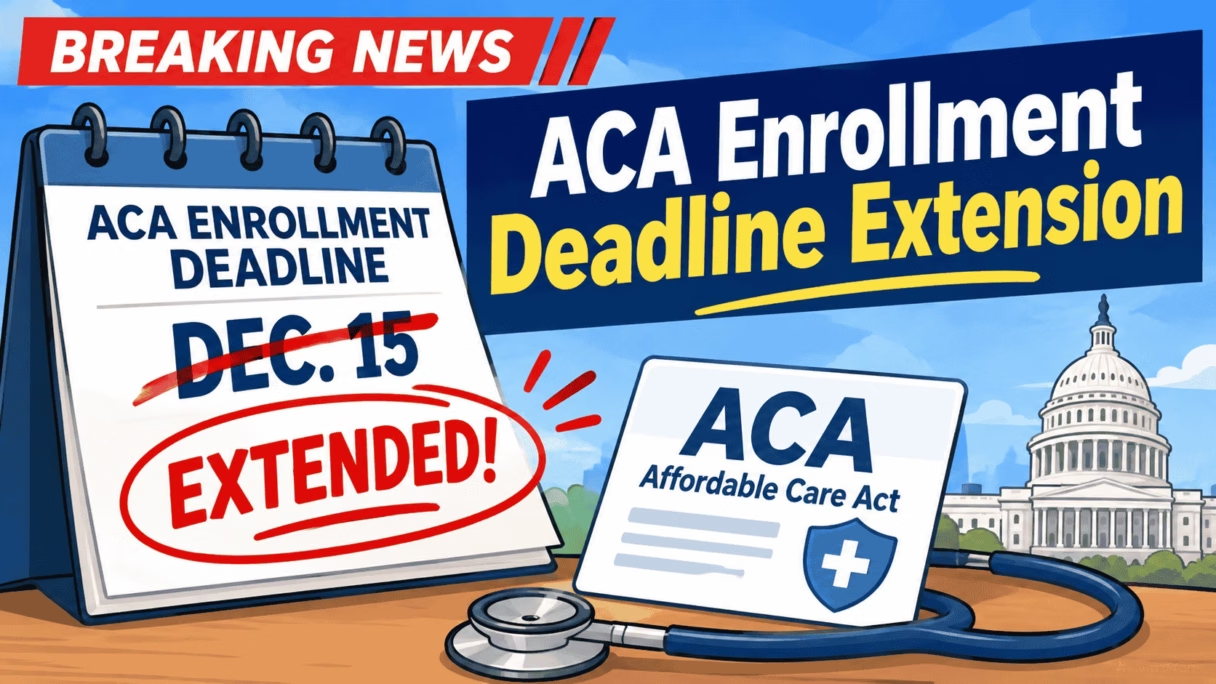
ACA Enrollment Deadline Extension: Advocacy groups and insurance brokers have asked CMS to move the Dec. 15 cutoff to Dec. 31, and the Dec. 15 date stays in place unless CMS acts. That date only decides whether coverage starts Jan. 1. HealthCare.gov open enrollment still runs through Jan. 15, 2027.
The ACA enrollment deadline extension request landed this week, and it comes from people who work the front lines of enrollment. Eleven broker firms signed a letter to the Centers for Medicare and Medicaid Services on Nov. 20, and advocacy groups sent their own letters on Nov. 21. Their complaint is practical: new identity checks are making applications slow, and online applications are timing out in the middle of the check, which forces people to start over. Brokers say an assisted application that used to take about 15 minutes now takes about an hour. With Dec. 15 only 20 days away, they want two more weeks so that people are not pushed into a February 1 start date or left with a gap in coverage. We’ll be updating this article monthly as CMS responds.
The pressure is highest in Texas, where broker-assisted enrollment made up 83 percent of ACA signups in 2026, up from 53 percent in 2020. The Texas Department of Insurance says the state accounts for roughly half of the 375,363 enrollees whose plans were canceled in a federal fraud crackdown. As of Wednesday, November 25, 2026, we found no public CMS response to the letters. Below, we explain exactly which deadline is in question, what changed this year, what the key dates are in every type of marketplace, and what you can do today so a processing delay does not cost you a month of coverage.
ACA Enrollment Deadline Extension Key Dates
| Item | Latest information |
|---|---|
| What was requested | Move the Dec. 15 deadline to Dec. 31 |
| Who asked | 11 broker firms (letter dated Nov. 20) and advocacy groups (letters dated Nov. 21) |
| Who must decide | CMS, which runs HealthCare.gov |
| Current status | No extension announced, per reporting on Nov. 25 |
| Days left until Dec. 15 | 20 days from Nov. 25 |
| Days left until Dec. 31 | 36 days from Nov. 25 |
| HealthCare.gov open enrollment | Nov. 1, 2026 to Jan. 15, 2027 |
| Deadline for Jan. 1 coverage | Dec. 15 in HealthCare.gov states |
| Coverage start if you enroll Dec. 16 to Jan. 15 | Feb. 1, 2027 |
| Main problem cited | Identity checks that time out and send applicants back to the start |
| Broker time per application | About 1 hour now, versus about 15 minutes before |
What Is the Dec. 15 ACA Deadline and Why It Is Not the End of Open Enrollment?
Many headlines call Dec. 15 the open enrollment deadline. That is a shortcut, and it can mislead people into thinking they are locked out after that day. Here is the accurate picture for the 2027 plan year.
Open enrollment in HealthCare.gov states opens Nov. 1, 2026 and closes Jan. 15, 2027. CMS confirmed that schedule in its Oct. 30 fact sheet on plan year 2027. Within that window, Dec. 15 is the last day to pick a plan if you want it to start Jan. 1. If you choose a plan between Dec. 16 and Jan. 15, coverage generally starts Feb. 1.
So the real cost of missing Dec. 15 is a month. You would have no new coverage in January, which matters for anyone who is losing an employer plan, aging off a parent’s policy, or who needs care early in the year. That is why the groups are asking for Dec. 31. A Dec. 31 cutoff would give people two extra weeks to get through the identity step and still be covered on the first day of the year.
Why was a shorter window even in the conversation? A 2025 federal rule would have ended federal open enrollment on Dec. 15 starting this fall. A federal court in Maryland vacated that part of the rule on June 12, 2026, in the case Columbus v. Kennedy. HHS appealed in July, and oral arguments were set for late October. An Aug. 4 HHS statement confirmed the Nov. 1 to Jan. 15 schedule for this season, though the dates could change for fall 2027 depending on the appeal. Some broker sites still list the old shorter window, so check official pages before you rely on a date.
Why ACA Identity Verification Is Slowing Down Enrollment?
The request exists because of a stack of integrity measures that CMS and the administration put in place over the past year. Together, they change what an ordinary enrollment looks like.
For agent-assisted applications on enhanced direct enrollment platforms, the consumer must now authorize the specific agent, usually with a one-time passcode or a link. Passcodes are single use and expire after 15 minutes. Platforms can send no more than three notifications in 24 hours for the same agent and application, and agents are blocked from moving forward until authorization is complete. That authorization is needed every plan year.
Some applicants face a second step called identity proofing. According to broker guidance and KFF Health News reporting, a consumer is treated as higher risk, and must verify identity through a third-party service such as Experian, if they are:
- Applying for new coverage, including coverage in a different state.
- Enrolled in a plan with a net premium of $30 or less a month after tax credits.
- Switching to a different or new agent.
People who fail the check can still enroll through HealthCare.gov or the call center, and may need to call a help desk or upload identification. Brokers say the weak point is the online flow: the application times out during the enhanced identity check, and the user has to start over. For someone with a slow connection, a shared phone or a spotty email account, that can turn a short task into an evening of retries.
None of this is surprising to CMS. The agency has said the steps are meant to stop enrollments that were made without consent and to protect consumers from improper plan switches. Whether the checks are worth the friction is a policy debate, and this article does not take a side. What matters for deadline planning is that the checks add time, and time is exactly what December does not offer.
Fraud Crackdown Background: 760,000 Enrollees and the Broker Freeze
To understand the mood behind the letters, it helps to know what happened over the summer. On Aug. 31, 2026, CMS canceled about 315,000 plan year 2026 policies covering more than 760,000 people. The agency called the enrollments unauthorized. According to a Morgan Lewis summary, they involved agent or broker help, lacked verified citizenship or immigration documentation, and insurers could not identify claims or establish contact with the consumer.
CMS also asked health plans to verify eligibility for nearly 1.2 million people. Enrollees had 30 days to respond, and those who did not lost coverage. The agency plans to investigate about 440,000 more flagged enrollees and estimates it can recover about $2.2 billion in advance premium tax credit payments. Some stakeholders have questioned whether the process followed normal procedures and whether legitimate enrollments were canceled. According to the wisevoter report on the letters, fewer than 1 percent of removed enrollees have asked for reinstatement so far, and it is unclear how many removals will be reversed.
A separate action is the broker moratorium. An interim final rule published Sept. 23 made the pause effective Sept. 22. It bars registration of new agents and brokers in the 30 federally facilitated marketplaces for plan year 2027 if they did not hold an active 2026 exchange agreement. Web brokers and agents registering with state exchanges are not affected. The pause is expected to last until Feb. 1, 2027 unless it is lifted or extended. CMS cited notices of intent to terminate sent to 100 agents and brokers in July and 469 in August. Agent groups have filed lawsuits against the policy.
The result is a squeeze. Fewer agents can help, each application takes longer, and demand peaks in the weeks before Dec. 15. That is the core of the argument for more time.
Texas and Other States Feeling the Pressure
The impact is not evenly spread. Texas is the clearest example. The state insurance department says Texas makes up about half of the 375,363 canceled enrollees in the state’s reporting, and broker-assisted enrollment there reached 83 percent of 2026 signups. If most people in a state depend on brokers, any slowdown in broker workflow becomes a statewide bottleneck.
Other states that rely on HealthCare.gov face the same Dec. 15 date. States that run their own exchanges set their own calendars, and several already give people more time. If you live in one of them, the extension request does not change your dates at all. The table in the next section shows the deadlines we could confirm.
ACA Open Enrollment 2027 Dates by State Exchange
The following dates come from a HealthInsurance.org review of 2027 schedules. Several exchanges changed their calendars during the court fight, so confirm with your state site before acting.
| State exchange | Open enrollment ends | Deadline for Jan. 1 start |
|---|---|---|
| HealthCare.gov states | Jan. 15, 2027 | Dec. 15 |
| California | Jan. 31 | Dec. 31 |
| Colorado | Jan. 15 | Dec. 15 |
| Idaho | Dec. 15 | Dec. 15 |
| Maryland | Jan. 15 | Dec. 31 |
| Massachusetts | Jan. 23 | Dec. 23 |
| Nevada | Jan. 15 | Dec. 31 |
| New Jersey | Jan. 31 | Dec. 31 |
| New Mexico | Jan. 15 | Dec. 31 |
| New York | Jan. 31 | Not stated |
| Oregon | Jan. 15 | Dec. 31 |
| Vermont | Dec. 28 | Not stated |
| Virginia | Jan. 29 | Dec. 31 |
| Washington | Jan. 15 | Dec. 31 |
One source lists Rhode Island with a Dec. 23 Jan. 1 deadline and another lists Dec. 31, so we left it out. Idaho and Vermont are the two states with windows that close before January. If you live in a state exchange, your marketplace website is the final authority.
How to Enroll in ACA Coverage Before the Deadline?
If you want coverage on Jan. 1, treat Dec. 15 as real until CMS says otherwise. Here is a practical way to get it done.
- Check your state. Use the marketplace finder on HealthCare.gov to see whether you use the federal site or a state exchange.
- Create or log in to your account early. If you are new, you will be asked to verify your identity. Do this first, not on the last weekend.
- Gather documents. Have Social Security numbers, immigration document numbers if they apply, an estimate of your 2027 household income, and any current policy information.
- Compare plans. Do not rely on auto renewal. Plans and prices change every year, and some insurers, including Cigna, have reduced coverage areas.
- Select a plan before Dec. 15 for Jan. 1 coverage, then watch for your insurer’s bill.
- If you use a broker, book now. With the moratorium, fewer agents are available, and you will need to approve the agent by passcode or link.
If the online identity step fails, do not keep retrying all night. Use the HealthCare.gov call center, a local navigator, or a certified agent. HealthCare.gov offers a local help finder for in-person and phone support.
ACA Marketplace 2027: Premiums Rise 13% as Subsidies Stay Expired, and What You Can Do About It
ACA Application Processing Time: What to Expect Now
Processing time is the heart of this story, so plan for it. Brokers report that an assisted application now takes about an hour, compared with about 15 minutes earlier. That is a broker estimate from the letters, not a CMS figure, and your experience may differ.
Time can also be lost in smaller ways. A one-time passcode expires after 15 minutes. If the person who must authorize the agent is not near their phone or email, the application stalls. Identity proofing can fail on a first try, which may require a document upload or a call. After you submit, your eligibility can still be flagged for a data matching issue, which asks you to send extra paperwork. Respond fast and keep copies, because a missed request can lead to lost subsidies.
A useful rule is to aim to finish at least a week before the deadline. That leaves room for one failed check, one missed call and one document request without losing January coverage.
ACA Premium Payment Schedule and When Coverage Starts
Choosing a plan does not always mean you are covered. Coverage starts only after the insurer receives your first premium payment, and each insurer sets its own payment deadline. Check your plan confirmation and the first bill carefully. We could not confirm one nationwide payment date, so do not assume one.
| Plan selection date | Typical coverage start |
|---|---|
| On or before Dec. 15, 2026 | Jan. 1, 2027 |
| Dec. 16, 2026 to Jan. 15, 2027 | Feb. 1, 2027 |
| After Jan. 15, 2027 | Only with a special enrollment period |
If a new deadline of Dec. 31 is granted, you would expect the Jan. 1 start to apply to those selections as well, but that would need to be stated in a CMS announcement. Until then, plan around Dec. 15. If you have a qualifying life event, such as losing employer coverage, marriage, divorce, a new baby or a move to a new ZIP code, a special enrollment period gives you a 60-day window.
What ACA Coverage Costs in 2027: Premiums, Subsidies and Out-of-Pocket Limits
Cost is the other reason people want more time to shop. According to reporting on insurer filings, insurers requested a median increase of about 15 percent for 2027, with requests ranging from a 1 percent decrease to a 54 percent increase across 276 insurers. Insurers cite medical price growth, a median medical cost trend of 10 percent and GLP-1 drug spending.
Most enrollees still receive subsidies, but the help is smaller than it was. Households above four times the federal poverty level no longer qualify for enhanced credits after those credits expired. KFF Health News listed the 2027 cutoff as $63,840 for a single person, $86,560 for a couple and $109,280 for a family of three. The out-of-pocket maximum rises about 13 percent to $12,000 for an individual and $24,000 for a family. Many lawfully present immigrants, including H-1B visa holders, refugees, asylees, people with temporary protected status and those with pending green card applications, lose subsidy eligibility. Green card holders remain eligible.
CMS presents a more positive picture in its fact sheet. It says more than 75 percent of HealthCare.gov buyers can find premiums at or below $50 a month, shoppers will see about 100 plans on average from five to six insurers, and eligible enrollees will have about 35 HSA-eligible plans on average. Both pictures can be true, because the answer depends on your income, age, state and plan type. The best approach is to enter your own numbers into the marketplace tool.
Will CMS Extend the ACA Enrollment Deadline?
There is precedent for short extensions, though not for this exact situation. In December 2019, HealthCare.gov was extended by a short period after technical problems, and the federal government gave consumers a brief extra window. That case involved system outages rather than identity rules, so it is an imperfect comparison.
What would push CMS to act? A clear technical failure would be the strongest reason, along with evidence that large numbers of people are being timed out. What would push against it? The agency has framed identity checks as fraud protection, and a late extension could create confusion about the Jan. 15 end date. We do not know which way CMS will go, and we are not predicting it. Readers should assume Dec. 15 until an official notice says otherwise.
ACA Enrollment Deadline Countdown and 2027 Subsidy Cutoff Checker
ACA Enrollment Deadline Countdown and 2027 Subsidy Cutoff Checker
Dates are for HealthCare.gov states. State exchanges differ. Dec. 15 stays in place unless CMS announces a change. Not tax or legal advice.1. Days left until each ACA deadline
2. Coverage start date by plan selection date
3. 2027 enhanced subsidy cutoff (400% of federal poverty level)
ACA Open Enrollment 2027 End Dates: HealthCare.gov vs State Exchanges
ACA Open Enrollment 2027 End Dates: HealthCare.gov vs State Exchanges
Length of the enrollment window in days, counted from Nov. 1, 2026 to each end date. Idaho, Connecticut and Massachusetts start earlier, so their true windows are longer.
Source: HealthInsurance.org, CMS. Confirm dates with your marketplace.
ACA Enrollment Cancellations 2026: CMS Fraud Crackdown by the Numbers
ACA Enrollment Cancellations 2026: CMS Fraud Crackdown by the Numbers
People affected by each CMS action. The 440,000 figure is flagged enrollees CMS plans to investigate, not confirmed cancellations.
Source: Morgan Lewis summary of CMS actions; Texas Department of Insurance figure via news reports.
ACA Subsidy Cutoff 2027: Income Limit by Household Size
ACA Subsidy Cutoff 2027: Income Limit by Household Size
Income at four times the federal poverty level. Households above these amounts lose eligibility for enhanced credits.
Source: KFF Health News. Other household sizes not shown.
Will Your ACA Subsidy End in 2026? State-by-State Marketplace Guide and Premium Tax Credit Updates
Official Websites and Resources for ACA Enrollment
Use official sources for logins, applications and status checks. Beware of look-alike sites that charge fees or ask for payment details. HealthCare.gov does not charge to enroll.
| Resource | What you can do there | Link |
|---|---|---|
| HealthCare.gov | Log in, apply, compare plans, check application status | https://www.healthcare.gov |
| Marketplace in your state | Find out whether you use HealthCare.gov or a state exchange | https://www.healthcare.gov/marketplace-in-your-state/ |
| Find local help | Locate navigators, agents and assisters near you | https://www.healthcare.gov/find-local-help/ |
| CMS 2027 plans and prices fact sheet | Official dates, plan counts and premium notes | https://www.cms.gov/newsroom/fact-sheets/plan-year-2027-marketplace-plans-prices-fact-sheet-0 |
| CMS program integrity fact sheet | Background on cancellations and consumer help | https://cms.gov/newsroom/fact-sheets/cms-actions-protect-consumers-strengthen-exchange-program-integrity |
| CMS newsroom | Watch for any deadline notice | https://www.cms.gov/newsroom |
| Marketplace Call Center | Report unauthorized enrollment or plan switches | 1-800-318-2596 (TTY 1-855-889-4325) |
| HHS Office of Inspector General | Report fraud | https://oig.hhs.gov/fraud/report-fraud |
FAQs About the ACA Enrollment Deadline Extension
Has CMS extended the ACA enrollment deadline?
Not as of Nov. 25, 2026. Advocacy groups and brokers have asked CMS to move the Dec. 15 deadline to Dec. 31, and we found no public response from the agency.
What is the ACA open enrollment deadline for 2027 coverage?
In HealthCare.gov states, open enrollment runs from Nov. 1, 2026 to Jan. 15, 2027. Dec. 15 is the last day to select a plan for coverage that starts Jan. 1.
Why do groups want the deadline moved to Dec. 31?
They say new identity verification steps are slowing applications, and online applications time out during the enhanced identity check. An extra two weeks would give people more time to finish and still have Jan. 1 coverage.
What happens if I miss Dec. 15?
If you are in a HealthCare.gov state, you can still enroll until Jan. 15, but coverage generally starts Feb. 1 instead of Jan. 1.
Who asked CMS for the extension?
Eleven broker firms signed a letter dated Nov. 20, and advocacy groups sent letters on Nov. 21, according to reporting on the requests.
Do state exchanges have different deadlines?
Yes. Many state exchanges run past Jan. 15, and several accept plan selections until Dec. 31 for Jan. 1 coverage. Idaho and Vermont close before January.
Why are ACA applications timing out?
Brokers say the enhanced identity check can time out, forcing the applicant to start over. One-time passcodes also expire after 15 minutes, which can stall an application if the consumer is not available.
Do I need an agent to enroll?
No. You can enroll yourself on HealthCare.gov, by phone, or with a navigator. An agent is optional, and with the broker moratorium, availability may be limited.
Is ACA open enrollment ending December 15?
For most people using HealthCare.gov, no. Dec. 15 is the deadline for Jan. 1 coverage, and open enrollment itself ends Jan. 15, 2027.
Can I still get ACA coverage after December 15?
Yes, until Jan. 15 in HealthCare.gov states, with a Feb. 1 start date. After that, you generally need a special enrollment period.
What is the penalty for not having health insurance in 2027?
There is no federal tax penalty for being uninsured, though a few states have their own rules. Check your state’s requirements.
How do I verify my identity for HealthCare.gov?
You may be asked to confirm your identity through a third-party service, and if that fails you may need to call a help desk or upload identification. Official help is available at HealthCare.gov and the call center.
Why was my ACA plan canceled?
In August, CMS canceled about 315,000 plans covering more than 760,000 people it deemed unauthorized. If you believe yours was canceled in error, use the Marketplace Call Center or the appeals process.
How much will ACA premiums go up in 2027?
Insurers requested a median increase of about 15 percent, with a range from a 1 percent decrease to a 54 percent increase. Your own price depends on your plan and subsidy.
Who loses ACA subsidies in 2027?
Households above four times the federal poverty level lose eligibility for enhanced credits, and many lawfully present immigrants lose eligibility for financial help.
How do I report ACA enrollment fraud?
Call the Marketplace Call Center at 1-800-318-2596 for unauthorized enrollments, or use the HHS Office of Inspector General fraud hotline at 1-800-447-8477.
Conclusion
The ACA enrollment deadline extension request is a small ask with big consequences for people who depend on brokers and on a smooth online process. Two weeks could be the difference between coverage on Jan. 1 and a gap that lasts until February. At the moment, though, nothing has changed. CMS has not announced an extension, Dec. 15 remains the deadline for Jan. 1 coverage in HealthCare.gov states, and open enrollment still ends Jan. 15, 2027.
The sensible plan is to act as if the date will hold. Verify your identity early, approve your agent quickly, respond to any document request the same day, and finish at least a week before Dec. 15. If CMS does announce more time, treat it as a bonus rather than a plan. We’ll update this page as soon as the agency responds and as state exchanges post changes.
What the 2026 Midterm Results Could Mean for Your ACA Health Insurance and Medicaid?