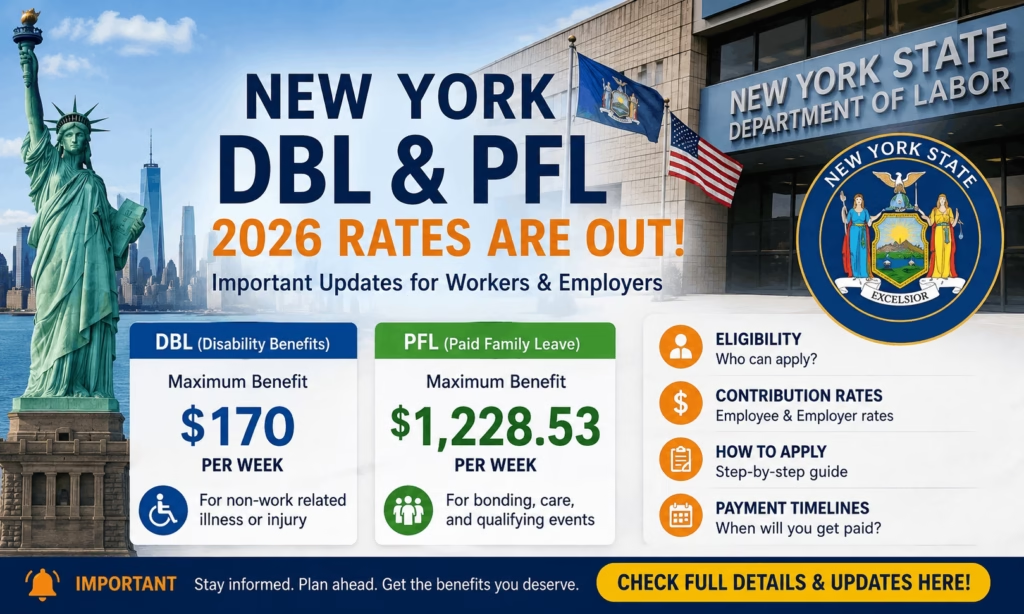
New York DBL and PFL 2026: New York workers heading into 2026 are dealing with two very different numbers, and the gap between them is bigger than most employees realize. The New York Disability Benefits Law (DBL) weekly benefit cap has been frozen at just $170 a week for decades, while the state’s Paid Family Leave (PFL) program is climbing again in 2026, with the maximum weekly benefit rising to $1,228.53, up from $1,177.32 in 2025. For anyone planning time off work for a personal illness, pregnancy, bonding with a new child, or caring for a sick family member, understanding which program applies, and what it actually pays, has real financial consequences.
The New York State Department of Financial Services confirmed the 2026 numbers in its annual adjustment: the PFL employee contribution rate rises to 0.432% of gross wages, up from 0.388% in 2025, with a new annual cap of $411.91 per employee. The increase is tied directly to the New York State Average Weekly Wage (SAWW), which itself is rising to $1,833.63 for 2026. Meanwhile, the DBL benefit maximum remains unchanged at $170 a week, a figure that has not moved since the 1980s, even as PFL benefits have grown substantially since the program launched in 2018. This guide breaks down both programs side by side, what changed for 2026, who qualifies, how the application process works, and when payments actually arrive. We’ll be updating this article monthly as New York State agencies release new guidance and confirm final figures for the year.
New York DBL and PFL 2026 Key Highlights
| Detail | Disability Benefits Law (DBL) | Paid Family Leave (PFL) |
|---|---|---|
| Purpose | Off-the-job injury, illness, or pregnancy | Bonding, family care, military exigency |
| 2026 maximum weekly benefit | $170/week | $1,228.53/week |
| Benefit calculation | 50% of average weekly wage, capped | 67% of average weekly wage, capped |
| 2026 employee contribution rate | 0.5% of wages, capped at $0.60/week | 0.432% of gross wages |
| 2026 maximum annual employee contribution | $31.20/year (approx.) | $411.91/year |
| Maximum duration | 26 weeks in a 52-week period | 12 weeks per year |
| Combined DBL + PFL cap | 26 weeks combined in any 52-week period | Same combined cap applies |
| State Average Weekly Wage (SAWW) used for 2026 | $1,833.63 | $1,833.63 |
| Can they run together? | No, benefits cannot be paid concurrently | No, same rule applies |
| Administering agency | New York Workers’ Compensation Board (WCB) | New York Workers’ Compensation Board (WCB) |
What Is New York Disability Benefits Law (DBL) 2026?
New York’s Disability Benefits Law is one of the oldest short-term disability programs in the country, and it exists to replace a portion of lost wages when a worker cannot do their job because of a non-work-related injury or illness. This includes pregnancy and childbirth recovery, which is why many New York employees first encounter DBL during a maternity leave rather than a workplace accident.
The DBL weekly benefit is calculated as 50% of an employee’s average weekly wage over the prior eight weeks worked, but it is hard-capped at $170 a week regardless of how much someone actually earns. That cap has stayed flat for so long that it now covers only a small fraction of a typical New York salary, which is a major reason many employers choose to supplement DBL with a private short-term disability policy. Benefits normally begin after a seven-day waiting period and can run for up to 26 weeks within a 52-week period.
Almost every private-sector employer in New York with one or more employees is legally required to carry DBL coverage, either through the New York State Insurance Fund, a licensed private carrier, or an approved self-insurance plan. Employees can be asked to contribute up to half a percent of their wages toward the cost, but that employee share is capped at 60 cents a week, meaning the maximum an employee pays out of pocket in a year is roughly $31.20.
$1,636 ODSP and Canada Disability Benefit Now Stack Fully in Ontario, No Clawback on Either Payment
$4427 EITC Payment: How to Know If You Qualify and When Will You Get It?
What Is New York Paid Family Leave (PFL) 2026?
Paid Family Leave was added onto the Disability Benefits Law framework starting January 1, 2018, and it works very differently from DBL. Rather than replacing income lost to a worker’s own illness, PFL replaces income when an employee needs time away from work to bond with a new child, care for a family member with a serious health condition, or handle a qualifying military exigency involving a spouse, domestic partner, child, or parent on active duty.
For 2026, the PFL benefit rate stays at 67% of an employee’s average weekly wage, but the dollar cap tied to that percentage moves up because it is pegged to the statewide average wage. The maximum PFL weekly benefit for 2026 is $1,228.53, calculated as 67% of the new $1,833.63 State Average Weekly Wage. An employee earning at or above the SAWW receives the full maximum; someone earning less receives 67% of their own actual average weekly wage. Eligible workers can take up to 12 weeks of PFL in a 52-week period, and the leave is job-protected, meaning the employer must reinstate the employee to the same or a comparable position afterward.
Since 2023, the definition of “family member” under PFL has included siblings, in addition to spouses, domestic partners, children, parents, parents-in-law, grandparents, and grandchildren. That broader definition remains in place for 2026, and it is worth double-checking against your specific relationship before assuming you don’t qualify.
NY DBL vs PFL 2026: What’s the Real Difference?
A lot of New York employees assume DBL and PFL are the same benefit under a different name, but they cover completely different life events and pay out at very different rates.
DBL is about an employee’s own inability to work due to illness, injury, or pregnancy-related recovery. It pays 50% of wages, capped low at $170 weekly, and it has existed since long before Paid Family Leave was created. PFL, on the other hand, is about caregiving and bonding, not the employee’s own medical condition, and it pays a much higher 67% of wages up to the new $1,228.53 cap for 2026.
Both benefits share the same combined 26-week limit in a rolling 52-week period, and New York law does not allow someone to collect DBL and PFL payments for overlapping periods of time. In practice, many new parents use DBL first to cover pregnancy-related disability, then transition to PFL for bonding time once they’ve physically recovered, since the two programs are designed to work sequentially rather than simultaneously.
Eligibility Criteria for NY DBL and PFL 2026
Eligibility for both programs depends heavily on how long an employee has been working and how many hours per week they typically put in.
For PFL eligibility, an employee who regularly works 20 or more hours per week becomes eligible after 26 consecutive weeks of employment with a covered employer. An employee who works fewer than 20 hours per week becomes eligible after working 175 days, and those days do not need to be consecutive. Part-time and seasonal workers are not automatically excluded; they simply need to meet the applicable day or week threshold.
For DBL eligibility, most employees working for a covered employer in New York State are eligible from their first day of employment for injuries or illnesses that are not job-related, though the specific waiting period before benefits begin is seven consecutive days of disability.
A few groups sit outside standard coverage rules. Government employees, some non-profit workers, and certain independent contractors may not be automatically covered unless their employer has opted in. Self-employed individuals and sole proprietors can choose to purchase optional DBL and PFL coverage for themselves, which is worth knowing if you run your own small business in New York and want the same protection your employees would receive.
Employment Insurance (EI) 2026 Rule Changes: What Every Canadian Worker Needs to Know
Empire State Child Credit 2026: $1,000 Per Child Under 4, Full Eligibility & Payment Guide
2026 Contribution and Benefit Rate Changes
The most important shift for 2026 sits in the PFL contribution rate. New York’s Department of Financial Services confirmed the rate employees pay through payroll deduction is increasing from 0.388% of gross wages in 2025 to 0.432% in 2026. Because PFL is funded entirely by employee payroll deductions (employers may voluntarily cover the cost but are not required to), this increase directly affects take-home pay for nearly every private-sector employee in the state.
The new annual cap on what an employee can be required to contribute toward PFL in 2026 is $411.91, up from $354.53 the year before. This is deducted incrementally from each paycheck throughout the year rather than in one lump sum, and once an employee hits the annual cap, no further PFL deductions are taken for the rest of that calendar year.
DBL contribution rules have not changed for 2026. Employers may still deduct up to half a percent of wages from employees, capped at 60 cents per week, which works out to roughly $31.20 annually if an employer chooses to pass along the maximum allowable share.
| Program | 2025 Rate/Cap | 2026 Rate/Cap | Change |
|---|---|---|---|
| PFL contribution rate | 0.388% of gross wages | 0.432% of gross wages | Increased |
| PFL annual max contribution | $354.53 | $411.91 | Increased |
| PFL maximum weekly benefit | $1,177.32 | $1,228.53 | Increased |
| DBL employee contribution | 0.5%, capped at $0.60/week | 0.5%, capped at $0.60/week | Unchanged |
| DBL maximum weekly benefit | $170/week | $170/week | Unchanged |
| State Average Weekly Wage (SAWW) | Lower base | $1,833.63 | Increased |
How to Apply for NY DBL and PFL in 2026
Filing a claim for either benefit follows a fairly structured process, though the exact paperwork depends on whether your employer uses the New York State Insurance Fund, a private carrier, or a self-insured plan.
- Notify your employer first. Before filing any paperwork, let your employer or HR department know you need disability or family leave, since they will need to provide the name of the insurance carrier handling your claim.
- Get the correct claim form. For DBL, this is typically Form DB-450 (Statement of Rights) paired with a claim form from your specific carrier. For PFL, most carriers use the standard PFL-1 Request for Paid Family Leave form, supported by the appropriate certification form depending on your reason for leave (bonding, caregiving, or military exigency).
- Attach supporting documentation. This means a healthcare provider’s certification for a medical disability, a birth certificate or adoption record for bonding leave, or a healthcare provider’s certification for a family member’s serious health condition.
- Submit within the filing window. Claims generally need to be filed within 30 days of the start of leave to avoid delays or denial on procedural grounds.
- Send the completed claim to your carrier. This could be the New York State Insurance Fund, a private insurer such as MetLife, The Hartford, Sun Life, or Prudential, or your employer’s self-insured plan administrator, depending on who provides your company’s coverage.
- Track your claim status. Most carriers offer an online portal or claimant login where you can check the status of a submitted claim, upload additional documents, or see payment history.
NY PFL and DBL Processing Time 2026
Once a complete claim is submitted, New York law requires the carrier to make a decision within 18 calendar days of receiving the completed claim with all required documentation. If the carrier needs additional information, that clock can be affected, so submitting a fully documented claim the first time is the fastest way to avoid delays.
For DBL, payments are also expected to begin promptly once approved, generally following the standard first-payment timeline set by the Workers’ Compensation Board. Missing information, an incomplete healthcare certification, or an employer failing to confirm employment details are the most common reasons claims stall past the standard processing window. If you haven’t heard back close to the 18-day mark, contacting your carrier directly and confirming your claim was received is the most effective next step.
Oregon Kicker Tax Credit 2026: How To Claim Your Share Of The $1.41 Billion Surplus
California Climate Credit 2026: Payment Timing Just Changed, Here Is What to Expect on Your Bill
$145.83 BC Family Benefit First Child Payment Confirmed as Income Phase-Out Shifts to $96,562
Payment Schedule 2026: When Do Benefits Actually Arrive?
Once approved, most carriers issue PFL and DBL payments on a biweekly basis, matching how many employers run standard payroll cycles, though this can vary slightly depending on which insurance carrier administers your employer’s plan. Direct deposit is widely available and is generally the fastest way to receive payments once approved, while some carriers still default to mailed paper checks unless you specifically request direct deposit.
Benefit payments are locked in based on your first day of absence, meaning if your leave starts before a new benefit year but continues into it, your weekly benefit amount is typically based on the rate in effect on your first day out, not a blended rate. This detail matters for anyone whose leave spans the transition from 2025 into 2026, since the 2026 PFL maximum is notably higher.
It’s also worth understanding the tax treatment. PFL benefits are subject to federal income tax but are not subject to New York State income tax, and employees typically receive a 1099 form reporting these benefits for the following tax season. DBL benefit tax treatment can vary depending on whether the employer or employee funded the contributions, so checking with your specific carrier or a tax professional is the safest approach.
Official New York DBL and PFL Resources
| Resource | What It’s For | Link Type |
|---|---|---|
| NY Workers’ Compensation Board | Official DBL and PFL program rules, forms, and updates | Official government website |
| Paid Family Leave official portal | PFL forms, FAQs, and eligibility details | Registration and information |
| NY State Insurance Fund | Coverage for employers without private insurance | Login and account access |
| Carrier claimant portals (MetLife, Hartford, Sun Life, Prudential) | Claim status tracking and document upload | Status check login |
Search “NY Workers Compensation Board Disability and Paid Family Leave” or “Paid Family Leave NY gov” to reach the current official pages, since carrier-specific claimant portal links vary by employer and insurance provider.
FAQs About NY DBL and PFL 2026
What is the maximum DBL benefit in New York for 2026?
The maximum DBL weekly benefit remains $170 a week for 2026, unchanged from prior years, and it equals 50% of an employee’s average weekly wage up to that cap.
What is the maximum PFL weekly benefit in New York for 2026?
The 2026 maximum PFL weekly benefit is $1,228.53, up from $1,177.32 in 2025, based on 67% of the new $1,833.63 State Average Weekly Wage.
Can I receive DBL and PFL benefits at the same time?
No. New York does not allow DBL and PFL benefits to be paid concurrently for the same period, though an employee may use one after the other, such as DBL for pregnancy recovery followed by PFL for bonding.
How long can I take PFL in New York in 2026?
Eligible employees can take up to 12 weeks of Paid Family Leave in a 52-week period, and DBL plus PFL combined cannot exceed 26 weeks in any rolling 52-week window.
Who pays for PFL in New York?
PFL is funded entirely through employee payroll deductions unless an employer voluntarily chooses to cover some or all of the cost, and the 2026 employee contribution rate is 0.432% of gross wages, capped at $411.91 annually.
Is New York Paid Family Leave taxable?
Yes, PFL benefits are subject to federal income tax, but they are exempt from New York State income tax, and recipients typically get a 1099 form for tax filing purposes.
How do I check the status of my NY DBL or PFL claim?
Claim status is typically checked through your specific insurance carrier’s online claimant portal, which your employer or HR department can direct you to based on who administers your company’s coverage.
Does a part-time employee qualify for PFL in New York?
Yes. Part-time employees working fewer than 20 hours per week become eligible for PFL after working 175 days, while those working 20 or more hours weekly qualify after 26 consecutive weeks.
How long does it take to get approved for PFL in New York?
Insurance carriers are required to make a decision on a complete PFL claim within 18 calendar days of receiving all necessary documentation.
Conclusion
New York’s 2026 numbers highlight just how differently DBL and PFL have evolved since PFL was introduced in 2018. While the Paid Family Leave maximum keeps climbing each year alongside the state’s average wage, now reaching $1,228.53 a week, the older Disability Benefits Law cap has stayed frozen at $170 a week for decades, leaving a significant gap in wage replacement for employees who need time off for their own medical condition rather than caregiving or bonding. Whether you’re planning parental leave, caring for a family member, or dealing with a personal illness, knowing which program applies, what it actually pays, and how the 2026 contribution rate changes affect your paycheck can make a real difference in planning your time away from work. Check with your employer’s HR department or your plan’s insurance carrier for the most current forms and claimant portal access specific to your workplace.
Trump Halts 50 Percent Tariffs Canada: What the Last Minute Deal With Ottawa Means
Green Card Rule Changes: New Public Charge Test to Assess Age, Health, Family Status and Finances