Ontario Social Assistance Immigration Status Rules: Ontario moved fast this week to close what Premier Doug Ford called a loophole in the province’s welfare system. On August 13, 2026, the province’s Minister of Children, Community and Social Services confirmed that Ontario has amended the regulations governing Ontario Works and the Ontario Disability Support Program, and the change took effect immediately, the same day it was announced. Under the new Ontario social assistance immigration status rules, people living in Canada without legal authorization and those authorized to stay only temporarily, including holders of study permits, work permits, and visitor or tourist visas, are no longer eligible for either program.
Minister Michael Parsa framed the change as a matter of fairness to taxpayers, saying it will ensure public dollars are focused on people facing financial hardship who are legally allowed to live in Canada. The amendment follows weeks of political pressure that began after media reports surfaced about a Social Benefits Tribunal ruling in July 2026 that awarded Ontario Works payments to a man who had entered Canada on a temporary work permit back in 1997 and remained in the country long after that permit expired. Ford had publicly vowed to change the rules within days of that story breaking, and the province delivered the regulatory amendment within weeks. We will be updating this article monthly as further guidance and any legal challenges to the new rules emerge.
What the New Ontario Social Assistance Immigration Status Rules Actually Say
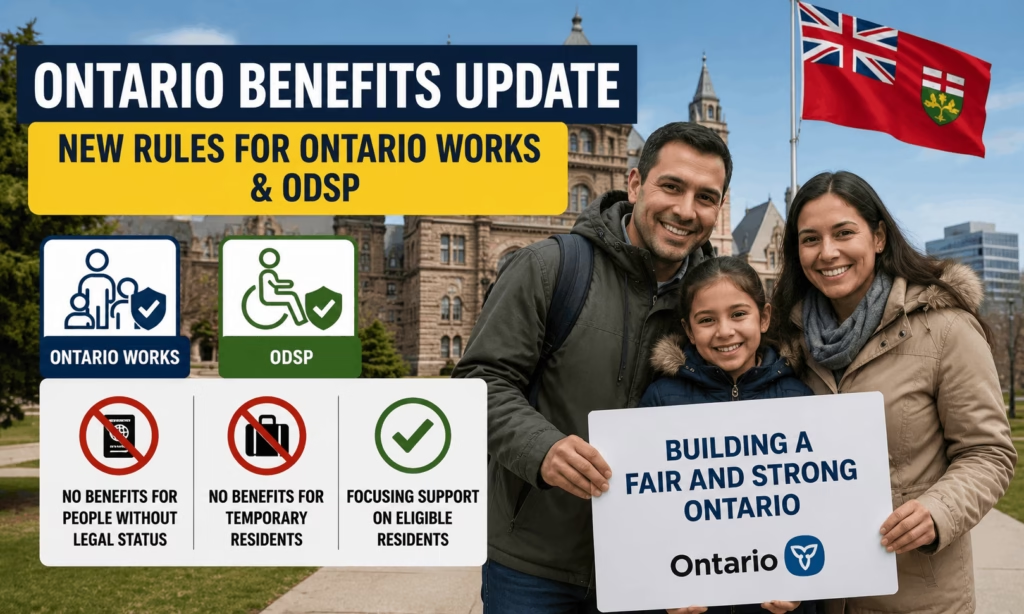
The amended regulations apply to two of Ontario’s largest income support programs, Ontario Works, which provides financial assistance to low-income residents actively seeking employment, and the Ontario Disability Support Program, commonly known as ODSP, which supports Ontarians living with disabilities. Under the new eligibility framework, two specific groups are now excluded from both programs.
The first group covers individuals who are in Canada without legal immigration status, meaning people whose authorization to remain in the country has expired or who never had legal status to begin with. The second group covers temporary residents, a broader category that includes international students on study permits, foreign workers on work permits, and visitors or tourists on temporary visas. Both groups are now barred from accessing Ontario Works or ODSP benefits under the amended rules, regardless of how long they have lived in the province or how dire their financial circumstances.
Social Security Compassionate Allowances List: 14 Conditions Added
IRS Business Tax Account New Features Give Small Businesses More Ways to Skip the Phone Line
SSA Payroll Information Exchange and New SSI Improvement Office: What the Report Actually Changes
Key Details of the Ontario Social Assistance Rule Change
| Detail | Information |
|---|---|
| Announcement date | August 13, 2026 |
| Effective date | August 13, 2026, immediately upon announcement |
| Programs affected | Ontario Works and the Ontario Disability Support Program (ODSP) |
| Newly excluded group 1 | People in Canada without legal immigration status |
| Newly excluded group 2 | Temporary residents, including study permit, work permit, and visitor visa holders |
| Minister responsible | Michael Parsa, Minister of Children, Community and Social Services |
| Triggering event | Social Benefits Tribunal ruling awarding benefits to a man on an expired 1997 work permit, reported in July 2026 |
| Premier’s public commitment | Doug Ford pledged the change in a social media post in July 2026 |
| Documentation now required | Proof of citizenship or eligible immigration status for all applicants |
| Legal mechanism | Provincial regulatory amendment, not new legislation requiring a legislative vote |
The Tribunal Ruling That Sparked the Change
The immediate catalyst for this regulatory amendment traces back to a Social Benefits Tribunal decision that generated significant public and political attention in July 2026. According to reporting on the case, the tribunal ruled in favor of a foreign national who had originally entered Canada on a temporary work permit in 1997. That permit had long since expired, yet the individual remained in the country and was ultimately awarded Ontario Works payments through the tribunal process.
The ruling quickly became a political flashpoint. Premier Doug Ford responded directly on social media, writing that his government would always support people who have fallen on hard times, but that support “doesn’t include people living in Canada illegally.” Within weeks, that public commitment translated into a formal regulatory change, an unusually fast turnaround for a provincial policy shift, made possible because Ontario amended existing program regulations rather than pursuing new legislation, which would have required a longer legislative process.
How the New Rules Affect Temporary Residents in Ontario
One of the most significant aspects of this change extends well beyond undocumented individuals. By explicitly including temporary residents, meaning anyone on a study permit, work permit, or visitor visa, the amended regulations remove a form of financial safety net that some temporary residents in Ontario had previously been able to access during periods of job loss, illness, or other hardship while their status remained valid.
International students facing unexpected financial emergencies, temporary foreign workers between jobs, and other visa holders experiencing hardship will no longer be able to turn to Ontario Works or ODSP for support under the new framework, regardless of how long they have lived and contributed to the province. Immigration advocates have noted this marks a notable narrowing of who counts as eligible for provincial income support compared to the framework that existed before August 13.
Documentation Requirements Under the New Framework
Under the amended regulations, applicants for both Ontario Works and ODSP must now provide documentation demonstrating their citizenship or otherwise eligible immigration status as part of the eligibility determination process. This represents a more formalized verification requirement than what existed previously, and it applies to the application process going forward for anyone seeking to access either program.
Current recipients are being urged by advocacy organizations and legal clinics to confirm their documentation is up to date and on file with their caseworker, since a gap or inconsistency in immigration status documentation could now directly affect the continuation of existing benefit payments, not just new applications.
Ontario’s Broader Push to Tighten Program Access in 2026
This regulatory amendment does not exist in isolation. The province has moved at what policy observers describe as a rapid pace throughout 2026, introducing a series of new rules and regulatory changes across multiple program areas. The August 13 immigration-status amendment is being described by those tracking Ontario’s regulatory activity as the most significant expansion of immigration-status-based restrictions within the social assistance eligibility framework the province has enacted so far this year.
Whether other Canadian provinces will follow Ontario’s approach and tie their own social assistance eligibility more explicitly to immigration documentation remains an open question. Since the regulatory template Ontario used is now public, other provincial governments facing similar political pressure around benefit access could look to Ontario’s amendment as a model, though no other province has announced a comparable change as of this writing.
What Current and Prospective Applicants Should Do Now
Legal aid organizations and immigration advocates working in Ontario are recommending a few concrete steps for anyone who could be affected by the new rules.
Current Ontario Works or ODSP recipients should contact their caseworker promptly to confirm what documentation is required to demonstrate their citizenship or immigration status, since incomplete records could put ongoing payments at risk under the amended eligibility framework.
Temporary residents who were previously receiving or considering applying for either program should seek advice from a regulated immigration consultant or legal aid clinic, since the new exclusion applies broadly to study permit, work permit, and visitor visa holders regardless of individual circumstances.
Anyone uncertain about how the amended regulations apply to their specific situation should reach out directly to Ontario’s Ministry of Children, Community and Social Services or their local Ontario Works or ODSP office, rather than relying on secondhand information, given how recently and rapidly this change took effect.
FAQs
When did Ontario’s new social assistance immigration status rules take effect?
The amended regulations took effect immediately on August 13, 2026, the same day Ontario’s Minister of Children, Community and Social Services announced the change.
Which programs are affected by the new Ontario rules?
The changes apply to Ontario Works and the Ontario Disability Support Program, two of the province’s main income support programs for low-income residents and people living with disabilities.
Who is now excluded from Ontario Works and ODSP?
People living in Canada without legal immigration status, along with temporary residents such as international students on study permits, foreign workers on work permits, and visitors on temporary visas, are no longer eligible under the amended regulations.
Why did Ontario make this change now?
The amendment follows a Social Benefits Tribunal ruling reported in July 2026 that awarded Ontario Works payments to a man on a work permit that expired in the late 1990s, which prompted Premier Doug Ford to publicly commit to changing the eligibility rules.
What documentation do I now need to apply for Ontario Works or ODSP?
Applicants must provide documentation demonstrating their citizenship or otherwise eligible immigration status as part of the application and eligibility verification process under the amended regulations.
Will current recipients lose their benefits because of this change?
Current recipients whose immigration status documentation is incomplete or does not meet the new eligibility criteria could see their benefits affected. Anyone currently receiving Ontario Works or ODSP is advised to confirm their documentation status with their caseworker as soon as possible.
Official Resources
| Resource | Purpose | Official Link |
|---|---|---|
| Ontario Works program information | Eligibility rules and application details | ontario.ca/page/ontario-works |
| Ontario Disability Support Program information | ODSP eligibility and application process | ontario.ca/page/ontario-disability-support-program |
| Ontario Ministry of Children, Community and Social Services | Official ministry announcements and contact | ontario.ca/page/ministry-children-community-and-social-services |
| MyBenefits Ontario account | Manage social assistance applications and payments online | mybenefits.mcss.gov.on.ca |
| Legal Aid Ontario | Free legal assistance for social assistance and immigration matters | legalaid.on.ca |
Conclusion
The Ontario social assistance immigration status rules that took effect on August 13, 2026 mark one of the most significant and fast-moving policy changes to the province’s welfare system this year, cutting off both undocumented individuals and a broad category of temporary residents from Ontario Works and ODSP with no transition period. Triggered directly by a single tribunal ruling and turned into policy within weeks, the amendment reflects the speed with which provincial regulatory changes, unlike new legislation, can be implemented once political will is in place. Anyone currently relying on either program, or considering applying, should confirm their documentation status immediately given how quickly this rule took hold. This article will be updated monthly as Ontario issues further guidance and as any legal or advocacy responses to the new rules develop.
Maryland SNAP Cost-Sharing Rules: Why the State Faces a $300 Million Bill Starting 2027
New $20,000 Visa Bond Program: What It Means for Travelers Entering the U.S.
VA Health and Benefits App: Every Feature You Can Use From Your Phone