SSA Overpayment Repayment Options: The Social Security Administration has quietly rolled out a new way for beneficiaries to pay back an overpayment, and it is meant to replace the paper check and money order process that has frustrated recipients for years. Starting this summer, anyone who gets an overpayment notice can now repay the debt directly online through Pay.gov or through their bank’s Online Bill Pay service, rather than mailing a check to a P.O. box and hoping it gets credited correctly. SSA says more than 80% of people who receive an overpayment notice are already choosing to pay this way, calling it faster, safer, and easier to track than the old paper process.
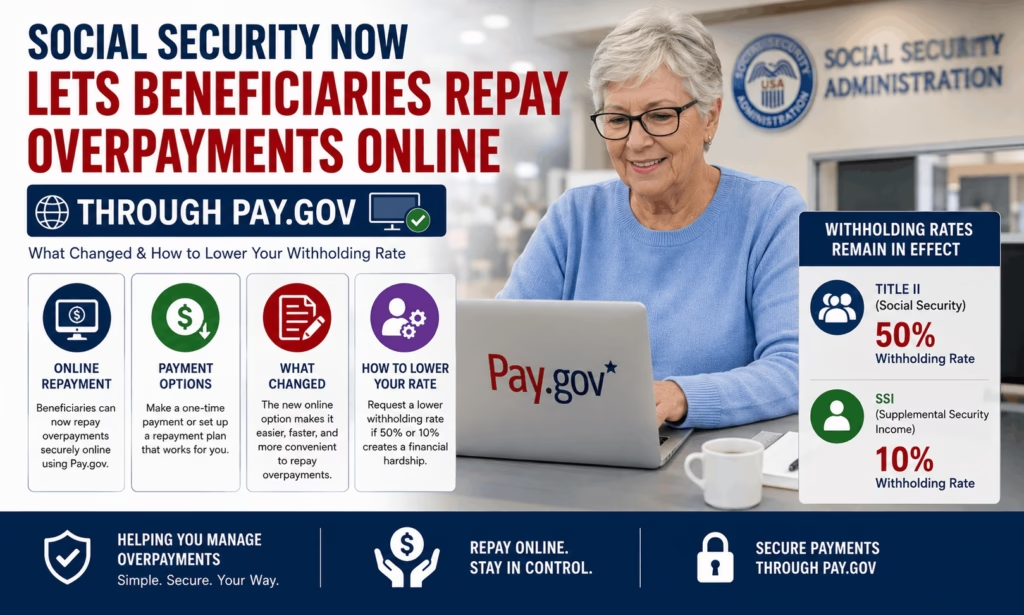
This comes at a moment when overpayment rules are already a source of real anxiety for millions of Social Security and SSDI recipients. The default Social Security overpayment withholding rate for Title II benefits, retirement, survivors, and disability insurance, sits at 50% of the monthly check for any overpayment notice dated April 25, 2025 or later, unless the beneficiary takes action within 90 days. SSI overpayments remain capped at a 10% withholding rate. Both figures are still current as of September 2026, and understanding exactly how the online repayment option fits alongside those withholding rules, appeal rights, and waiver options can make a real difference for anyone staring down a debt notice from SSA. We’ll be updating this article monthly as new guidance, forms, or rate changes come out of the agency.
What Changed: SSA’s New Online Overpayment Repayment Tool
SSA announced the digital repayment option as part of a government-wide push to move federal payments away from paper checks. The agency’s blog post on the change, titled Go Digital, explains that beneficiaries who receive an overpayment notice can now settle the debt electronically in two ways. The first is Pay.gov, where a remittance ID number printed on the overpayment notice lets a person submit payment directly. The second is Online Bill Pay, a service offered through most banks that routes payment through the Treasury’s Fiscal Service bill-pay gateway.
SSA frames the shift primarily around speed and security, electronic payments post faster than mailed checks and reduce the risk of a payment getting lost, delayed, or misapplied to the wrong account. Beneficiaries who do not have a bank account, or who are not comfortable paying online, can still use a paper check or money order, and SSA has kept a dedicated toll-free number, 1-855-807-8807, staffed Monday through Friday for anyone who needs help completing a payment. The rollout does not change how much anyone owes or which withholding rate applies, it only changes how the payment itself gets made once someone decides to repay in full or in part rather than have the debt withheld from monthly benefits.
Current Social Security Overpayment Withholding Rates
The underlying withholding rate rules have not changed since spring 2025, but the numbers remain a common source of confusion because SSA revised them twice within about 13 months. Here is where things actually stand.
| Benefit Type | Default Withholding Rate | Effective Date | Notes |
|---|---|---|---|
| Title II (retirement, survivors, SSDI) | 50% of monthly benefit | Overpayment notices dated April 25, 2025 or later | Reduced from a brief 100% policy after public pushback |
| Title II overpayments before March 27, 2025 | Prior arrangement stays in place | No change | No action required from beneficiary |
| SSI (Title XVI) | 10% of monthly payment | Unchanged throughout the 2024-2026 policy shifts | Needs-based program, not affected by Title II changes |
| No response within 90 days | Automatic 50% withholding begins (Title II) | Applies from notice date | Filing reconsideration, waiver, or rate request pauses this |
For Title II beneficiaries, the 50% rate became the default under an SSA emergency policy message issued in April 2025, after an earlier attempt to restore full 100% withholding drew sharp criticism from advocacy groups and lawmakers who warned it could push low-income seniors and disabled workers into housing instability. SSI’s 10% cap was left untouched through all of these changes because SSI is a needs-based program with a different statutory framework.
OAS Payment Increase September 2026: Confirmed Amounts, Payment Date, and the Annual GIS Reset !
Ohio SNAP Food Ban starts October 1, 2026: What’s Banned, Court Update & Rules
Why Overpayments Happen
Understanding how an overpayment happens in the first place helps explain why the repayment rules matter so much to so many beneficiaries. Common causes include a beneficiary returning to work and not reporting income changes quickly enough, a change in marital status that affects spousal or survivor benefit amounts, a lump-sum settlement or back pay award that retroactively changes eligibility, and administrative errors on SSA’s own end when calculating monthly benefit amounts. Death of a household member, an unreported move, or delayed processing of a reported change can all trigger a notice as well. SSA’s Office of the Inspector General has previously found that improper payments, meaning payments in the wrong amount in either direction, make up less than 1% of total benefit outlays, but with the agency issuing close to 1.4 trillion dollars a year to roughly 73 million beneficiaries, even a small error rate translates into a large number of individual overpayment notices.
For SSDI recipients specifically, one of the most common triggers is work activity during a Trial Work Period or Extended Period of Eligibility. Beneficiaries are allowed to test their ability to work while keeping benefits, but if earnings exceed the substantial gainful activity threshold and SSA is not notified quickly enough, months of benefits can be flagged as overpaid retroactively, sometimes totaling thousands of dollars by the time the agency catches the discrepancy. Reporting income changes promptly through a my Social Security account, rather than waiting for tax season, is one of the most effective ways beneficiaries can avoid this particular type of overpayment altogether.
How to Apply for a Lower Repayment Rate or Waiver
Beneficiaries who receive an overpayment notice are not required to accept the default withholding rate. SSA offers three distinct paths, and choosing the right one, and filing it fast, is what actually protects a beneficiary’s monthly income while the case is reviewed.
Requesting reconsideration means disputing that the overpayment happened at all, or disputing the amount SSA says is owed. This is filed using Form SSA-561, Request for Reconsideration, either online through a my Social Security account or at a local field office. Requesting a waiver means agreeing the overpayment occurred but arguing that it was not the beneficiary’s fault and that repaying it would cause financial hardship or otherwise be unfair. This uses Form SSA-632, Request for Waiver of Overpayment Recovery, and for overpayments of $2,000 or less, SSA can often process a simplified waiver over the phone with less paperwork. Requesting a lower repayment rate, without disputing the debt itself, uses Form SSA-634, Request for Change in Overpayment Recovery Rate, and lets a beneficiary propose a smaller monthly amount based on income and necessary living expenses.
Timing matters more than most beneficiaries realize. Filing any of these three requests within 10 days of receiving the notice stops SSA from withholding anything while the request is reviewed. Filing within 30 days still pauses collection during the review period. Filing later than that, but within the standard 60-day appeal window for reconsideration, still preserves appeal rights but does not guarantee collection stays paused. Waivers, unlike reconsideration, can technically be requested at any time, there is no hard deadline, though filing early avoids months of withholding while the case is pending.
Processing Time for Overpayment Cases
Processing time varies significantly depending on which type of request is filed and how complex the case is. A phone-based simplified waiver for a debt of $2,000 or less can sometimes be resolved in a single call. A standard reconsideration request typically takes several weeks to a few months, depending on office workload and whether additional documentation is needed. Waiver requests that require a review of income, assets, and monthly expenses to establish financial hardship tend to take longer, sometimes stretching to two or three months before a decision is issued, particularly if a follow-up interview is required.
If a request is denied at the first level, beneficiaries have further appeal rights, including a hearing before an administrative law judge, though that process can add many additional months. Throughout any pending reconsideration or waiver request filed within the applicable window, SSA is required to pause active withholding, meaning beneficiaries do not lose benefit income while their case works its way through review.
Local field office workload also plays a role in how long a case takes. Offices in high-population areas or regions dealing with staffing shortages sometimes take longer to schedule the interviews that waiver requests often require, particularly when a beneficiary’s financial hardship claim needs supporting documentation such as pay stubs, rent receipts, or medical bills. Beneficiaries can check the status of a pending reconsideration or waiver request through their my Social Security online account, or by calling their local office directly, and SSA generally recommends following up if no decision has been issued within 90 days of filing.
Criticism and Support for the Current Withholding Policy
The back-and-forth on overpayment withholding rates over the past two years reflects a genuine policy tension SSA has struggled to balance. Advocacy groups such as AARP and Justice in Aging welcomed the move away from 100% withholding, arguing that many overpayments trace back to SSA’s own administrative delays or errors rather than any wrongdoing by the beneficiary, and that taking a person’s entire monthly check to recover a debt they did not cause risks pushing low-income seniors and disabled workers toward eviction or missed medical care. At the same time, fiscal watchdogs and some members of Congress have argued that a 10% cap, the rate that applied briefly in 2024, was too lenient and allowed some large overpayments to take years or even decades to recover, effectively leaving beneficiaries carrying debt on the government’s books far longer than intended.
The 50% rate that has been in place since April 2025 is widely described as a middle-ground compromise between those two positions. It recovers debt meaningfully faster than the old 10% cap while stopping short of the harsher 100% policy that briefly took effect in March 2025. Even so, consumer advocates continue to point out that losing half of a monthly Social Security check can still be financially devastating for beneficiaries who rely on that income to cover rent, utilities, and prescription costs, which is part of why SSA continues to emphasize the availability of waivers, rate-reduction requests, and now, easier online repayment as an alternative to full benefit withholding.
$400 Inflation Refund Checks 2026: New York’s Real Program, Fact-Checked
Stimulus Check 2026: Fact-Checking Every Viral Payment Claim (Tracker)
Social Security SSI Payment Date September 2026 Confirmed by SSA- Check Full Schedule here!
Overpayment Repayment Schedule and Payment Options
For beneficiaries who accept the overpayment and simply want to repay it, SSA offers several payment paths beyond automatic monthly withholding from a benefit check. Full repayment can now be made electronically through Pay.gov using the remittance ID from the notice, or through a bank’s Online Bill Pay service routed through the Treasury’s Fiscal Service. Beneficiaries can also still mail a paper check or money order, or ask SSA to set up a structured monthly installment plan, with payments as low as $10 a month in cases of significant financial hardship.
Standard repayment plans are generally expected to close out the debt within 60 months, though SSA has discretion to extend that timeline for beneficiaries who demonstrate they cannot afford a faster payoff. Anyone unable to make a scheduled payment, electronic or otherwise, should contact SSA before missing it, since falling behind on an agreed installment plan can trigger a return to the default withholding rate taken directly from monthly benefits.
Social Security Overpayment Key Highlights
| Detail | Information |
|---|---|
| Title II default withholding rate | 50% of monthly benefit |
| SSI default withholding rate | 10% of monthly payment |
| Rate effective date | April 25, 2025 and later notices |
| New online repayment tool announced | July 16, 2026 |
| Share of recipients now paying online | Over 80% |
| Window to pause withholding during review | 10 days for full pause, 30 days for review-period pause |
| Reconsideration deadline | 60 days from notice date |
| Waiver filing deadline | No deadline, can be requested any time |
| Simplified phone waiver threshold | Overpayments of $2,000 or less |
| Estimated 10-year program savings from 50% rate | About $7 billion |
| Minimum installment plan payment | As low as $10 per month |
| Standard repayment plan length | Up to 60 months |
FAQs About SSA Overpayment Repayment Options 2026
What is the current Social Security overpayment withholding rate?
For Title II benefits, retirement, survivors, and SSDI, the default rate is 50% of the monthly benefit for overpayment notices dated April 25, 2025 or later. SSI overpayments remain at a 10% withholding rate.
Can I pay back a Social Security overpayment online?
Yes. SSA now allows beneficiaries to repay an overpayment electronically through Pay.gov using the remittance ID from their notice, or through their bank’s Online Bill Pay service.
How do I lower my overpayment withholding rate?
File Form SSA-634, Request for Change in Overpayment Recovery Rate, either online or at a local Social Security office, explaining your monthly income and necessary expenses.
What happens if I do nothing after receiving an overpayment notice?
If no reconsideration, waiver, or rate-change request is filed within 90 days, SSA automatically begins withholding 50% of Title II benefits or 10% of SSI payments until the debt is repaid.
Can Social Security waive my overpayment entirely?
Yes, if you can show you were not at fault for the overpayment and that repaying it would cause financial hardship or otherwise be unfair, using Form SSA-632, Request for Waiver of Overpayment Recovery.
How long do I have to appeal an overpayment notice?
You generally have 60 days from the date of the notice to file a formal reconsideration request, though filing within 10 or 30 days is what pauses active withholding during the review.
Does the 50 percent withholding rate apply to SSI recipients too?
No. SSI overpayments have remained capped at 10% withholding throughout all of the recent Title II rate changes, since SSI is a separate, needs-based program.
Is there a fee to repay an overpayment online?
No. SSA’s online repayment options through Pay.gov and Online Bill Pay do not carry an additional fee beyond the overpayment amount itself.
Trump Accounts Dell $250 Grant: Did Deposits Actually Start Monday? Here’s Who’s Actually Been Paid
2027 Social Security COLA Forecast: Latest 3.6% Estimate and How Much Retirees Could Get
$2000 Stimulus Payment September 2026 Fact-Check: Is It Really Coming?
People Also Ask
Why did Social Security change the overpayment withholding rate?
SSA moved from a brief 100% withholding policy back down to 50% in April 2025 after advocacy groups and lawmakers warned that taking a beneficiary’s entire monthly check to recover an overpayment, often one caused by the agency’s own administrative error, could push seniors and disabled beneficiaries into serious financial hardship.
What is the difference between an overpayment appeal and a waiver?
An appeal, filed with Form SSA-561, disputes whether the overpayment happened or how much is owed. A waiver, filed with Form SSA-632, accepts that the overpayment occurred but asks SSA to forgive it because the beneficiary was not at fault and cannot afford to repay it.
How much money is Social Security trying to recover through overpayment withholding?
SSA’s Office of the Chief Actuary has estimated the higher withholding rate policy could recover about $7 billion in program savings over the next decade.
Can I set up a payment plan instead of having my benefits withheld?
Yes. Beneficiaries can request an installment plan with SSA, with payments as low as $10 a month depending on financial circumstances, generally intended to repay the debt within 60 months.
What number do I call for help with a Social Security overpayment?
SSA’s general customer service line is 1-800-772-1213. For help specifically with online overpayment repayment, the agency’s dedicated toll-free number is 1-855-807-8807, available Monday through Friday.
Official Social Security Overpayment Resources
| Resource | Link |
|---|---|
| Pay an overpayment online | pay.gov |
| Online Bill Pay through Treasury | fiscal.treasury.gov/credit-gateway/online-bill-payment.html |
| SSA Go Digital overpayment repayment announcement | ssa.gov/blog/en/posts/2026-07-16.html |
| Request for Reconsideration (Form SSA-561) | ssa.gov/forms/ssa-561.html |
| Request for Waiver of Overpayment Recovery (Form SSA-632) | ssa.gov/forms/ssa-632.html |
| Request for Change in Overpayment Recovery Rate (Form SSA-634) | ssa.gov/forms/ssa-634.html |
| my Social Security account login | secure.ssa.gov/RIL/SiView.action |
| Find a local Social Security office | ssa.gov/locator |
| General SSA customer service | ssa.gov or 1-800-772-1213 |
| Overpayment repayment help line | 1-855-807-8807 |
Conclusion
The core overpayment rules have held steady since spring 2025, Title II beneficiaries face a 50% default withholding rate, SSI recipients face 10%, and both apply automatically 90 days after a notice unless the beneficiary files for reconsideration, a waiver, or a lower rate. What has genuinely changed this year is how beneficiaries can settle those debts once they decide to repay rather than have benefits withheld, with SSA’s new online options through Pay.gov and Online Bill Pay replacing much of the old paper check process for the more than 80% of recipients who now choose to pay electronically. For anyone holding an overpayment notice right now, the most important step is still the same one it has always been, act within the first 10 to 30 days to preserve the pause on withholding, choose the right form for your situation, and use the payment method, online or otherwise, that actually fits your circumstances.
Canada 50% Tariff 2026: 700 US Goods Hit With Tariffs Up to 50% From September 8
Social Security Changes September 2026: SSA Announces Major Update for Retirees and Beneficiaries
Minimum Wage Increase in 5 Canadian Provinces: What Changes October 1, 2026