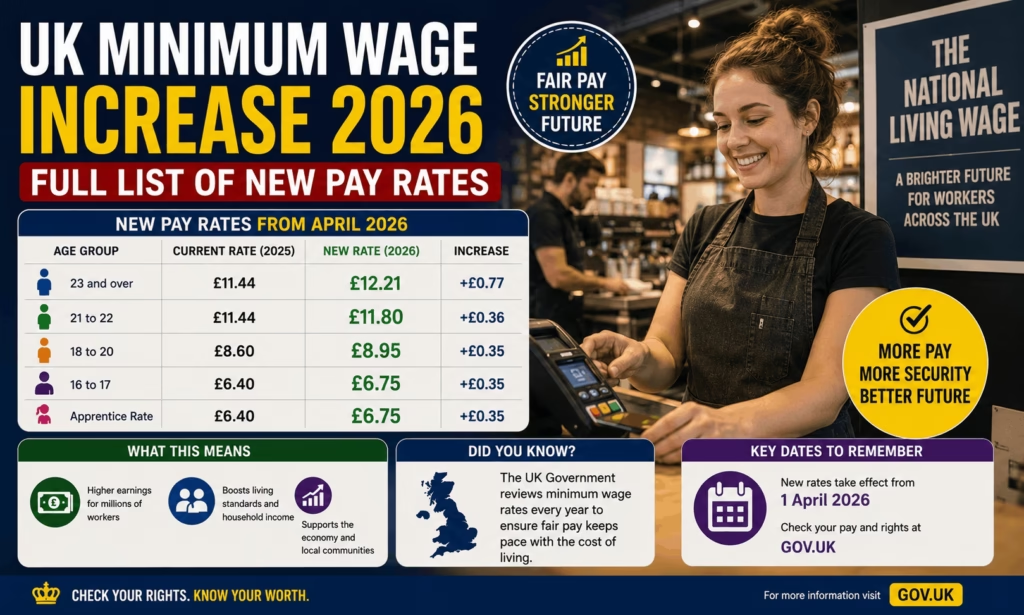
The UK Minimum Wage Increase 2026 is now confirmed, and if you are still working with figures from an older article, you are likely looking at outdated pay bands. From 1 April 2026, the National Living Wage for workers aged 21 and over rose to £12.71 an hour, up from £12.21, a 4.1% increase. This was announced by Chancellor Rachel Reeves ahead of the Autumn Budget and confirmed again in the Spring Statement 2026, with the government accepting the Low Pay Commission’s recommendations in full. Younger workers saw an even bigger jump, with the 18 to 20 rate rising by 8.5% to £10.85 an hour, the largest step yet in the government’s plan to gradually align all adult age bands into a single rate.
This article has been rebuilt to remove any outdated 2025/26 figures that may still be circulating online, so you are working with the correct, currently in force UK minimum wage rates. Below you will find the full confirmed pay bands by age group, the accommodation offset, what this means for your actual take-home pay, and how these statutory rates compare with the separate, voluntary Real Living Wage. We’ll be updating this article monthly to reflect any further government confirmations or enforcement updates from HMRC.
Key Highlights: UK Minimum Wage Increase 2026 at a Glance
| Detail | 2025/26 Rate | 2026/27 Rate (From 1 April 2026) |
|---|---|---|
| National Living Wage (age 21+) | £12.21/hour | £12.71/hour |
| National Minimum Wage (age 18-20) | £10.00/hour | £10.85/hour |
| National Minimum Wage (age 16-17) | £7.55/hour | £8.00/hour |
| Apprentice rate (under 19, or first year) | £7.55/hour | £8.00/hour |
| Accommodation offset (daily) | £10.66/day | £11.10/day |
| Percentage increase (age 21+) | – | 4.1% |
| Percentage increase (age 18-20) | – | 8.5% |
| Percentage increase (age 16-17 / apprentice) | – | 6% |
| Workers benefiting (estimated) | – | Around 2.7 million |
| Real Living Wage (voluntary, outside London) | – | £13.45/hour |
| Real Living Wage (voluntary, London) | – | £14.80/hour |
Full List of New UK Minimum Wage Rates From April 2026
Here is the complete, confirmed breakdown of the new minimum wage rates that took effect on 1 April 2026, based on the government’s official acceptance of the Low Pay Commission’s recommendations.
| Worker Category | Old Rate | New Rate (from 1 April 2026) | Increase |
|---|---|---|---|
| Age 21 and over (National Living Wage) | £12.21 | £12.71 | 4.1% |
| Age 18 to 20 | £10.00 | £10.85 | 8.5% |
| Age 16 to 17 | £7.55 | £8.00 | 6.0% |
| Apprentices (under 19, or first year of apprenticeship) | £7.55 | £8.00 | 6.0% |
| Daily accommodation offset | £10.66 | £11.10 | 4.1% |
The National Living Wage applies to all workers aged 21 and over, regardless of experience or job type, and is legally the minimum any employer can pay. The National Minimum Wage is the term used for the lower statutory bands that apply to younger workers and apprentices. Both are set in law, and any employer paying below these rates can be investigated and fined by HMRC.
Why the National Living Wage Went Up 4.1% This Year
The Low Pay Commission (LPC), an independent body that advises the government, recommends minimum wage levels each year with the aim of keeping the National Living Wage at or above two-thirds of median earnings for workers aged 21 and over. For 2026, the LPC pointed to stronger than expected wage growth across the economy as the main driver behind the 4.1% recommendation, which the government then accepted in full. The LPC had previously projected a range of £12.55 to £12.86 for the 2026 rate, with £12.71 landing close to the central estimate.
Why 18 to 20 Year Olds Got a Bigger Rise Than Everyone Else
The 8.5% increase for 18 to 20 year olds is not a one-off. It reflects a deliberate, longer-term government policy to gradually close the gap between youth rates and the adult National Living Wage, working toward a single rate that eventually applies to all workers aged 18 and over. While the age bands have been retained for 2026 rather than merged immediately, this year’s disproportionately larger rise for younger workers is a clear signal of the direction of travel, and employers who rely heavily on younger staff, particularly in retail and hospitality, should expect this trend to continue in future upratings.
What the Minimum Wage Increase Means for Your Pay Packet
For a full-time worker on 37.5 hours a week earning the National Living Wage, the move from £12.21 to £12.71 an hour adds up to roughly £975 more in gross annual earnings, which works out to around £81 extra a month before tax. After income tax and National Insurance are deducted, that typically translates to about £58 to £60 extra in take-home pay each month, depending on individual circumstances.
Workers aged 18 to 20 benefit proportionally more due to the larger 8.5% rise, seeing an estimated £1,658 extra in gross annual earnings, or around £138 a month, for someone working the same 37.5-hour week. Part-time workers see the same hourly increase, but the total annual gain scales down according to hours actually worked.
National Living Wage vs the Real Living Wage: What Is the Difference
It is easy to confuse the statutory National Living Wage with the Real Living Wage, but they are not the same thing.
- The National Living Wage and National Minimum Wage are legally binding minimums set by the government, enforced by HMRC, and apply to every eligible employer in the UK.
- The Real Living Wage is a voluntary, higher rate calculated independently by the Living Wage Foundation charity based on the actual cost of living. It currently stands at £13.45 an hour outside London and £14.80 an hour in London. Employers can choose to sign up and pay this rate, but they are under no legal obligation to do so.
Some employers, particularly larger retailers, already pay all staff at or above the National Living Wage regardless of age, even though they are not legally required to do so for younger age bands.
How the Minimum Wage Increase Affects Employers
For businesses, particularly in hospitality and retail, this increase represents a real and immediate cost pressure. Industry bodies have estimated the sectoral cost impact runs into the billions when the NLW rise is combined with the larger increases for younger workers. Employers are advised to take several practical steps ahead of and following the April 2026 change:
- Audit current pay rates across every worker category to identify anyone now falling below the new statutory minimum.
- Update payroll systems promptly to reflect the correct rates from the exact effective date of 1 April 2026.
- Review salary sacrifice and deduction arrangements carefully, since these must never cause an employee’s effective hourly rate to drop below the legal minimum.
- Check contracts with staffing agencies and suppliers to confirm third-party providers are also paying compliant rates.
Failure to comply can result in financial penalties, back-pay orders, and, in serious cases, public naming by the government, in addition to potential prosecution.
Official UK Minimum Wage Resources and Links
For the most accurate, up to date figures and to check compliance, always refer to official government sources rather than third-party summaries.
| Purpose | Official Resource |
|---|---|
| Current National Minimum Wage and National Living Wage rates | gov.uk National Minimum Wage rates page |
| Check if you are being paid correctly | gov.uk National Minimum Wage calculator |
| Report an employer for underpayment | gov.uk Report a National Minimum Wage complaint |
| Low Pay Commission recommendations and reports | gov.uk Low Pay Commission publications |
| Employer guidance on National Minimum Wage compliance | gov.uk National Minimum Wage guidance for employers |
| HMRC minimum wage enforcement information | gov.uk HMRC National Minimum Wage enforcement |
People Also Ask
What is the UK minimum wage from April 2026? From 1 April 2026, the National Living Wage for workers aged 21 and over is £12.71 an hour, with lower statutory bands for younger workers and apprentices.
How much is minimum wage going up in 2026? The National Living Wage rose by 4.1%, from £12.21 to £12.71 an hour. Workers aged 18 to 20 saw a larger 8.5% rise, to £10.85 an hour.
Is the National Living Wage the same as the Real Living Wage? No. The National Living Wage is the legal statutory minimum set by the government. The Real Living Wage is a separate, voluntary rate calculated by the Living Wage Foundation, currently £13.45 outside London and £14.80 in London.
What is the minimum wage for 16 and 17 year olds in 2026? From April 2026, workers aged 16 to 17, along with apprentices under 19 or in their first year, are entitled to a minimum of £8.00 an hour.
Do apprentices get the full minimum wage? Apprentices under 19, or those in the first year of their apprenticeship regardless of age, are entitled to the apprentice rate, which rose to £8.00 an hour from April 2026. Apprentices outside these criteria are entitled to the full rate for their age band.
FAQs
When did the new UK minimum wage rates take effect?
The new rates took effect from 1 April 2026, following confirmation by the Chancellor and formal acceptance of the Low Pay Commission’s recommendations.
What is the National Living Wage for 2026/27?
The National Living Wage for workers aged 21 and over is £12.71 an hour for the 2026/27 tax year.
How many workers benefit from the 2026 minimum wage increase?
The government estimates that around 2.7 million workers across the UK benefit from this increase.
What is the daily accommodation offset in 2026?
The accommodation offset, which applies when an employer provides living accommodation, rose to £11.10 a day from 1 April 2026.
Can my employer pay me less than the National Minimum Wage?
No. It is illegal for an employer to pay below the statutory minimum for your age band. You can report underpayment directly to HMRC through gov.uk.
Will the minimum wage rise again in 2027?
Yes, the National Minimum Wage and National Living Wage are reviewed annually by the Low Pay Commission, with new rates typically confirmed in the autumn and taking effect the following April.
Conclusion
The UK Minimum Wage Increase 2026 brings the National Living Wage to £12.71 an hour for workers aged 21 and over, alongside a notably larger 8.5% rise for 18 to 20 year olds as part of the government’s move toward a single adult rate over time. With around 2.7 million workers affected and real financial implications for both pay packets and business costs, it is essential to check the correct, currently in force rate for your specific age band rather than relying on older figures. Because these rates are reviewed annually and can be confirmed or adjusted through future Budget and Spring Statement announcements, always verify the latest position on gov.uk, and check back here for monthly updates as new confirmed data becomes available.