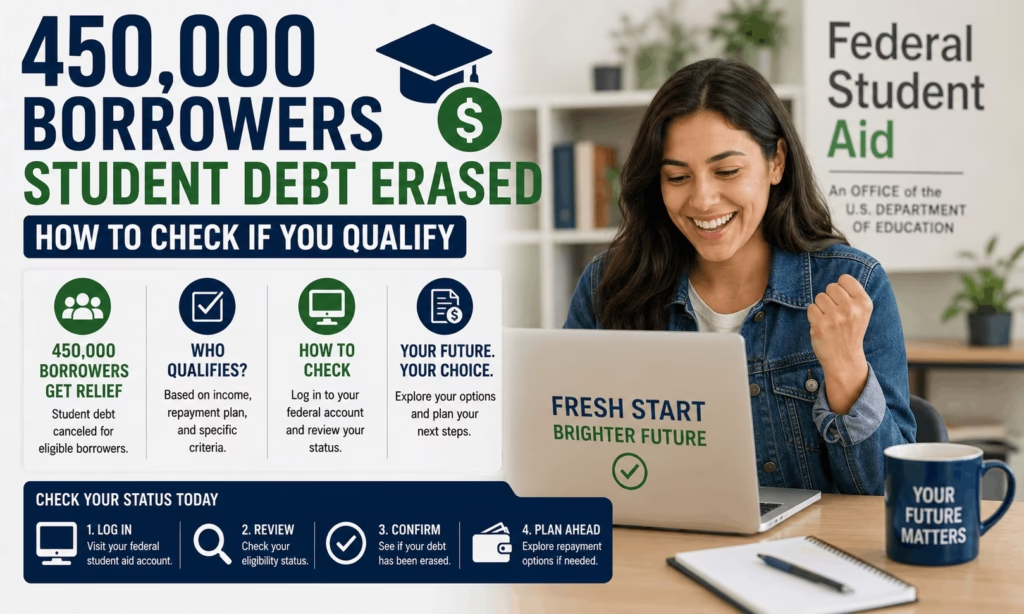
450,000 Borrowers Student Debt Erased: A federal appeals court decision in late July 2026 cleared the way for roughly 450,000 federal student loan borrowers to have their debt canceled, after denying a Trump administration request to delay processing a large batch of pending fraud claims. The ruling unlocked relief for nearly 200,000 additional borrowers on top of those already covered under an earlier settlement, bringing the total wiped out under the case to approximately $23 billion in student debt.
The relief comes from Sweet v. McMahon, a class-action lawsuit that has now stretched across three presidential administrations and three different education secretaries since it was first filed in 2019, originally as Sweet v. DeVos. If you attended a for-profit or other school named in the case and filed, or should have filed, a borrower defense claim, you may already qualify without needing to do anything further, though hundreds of thousands of others are only now finding out where they stand. This article walks through exactly how the 450,000 borrowers student debt erased settlement works, how to check your own account for a discharge, and what to do if you believe you should be included but have not yet applied. We’ll be updating this article monthly as the Department of Education continues processing remaining claims.
What Is the Sweet v. McMahon Settlement?
The case at the center of this relief has changed names three times as education secretaries changed, tracking the federal official responsible for defending the Department of Education in court. It began in 2019 as Sweet v. DeVos, filed by the Project on Predatory Student Lending on behalf of borrowers who said they were defrauded by their colleges. It became Sweet v. Cardona under the Biden administration, and it is now known as Sweet v. McMahon, reflecting current Education Secretary Linda McMahon.
The lawsuit centers on the federal borrower defense to repayment rule, which allows federal student loan borrowers to petition the Department of Education to discharge their loans if their school lied to them about things like job placement rates, the transferability of credits, or the selectivity and accreditation of the program. Plaintiffs argued that the Department had illegally stopped processing thousands of these claims and had wrongfully denied others without proper consideration, leaving borrowers stuck with growing balances for years while their applications sat unresolved.
From 200,000 to 450,000: How the Numbers Grew
The original Sweet v. Cardona settlement, approved by a federal judge in November 2022 and upheld after the Supreme Court declined to block it in 2023, covered roughly 200,000 borrowers from more than 150 schools and discharged about $6 billion in debt. That group had all filed borrower defense applications before June 22, 2022.
But the 2022 settlement also opened a second, larger door. It allowed more than 250,000 additional borrowers to submit new borrower defense applications during a brief post-settlement window, and it required the Department of Education to review those new claims within a set timeframe, or the loans in question would be automatically discharged if the deadline was missed. According to court documents the Education Department filed in April 2026 as part of its ongoing appeal, the agency had only processed about 60,000 of those roughly 250,000 post-class applications by the court-appointed deadline. When the Trump administration asked a federal appeals court for more time to review the remaining applications, the court said no in late July 2026, which meant those unresolved claims moved toward automatic discharge, adding close to 200,000 more borrowers to the relief total and pushing the overall count to approximately 450,000.
SSDI Fast-Track Approval 2026: Compassionate Allowances, QDD
Quebec Experience Program 2026: PEQ Reopening Dates, Eligibility
$5000 CRA Data Breach Settlement 2026: Who Qualifies and How to Claim
H-1B 60-Day Grace Period Elimination: What US Visa Workers Should Know
How Much Debt Has Actually Been Erased So Far
According to Eileen Connor, president and executive director of the Project on Predatory Student Lending, the organization representing the class, the settlement has now affected more than 450,000 people and improved their personal balance sheets by more than $23 billion combined. Separately, the Education Department’s own April 2026 court filing confirmed that, following the original 2022 settlement, it had already provided approximately $12 billion in loan discharges and refunds to nearly 300,000 borrowers who claimed they had been defrauded. With the July 2026 appellate ruling now unlocking the remaining post-class applications, that total is expected to continue growing as the Department processes the backlog.
What a Discharge Actually Includes
Under the borrower defense to repayment framework this settlement operates through, an approved discharge is not limited to simply zeroing out your remaining loan balance. It generally includes full discharge of the federal student loans tied to the qualifying school, reimbursement of any amounts you already paid toward those loans, a request to financial reporting agencies to remove related negative credit history, and reinstatement of federal student aid eligibility if it had been affected. For some borrowers whose balances grew substantially due to years of accruing interest while their applications sat pending, this combination of discharge and refund can represent a significant financial reset.
How to Check If Your Student Debt Was Erased
The most direct way to check your status is to log in to your account at the Federal Student Aid website and review your current loan balance and status directly, since Department of Education systems are updated as discharges are processed. Some borrowers included in this settlement have reported logging in and discovering their loan balance had already dropped to zero without any additional action required on their part, since qualifying discharges under the post-class deadline provision are applied automatically once a claim is confirmed to qualify. If your account still shows an outstanding balance tied to a school you believe engaged in misconduct, and you already filed a borrower defense claim before June 22, 2022, or during the 2022 post-settlement window, it is worth contacting your loan servicer directly to ask specifically about the status of your borrower defense application under the Sweet v. McMahon settlement.
Who Is Included in the 450,000 Borrowers Getting Relief
Generally, you fall within this settlement’s affected population if you attended one of the schools identified in the case as having engaged in substantial institutional misconduct, many of which were for-profit institutions and some of which have since closed entirely, and if you had a borrower defense application pending as of June 22, 2022, or you submitted a new application during the defined post-settlement filing window later that year. Borrowers who received a prior denial of their borrower defense claim under a previous administration were also brought back into consideration as part of the settlement’s terms, meaning an earlier denial does not automatically mean you are excluded from this relief.
If You Were Defrauded but Never Applied
If you believe your school misled you about outcomes, credit transferability, job placement, or accreditation, but you never filed a borrower defense application at all, you generally are not automatically covered by this specific settlement, since it is built around applications that were already filed or eligible to be filed within the settlement’s defined windows. That said, the underlying borrower defense to repayment program continues to operate independently of this settlement, meaning you can still file a new claim through the Department of Education if you believe you qualify, though processing timelines outside of this court-supervised settlement framework can vary considerably.
Canada Set to Finalize LNG Agreement With Germany’s SEFE for Ksi Lisims LNG Project
New UK Immigration Rules 2026: What Changes for Visa Applicants?
Key Dates in the Sweet v. McMahon Case
| Date | Milestone |
|---|---|
| 2019 | Case filed as Sweet v. DeVos by the Project on Predatory Student Lending |
| June 22, 2022 | Cutoff date for borrower defense applications covered under the original settlement class |
| November 16, 2022 | Federal judge approves the Sweet v. Cardona settlement, covering roughly 200,000 borrowers and $6 billion in relief |
| February 24, 2023 | Supreme Court declines to block the settlement after schools sought to halt it |
| 2022, post-settlement window | Over 250,000 additional borrowers file new borrower defense applications |
| April 2026 | Education Department court filing confirms only about 60,000 of the post-class applications processed |
| Late July 2026 | Federal appeals court denies Trump administration request to delay remaining applications |
| Late July 2026 onward | Approximately 200,000 additional borrowers become eligible for discharge, bringing the total to roughly 450,000 |
Watch Out for Student Loan Relief Scams
Because this settlement has received wide national news coverage, it is a common target for scam companies claiming they can speed up your discharge or guarantee your inclusion for a fee. Filing or checking the status of a borrower defense claim is completely free through the Department of Education, and the settlement discharges are applied automatically for qualifying borrowers without requiring payment to any third party. If you receive a call, text, or email asking for payment or your Federal Student Aid login credentials in connection with this settlement, treat it as fraudulent and report it rather than responding.
Official Resources and Where to Check Your Status
| Resource | Purpose | Link |
|---|---|---|
| Federal Student Aid account login | Check your current loan balance and discharge status | studentaid.gov/login |
| Borrower defense to repayment application | File a new borrower defense claim | studentaid.gov/borrower-defense |
| Sweet v. McMahon settlement information | Official Department of Education settlement updates | studentaid.gov (borrower defense settlement page) |
| Project on Predatory Student Lending | Legal advocacy organization representing the class | predatorystudentlending.org |
| Report student loan scams | Report fraudulent settlement-related contact | consumer.ftc.gov |
FAQs
How do I know if I’m one of the 450,000 borrowers getting student debt erased?
Log in to your account at studentaid.gov and check your current loan balance and status. If you filed a borrower defense claim before June 22, 2022, or during the 2022 post-settlement window, and your school is among those named in the case, your discharge may already be applied or in process.
What is Sweet v. McMahon?
It is a class-action lawsuit, originally filed in 2019 as Sweet v. DeVos, involving borrowers who say the Department of Education illegally delayed or denied their borrower defense claims after they were defrauded by their schools. It is now named after current Education Secretary Linda McMahon.
Why did the number of affected borrowers jump to 450,000?
A federal appeals court denied the Trump administration’s request in late July 2026 to delay processing roughly 200,000 remaining post-settlement applications, unlocking automatic discharge for that group and bringing the total number of affected borrowers to approximately 450,000.
Do I need to apply again if I already filed a borrower defense claim?
Generally no, if your application was already filed before June 22, 2022, or during the defined 2022 post-settlement window. Discharges under this settlement are applied automatically once a qualifying claim is confirmed.
What happens if my school isn’t part of this settlement?
If your school is not among those named in the Sweet v. McMahon case, you can still file a standard borrower defense to repayment application independently through the Department of Education, though it would not fall under this specific settlement’s automatic processing timeline.
Is this settlement related to broader student loan forgiveness programs?
No. This settlement is specifically tied to the borrower defense to repayment rule for borrowers who say their schools defrauded them, and it is legally separate from broader, more general student debt relief proposals that have faced other legal challenges.
Will I get a refund if I already made payments on the discharged loan?
Yes. Approved borrower defense discharges under this settlement generally include reimbursement of amounts already paid toward the discharged loans, in addition to erasing the remaining balance.
Is there a fee to check my eligibility or receive this relief?
No. Checking your status and receiving a discharge under this settlement is completely free through official Department of Education channels. Anyone asking for payment to process your claim is not a legitimate part of this program.
Conclusion
The jump from roughly 200,000 to approximately 450,000 borrowers under the Sweet v. McMahon settlement reflects a federal court finally forcing the Department of Education to act on a backlog of borrower defense claims that had sat unresolved for years across three presidential administrations. If you attended one of the schools named in the case and filed a borrower defense claim by the relevant deadlines, the most reliable next step is logging directly into your Federal Student Aid account to check your current balance, rather than waiting for a notification or relying on unofficial sources. For borrowers still uncertain about their status, contacting your loan servicer directly and referencing the Sweet v. McMahon settlement by name remains the most effective way to get a clear answer.
EITC Refund 2026: IRS Confirms Up To $4,427 for Taxpayers With One Child