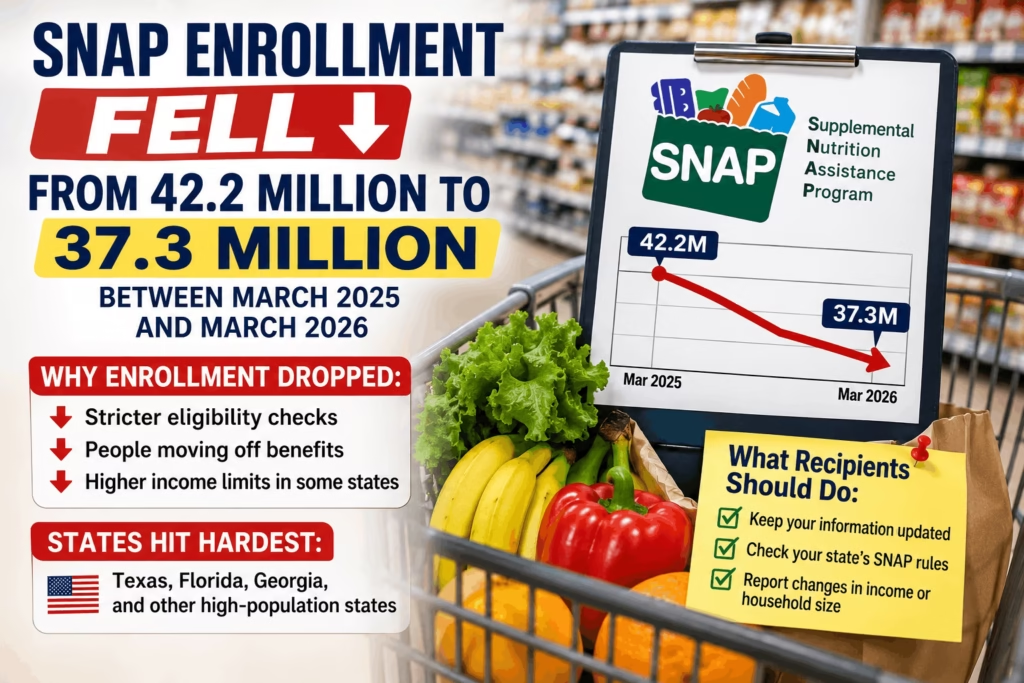
SNAP Enrollment Drop 2026: Nearly five million people have disappeared from the Supplemental Nutrition Assistance Program in just one year, and the numbers released by the U.S. Department of Agriculture confirm what food banks across the country have been reporting for months. SNAP enrollment fell from roughly 42.2 million recipients in March 2025 to about 37.3 million by March 2026, one of the steepest year over year contractions the program has seen in decades. For a program built specifically to expand automatically when people need it most, a drop this sharp during a period without a booming economy has caught the attention of hunger relief groups, state agencies, and lawmakers alike.
The SNAP enrollment drop is not evenly spread across the country. Arizona alone lost 53.9 percent of its SNAP recipients between March 2025 and March 2026, the steepest decline of any state, followed by Florida at 21.1 percent and North Carolina at 19.6 percent. Only one state, Alaska, actually saw its SNAP rolls grow, up 8.7 percent over the same period. Anti-hunger advocates say the losses are running well ahead of even the government’s own projections, and they trace the cause directly to the sweeping federal law signed in July 2025. We will be updating this article monthly as new USDA participation data is released.
What Is Driving the SNAP Enrollment Drop 2026?
The decline traces back to the One Big Beautiful Bill Act, the tax and spending package President Trump signed into law on July 4, 2025. The legislation, often shortened to H.R. 1, rewrote eligibility and work requirement rules for SNAP as part of a broader push to cut federal spending. The Congressional Budget Office estimated the changes would reduce federal SNAP spending by roughly 186 billion dollars over ten years.
According to the Center on Budget and Policy Priorities, SNAP participation fell by more than 4.5 million people, close to 11 percent, between the law’s enactment in July 2025 and April 2026. Measured over the full twelve months to April 2026, the drop was even larger, nearly 4.9 million people, or close to 12 percent nationwide. Every state except Alaska recorded a decline, with 44 states seeing losses of 5 percent or more and 23 states seeing drops of 10 percent or greater.
Researchers at the organization note this is the fastest SNAP contraction in almost thirty years. The only comparable period was after Congress passed deep cuts to the Food Stamp Program in 1996, when participation fell 11 percent, or about 2.7 million people, between March and December of 1997.
New Work Requirements Are a Major Factor
A large share of the drop is being linked to expanded SNAP work requirements that began rolling out in February 2026. Under the new rules, more adults, including many older adults and parents of school-age children who were previously exempt, must now document a minimum number of work or job training hours each month to keep their benefits.
The SNAP work requirements changes have proven difficult to administer in practice. State agencies, many already understaffed, have struggled to process the added verification paperwork on time. Recipients who cannot get through to a caseworker to confirm their work hours or exemption status risk being automatically dropped from the program, even if they remain otherwise eligible.
One case documented by public radio illustrates the problem clearly. A Georgia man who moved from Missouri in late 2024 received a SNAP benefits card but could never get it activated because he could not reach his local office by phone and was repeatedly told to schedule an appointment instead of receiving in-person help. After a year of trying, he still had not been able to use his benefits.
SNAP Soda and Candy Ban by State: Full List, Dates, and Rules for 2026
SNAP Enrollment Decline by the Numbers
| Metric | Figure |
|---|---|
| SNAP recipients, March 2025 | About 42.2 million |
| SNAP recipients, March 2026 | About 37.3 million |
| Approximate people who lost benefits | Nearly 5 million |
| Decline since H.R. 1 enactment (July 2025 to April 2026) | More than 4.5 million people, about 11 percent |
| Decline over the full year (April 2025 to April 2026) | Nearly 4.9 million people, about 12 percent |
| States with 10 percent or greater decline | 23 states |
| States with any decline | 49 states plus D.C. |
| State with highest percentage drop | Arizona, down 53.9 percent |
| Only state with an increase | Alaska, up 8.7 percent |
| Projected 10-year federal SNAP spending cut (CBO) | 186 billion dollars |
| New work requirements begin | February 2026 |
Which States Saw the Biggest SNAP Losses
State-level USDA data shows the sharpest contractions concentrated in the South and West. Arizona’s 53.9 percent drop stands well apart from every other state, followed by Florida at 21.1 percent, North Carolina at 19.6 percent, Louisiana at 17.4 percent, Nevada at 16.7 percent, and Oklahoma at 16.3 percent.
Advocacy groups point out that these are not simply states with fewer people needing help. Several of them moved fastest to implement the new eligibility verification systems and work requirement checks, and administrative bottlenecks, rather than genuine improvements in household income, appear to explain much of the gap between projected and actual enrollment losses.
SNAP Participation Losses Are Outpacing Federal Projections
When the Congressional Budget Office released its February 2026 baseline, it projected SNAP participation would average about 39.3 million people across 2026, down from roughly 42 million in 2025. The real number came in well below even that reduced estimate. Just 37.4 million people participated in SNAP in March 2026 alone, already about 4.7 million below the average monthly participation for fiscal year 2025, according to the Center on Budget and Policy Priorities analysis of USDA data.
That single month’s shortfall already exceeds CBO’s full-year prediction of roughly 3 million fewer average participants for 2026 compared with 2025. Preliminary state data for April and May 2026 suggests the decline has continued rather than leveled off, meaning the year-end average could land meaningfully below what federal budget forecasters expected when the law was written.
Impact on Children and Food Insecurity
One detail drawing particular concern from public health researchers is that many of the people losing SNAP were never actually targeted by the eligibility restrictions written into H.R. 1. Children, in particular, make up a significant share of those dropped from the program, largely as a side effect of household-level paperwork and verification failures rather than any rule specifically aimed at reducing benefits for kids.
Food banks in several of the hardest-hit states report rising demand at the same time SNAP caseloads are falling, a combination anti-hunger groups describe as a warning sign that need has not actually gone down, only access has.
SNAP Payments August 2026: Full EBT Payment Schedule by State, New Rules & Status Check!
State-by-State SNAP Food Ban 2026: What’s Banned, Status Update
What SNAP Recipients Should Do If Benefits Are at Risk
Legal aid organizations and state benefit navigators are giving consistent advice to households worried about losing coverage during this transition.
Recipients should respond immediately to any notice requesting work hour verification or recertification paperwork, since missed deadlines are one of the most common reasons benefits are cut off even for people who remain eligible.
Anyone who cannot reach their state SNAP office by phone should try the online case management portal for their state, or visit an in-person office directly, since call center backlogs have been a major contributor to the enrollment losses documented so far.
Households that believe they were wrongly removed from SNAP have the right to request a fair hearing through their state agency, and should keep copies of any documentation submitted, including work hour logs or exemption paperwork.
People newly subject to work requirements should ask their caseworker directly which exemptions might apply to them, since categories such as caregiving responsibilities, certain disabilities, and pregnancy can qualify someone for an exemption that is easy to miss without asking.
FAQs About SNAP Enrollment Drop 2026
Why has SNAP enrollment dropped so much in 2026?
The decline is primarily linked to the One Big Beautiful Bill Act signed in July 2025, which introduced new work requirements and tighter eligibility verification rules for SNAP. Administrative backlogs at state agencies have caused many eligible people to lose benefits due to paperwork and verification delays rather than actual changes in their income.
How many people have lost SNAP benefits since 2025?
USDA data shows SNAP enrollment fell from about 42.2 million people in March 2025 to about 37.3 million in March 2026, a decline of nearly 5 million people. Measured from the law’s July 2025 enactment through April 2026, the Center on Budget and Policy Priorities put the loss at more than 4.5 million people.
Which states have been hit hardest by the SNAP enrollment drop?
Arizona recorded the steepest decline at 53.9 percent between March 2025 and March 2026, followed by Florida, North Carolina, Louisiana, Nevada, and Oklahoma. Alaska was the only state where SNAP enrollment increased during the same period.
What are the new SNAP work requirements?
Starting in February 2026, more adults, including many who were previously exempt, are required to document a set number of work, education, or job training hours each month to remain eligible for SNAP benefits.
Can I appeal if I was removed from SNAP by mistake?
Yes. Every state SNAP agency is required to offer a fair hearing process for recipients who believe their benefits were wrongly reduced or terminated. Contacting the state agency promptly and keeping documentation is important for a successful appeal.
Is SNAP enrollment expected to keep falling?
Preliminary data from April and May 2026 suggests participation has continued to decline in most reporting states, and policy analysts expect the full eligibility and work requirement changes under the 2025 law to keep affecting enrollment through the rest of the year.
Official Resources
| Resource | Purpose | Official Link |
|---|---|---|
| USDA SNAP program information | Eligibility rules and state agency directory | fns.usda.gov/snap |
| SNAP state directory and applications | Apply, check status, or recertify by state | fns.usda.gov/snap/state-directory |
| USDA SNAP data and reports | Official monthly participation data | fns.usda.gov/data-research/data-tools |
| Center on Budget and Policy Priorities SNAP tracker | Independent tracking of enrollment changes | cbpp.org |
| Benefits.gov SNAP eligibility check | Check possible eligibility nationwide | benefits.gov/benefit/361 |
Conclusion
The SNAP enrollment drop from 42.2 million to 37.3 million recipients between March 2025 and March 2026 marks one of the fastest contractions the food assistance program has experienced in nearly thirty years. While federal officials point to new work requirements and fraud prevention as the intended goals of the 2025 law, independent analysts and food banks say the losses are outpacing projections and increasingly falling on people who remain eligible but are being tripped up by paperwork and verification delays. Households currently receiving SNAP, or recently removed from it, should act quickly on any notice from their state agency and use the appeal process if they believe a mistake was made. This article will be updated monthly as new USDA and state-level SNAP participation data becomes available.
SNAP Enrollment Decline 2026: Latest USDA Data, Causes & State-by-State Breakdown
SNAP Delay 2026: Payment Delays, Benefit Changes, Participation Decline & State-by-State Breakdown