Federal vs Private Student Loans 2026 remains one of the biggest financial decisions families face but the comparison has changed dramatically this year. Beginning July 1, 2026, the One Big Beautiful Bill Act (OBBBA) rewrote how federal student loans are priced, repaid, and forgiven, while the annual Treasury-based interest rate reset brought new numbers into effect for the 2026–27 academic year. Anyone weighing federal loans versus private student loans now needs to understand not just the old basics — fixed rates, credit checks, co-signers — but a completely restructured repayment system that limits new borrowers to just two federal repayment options.
For the 2026–27 school year, confirmed federal direct loan interest rates are 6.52% for undergraduates, 8.07% for graduate Direct Unsubsidized Loans, and 9.07% for PLUS loans, set from the May 12, 2026 Treasury note auction. At the same time, Grad PLUS loans have been eliminated for new borrowers, Parent PLUS loans now carry annual and lifetime caps, and most existing income-driven repayment (IDR) plans including SAVE, PAYE, and ICR are closed to new enrollment and will fully sunset by July 1, 2028, replaced by a new Repayment Assistance Plan (RAP) and a revised Standard Repayment Plan. We’ll be updating this article monthly to reflect the latest studentaid.gov announcements, Treasury rate resets, and OBBBA implementation guidance.
Federal vs Private Student Loans 2026 Key Highlights
| Key Point | Details |
|---|---|
| Effective Date of New Rules | July 1, 2026 |
| Governing Law | One Big Beautiful Bill Act (OBBBA), signed July 4, 2025 |
| New Undergraduate Federal Rate | 6.52% (Direct Subsidized/Unsubsidized) |
| New Graduate Federal Rate | 8.07% (Direct Unsubsidized) |
| New PLUS Loan Rate | 9.07% (Parent PLUS) |
| Rate-Setting Formula | May 2026 10-year Treasury yield (4.468%) + fixed margin |
| Grad PLUS Loans | Eliminated for new borrowers from July 1, 2026 |
| Parent PLUS Annual Cap | $20,000 per year (dependent undergraduate) |
| Parent PLUS Aggregate Cap | $65,000 (dependent undergraduate) |
| New Repayment Plans for New Borrowers | Repayment Assistance Plan (RAP) and new Standard Plan only |
| Old IDR Plans (SAVE, PAYE, ICR) | Closed to new enrollment; fully phased out by July 1, 2028 |
| Deadline to Switch Existing IDR Plans | July 1, 2028 |
| Official Portal | studentaid.gov |
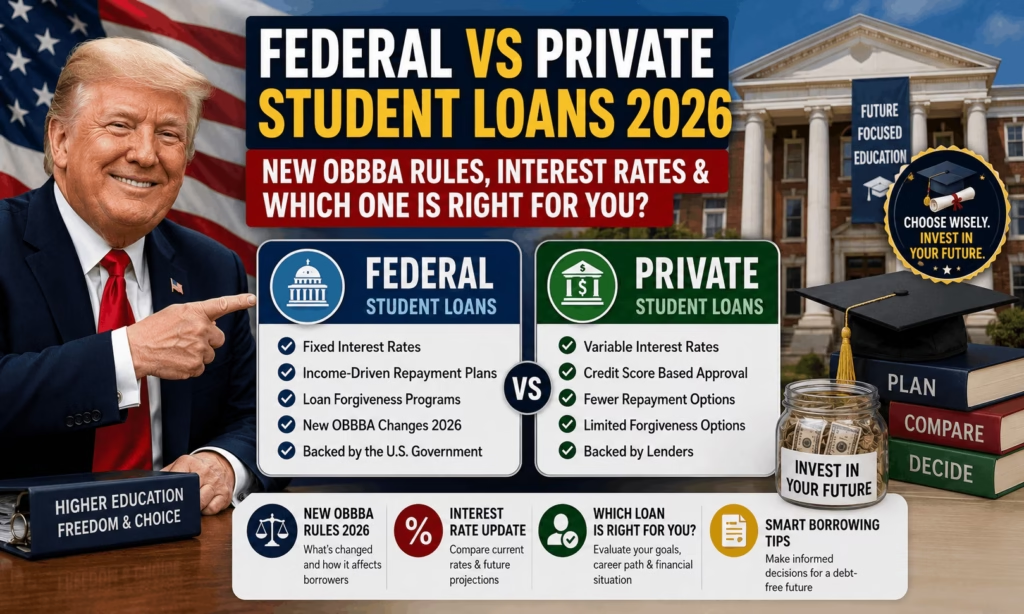
Federal vs Private Student Loans 2026
| Factor | Federal Student Loans | Private Student Loans |
|---|---|---|
| Lender | U.S. Department of Education | Banks, credit unions, online lenders |
| Credit Check | Not required (except PLUS loans) | Required; often needs a co-signer |
| 2026–27 Interest Rate | 6.52% (UG) – 9.07% (PLUS) | Varies by credit; can start lower or run much higher |
| Repayment Plans | RAP or new Standard Plan (new borrowers); legacy plans for existing borrowers until 2028 | Set by lender; limited flexibility |
| Forgiveness Options | RAP forgiveness after set term; PSLF for qualifying public service | Rarely offered |
| Deferment/Forbearance | Available, though limits tighten from July 1, 2027 | Lender-dependent, often minimal |
| Best For | Most students as a first option | Filling gaps after federal aid is exhausted |
New Federal Student Loan Interest Rates Effective July 1, 2026
Every July 1, new federal student loan interest rates are calculated from the high yield of the May Treasury note auction plus a fixed statutory add-on for each loan type. The May 12, 2026 auction produced a high yield of 4.468%, which set the following confirmed rates for loans first disbursed between July 1, 2026, and June 30, 2027:
| Loan Type | New Interest Rate (2026–27) |
|---|---|
| Direct Subsidized Loans (Undergraduate) | 6.52% |
| Direct Unsubsidized Loans (Undergraduate) | 6.52% |
| Direct Unsubsidized Loans (Graduate/Professional) | 8.07% |
| Direct PLUS Loans (Parent PLUS) | 9.07% |
These rates apply only to new loans disbursed on or after July 1, 2026, and stay fixed for the life of that loan. Existing borrowers keep the rate they originally locked in — this year’s reset does not touch loans already disbursed.
What Is the One Big Beautiful Bill Act (OBBBA) and Why Does It Matter for Student Loans?
The One Big Beautiful Bill Act, signed into law on July 4, 2025, is the biggest overhaul of the federal student loan system in over a decade. Its student loan provisions take effect in stages, with the first and largest wave starting July 1, 2026. Instead of the multiple income-driven repayment (IDR) plans borrowers could previously choose from, the law consolidates federal repayment into two options for anyone taking out a new federal loan on or after July 1, 2026:
- The Repayment Assistance Plan (RAP) — a new income-driven option
- A revised Standard Repayment Plan, with fixed payments tiered from 10 to 25 years depending on loan balance
If a new borrower doesn’t actively choose a plan, they are automatically placed on the new Standard Repayment Plan.
What Happens to SAVE, PAYE, and ICR Plans?
Under the OBBBA, the SAVE Plan, Pay As You Earn (PAYE), and Income-Contingent Repayment (ICR) plan stop accepting new enrollments from July 1, 2026, and are scheduled to close permanently by July 1, 2028. Borrowers already using these plans, and who do not take out any new federal loans after July 1, 2026, can remain on their current plan — or switch voluntarily into RAP or the current Income-Based Repayment (IBR) plan — until the 2028 transition deadline. After that date, anyone still on SAVE, PAYE, or ICR is automatically moved into RAP. IBR is the only older IDR plan that survives long-term and remains open indefinitely.
Grad PLUS Loans Eliminated & New Parent PLUS Borrowing Limits
Two of the biggest changes affecting graduate students and parents:
- Grad PLUS Loans are eliminated for new borrowers starting July 1, 2026. Graduate and professional students will need to rely on Direct Unsubsidized Loans (subject to new lifetime limits) or private loans to cover any funding gap.
- Parent PLUS Loans now carry a $20,000 annual cap and a $65,000 aggregate cap for a dependent undergraduate student — a major shift from the previous system, which allowed borrowing up to the full cost of attendance.
- New Parent PLUS loans disbursed on or after July 1, 2026 are only eligible for the new Standard Repayment Plan — they cannot enroll in RAP, and this affects Public Service Loan Forgiveness (PSLF) eligibility for parent borrowers going forward.
Public Service Loan Forgiveness (PSLF): What’s New
PSLF still cancels remaining federal balances for qualifying borrowers who work full-time for government or nonprofit employers for 10 years while making 120 qualifying payments. One notable update: payments made during a medical or dental residency or fellowship now count toward PSLF, provided the employer is an eligible nonprofit or public service institution. Borrowers must still be on an eligible repayment plan — a current IDR plan, RAP, or the old Standard Plan — to keep earning PSLF credit, which is why the Parent PLUS restriction to the Standard-only track matters for parents pursuing forgiveness.
Forbearance, Deferment & Loan Rehabilitation Changes (Effective July 1, 2027)
Some OBBBA provisions phase in a year later, on July 1, 2027:
- General forbearance shrinks from 12 months at a time (3-year cumulative limit) to 9 months within any two-year period, for loans originated on or after that date.
- Economic hardship and unemployment deferments are being phased out for loans made after July 1, 2027; borrowers with older loans can still use these deferments until their loans are paid off.
- Borrowers will be able to rehabilitate a defaulted loan twice instead of once, with a lower minimum rehabilitation payment of $10.
Federal vs Private Student Loans 2026: Which Should You Choose?
Even with the new RAP and Standard Plan structure, federal student loans remain the safer starting point for most students in 2026. They still don’t require a credit check (apart from PLUS loans), offer fixed statutory interest rates, and provide access to PSLF and structured forgiveness under RAP after a set repayment period. Private student loans, offered by lenders such as banks and credit unions, remain credit-based and often need a co-signer, with rates that can be lower for borrowers with excellent credit but come without the deferment, forbearance, or forgiveness protections federal loans provide.
With Grad PLUS eliminated and Parent PLUS capped, more families may find themselves needing private loans to bridge a larger funding gap than in previous years — but the general rule for 2026 hasn’t changed: exhaust federal aid, scholarships, and work-study first, and treat private loans as a supplement, not a starting point.
Student Loan Websites & Useful Links
| Federal Student Aid Home | studentaid.gov |
| Login / FAFSA Account | studentaid.gov/fafsa |
| Loan Simulator (compare RAP vs Standard Plan) | studentaid.gov/loan-simulator |
| PSLF Help Tool | studentaid.gov/pslf |
| Direct Consolidation Loan Application | studentaid.gov/loan-consolidation |
| Check Loan Balance & Status | studentaid.gov/aid-summary |
| Home Page | https://govtschemes.org/ |
The Federal vs Private Student Loans 2026 decision now comes with a bigger asterisk than in past years: the OBBBA’s July 1, 2026 overhaul has narrowed federal repayment choices to RAP and the new Standard Plan for new borrowers, eliminated Grad PLUS loans, and capped Parent PLUS borrowing — all while interest rates ticked up slightly to 6.52%–9.07% for the 2026–27 academic year. Federal loans still carry the stronger safety net for most students, but families borrowing for the first time after July 1, 2026, should map out their repayment plan choice carefully before signing, since that decision now applies across all of a borrower’s federal debt going forward.
FAQs
What are the new federal student loan interest rates for 2026–27?
6.52% for Direct Subsidized and Unsubsidized undergraduate loans, 8.07% for graduate Direct Unsubsidized loans, and 9.07% for Parent PLUS loans, effective for loans disbursed July 1, 2026 through June 30, 2027.
What is the Repayment Assistance Plan (RAP)?
RAP is the new income-driven repayment plan created under the OBBBA. It replaces SAVE, PAYE, and ICR for new borrowers and is one of only two repayment options — along with the new Standard Plan — available for federal loans first disbursed on or after July 1, 2026.
Are Grad PLUS loans still available in 2026?
No. Grad PLUS Loans are eliminated for new borrowers starting July 1, 2026. Graduate and professional students must rely on Direct Unsubsidized Loans or private loans instead.
What is the new Parent PLUS loan limit?
For a dependent undergraduate student, Parent PLUS borrowing is capped at $20,000 per year and $65,000 in aggregate, starting July 1, 2026.
Do I need a credit check for federal student loans?
Most federal student loans, other than PLUS loans, do not require a credit check, making them accessible to a wide range of students regardless of credit history.
Is a co-signer required for private student loans?
Many private lenders require a co-signer if the borrower has a limited or non-existent credit history, which is common for undergraduate students.
Can I still use the SAVE Plan in 2026?
Borrowers already enrolled in SAVE can remain on it temporarily if they don’t take out new federal loans after July 1, 2026, but the plan is closed to new enrollment and will be phased out entirely by July 1, 2028.
Can private loans be forgiven?
No, private student loans generally do not offer forgiveness programs. Forgiveness options such as PSLF and RAP forgiveness apply only to federal loans.
Which is better for students in 2026: federal or private loans?
For most students, federal loans remain the better first option due to lower, fixed statutory rates and stronger borrower protections. Private loans are best reserved for funding gaps once federal and other aid options are exhausted.
What happens if I miss income recertification on an IDR or RAP plan?
Missing your recertification deadline can cause your payment to be recalculated as though you were on a standard repayment schedule, often resulting in a significantly higher monthly payment.