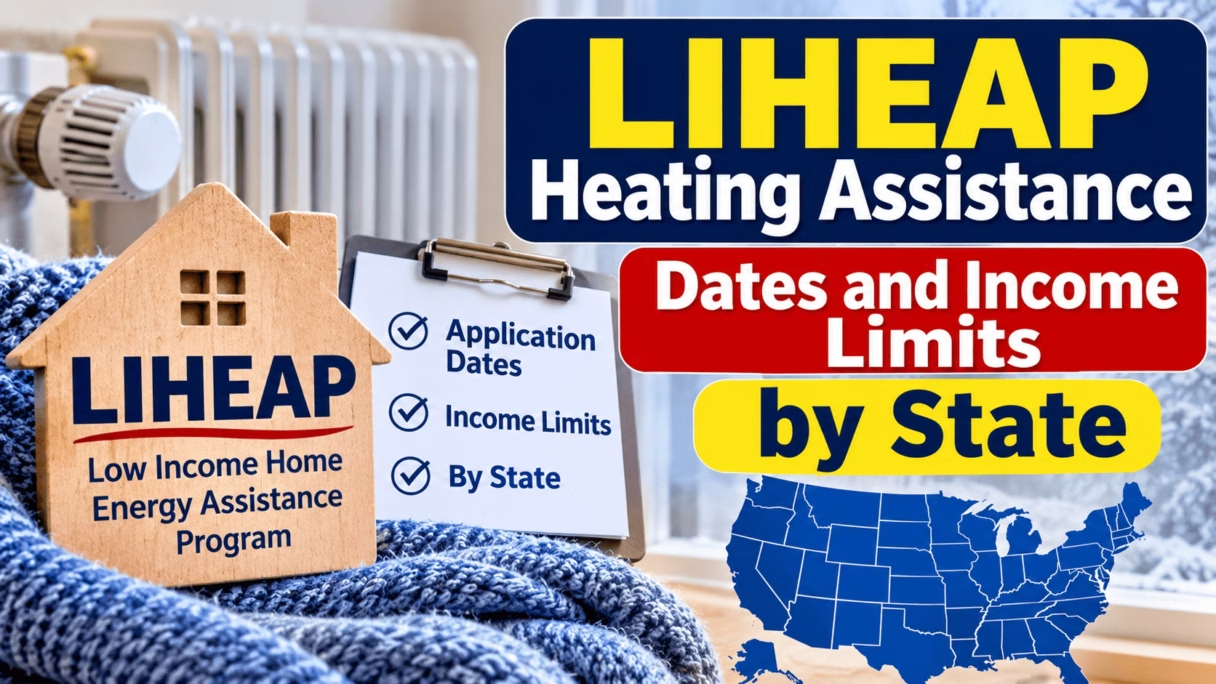
LIHEAP heating assistance is open in most states this winter. You can qualify if your household income is at or below 150% of the poverty line ($23,940 a year for one person, $49,500 for a family of four) or, in many states, 60% of state median income. Apply through your state LIHEAP office, a local community action agency or your state’s online portal. Many states pay first come, first served, so apply early.
Heating bills are heading up this winter, and the window to get help is already closing in some places. The U.S. Energy Information Administration says households that heat with oil should expect to spend about 21% more than last winter, while natural gas users should spend about 9% less. Virginia closed its main fuel assistance window on November 13. Kansas opens on November 30, and North Carolina and Georgia open for older adults on December 1. On October 9, HHS released $3.63 billion in LIHEAP heating assistance funds, which is 90% of the federal amount available under the stopgap spending law. Most states are now taking applications, but dates, income limits and benefit amounts differ widely. This guide gives you the dates, income rules and steps for LIHEAP heating assistance, plus a state-by-state tool you can use right now.
The money is not guaranteed beyond this winter. Last year, the first $3.6 billion went out on November 28, and the final 10%, about $421 million, was not released until April 20 after repeated budget office extensions. The administration’s 2027 budget again proposes ending LIHEAP entirely, and 31 senators wrote to HHS in September asking for a fast, full release. Congress has rejected elimination before. About six million households got heating or cooling help last year, according to the senators. States are filling gaps on their own. Massachusetts declared an energy emergency on October 5 and added a new oil relief benefit, and New York raised its regular benefit when applications opened on November 2.
LIHEAP Heating Assistance 2026-27 Key Highlights
| Key fact | 2026-27 data |
|---|---|
| Federal funds released for FY 2027 | $3,631,860,000 on October 9, 2026 |
| Share of annual funding released | 90% under the stopgap law |
| Federal income ceiling | Greater of 150% of poverty or 60% of state median income |
| 150% of poverty, one person | $23,940 a year ($1,995 a month) |
| 150% of poverty, family of four | $49,500 a year ($4,125 a month) |
| Typical benefit | $200 to $1,500 a season, higher in some states |
| New York | Up to $1,086; regular HEAP opened November 2; emergency HEAP opens January 4, 2027 |
| Pennsylvania | November 2, 2026 to April 23, 2027; cash grants of $200 to $1,000 |
| New Jersey | October 1, 2026 to June 30, 2027; benefits of $118 to $1,278 |
| Massachusetts | New oil relief of up to $680 for households at 60% to 100% of median income |
| Winter heating outlook | Heating oil spending up 21%, electricity up 4%, propane down 3%, natural gas down 9% |
| Referral line | 1-866-674-6327 (weekdays, 9 a.m. to 7 p.m. ET) |
Is LIHEAP Funded This Winter?
Yes, for now. The Office of Community Services released $3,631,860,000 in block grant money for fiscal year 2027 on October 9. That is 90% of what the stopgap law, Public Law 119-103, makes available. A state cannot spend its share until HHS approves its 2027 plan, so some local offices may open later than their state announced.
Three things to watch. First, the stopgap is not full-year funding, so Congress still has to pass a final 2027 bill. Our earlier coverage put the stopgap deadline at December 11, so check Congress.gov for the latest. Second, the White House asked Congress to eliminate LIHEAP for 2027, as it did for 2026. Lawmakers from both parties pushed back and funded the program at more than $4 billion last year. Third, final state amounts can change how long a season lasts. States that run low on money can close early, which is why most agencies urge early applications.
Last winter shows why timing matters. The delayed release pushed some state start dates back by weeks, and the last 10% of 2026 funds arrived in late April, near the end of heating season. This year the main release came about seven weeks earlier than in 2025.
Social Security COLA Scams: How to Spot Fake Increase Notices
Heating Costs This Winter: What to Expect
The Energy Information Administration’s October 7 outlook shows a split. Heating oil expenditures are forecast to rise 21% as prices climb 34%, partly offset by milder weather. Electricity is up 4%. Propane is down 3% and natural gas is down 9%. About 3% of homes use heating oil, mostly in the Northeast, so the pain is concentrated there.
The National Energy Assistance Directors Association gave a gloomier forecast in September, projecting average household heating spending of $1,030, up 8.7%, with heating oil up 31.3%. The two forecasts use different dates and methods, so treat them as a range. If you heat with oil in New England, New York or Pennsylvania, plan for a higher bill and apply early.
LIHEAP Application Dates by State: What Opens or Closes Soon
The table below lists the dates that matter in the next few weeks. For every state, use the tool later in this article.
| Date | State | What happens |
|---|---|---|
| November 13, 2026 | Virginia | Fuel Assistance window closed; crisis help runs to March 15, 2027 |
| November 30, 2026 | Kansas | Applications open at 8 a.m. and run to March 31, 2027 |
| December 1, 2026 | North Carolina | Opens for ages 60+ and disabled; January 1 for everyone else |
| December 1, 2026 | Georgia | Usually opens for ages 65+ and medically homebound; state has not posted dates |
| December 2026 | Massachusetts | New oil relief of up to $680 begins |
| Mid-December 2026 | Kentucky | Fall heating subsidy closes; sources show December 14 or December 18 |
| December 15, 2026 | Oklahoma | Expected opening date |
| January 4, 2027 | New York | Emergency HEAP opens; Arkansas is also expected to open |
| January 6, 2027 | Kentucky | Winter Crisis opens |
| April 23, 2027 | Pennsylvania | Regular season closes |
| April 30, 2027 | Several states | Alaska, Colorado, Indiana, Iowa, Massachusetts, Montana and Wyoming close |
| June 30, 2027 | New Jersey | Season closes |
Illinois, Iowa, Missouri and several other states opened first for older adults and people with disabilities and later for everyone else. States that run all year include Arizona, California, New Mexico, North Dakota, Oregon, Texas, Vermont and Washington, according to published trackers. Alabama, South Carolina, South Dakota and West Virginia had not confirmed 2026-27 dates when we checked.
LIHEAP Income Limits 2026-27
Federal law lets each state set its own cutoff, up to the greater of 150% of the federal poverty guideline or 60% of state median income. Most states use one of those two. For fiscal year 2027, 60% of median income is higher than 150% of poverty in nearly every state for households of one to six people, so states that use the median-income rule reach more families.
| Household size | 150% of poverty, a year | 150% of poverty, a month |
|---|---|---|
| 1 | $23,940 | $1,995 |
| 2 | $32,460 | $2,705 |
| 3 | $40,980 | $3,415 |
| 4 | $49,500 | $4,125 |
| 5 | $58,020 | $4,835 |
| 6 | $66,540 | $5,545 |
| 7 | $75,060 | $6,255 |
| 8 | $83,580 | $6,965 |
Add $8,520 a year for each person beyond eight. Alaska and Hawaii use higher poverty guidelines. These figures come from the 2026 HHS poverty guidelines, which apply to the 2026-27 heating season.
State examples show how much the rules differ.
| State | Income rule |
|---|---|
| Pennsylvania | 150% of poverty: $23,940 for one person, $49,500 for four |
| New Jersey | 60% of median income: about $51,273 for one, $98,602 for four |
| New York | $3,563 a month for one person, $6,852 a month for four |
| Illinois | 60% of median income: $41,290 for one, $79,405 for four |
| Massachusetts | 60% of median income: $103,049 for four; oil relief covers up to $171,749 |
| Kansas | 150% of poverty: $1,995 a month for one, $4,125 for four |
| Ohio | Winter Crisis at 175% of poverty |
Some households qualify automatically. In some states, getting SNAP, SSI, TANF or certain veterans benefits counts as proof of eligibility. Ask your local office. Income usually means gross income for everyone in the home, before taxes.
Alaska Permanent Fund Dividend 2026: Who Qualifies, When It’s Paid, and What Comes Next
LIHEAP Heating Help Tool by State
Use the tool below to see your state’s application dates, income rule and notes. Add your household size and yearly income to check the federal 150% poverty line. It also tells you when a state date is confirmed, reported by a single source, or not posted yet.
LIHEAP Heating Help Finder by State
Pick your state to see 2026-27 application dates, income rules and notes. Add your household size and income to check the federal 150% poverty line.
Dates were compiled from state notices and published tracker pages as of November 21, 2026. Dates marked “reported” or “not confirmed” come from a single source or have not been posted by the state, so confirm with your state LIHEAP office, local community action agency or the National Energy Assistance Referral line at 1-866-674-6327 before you rely on them. LIHEAP never charges an application fee.
Treat the tool as a starting point. Agencies change dates when funding shifts, and county offices sometimes open on different days than the state. Always confirm with your local office before you travel or take time off work.
How to Apply for LIHEAP Heating Assistance
- Find your state office. Start with the tool above, or call the National Energy Assistance Referral line at 1-866-674-6327.
- Gather your documents. Most offices ask for photo ID, Social Security numbers for everyone in the home, proof of income for the period the state requires, a recent heating or utility bill with your account number, and a lease if heat is included in your rent.
- Choose how to apply. Options usually include an online portal, a paper form, a phone call, or an appointment at a county office or community action agency. Pennsylvania uses dhs.pa.gov/COMPASS or the helpline at 1-866-857-7095. New York uses ny.gov/HEAP or your local social services office. Massachusetts uses mass.gov/heatinghelp.
- Submit and keep proof. Save your confirmation number and a copy of everything you send.
- Respond fast to requests. If the office asks for a missing document, answer by the deadline in the letter.
- Keep paying what you can. Assistance may not arrive before your next bill, and a late payment fee still applies.
You can apply once per heating season for regular help. Crisis or emergency help is a separate benefit in most states. Pennsylvania, for example, lets a household receive more than one crisis grant up to a $1,000 total.
LIHEAP Processing Time
There is no single national processing time. Each state sets its own rules, and speed depends on how many people apply and how complete your paperwork is. Many applicants wait several weeks for a regular decision. Crisis requests, such as a shutoff notice or an empty fuel tank, are usually handled faster. If you have less than two weeks of fuel or have received a shutoff notice, say so when you apply and ask for the crisis track.
If you do not hear back, call your local office, not the national line, and give your application date and confirmation number.
LIHEAP Payment Schedule
LIHEAP usually pays your utility or fuel vendor directly, and the credit shows on your next bill or as a fuel delivery. If your heat is included in your rent, some states send the payment to you or your landlord instead. Industry guides note that payments can arrive weeks or even months after approval, so ask your utility whether it has received your award.
Benefit size depends on income, household size, fuel type and region. Typical regular benefits run from $200 to $1,500 a season. Pennsylvania pays $200 to $1,000 in cash grants. New Jersey reports $118 to $1,278. New York pays up to $1,086, with a base of $990 for delivered oil, kerosene or propane and $700 for wood, pellets or coal. Connecticut reports about $355 to $705.
What Else Can Lower Your Heating Bill This Winter?
LIHEAP is not your only option. Several protections and programs can stack with it.
- Shutoff rules. Pennsylvania’s winter utility shutoff protection runs December 1 to March 31, and New Jersey’s runs November 15 to March 15. These pauses do not erase what you owe.
- State relief. Massachusetts will pay up to $680, one time, to oil-heated households earning 60% to 100% of median income, from December through April 30, 2027, or until money runs out. The state also cut some electric bill charges for January through March 2027.
- Emergency HEAP in New York. It opens January 4, 2027 for households facing a heat emergency.
- Utility hardship plans. Ask your gas, electric or oil company about budget billing, payment plans and its own discount programs.
- Local help. Calling 211 or your community action agency can connect you to fuel funds and charities. In Massachusetts, the Emergency Winter Warmth Fund started with $100,000 from Citizens Energy.
- Lower the demand. Weatherization programs, run separately from LIHEAP, can seal and insulate homes at no cost to eligible households.
One SNAP change matters this winter. Under a 2025 federal law, receiving LIHEAP no longer automatically gives every SNAP household the larger heating and cooling utility allowance. That shortcut now applies only if someone in the household is 60 or older or has a disability. Other households may need to show their heating or cooling costs when they apply or renew, so keep your bills.
IRS Tax Refund 2027: Check Refund Dates, New Deductions and What to Do Now
LIHEAP Scams to Avoid
LIHEAP never charges a fee, and it does not give grants directly to individuals. The federal program pays through states and local agencies. If someone asks for money to process your application, or promises a guaranteed payout by text or social media, stop. Report it to the HHS fraud hotline at 1-800-447-8477. Use only your state agency, a local community action agency or the referral line above.
Official LIHEAP Websites and Resources
| Resource | What it is for | Link |
|---|---|---|
| HHS LIHEAP FY 2027 funding release | Official release of federal funds | https://acf.gov/ocs/grants-funding/recipients/liheap/block-grant-funding-release-2027 |
| HHS income guidance for FY 2027 | Poverty guidelines and state median income | https://www.hhs.gov/guidance/document/liheap-im2026-01-federal-poverty-guidelines-fpg-and-state-median-income-smi-estimates |
| Pennsylvania COMPASS | Apply, check status | https://www.dhs.pa.gov/COMPASS |
| New York HEAP | Apply and learn about benefits | https://www.ny.gov/services/apply-HEAP |
| Massachusetts heating help | HEAP and oil relief | https://www.mass.gov/HeatingHelp |
| New Jersey USF and HEA | Energy bill help and one application | https://www.nj.gov/dca/dhcr/offices/USFHEA_factsheet.shtml |
| Maryland OHEP income guidelines | FY 2027 income table | https://dhs.maryland.gov/documents/OHEP/FY27-OHEP-Income-Guidelines.pdf |
| EIA winter fuels outlook | Heating cost forecast | https://www.eia.gov/Todayinenergy/detail.php?id=68264 |
| NEADA | Heating cost research and state help | https://neada.org/ |
| Referral line | National Energy Assistance Referral, 1-866-674-6327 | Phone, weekdays 9 a.m. to 7 p.m. ET |
LIHEAP Heating Assistance FAQs
When does LIHEAP open for 2026-27?
It depends on your state. Alaska, Indiana, Massachusetts, Montana, New Jersey, Wisconsin and Wyoming opened on October 1. Pennsylvania and New York opened on November 2. Kansas opens November 30, and North Carolina and Georgia open in December for older adults. Use the state tool above for your date.
How much money can you get from LIHEAP?
Typical regular benefits run from $200 to $1,500 a season. New York pays up to $1,086, Pennsylvania $200 to $1,000, and New Jersey $118 to $1,278. Your amount depends on your income, household size and fuel.
What is the LIHEAP income limit for 2026-27?
The federal ceiling is the greater of 150% of poverty or 60% of state median income. Using 150% of poverty, that is $23,940 for one person and $49,500 for a family of four. Many states use the higher median-income rule.
Is LIHEAP funded for this winter?
Yes. HHS released $3.63 billion on October 9, which is 90% of the federal amount available under the stopgap law. The rest depends on what Congress passes.
Can renters and oil or propane users get LIHEAP?
Yes. Renters can qualify, including some whose heat is included in rent. Delivered oil, kerosene and propane households often get larger benefits, as New York’s $990 base benefit shows.
How often can I apply for LIHEAP?
Once per heating season for regular help. Crisis help is separate and may be available more than once, depending on your state.
Does LIHEAP pay my heating bill directly?
Usually yes. Payment typically goes straight to your utility or fuel vendor. If heat is included in your rent, some states pay you or your landlord.
What happens if I miss the LIHEAP deadline?
Some states keep applications open until funds run out, while others close on a fixed date. If you miss yours, ask about crisis help, which often runs longer. Virginia, for example, closed Fuel Assistance on November 13 but kept crisis help open to March 15.
Do I qualify for LIHEAP if I get SNAP?
Often yes. In some states, SNAP, SSI or TANF counts toward eligibility, but you still have to apply. Your income and household size still matter in other states.
How long does LIHEAP take to approve?
Many people wait several weeks for a regular decision, and crisis requests move faster. Timing depends on your state and on how complete your documents are.
Is there a fee to apply for LIHEAP?
No. LIHEAP is free. Report anyone who asks for payment to the HHS fraud hotline at 1-800-447-8477.
Does LIHEAP affect my SNAP benefits?
It can. Since a 2025 federal law change, only SNAP households with a member who is 60 or older or has a disability get the larger utility allowance automatically for receiving LIHEAP. Others may need to show heating costs.
Conclusion
LIHEAP heating assistance is open in most states, but the clock is running. Funding was released earlier than last year, yet it is a stopgap, and the White House still wants to end the program. Heating oil households face the biggest jump, while natural gas users may see lower bills. The practical advice is simple. Find your state’s dates, gather your documents and apply now rather than waiting for a cold snap. If you are near a limit, check whether your state uses the 150% poverty rule or the higher median-income rule. We will keep updating this guide as states post new dates and Congress decides on funding.
SSDI Payment Dates 2026-27: Your Disability Check Schedule by Birthday, Plus the 3.6% COLA