New Canada Travel Tips 2026: International travelers planning a trip to Canada are navigating an updated set of entry guidelines, digital customs protocols, and national park reservation frameworks established by federal transport and border authorities. The Government of Canada and Immigration, Refugees and Citizenship Canada (IRCC) have streamlined processing systems while introducing expanded Electronic Travel Authorization (eTA) eligibility for international visitors flying into major international hubs. From updated digital advance declarations at customs kiosks to modified Parks Canada pass reservation schedules, staying informed about current regulations ensures seamless passage across Canadian land borders and airport terminals. We’ll be updating this article monthly.
Understanding how these regulatory updates interact with local transit networks, regional border crossing wait times, and seasonal weather changes is vital for both first-time tourists and returning visitors. While basic tourist entry rules allow eligible visitors to stay for up to six months, border enforcement officers strictly evaluate documentation, return travel tickets, and proof of sufficient funds upon arrival. Travelers utilizing domestic airlines, scenic rail services like VIA Rail, or cross-border driving routes must prepare for modern border control procedures and updated park access policies before departure.
New Canada Travel Tips 2026 Key Highlights
| Travel Parameter | Official Specification & Requirements |
| Primary Entry Requirement (Air) | Electronic Travel Authorization (eTA) or valid Visitor Visa |
| eTA Application Fee | CA$7 (Valid for up to 5 years or until passport expiry) |
| Standard Tourist Stay Duration | Up to 180 days (6 months) per entry |
| U.S. Permanent Residents (Green Card) | Valid passport plus valid U.S. Green Card required |
| Customs Pre-Declaration Tool | ArriveCAN advance declaration (Optional but speeds up border checks) |
| National Parks Summer Promotion | Canada Strong Pass (Free admission & 25% off camping Jun 19 to Sep 7) |
| Primary Administering Agencies | CBSA (Border) and IRCC (Immigration) |
Mastering the Electronic Travel Authorization (eTA) and Visa Rules
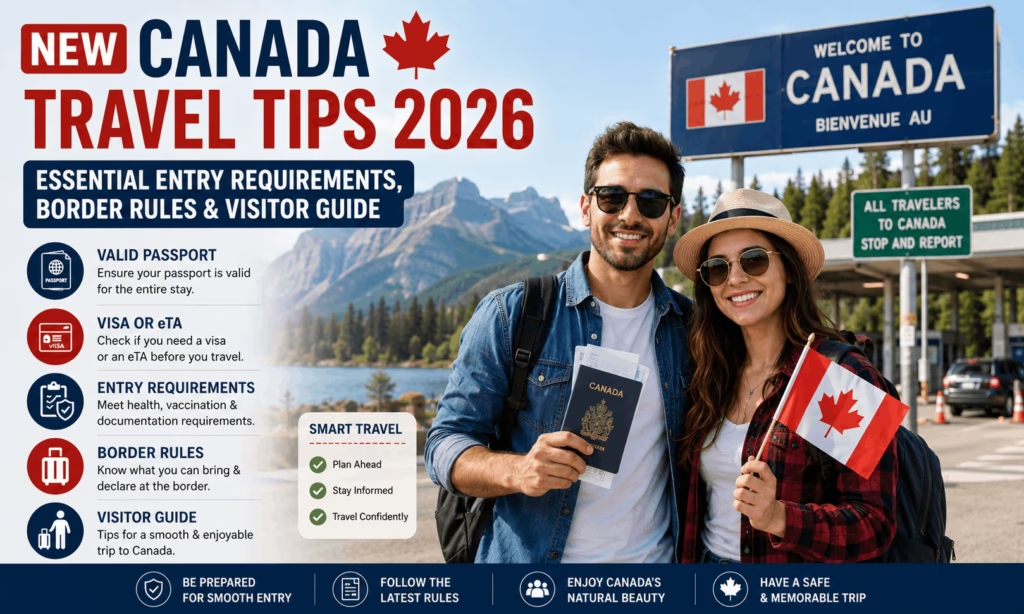
Applying for correct travel credentials remains the most critical step when preparing for a Canadian trip. The Electronic Travel Authorization (eTA) is an entry requirement for visa-exempt foreign nationals traveling to Canada by air.
Who Needs an eTA for Canada?
If you hold a passport from a visa-exempt country (such as the United Kingdom, Australia, Japan, France, Germany, or South Korea) and are flying into or transiting through a Canadian airport, you must possess an approved eTA tied electronically to your passport.
- Air Travel Requirement: The eTA is strictly required for air travel. You do not need an eTA if arriving by car, bus, train, or boat (including cruise ships).
- Cost and Validity: The official eTA costs CA$7 when purchased directly through the official Government of Canada portal. It remains valid for up to five years, or until your passport expires.
- Passport Linking: Because the eTA is electronically linked to a specific passport number, renewing your passport automatically invalidates your existing eTA, requiring a fresh online application.
Expanded eTA Eligibility for Selected Countries
IRCC maintains flexible eTA rules for citizens of select visa-required countries who either held a Canadian visitor visa in the past 10 years or currently hold a valid U.S. nonimmigrant visa. Eligible travelers from these designated countries can fly to Canada using an eTA rather than undergoing a full visitor visa application process.
U.S. Citizens and Lawful Permanent Residents
U.S. citizens travel to Canada using a valid U.S. passport and do not require an eTA or visa. U.S. Lawful Permanent Residents (Green Card holders) must carry a valid passport issued by their country of nationality along with a valid Green Card, regardless of whether they arrive by air, land, or sea.
Social Security Payment August 2026: How Much Will You Receive This Week?
Canada Pension Plan Payment August 27th, 2026: Who Will Receive CPP Benefits and How Much?
Navigating Border Crossings: Customs and ArriveCAN Updates
Clearing Canadian customs at primary international airports (Toronto Pearson YYZ, Vancouver YVR, Montreal Trudeau YUL, and Calgary YYC) is faster thanks to automated border kiosks and digital declaration systems.
Using the Advance Declaration Feature
Travelers can submit their customs and immigration declaration up to 72 hours prior to arrival using the official ArriveCAN web portal or mobile application. By completing the advance declaration, travelers gain access to express lanes at major airport customs halls, reducing total border processing time significantly.
Goods, Duty-Free Allowances, and Personal Exemptions
Canadian border officers enforce strict regulations regarding what items can be brought across international borders:
- Currency Declaration: Carrying currency or monetary instruments equal to or exceeding CA$10,000 must be declared upon arrival.
- Food, Plant, and Animal Restrictions: All agricultural products, meats, fruits, and organic materials must be declared. Failure to declare restricted items can result in immediate fines up to CA$1,300.
- Alcohol and Tobacco Limits: Visitors may bring up to 1.5 liters of wine, or 1.14 liters of liquor, or 24 cans of beer duty-free, alongside up to 200 cigarettes or 50 cigars.
National Parks, Reservations, and the Canada Strong Pass
Canada’s vast national parks, managed by Parks Canada, attract millions of outdoor enthusiasts annually. Securing park permits, camping reservations, and shuttle passes requires strategic advance planning due to high visitor demand.
Parks Canada Reservation System Guidelines
Campground reservations for top destinations like Banff, Jasper, Yoho, Pacific Rim, and Cape Breton Highlands open early in the calendar year.
- Create an Account Early: Set up a Parks Canada Reservation Service account well before booking dates launch.
- Understand Launch Days: Popular campgrounds in Banff (Lake Louise, Johnston Canyon) sell out within minutes of launch.
- Shuttle Passes for Lake Louise and Moraine Lake: Personal vehicle access to Moraine Lake in Banff National Park is restricted year-round. Visitors must book official Parks Canada shuttle tickets online in advance.
The Canada Strong Pass Summer Discount
Travelers visiting between mid-June and early September can take advantage of the national Canada Strong Pass initiative. This promotional pass provides free admission to national parks, national historic sites, and national marine conservation areas, alongside a 25% discount on frontcountry camping and roofed accommodations reserved through Parks Canada.
Transportation and Domestic Travel Logistics
Canada is the second-largest country by total land area, making realistic travel planning essential when building holiday itineraries.
Air Travel vs. Rail and Car Rentals
- Domestic Flights: Internal flights between major provinces can be long and costly. Booking internal flights weeks in advance through national carriers ensures better seat availability and manageable baggage fees.
- VIA Rail Services: Scenic rail corridors like the Canadian (Toronto to Vancouver) or the Ocean (Montreal to Halifax) offer incredible views, but booking cabin space months in advance is necessary during peak summer and autumn foliage seasons.
- Car Rentals and Driving: Renting a vehicle is ideal for exploring regional park systems and scenic drives like the Icefields Parkway (Alberta) or the Cabot Trail (Nova Scotia). Ensure you hold a valid driver’s license from your home country; an International Driving Permit (IDP) is recommended if your license is not in English or French.
Currency, Tipping, and Local Financial Practices
- Official Currency: The Canadian Dollar (CAD, denoted as $ or CA$).
- Cashless Payments: Canada is predominantly a cashless society. Tap-to-pay credit cards, mobile wallets, and contactless debit payments are universally accepted at retail stores, restaurants, and transportation hubs.
- Tipping Etiquette: Tipping is customary in restaurants, cafes, taxis, and personal service businesses. Standard tipping rates range between 15% and 20% of the pre-tax bill for good service.
SNAP Payments August 2026: Full EBT Payment Schedule by State, New Rules & Status Check!
Official Travel Resources and Government Portal Links
To ensure you are accessing accurate, up-to-date entry rules and government services, always use official government websites.
| Resource Description | Official Portal Link |
| Apply for Official eTA (CA$7) | Official Canada eTA Application Portal |
| IRCC Visitor Visa Portal | Apply for a Canadian Visitor Visa |
| CBSA ArriveCAN Advance Declaration | Official ArriveCAN Digital Portal |
| Parks Canada Reservation Service | Official Parks Canada Booking System |
| Travel Canada Tourism Information | Destination Canada Official Site |
| Home Page | https://govtschemes.org/ |
FAQs
Do I need an eTA if I enter Canada by car from the United States?
No. The Electronic Travel Authorization (eTA) is required solely for visa-exempt foreign nationals entering or transiting Canada by air. If you cross the land border by automobile, bus, or train, you do not need an eTA, though you still require a valid passport.
How far in advance should I apply for my Canada eTA?
Most eTA applications are approved within minutes of submitting the online form. However, some applications may require additional documentation review, taking up to 72 hours. It is best practice to apply as soon as you confirm your travel plans.
Can U.S. Green Card holders travel to Canada without a visa?
Yes. U.S. Lawful Permanent Residents do not need a visitor visa or an eTA to enter Canada. They must present a valid passport issued by their country of citizenship along with their official U.S. Green Card upon arrival.
Is ArriveCAN still mandatory for entry into Canada?
ArriveCAN is no longer mandatory for entry, but using the Advance Declaration feature within ArriveCAN allows travelers to submit customs declarations early, granting access to express clearance lanes at major international airports.
How long can a tourist stay in Canada on a single visit?
Most visitors can stay in Canada for up to six months (180 days) from their date of entry, as determined by the Canadian border service officer at the port of entry.
Conclusion
Following essential New Canada Travel Tips ensures a smooth, enjoyable trip to one of the world’s most scenic destinations. By securing your Electronic Travel Authorization (eTA) through official government portals, utilizing digital customs pre-declarations, and booking national park permits early, you eliminate potential travel friction points. Whether your journey involves exploring vibrant metropolitan areas like Toronto and Vancouver or hiking through world-renowned national parks, maintaining up-to-date documentation guarantees a memorable Canadian travel experience.
$2000 Tariff Dividend August 2026: Is It Still Coming? Full Fact-Check Update
2027 Social Security COLA Forecast: Latest Estimate, Medicare Offset & What Retirees Can Expect