Stimulus Payment Benefits: If you’ve searched for “how to register for your stimulus payment,” you’re not alone — and you’ve probably also seen a flood of conflicting headlines, social media posts, and texts promising checks are on the way. Here’s the honest, up-to-date picture: as of July 2026, there is no new federal stimulus payment program, and there is currently no registration process to sign up for one. Below is what’s actually happening, what to do if you’re still owed money from the past, and how to protect yourself from scams riding on stimulus rumors.
There Is No Active Stimulus Program to Register For
There has been no official announcement or legislative action indicating that a new stimulus check will be issued this year. Any website, email, or text claiming you need to “register” or “verify your information” to receive a stimulus payment right now is not describing a real government program — and scam texts and emails promising “tariff rebate” checks have been proliferating, with state officials warning people not to share personal information or pay fees to claim them.
The confusion is understandable, because there’s genuine political activity around the idea of new payments — it just hasn’t turned into law yet.
The “Tariff Dividend” and Rebate Proposals — Where Things Stand
Much of the current buzz traces back to President Trump’s idea of a “tariff dividend.” Late in 2025, Trump made a series of social media posts saying he’d support a plan to send at least $2,000 per person to working-class families, funded by tariff revenue. His economic adviser Kevin Hassett later said on CBS’s Face the Nation that a formal proposal could come to Congress.
But the numbers have been a persistent sticking point. Economists have estimated that a $2,000 rebate could cost around $450 billion — roughly double the tariff revenue actually projected for 2026. On top of that, the Supreme Court’s 6-3 ruling in February 2026 struck down the tariff hikes that were supposed to fund the dividend, and the government is now expected to issue billions of dollars in refunds to businesses and importers rather than collecting new revenue. That ruling effectively derailed Trump’s original timeline, which had aimed for checks to go out sometime in 2026 before the midterms.
Since then, several members of Congress have introduced their own bills, though none have passed:
- American Consumer Tariff Rebate Act of 2026 (Rep. Henry Cuellar, D-Texas) — would allocate roughly $231 billion to fund rebates estimated between about $1,020 and $2,040 per person, depending on filing status, as restitution for consumer costs tied to tariffs.
- Tariff Refunds for Working Families Act (Sen. Martin Heinrich, D-N.M.) — would provide $1,200 rebates to joint filers earning under $180,000 a year, plus $600 per additional child.
- Make Billionaires Pay Their Fair Share Act (Sen. Bernie Sanders, I-Vt., and Rep. Ro Khanna, D-Calif.) — would impose a 5% annual wealth tax on the country’s roughly 938 billionaires and use it to fund an annual $3,000 payment to every person in households earning $150,000 or less.
None of these bills has advanced to a floor vote, and for any new payment to actually happen, a full legislative process would need to play out, with no guarantee Congress approves it.
What About the Tariff Refunds Going to Businesses?
Separately, there’s real money moving — but it’s not going straight into individual bank accounts. U.S. Customs and Border Protection has launched a new processing system, CAPE, to handle refund claims from more than 333,000 importers who paid tariffs under emergency powers the Supreme Court later found unlawful. The Court of International Trade in New York is expected to issue refunds for approved claims within 60 to 90 days of approval. Those are business-to-government refunds tied to specific import transactions — not a program individual taxpayers can sign up for.
If You Think You Missed a Past Payment
The three rounds of Economic Impact Payments from the COVID-19 era are long closed out. The IRS has issued all first, second, and third Economic Impact Payments, and the Get My Payment tool used to track them is no longer available. If you believe you’re missing money from those rounds, you can securely log into your IRS online account and check your Tax Records page, which lists the total of all three payments you received.
There was one more chance to claim missed money after that: in late 2024, the IRS automatically sent payments of up to $1,400 to people who hadn’t claimed the 2021 Recovery Rebate Credit on their tax returns, delivering them by direct deposit or mail between December 2024 and January 2025. The final opportunity to claim that credit by filing a 2021 return passed on April 15, 2025, with no extensions offered. If you missed that deadline, that particular credit is no longer available — there’s no current “registration” workaround.
A Real (But Unrelated) Payment: The Coast Guard Bonus
One legitimate one-time payment did go out this year, though it has nothing to do with general stimulus checks. Coast Guard members received a “Devotion to Duty” bonus totaling $2,000 before taxes — about $1,776 after withholding — classified as special duty pay and funded through legislation Trump signed to keep federal operations running. If you saw this mentioned alongside stimulus rumors, that’s why — but it applies only to Coast Guard personnel.
Frequently Circulated Numbers That Aren’t Real Checks
You may have seen references to “$1,702” or “$1,390” stimulus payments. These claims typically trace back to state-run programs — like Alaska’s Permanent Fund Dividend — or to scams spreading on social media, not any federal stimulus program. If a figure doesn’t match an actual bill number or IRS announcement, treat it with skepticism.
How to Protect Yourself From Stimulus Scams?
Sincethere’s no legitimate registration process right now, treat any request to “sign up” for a stimulus payment as a red flag. The IRS has been urging taxpayers to be cautious of emails, texts, websites, and social media posts asking for money or personal information, emphasizing that the agency never initiates contact by email, text, or social media, and that scammers often use fake accounts or cloned links to impersonate it.
A few practical rules of thumb:
- Never pay a fee to “unlock” or “register for” a stimulus payment. The government does not charge fees to send you money it owes you.
- Don’t click links in unsolicited texts or emails about stimulus checks. Go directly to IRS.gov by typing it into your browser instead.
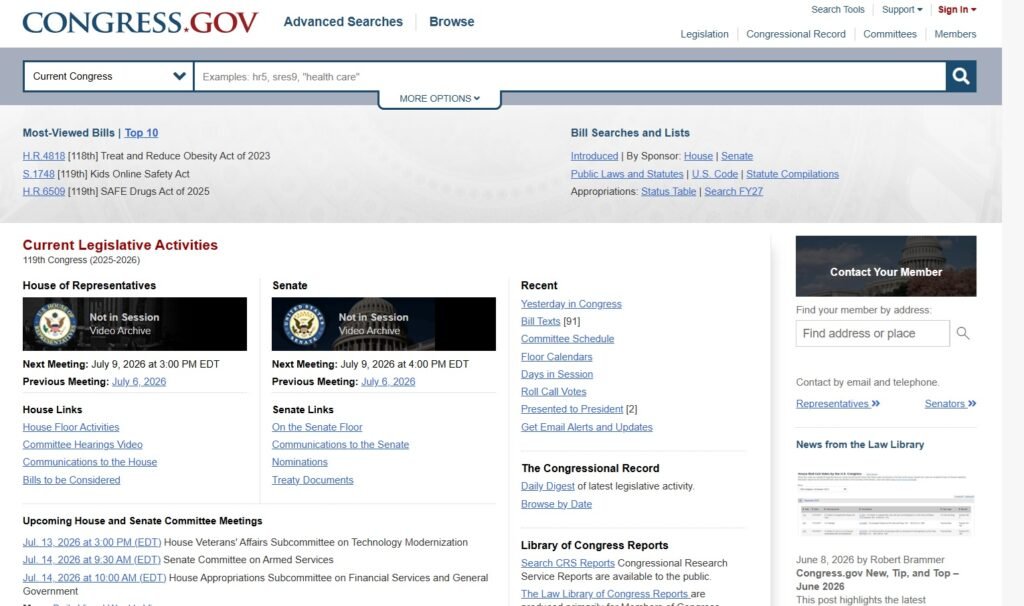
- Check official sources for legislation. Congress.gov lets you look up any bill by name or number to confirm its actual status — most stimulus bills making headlines are still sitting in committee.
- Be wary of urgency and specific dollar amounts in viral posts. Scammers use precise, official-sounding numbers to seem credible.
The Bottom Line
There’s no stimulus payment to register for in mid-2026. What exists are competing political proposals — the tariff dividend concept, the Cuellar and Heinrich rebate bills, and the Sanders-Khanna wealth tax plan — all of which would require Congress to actually pass legislation before a single check goes out. Past COVID-era stimulus rounds and the 2021 Recovery Rebate Credit are both fully closed, with no reopening. If a new program is approved, it will be announced directly by the IRS and Treasury Department, not through a third-party “registration” website — and that’s the safest thing to remember the next time a stimulus headline crosses your feed.
Top searched questions
Is there a new federal stimulus payment available in 2026?
As of now, no nationwide federal stimulus payment for all Americans has been approved for 2026. Any claims regarding universal new stimulus checks should be verified through official government sources.
Do I need to register for a stimulus payment?
In most cases, registration is not required. If Congress approves a stimulus payment, eligible recipients are typically identified using IRS tax records or other government data.
Who might be eligible if a new stimulus is approved?
Eligibility would depend on the legislation but could include:
U.S. citizens and qualified residents.
Individuals meeting income requirements.
Certain Social Security beneficiaries.
Eligible dependents, if specified in the law.
Will Social Security recipients automatically receive a stimulus payment?
If future stimulus legislation includes Social Security beneficiaries, many recipients would likely receive automatic payments, similar to previous programs.
Can I still claim missed COVID-era stimulus payments?
Some taxpayers who were previously unable to claim Recovery Rebate Credits may have limited opportunities to claim them, depending on IRS filing deadlines. Check current IRS guidance to determine if any deadlines still apply.
Will stimulus payments affect my taxes?
Past federal stimulus payments were generally not considered taxable income. Any future payments would depend on the terms of the legislation authorizing them.