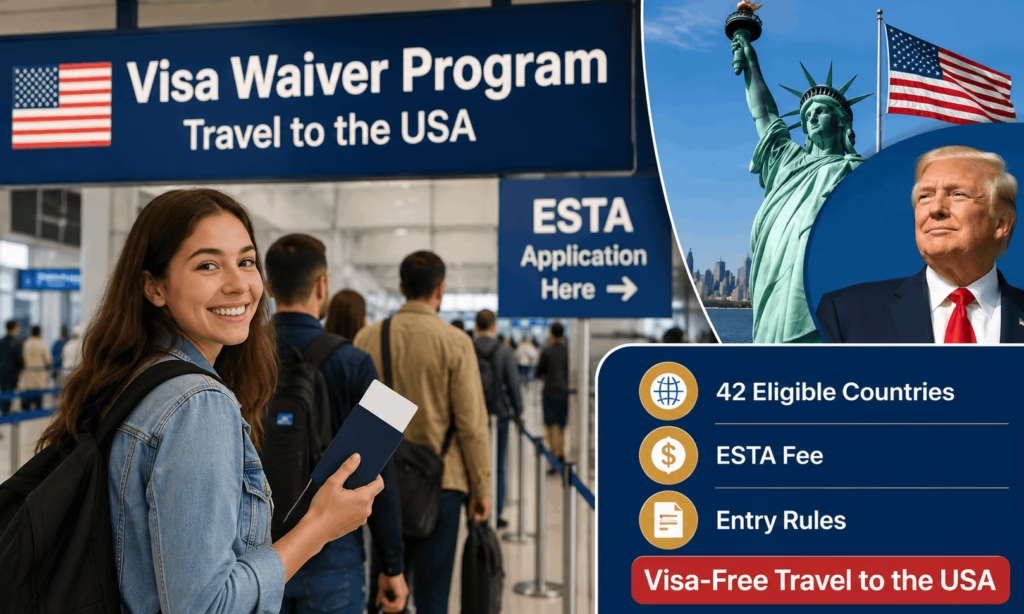
Visa Waiver Program (VWP) 2026: The U.S. Visa Waiver Program (VWP) just got more expensive, and travelers from dozens of countries are only now catching up to the change. The ESTA application fee nearly doubled in the past year, jumping from $21 to $40, and then rose again to $40.27 under a routine cost-of-living adjustment that took effect on January 1, 2026. For citizens of the 42 countries still eligible for visa-free travel to the United States, the core benefit hasn’t disappeared but the price of entry, and the screening behind it, has changed noticeably heading into the busy August travel season.
The fee hike traces back to the federal spending law known as the “One Big Beautiful Bill,” which mandated the base ESTA fee rise from $21 to $40 effective September 30, 2025, with annual inflation adjustments layered on top going forward. Land-border travelers were hit even harder: the I-94 Arrival/Departure Record fee jumped from $6 to $30 for anyone entering by road from Canada or Mexico. We’ll be updating this article monthly as CBP and the State Department confirm further changes to fees, eligible countries and screening requirements.
What Is the Visa Waiver Program (VWP)?
The Visa Waiver Program is a reciprocal arrangement, launched in 1986 and made permanent in 2000, that lets citizens of participating countries travel to the United States for tourism or short-term business without first obtaining a traditional visa. Instead of a consulate interview, eligible travelers apply online through the Electronic System for Travel Authorization (ESTA), a pre-screening tool run by U.S. Customs and Border Protection (CBP). An approved ESTA is not a visa — it’s a travel authorization — but it functions the same way for entry purposes, permitting stays of up to 90 days per visit for up to two years before renewal is required.
Quick Summary: VWP and ESTA Key Facts for 2026
| Detail | Current Information |
|---|---|
| Program Name | Visa Waiver Program (VWP) |
| Application System | ESTA (Electronic System for Travel Authorization) |
| Current ESTA Fee | $40.27 (effective January 1, 2026) |
| Previous Fee | $21.00 (before September 30, 2025) |
| Max Stay Per Visit | 90 days |
| Validity | 2 years, or until passport expires |
| Number of Eligible Countries | 42 |
| Newest Member Country | Qatar (designated September 27, 2024) |
| Entry Purpose Allowed | Tourism, business meetings, short training — no work or study |
| I-94 Land Border Fee | Now $30 (up from $6) |
| Official Application Site | esta.cbp.dhs.gov |
Which 42 Countries Are Currently Eligible for the VWP?
As of mid-2026, citizens of the following countries can apply for ESTA instead of a traditional visitor visa: Andorra, Australia, Austria, Belgium, Brunei, Chile, Croatia, Czech Republic, Denmark, Estonia, Finland, France, Germany, Greece, Hungary, Iceland, Ireland, Israel, Italy, Japan, South Korea, Latvia, Liechtenstein, Lithuania, Luxembourg, Malta, Monaco, Netherlands, New Zealand, Norway, Poland, Portugal, Qatar, San Marino, Singapore, Slovakia, Slovenia, Spain, Sweden, Switzerland, Taiwan, and the United Kingdom.
Two important notes for anyone checking eligibility this year: Israel joined the program in October 2023, and Qatar became the most recent addition in September 2024 — the first Gulf nation admitted to the VWP. Membership can change without much public notice, so travelers should always verify current status directly on the official CBP ESTA portal before booking flights, since a country’s designation can be suspended or rescinded following a periodic security review.
State-by-State SNAP Food Ban 2026: What’s Banned, Status Update
Why the ESTA Fee Went Up — and What It Pays For
The fee increase isn’t cosmetic. It stems directly from the “One Big Beautiful Bill,” the federal legislation that restructured several immigration and travel-related fees. Under that law, the base ESTA fee rose from $21 to $40 effective September 30, 2025. From there, the fee is now subject to an annual inflation adjustment, which pushed it to $40.27 starting January 1, 2026 — a roughly 2.7% increase tied to the consumer price index. Officials from the countries most affected, including several across the Middle East and Europe, have noted the change publicly, since it applies uniformly to citizens of all 42 VWP nations regardless of where they’re flying from or which U.S. city they’re headed to.
Land-border crossers weren’t spared either. The I-94 Arrival/Departure Record fee, required for travelers entering the U.S. by road from Canada or Mexico, climbed from $6 to $30 under the same legislation — a five-fold increase that primarily affects short cross-border trips rather than flights.
Tighter Screening: What Changed in the ESTA Application for 2026
Beyond the cost, the ESTA application itself has grown more detailed. Starting in January 2026, CBP added new screening questions covering social media activity and prior travel to active conflict zones, part of a broader push toward stricter vetting of visa-waiver travelers. Applicants who have visited restricted countries — Iran, Iraq, North Korea, Syria, or Yemen since March 2011 — generally lose ESTA eligibility even if they hold a passport from a qualifying VWP country, and must instead apply for a standard B-1/B-2 visitor visa through a U.S. embassy or consulate.
Separately, travelers who don’t qualify for the VWP and rely on the standard visitor visa renewal process are now facing a shorter interview-waiver window: renewals now require an in-person interview after just 12 months, down from the previous 48-month grace period.
Social Security Payment August 2026: How Much Will You Receive This Week?
25 States Sue Trump Administration Over New Tariffs on Trading Partners
How to Apply for ESTA: Step-by-Step
- Confirm eligibility — check that your country is on the current VWP list at the official CBP site.
- Verify your passport — it must be a machine-readable, biometric e-Passport valid beyond your planned stay.
- Apply online at the official portal: esta.cbp.dhs.gov — never a third-party site claiming to offer “expedited” ESTA processing for extra fees.
- Provide travel and contact details, including U.S. address and emergency contact information.
- Pay the $40.27 fee by debit or credit card.
- Wait for approval — most applications are processed within minutes to 72 hours, though CBP recommends applying at least 72 hours before travel.
- Travel with your approved ESTA and passport — CBP officers at the port of entry still make the final admission decision, even with an approved ESTA.
What the VWP Does Not Allow
An approved ESTA permits tourism, short unpaid business activity, and brief training or conferences — it does not authorize employment, academic study, or stays beyond 90 days. Overstaying a VWP visit can result in a ban from future use of the program, regardless of nationality. Travelers who anticipate needing a longer stay, paid work, or enrollment in a U.S. institution must apply for the appropriate visa category instead, such as an H-1B, F-1, or standard B-1/B-2 visa.
Official Resources
| Resource | Purpose | Official Link |
|---|---|---|
| ESTA Application Portal | Apply for travel authorization | esta.cbp.dhs.gov |
| U.S. Customs and Border Protection | VWP program rules and updates | cbp.gov |
| U.S. Department of State — VWP | Full country eligibility list | travel.state.gov (Visa Waiver Program page) |
| Federal Register — Fee Rule | Legal basis for the 2025-2026 fee changes | federalregister.gov |
| CBP I-94 Portal | Land-border arrival/departure records | i94.cbp.dhs.gov |
FAQs
How much does ESTA cost in 2026?
The current ESTA fee is $40.27, effective January 1, 2026, following an inflation adjustment on the $40 base fee that took effect September 30, 2025.
How long is an approved ESTA valid?
An approved ESTA is valid for two years, or until your passport expires — whichever comes first — and allows multiple trips, each up to 90 days.
Can I work or study in the US on an ESTA?
No. The Visa Waiver Program only permits tourism, short-term unpaid business activity, or brief training. Working or studying requires a different visa category.
Is Canada part of the Visa Waiver Program?
No. Canada is not part of the VWP, but Canadian citizens are generally exempt from needing a visa for short visits under separate long-standing entry rules.
Which country most recently joined the VWP?
Qatar was designated in September 2024, becoming the first Gulf nation admitted into the program. Country eligibility can change following periodic security reviews, so always confirm current status on the official CBP site before traveling.
What happens if I’ve traveled to Iran, Iraq, Syria, North Korea or Yemen?
Travelers who have visited these countries since March 2011 generally lose ESTA eligibility, even with a passport from a VWP member country, and must apply for a standard visitor visa instead.
People Also Ask
Do I need a visa to enter the US if I’m from a VWP country? No — if your country is one of the 42 current VWP members and you have an approved ESTA, you can enter without a traditional visa for stays of up to 90 days.
Why did the ESTA fee increase in 2025 and 2026? The fee rose due to the “One Big Beautiful Bill,” federal legislation that raised the base ESTA fee from $21 to $40 in September 2025, with an additional inflation adjustment bringing it to $40.27 in January 2026.
Can an approved ESTA be denied entry at the airport? Yes. An approved ESTA only authorizes boarding a flight to the US — the final decision on admission is always made by a CBP officer at the port of entry.
What’s the difference between ESTA and a B-1/B-2 visa? ESTA is a faster, cheaper online pre-screening available only to citizens of VWP member countries for short tourism or business trips, while a B-1/B-2 visa requires an embassy interview and is available to travelers from any country, often for longer or more flexible stays.
Conclusion
The Visa Waiver Program remains one of the fastest ways for citizens of 42 countries to travel to the United States, but 2026 has brought real changes worth knowing before you book: a higher ESTA fee, a steeper I-94 land-border charge, and new screening questions covering social media and past travel to conflict zones. None of this changes who is eligible it simply raises the cost and scrutiny involved. Travelers heading to the U.S. this year should apply for ESTA well ahead of their trip, confirm their country’s current status directly through esta.cbp.dhs.gov, and budget for the updated fees before finalizing travel plans. We’ll be updating this article monthly as CBP and the State Department release further changes to VWP eligibility, fees and screening requirements.
First Canada Grocery Benefit Payment Arrives This Week – Check Your Account Now!