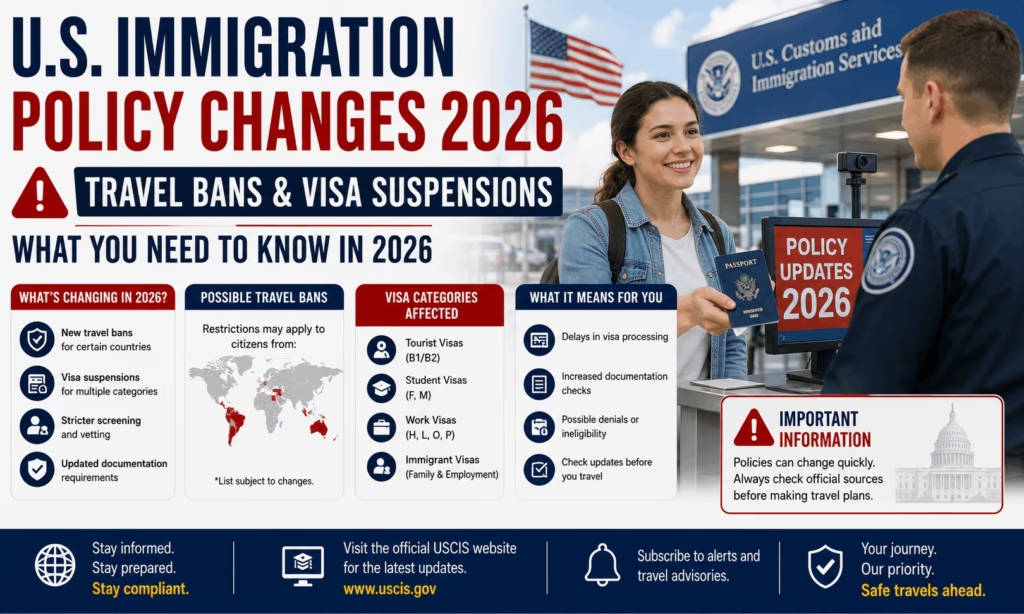
US citizenship approvals have dropped sharply this year, and the wait for new citizens is now the longest in years. Federal data reported this month shows about 173,000 naturalization approvals from January through August 2026, down 72 percent from the same eight months of 2025. Denials fell 41 percent, which means the drop is not coming from a surge in rejections. It is coming from cases that simply are not being finished. More than 800,000 applications are pending, and the average wait has grown from about six months in August 2025 to nearly 13 months in August 2026. For a green card holder who filed this spring, that can mean a decision after the midterm elections on November 3, and for families planning travel, jobs or sponsorship around a citizenship date, it can mean rewriting the whole calendar. The slowdown is hitting people who did everything right: they held their green cards for years, filed complete applications and paid the fee. We’ll be updating this article monthly.
The numbers vary sharply by city. At the San Jose field office, approvals fell from 9,041 to 317, a 96.5 percent drop, and Seattle fell 90.3 percent. USCIS has not published a naturalization-specific rule behind the slowdown. The Department of Homeland Security says the agency has implemented reforms so that citizenship goes only to qualified people, and calls naturalization a privilege, not a right. Below, you will find the confirmed data, what is driving the delay, a proposed fee increase that would raise the N-400 to $1,330, a calculator that estimates your decision window and earliest filing date, and the practical sections on how to apply, processing time and fees. We also separate what the data confirms from what officials and critics claim, because several explanations are circulating and not all of them are documented in a published rule. Where we could not verify a figure ourselves, we say so.
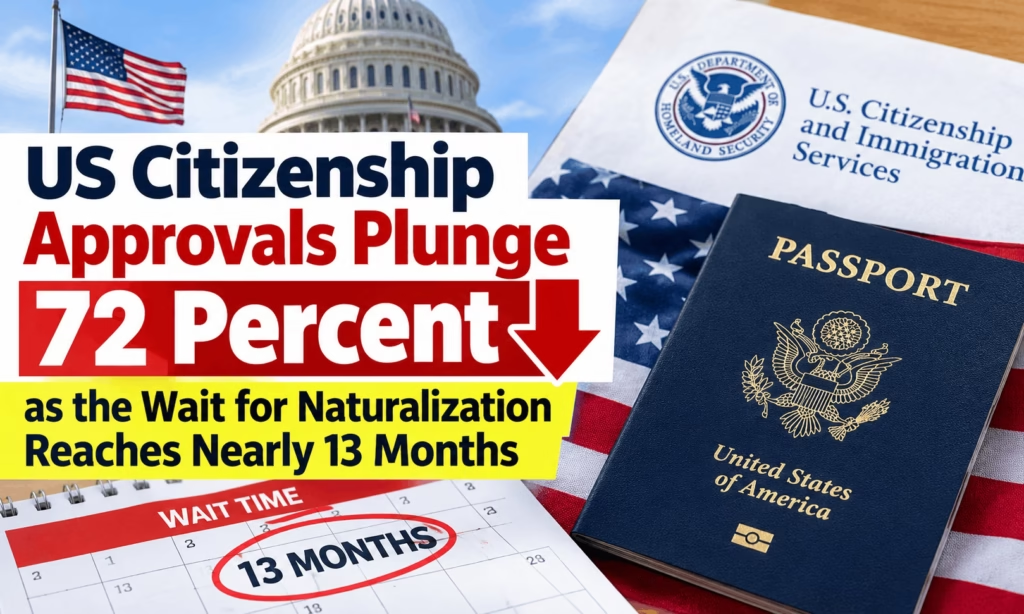
US Citizenship Approvals 2026 Key Highlights
| Item | Detail |
|---|---|
| Approvals, January to August 2026 | About 173,000, down 72 percent from 2025 |
| Denials, same period | Down 41 percent |
| Pending N-400 cases, August 2026 | 813,453 |
| Pending more than six months | 513,462 |
| Average wait, August 2025 | About 6 months |
| Average wait, August 2026 | Nearly 13 months (12.7 months) |
| Median processing time, April to June 2026 | 9.5 months for regular applicants, 2.6 months for military |
| Monthly approvals | 18,439 in June, 16,514 in July, 15,349 in August |
| Applications received in August | 54,492, about 3.5 times the approvals |
| Current N-400 fee | $710 online, $760 by mail |
| Proposed N-400 fee | $1,280 online, $1,330 by mail, not final |
| Next update | Monthly |
What the 72% Drop in US Citizenship Approvals Actually Measures?
The 72 percent figure compares January through August 2026 with the same period in 2025. It was first reported nationally by The Washington Post from federal immigration data, and other outlets, including Newsweek, have since analyzed USCIS quarterly figures. Because those figures come from slightly different cuts of the data, you will see different numbers in different stories. Here is how to read them.
Approvals are decisions to grant citizenship. Quarterly, the April to June 2026 quarter produced about 57,700 approvals, compared with 241,326 in the same quarter of 2025 and 218,720 in 2024. Denials in that quarter were 12,842, while 145,872 new applications arrived. In other words, USCIS received roughly two and a half new applications for every approval.
The average wait of nearly 13 months and the 9.5 month median are not contradictions. An average is pulled up by a long tail of cases that wait very long, while a median is the midpoint. When a backlog grows, the average rises faster. If your case is in a slow office, you could be well above either number.
US Birthright Citizenship Latest Rules, Court Ruling & Eligibility Calculator
How Big Is the Naturalization Backlog Right Now?
The backlog is the other half of the story. USCIS reported 813,453 pending N-400 cases with its August 2026 data. Of those, 513,462 had been waiting more than six months. At the end of the April to June quarter, 742,138 cases were pending, made up of 727,371 regular cases and 14,767 military cases. Two years earlier, the pending count in the same period was 462,974.
Monthly approvals have also been falling. They were 18,439 in June, 16,514 in July and 15,349 in August, while applications received in August alone were 54,492. As long as new filings outrun approvals by that margin, the backlog grows, and each month of delay pushes waits longer.
For context, the median processing time for fiscal year 2024 was under six months, which was the lowest since 2013. The change in two years is large.
US Citizenship Approvals by Field Office: Where Delays Are Worst
Where you file matters. USCIS pending counts at the end of June 2026 were highest in these offices.
| Field office | Pending cases, end of June 2026 |
|---|---|
| Houston | 31,057 |
| Dallas | 28,662 |
| Chicago | 23,623 |
| San Jose | 20,899 |
| San Antonio | 18,999 |
Dallas received the most applications in the April to June quarter, at 6,167, and Houston completed the most approvals, at 4,441. Brooklyn reported 733 denials, the figure that stood out in that quarter’s data.
The sharpest declines are on the West Coast. San Jose’s approvals fell 96.5 percent and Seattle’s fell 90.3 percent, according to the reporting on the data. The government has not released an office-by-office explanation, so we cannot say whether those drops reflect staffing, case mix, local policy or something else. If you are choosing between filing now and waiting, you cannot change your office, since it is assigned by your address, but you can check how your office is performing before you plan travel or work.
Why Are US Citizenship Approvals Falling? What Officials and Critics Say
USCIS gave no specific reason for the August decline and had announced no naturalization-specific policy change as of October 22. The explanation that has been put forward comes from two directions.
The administration’s position, from DHS, is that USCIS has implemented reforms to limit citizenship to qualified applicants, and that naturalization is a privilege, not a right. Reported changes include a revised civics test, higher English expectations, and social media screening for what has been described as anti-American activity. Reporting also says vetting now looks at tax returns, evidence of good moral character, and interviews with neighbors and co-workers, and that two senior administration officials said USCIS is re-vetting some applications approved under the previous administration. Those details come from news reports and officials’ accounts rather than a published rule, so treat them as reported, not confirmed in a regulation.
Critics, including Representative Pramila Jayapal, attribute the slowdown to a broader immigration crackdown. That claim has not been independently verified, and the administration disputes the framing. What the data does show is that fewer cases are being finished, and that tighter limits on other legal immigration channels are also in the news. The reasons are contested, so applicants should focus on what they can control: a clean, complete application and an accurate record.
Trump Proof of Citizenship Voting Order: A Federal Judge Just Blocked It Again
What Changed in the Naturalization Test and Form
Two concrete changes affect almost every applicant. The first is the civics test. A revised version took effect October 20, 2025. The question pool grew from 100 to 128, officers ask up to 20 questions, and applicants must answer at least 12 correctly. Some news reports describe the test as a return to a version of the 2020 test. It puts more weight on history and government concepts than on memorized single facts.
The second is the form. The 01/20/2025 edition of Form N-400 is the only edition USCIS accepts, and older editions are rejected. If you download an old form from a non-official site, your filing could be returned.
Applicants get two attempts at the English and civics tests. If you fail one part at the first interview, a retest on that part is typically scheduled 60 to 90 days later, according to one law firm’s guide. That adds time to a process that is already long, which is why preparing before the interview matters more than it used to.
Proposed N-400 Fee Increase: What Would Change
Separately from the slowdown, DHS has proposed a large fee increase. A notice of proposed rulemaking was published in the Federal Register on June 23, 2026, with comments open until August 24, 2026 on docket USCIS-2026-0265.
| Fee | Current | Proposed |
|---|---|---|
| N-400, filed online | $710 | $1,280 |
| N-400, filed by mail | $760 | $1,330 |
| N-336 appeal, online | $780 | $1,425 |
| N-336 appeal, by mail | $830 | $1,475 |
| Reduced fee for income between 150 and 400 percent of poverty | $380 | Eliminated |
| Fee waiver for income at or below 150 percent of poverty | $0 | Eliminated |
Military service members would stay exempt. As of the latest reporting, the rule is not final and the current fees still apply. If you are close to being eligible and a fee waiver or reduced fee is your only way to file, the proposal is the main reason some attorneys are urging eligible people not to wait. That is not legal advice, and a final rule could differ from the proposal, so confirm the current fee on the USCIS fee page before you file.
US Citizenship Wait Time and Eligibility Calculator
To make the numbers useful for your own case, we built a two-part tool. The first part estimates your decision window. Enter the date you filed and the tool shows a range based on the 9.5 month median for regular applicants and the 12.7 month average, then tells you how many days have passed and whether you are already past those marks. The second part estimates the earliest date you can file, based on the date you became a permanent resident and whether you are applying under the standard five-year rule or the three-year rule for spouses of citizens. It also compares your current fee with the proposed fee.
US Citizenship Wait Time and Eligibility Estimator
Planning estimates based on USCIS data reported for 2026. Not legal advice.
Part 1: When might my N-400 be decided?
Part 2: When can I file, and what will it cost?
Decision windows use the 9.5 month median for regular applicants and the 12.7 month average (military median 2.6 months) reported for 2026. Your office and case details can change the timeline. The proposed fees are not final. This tool does not check continuous residence, physical presence, good moral character or other requirements. Confirm everything on uscis.gov.
Who Can Apply for US Citizenship: N-400 Eligibility Basics
In general, an applicant must be at least 18, be a lawful permanent resident, and have held that status for five years, or three years if married to and living with a US citizen who has been a citizen for that time. An applicant must also meet continuous residence and physical presence requirements, live in the state or USCIS district for at least three months before filing, show good moral character, pass the English and civics tests, and be willing to take the oath of allegiance. USCIS allows people to file up to 90 days before reaching the five-year or three-year mark.
Special rules apply to military applicants, who can file sooner and, as the data shows, are being processed much faster, with a median of 2.6 months. Some applicants with disabilities can request exceptions to the English and civics requirements.
These are the standard rules, and exceptions exist. The USCIS eligibility pages and its naturalization guide are the place to confirm your own situation.
New US Immigration Fees 2026: H-1B Court Battle & Citizenship Cost Hike
How to Apply for US Citizenship With Form N-400?
The steps below are the standard path for most applicants.
- Confirm you are eligible, using the USCIS guide and the earliest filing date from the calculator.
- Gather documents, such as your green card, travel history, addresses and employers for the past five years, marriage and divorce records if relevant, and any arrest or court records.
- Complete the current edition of Form N-400, preferably online with a USCIS online account.
- Pay the filing fee, which includes biometrics, or request a fee waiver or reduced fee if you qualify.
- Receive your receipt notice, then attend the biometrics appointment.
- Attend your interview, where you take the English and civics tests and answer questions about your application.
- Receive your decision, and if approved, attend the oath ceremony. You become a citizen when you take the oath.
If you have any criminal history, a long absence from the United States, or a complex immigration history, speak with an accredited representative or an immigration attorney before filing.
US Citizenship Processing Time: How Long Each Step Takes
Official timing is best checked on the USCIS processing times page, which lists your office. National figures from the latest data are a median of 9.5 months for regular cases and an average near 12.7 months.
Stage estimates are less certain. Before the slowdown, one law firm’s guide put the receipt notice at one to four weeks after filing, biometrics at four to eight weeks, and the interview notice three to eight months after biometrics. Those estimates were published in March 2026, before the latest data, so expect longer waits in slow offices.
How to protect your timeline:
- File a complete application on the current form.
- Attend biometrics and interview appointments, and reschedule only if you must.
- Keep copies of everything and respond to requests for evidence on time.
- Check your case status regularly in your USCIS online account.
- If your case is well past the posted processing time, you can submit a case inquiry through USCIS, and an attorney can advise whether other steps make sense.
US Citizenship Fees and Payment: What You Pay and When
Fees are due when you file. As of August 2026, the N-400 costs $710 online and $760 by mail, and the fee includes biometrics, with no separate charge for the English and civics tests. A reduced fee of $380 applies to households with income between 150 and 400 percent of the federal poverty guidelines, and a fee waiver, requested with Form I-912, is available if household income is at or below 150 percent or in certain means-tested benefit cases.
If you pay by mail, you can use the payment methods described in the form instructions. If you file online, you pay through your USCIS online account. After approval, there is no separate fee for the oath ceremony. A US passport and other documents come later and have their own fees.
Because of the proposed rule, keep an eye on the USCIS fee page and the Federal Register for any final notice. A final rule would set an effective date, and filings after that date would be charged the new fee.
Official US Citizenship and Naturalization Resources
| Resource | Use | Link |
|---|---|---|
| USCIS online account | Login, file online and check status | https://my.uscis.gov |
| Case status online | Check a receipt number | https://egov.uscis.gov/casestatus/landing.do |
| USCIS processing times | See posted times for your office | https://egov.uscis.gov/processing-times |
| Form N-400 | Application for naturalization | https://www.uscis.gov/n-400 |
| Citizenship resource center | Study materials and test information | https://www.uscis.gov/citizenship |
| Fee calculator and fee schedule | Confirm the current fee | https://www.uscis.gov/g-1055 |
| Fee waiver Form I-912 | Request a fee waiver | https://www.uscis.gov/i-912 |
| Regulations.gov docket USCIS-2026-0265 | Read the proposed fee rule | https://www.regulations.gov |
| USCIS Contact Center | General questions | 1-800-375-5283 |
We could not open several USCIS pages during our research, so verify each address before you publish or rely on it. If a link does not work, start from uscis.gov and use the site search. Only use official government sites, and be careful with look-alike sites that charge to submit forms.
USCIS Filing Deadline Rule Change: No Weekend Grace for Age Cutoffs
FAQs About US Citizenship Approvals and Wait Times
How much have US citizenship approvals fallen in 2026?
About 173,000 people were approved from January through August 2026, down 72 percent from the same period in 2025, according to reporting on federal data.
How long is the wait for US citizenship now?
The average wait reached nearly 13 months in August 2026, up from about six months a year earlier. The median for regular applicants was 9.5 months from April to June.
How many N-400 cases are pending?
USCIS reported 813,453 pending cases with its August 2026 data, and 513,462 of them had waited more than six months.
Why are citizenship approvals down?
USCIS has not given a specific reason. DHS says it has implemented reforms to limit citizenship to qualified applicants, while critics point to a broader immigration crackdown.
Are denials rising?
No. Denials fell 41 percent in the same period, so the drop reflects fewer decisions overall.
Is the N-400 fee going up?
DHS has proposed raising it to $1,280 online and $1,330 by mail, but the rule is not final and the current fees are $710 and $760.
How long does it take to become a US citizen in 2026?
The latest data shows a median of 9.5 months and an average near 12.7 months once your application is filed, plus the time to reach eligibility.
Can I vote in November if my citizenship is pending?
No. You must be a citizen to vote in federal elections, and citizenship takes effect when you take the oath.
How do I check my N-400 status?
Use your USCIS online account or the case status page with your receipt number.
What is the new civics test for citizenship?
The revised test has a pool of 128 questions, officers ask up to 20, and you must answer at least 12 correctly.
Which USCIS offices have the biggest backlogs?
At the end of June 2026, Houston, Dallas, Chicago, San Jose and San Antonio had the most pending cases.
Can I get a fee waiver for the N-400?
Currently, yes, if your household income is at or below 150 percent of the federal poverty guidelines or you meet certain benefit rules. The proposed rule would end waivers.
How do I speed up my citizenship application?
Filing a complete application on the current form, attending every appointment and answering requests quickly helps. Military applicants have a faster track.
Conclusion
US citizenship approvals have fallen 72 percent in 2026, the backlog has passed 800,000 cases, and the average wait is now close to 13 months. The reasons are disputed, and the government has not published a rule explaining the slowdown, but the numbers are clear enough to plan around. If you are eligible, file a complete application on the current N-400, track your case in your USCIS account, and prepare for the longer civics test. Watch the proposed fee rule closely, since a final version could change what filing costs. We’ll keep tracking new data and policy changes, and this guide will be refreshed monthly.
USCIS Mandatory E-Filing: Which Immigration Forms Must Be Filed Online?