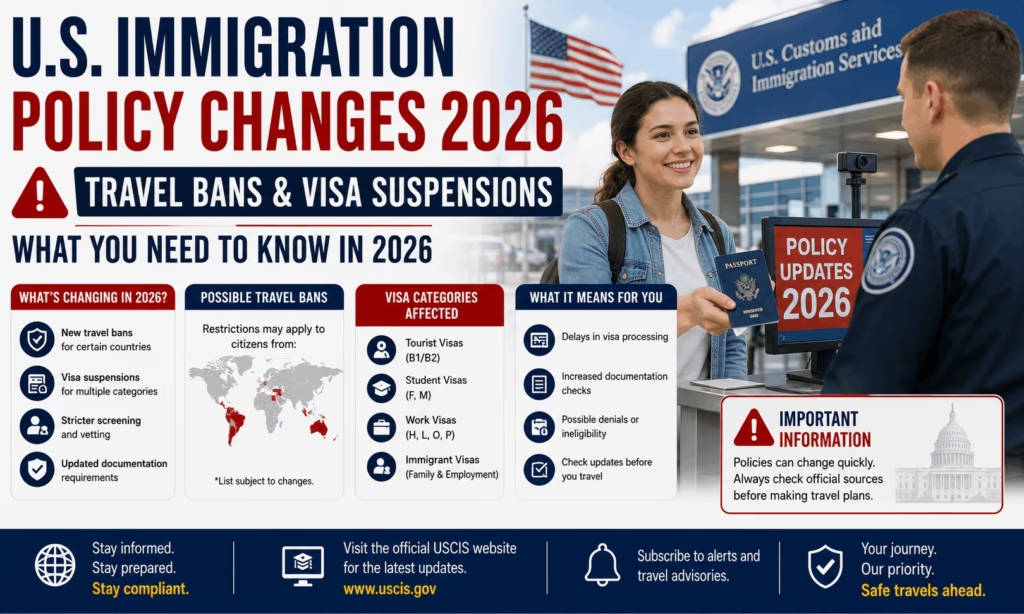
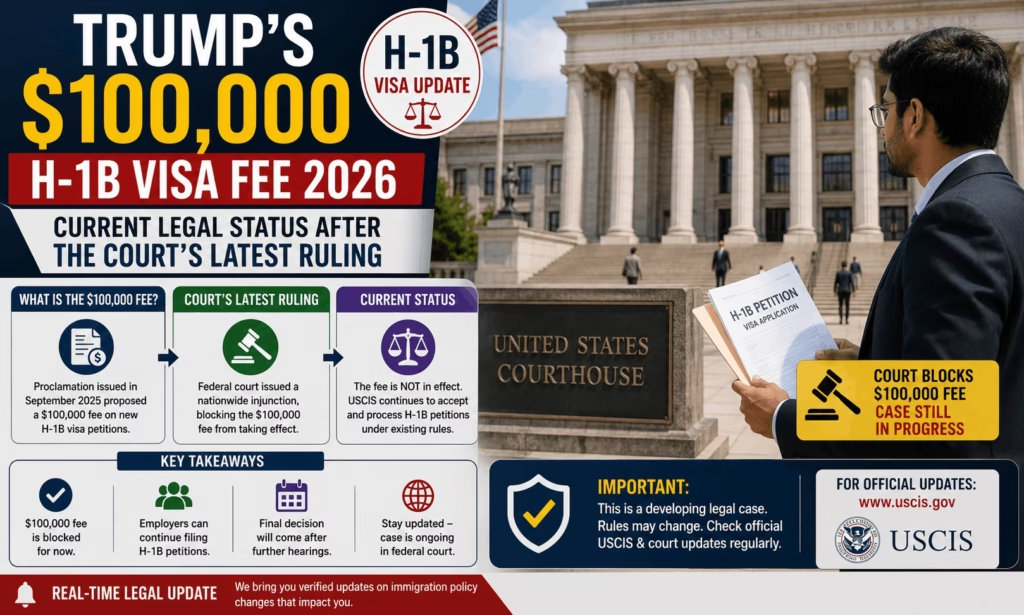
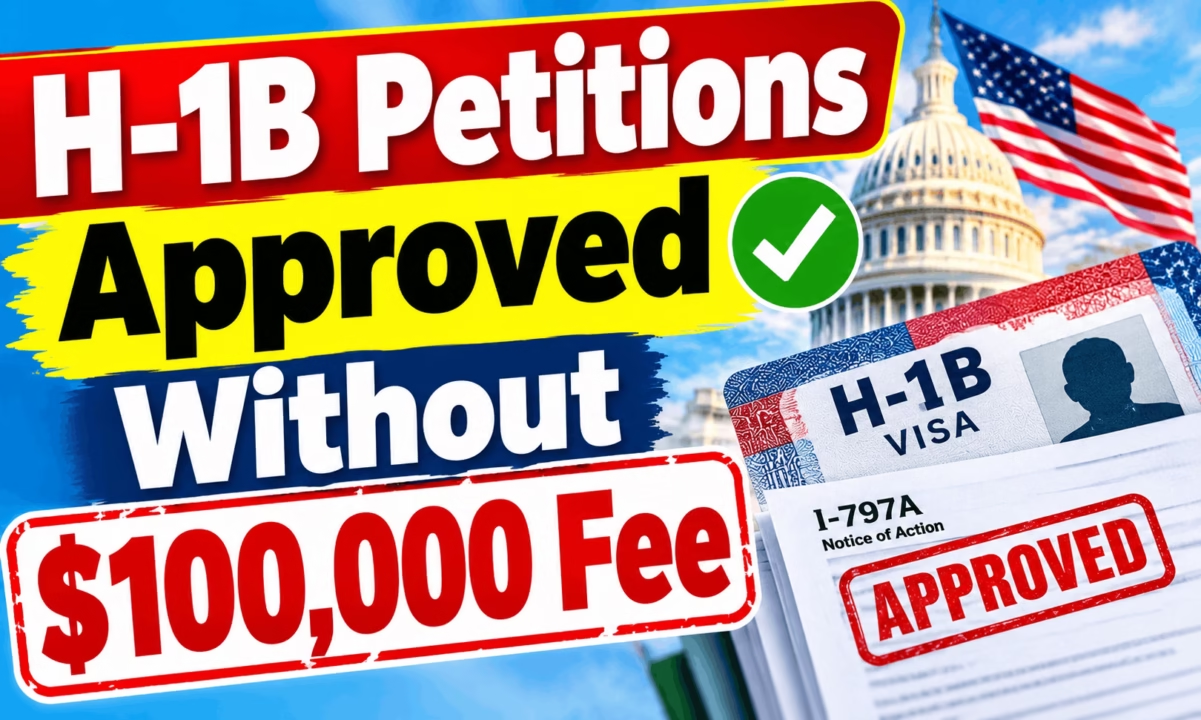
H-1B Petitions Approved Without $100,000 Fee: USCIS has started approving H-1B petitions without the $100,000 fee, ending weeks of silence at service centers and giving employers their first real sign that the court orders blocking the charge are being followed. The approvals, reported by immigration law firms on October 23 and 25, 2026, cover petitions that were filed without the payment and then sat well past the 15 business day premium processing deadline. The agency says it is complying with the orders, and it has also said it will collect the money if those orders are lifted. For now, that means a petition for a worker abroad can move forward without the six-figure payment that the White House first announced in September 2025. We’ll be updating this article monthly as the courts and agencies act.
The relief is real but uneven. Some employers saw approval notices arrive this week, while others are still waiting and may need to push their cases directly. Two federal courts have blocked the fee. A judge in Massachusetts vacated it in June 2026, and a judge in Northern California barred enforcement of the renewed version on September 30, 2026. The government is appealing, and a separate $103,265 H-1B fee proposal from the Department of Homeland Security is still moving through the rulemaking process. Below is a plain breakdown of the dates, who benefits, what to do about pending cases, how filing and payment work, and what could change next.
H-1B Petitions Approved Without $100,000 Fee Key highlight
| Key highlight | Current status |
|---|---|
| $100,000 payment for new H-1B workers abroad | Blocked by two federal courts |
| USCIS position | Complying with orders, will collect if orders are lifted |
| Government appeals | Pending in the First Circuit and the Ninth Circuit |
| $103,265 proposed fee | Proposal only, no legal effect yet |
| Approvals so far | Uneven, some petitions still pending past 15 business days |
Why USCIS Started Approving H-1B Petitions Without the Fee Now
For several weeks after the courts acted, many employers who filed without the payment heard nothing. Premium processing promises a response within 15 business days, but a number of petitions blew through that window without an approval, a request for evidence or a denial. Immigration lawyers read the silence as a service center waiting for guidance on what to do with files that carried no payment.
That changed in the second half of October. The law firm MeltzerHellrung reported on October 23 that approvals had begun, and it said the backlog started to clear after it publicized a planned multi-company mandamus action, which is a type of lawsuit that asks a court to force an agency to act on a delayed case. The firm said no lawsuit was actually filed. Business Today picked up the story two days later. The pattern matters for employers because it suggests that pressure, rather than a formal new notice from the agency, may be what shook the cases loose.
USCIS has not framed this as a policy change. Its stated position is narrow: it follows the court orders for now, and if an appeals court lets the fee return, it will collect it. Employers should treat the current approvals as a window, not a permanent fix.
Why Some Parents Are Rejecting the Trump Account $1000 Deposit?
H-1B $100,000 Fee Update Key Dates
| Date | What happened |
|---|---|
| September 2025 | A presidential proclamation imposes a $100,000 payment on certain new H-1B petitions, mainly for workers outside the United States |
| June 2026 | The U.S. District Court for the District of Massachusetts vacates the policy that carries out the fee |
| July 24, 2026 | The First Circuit declines to pause that ruling while the government appeals |
| August 25, 2026 | DHS publishes a proposed rule for a $103,265 fee on cap-subject H-1B petitions |
| September 18, 2026 | The President extends the payment requirement through September 21, 2027 |
| September 24, 2026 | Public comment period closes on the $103,265 proposal |
| September 30, 2026 | The Northern District of California vacates the renewed fee policy and bars enforcement |
| October 23 to 25, 2026 | Law firms report USCIS approving fee-subject petitions filed without payment |
What the Courts Actually Ruled on the $100,000 H-1B Fee?
Two separate cases are doing the work here, and they rest on different reasoning.
In June 2026, U.S. District Judge Leo T. Sorokin in Massachusetts vacated the implementing policy in a case brought by a coalition of 20 states led by California Attorney General Rob Bonta. The ruling found that the policy exceeded the authority Congress gave the executive branch and violated the Administrative Procedure Act. The government appealed, and on July 24 the First Circuit refused to pause the decision, so the fee stayed off the table while the appeal plays out.
On September 30, 2026, U.S. District Judge Haywood S. Gilliam Jr. in Northern California ruled in Global Nurse Force v. Trump. The plaintiffs include a church, unions, a pastor, a professors’ group and a nurse staffing company. Judge Gilliam found the agency policies likely arbitrary and capricious because the government did not weigh alternatives or the reliance interests of employers. He also held that the policies work as legislative rules that needed notice and comment rulemaking, which never happened. He vacated and remanded them and enjoined agencies from enforcing them until that process is complete. Forbes reported the details on October 1.
The judge also rejected an argument that plaintiffs must first request a national interest exception, noting that those requests had gone unanswered for months. The government has appealed to the Ninth Circuit.
Who Benefits From the H-1B Fee Being Blocked?
The payment was aimed mainly at new petitions for workers who are outside the United States and need a visa from a consulate or another admission process to start H-1B work. That is the group that gains most right now.
Employers with a pending petition for a worker abroad can expect approvals to start moving, particularly if they filed without paying and relied on the orders. Hospitals, schools, universities, small clinics and technology firms that had stopped overseas recruiting may reopen those searches. Candidates who hold a valid, unexpired H-1B visa stamp may be able to travel with the new employer’s approval notice without a fresh consular interview, according to the law firm summaries. Workers who were counted against the cap earlier and still have time left on the six year limit can generally be petitioned for without entering another lottery.
People already inside the country who are changing status or employers are mostly outside the fee’s scope. Cap-exempt employers, such as many universities and nonprofit research groups, were also in a different position under the proposed $103,265 rule, which does not apply to cap-exempt petitions.
What Employers Should Do About Pending H-1B Petitions?
Employers do not need a complicated plan, but they do need to act quickly while the orders stand. The reported advice from immigration counsel boils down to five steps.
- Audit every pending petition that was subject to the fee, especially premium cases that are more than 15 business days old.
- Push stalled cases through the USCIS contact process and, if counsel advises, through a mandamus filing.
- Move fast on approvals. Schedule consular appointments and travel while the orders hold.
- Reopen candidate pipelines abroad, but check each person’s visa validity and prior H-1B history before making an offer.
- Budget for a reversal. HR teams should model what happens if the payment returns midway through a hiring cycle.
Workers outside the country cannot start work until the petition is approved, and H-1B portability, which lets someone change employers without waiting, does not apply to a person who is abroad. Some firms are using a contractor or employer of record setup overseas as a bridge while the case is pending. That is a legal and tax decision, so it belongs with counsel.
Who gets Social Security on Wednesday, October 28?
LIHEAP 2026-27 Application Dates by State: When Winter Heating Assistance Opens and How to Apply
Trump $1 Million Voter Fraud Reward: What We Know, Who Would Pay and Where to Report Real Problems
H-1B Fee Exposure Calculator for Employers
The calculator below does two things. The first part counts 15 business days from your premium processing receipt date, so you can see whether your petition is past the deadline and ready for a follow up. The second part shows what hiring plans would cost if the $100,000 payment returns, and what the proposed $103,265 fee would add for cap-subject petitions. It is a planning aid only. It skips some federal holidays that fall outside its list, and it is not legal advice.
H-1B Premium Processing Deadline Checker
Counts 15 business days from your premium processing receipt date (weekends and listed federal holidays skipped).
H-1B Fee Exposure Estimator
Planning estimate only. The $100,000 payment is currently blocked by court orders and the $103,265 fee is a proposed rule with no legal effect. Not legal advice. Confirm with USCIS and your counsel.
H-1B Processing Time: What to Expect After Filing
Regular H-1B processing has no fixed promise, and a standard case can take several months. Premium processing is the fast track. For H-1B petitions it carries a 15 business day clock, and USCIS must issue an approval, a denial, a request for evidence or a notice of intent to deny within that period. The clock restarts after an employer answers a request for evidence.
The recent problem was that the clock ran out on fee-subject petitions without a decision. Employers in that situation should note the receipt date, count the business days, and contact USCIS once the deadline passes. USCIS refunds the premium fee when it misses the deadline, but a refund does not substitute for an approval, so most employers prefer to push for a decision.
Check your case at the USCIS case status page using the 13 character receipt number that starts with three letters, such as EAC, WAC, SRC or LIN. A my USCIS online account also shows notices and lets you update an address.
How to Apply for an H-1B Visa: Registration to Approval
The H-1B is an employer driven process, so the worker cannot apply alone. The path for a cap-subject petition runs in a set order.
- The employer registers the worker in the USCIS registration system during the annual registration window. Since the weighted selection rule took effect on February 27, 2026, selection is based on the wage level of the job offer. A Level 4 wage earns four entries, Level 3 earns three, Level 2 earns two and Level 1 earns one.
- If selected, the employer gets a filing window of at least 90 days to submit the petition.
- The employer obtains a certified Labor Condition Application from the Department of Labor.
- The employer files Form I-129 with supporting evidence, the filing fees and, if wanted, the premium processing request.
- After approval, a worker abroad applies for the visa at a U.S. consulate and enters the country. A worker inside the U.S. usually changes status without leaving.
For a worker abroad, the proclamation added a payment step in the past. Under the court orders, that step is currently not being enforced.
H-1B Payment Schedule: How the $100,000 Fee Would Work If It Returns
The proclamation set the payment as a single charge per new petition, not an annual cost, and the earlier USCIS guidance told employers to pay before filing through the government’s online payment portal. That timing is why many petitions stalled: a filing without proof of payment had nowhere to go.
If an appeals court restores the fee, expect USCIS to publish fresh instructions. Employers should plan for three scenarios.
| Scenario | What likely happens |
|---|---|
| Orders stay in place | Petitions keep moving, no payment collected |
| Appeals court lifts a stay | USCIS resumes collecting, possibly asking for payment on pending files |
| DHS finalizes the $103,265 rule | A different fee applies to cap-subject petitions, with its own start date |
The $103,265 proposal is separate from the proclamation. DHS published it on August 25, 2026 as a proposed rule, and it would apply to all cap-subject H-1B petitions, including those eligible for the master’s cap, on top of existing filing fees. DHS says it would recover costs tied to several departments, including ICE, CBP, EOIR, the State Department and Labor. The comment period closed on September 24, 2026 under docket USCIS-2026-0298. Until DHS reviews comments and publishes a final rule, nothing is owed.
The September 18 Executive Order on Layoffs and H-1B Reviews
The same day the President extended the payment requirement, an executive order told agencies to consider whether employers have recent or planned layoffs of U.S. workers when they review H-1B petitions, including petitions already filed. This is a separate pressure point from the fee. An employer with a recent reduction in force should expect more questions, and legal teams should be ready to explain the business reason for hiring a foreign worker.
The White House has also said that registrations from the largest IT staffing and outsourcing firms fell by 92 percent after the payment requirement and the weighted selection system took effect, a figure reported by SHRM. That number shows how strongly the policy changed behavior even while the courts were blocking collection, and it helps explain why employers remain cautious.
Social Security Name Change After Marriage: The Latest SSA Steps, Documents and Tax Rules
Where to Check Official H-1B Information
| Resource | Use it for | Link |
|---|---|---|
| USCIS H-1B Specialty Occupations page | Eligibility, cap rules and filing steps | https://www.uscis.gov/working-in-the-united-states/h-1b-specialty-occupations |
| USCIS proclamation alert | Official notice on the $100,000 payment | https://www.uscis.gov/newsroom/alerts/presidential-proclamation-on-restriction-on-entry-of-certain-nonimmigrant-workers |
| USCIS case status | Track a petition with a receipt number | https://egov.uscis.gov/casestatus/landing.do |
| my USCIS account (login and registration) | Create or sign in to an online account | https://my.uscis.gov |
| H-1B registration and employer account | Registration and selection steps | https://www.uscis.gov/h-1b-electronic-registration-process |
| Premium processing | Fees and timelines | https://www.uscis.gov/forms/all-forms/how-do-i-request-premium-processing |
| Form I-129 | Petition for a nonimmigrant worker | https://www.uscis.gov/i-129 |
| Department of Labor Foreign Labor Certification | Labor Condition Application | https://flag.dol.gov |
| Regulations.gov docket USCIS-2026-0298 | The proposed $103,265 fee | https://www.regulations.gov |
| Department of State visa information | Consular appointments | https://travel.state.gov |
| Pay.gov | Government payment portal | https://www.pay.gov |
What Could Change Next for H-1B Workers and Employers
Four things are worth watching in the coming months.
First, the Ninth Circuit. If it grants the government a stay of the California order, USCIS could resume collecting quickly. Second, the First Circuit. A ruling on the merits of the Massachusetts appeal could confirm or undo the nationwide vacatur. Third, DHS and its $103,265 rule, which could replace the proclamation as the main cost barrier if it becomes final. Fourth, the next cap season, when weighted selection and any fee will shape how many registrations employers submit.
Forbes noted that the October 1 ruling makes it less likely the administration can bring back the $100,000 payment without going through full rulemaking. That is a legal prediction, not a guarantee, and employers who plan around it should keep a contingency budget.
FAQs About H-1B $100,000 Fee Approvals
Is the $100,000 H-1B fee still in effect?
The proclamation is still on the books and was extended through September 21, 2027, but federal courts have blocked its enforcement. USCIS says it is following those orders and will collect the fee only if they are lifted.
Why is USCIS approving H-1B petitions without the fee?
Because two courts barred enforcement. A Massachusetts judge vacated the policy in June 2026, and a California judge did the same for the renewed version on September 30, 2026.
Who had to pay the $100,000 H-1B fee?
The payment targeted new petitions for workers outside the United States who need consular processing or another admission step to begin H-1B work.
Does the fee apply to H-1B extensions and change of status cases?
The proclamation was aimed at new entries of workers abroad, so extensions and changes of status inside the country were generally outside its main scope. Check with counsel for any special facts.
What is the $103,265 H-1B fee?
It is a proposed DHS fee on cap-subject H-1B petitions, published August 25, 2026. It is not in force until DHS issues a final rule.
How long does H-1B premium processing take?
Fifteen business days, though several fee-subject petitions passed that deadline during the court dispute.
Can an H-1B worker abroad start working after approval?
Yes, but only after the petition is approved and the worker enters the United States with the right visa or admission.
Could USCIS ask for the fee later on an approved petition?
USCIS has only said it will collect the fee if the orders are lifted. How it would treat approvals already issued has not been spelled out, so employers should keep records of their filings.
Will H-1B petitions get approved without the $100,000 fee?
Some already are. Law firms reported approvals starting in late October 2026, though results are uneven and some cases are still pending.
Is the H-1B $100,000 fee one time or yearly?
The proclamation set it as a single payment per new petition, according to earlier USCIS guidance, not an annual charge.
What happens if the court orders are lifted?
USCIS has said it will collect the fee. Employers should be ready for new filing instructions.
Can small employers and hospitals still hire H-1B workers from abroad?
Yes, while the court orders hold. Several plaintiffs in the California case, including a rural clinic and a school, said the fee had stopped their hiring.
Does the weighted selection system help higher paid applicants?
Yes. Since February 27, 2026, a registration for a Level 4 wage gets four entries in the lottery, compared with one for Level 1.
Where can I check my H-1B petition status?
Use the USCIS case status page with your receipt number, or sign in to your my USCIS account.
Conclusion
The news that USCIS is approving H-1B petitions without the $100,000 fee is good for employers and workers who were stuck, but it rests on court orders that the government is still fighting. The safest approach is to move approved cases quickly, follow up on petitions past their premium processing deadline, verify each candidate’s visa history, and keep a budget for the fee returning. Watch the Ninth Circuit, the First Circuit and the DHS $103,265 rulemaking, and rely on USCIS and the court records for final answers. We’ll keep this page current as new rulings and guidance arrive.
Social Security Wage Base 2027 Rises to $192,300: New Max Tax, COLA and Free Calculator