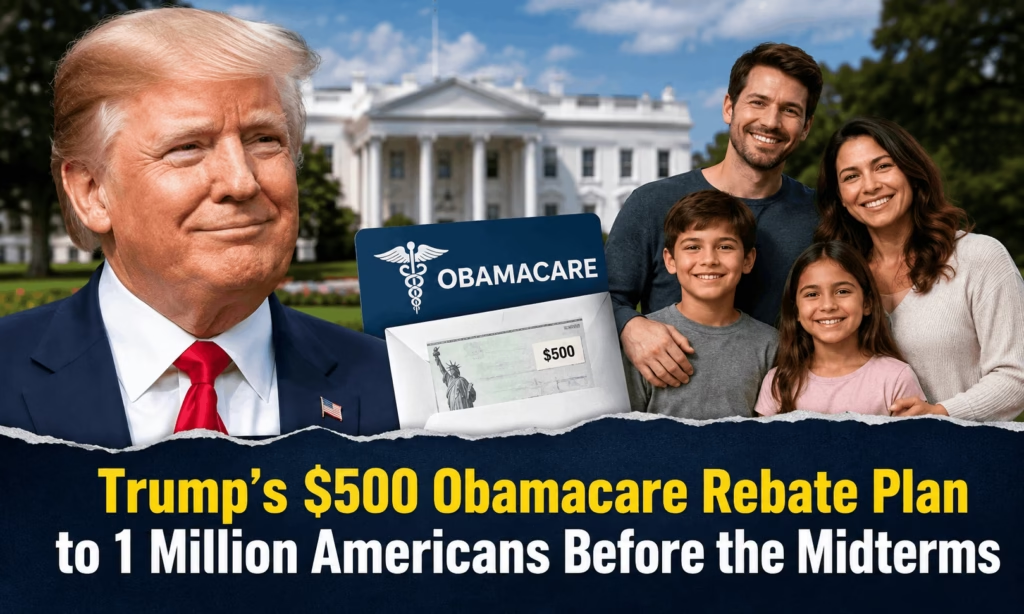
Trump’s Obamacare Rebate Plan: A direct deposit of $500 could soon land in the accounts of roughly one million Americans who buy their own health coverage, under a plan the Trump administration has not yet formally announced but that officials described directly to Axios on September 9, 2026. The payments would go to Affordable Care Act marketplace enrollees in 30 states who do not receive federal premium subsidies, meaning they currently absorb the full cost of their coverage without government help. The administration says the money would come from a $500 million pool of excess fees collected from Obamacare enrollees during the Biden years that officials describe as having been over-collected and left sitting unspent in federal accounts.
President Trump was expected to preview the plan Wednesday night at the Republicans’ midterm convention in Dallas, using it as a concrete example of savings tied to his broader approach to health care policy ahead of the November 3 midterm elections. The rebate proposal lands at a politically charged moment for health insurance costs nationwide, arriving just weeks after Congress allowed enhanced Affordable Care Act tax credits to expire without extension, a decision that has already pushed average marketplace premiums sharply higher for 2026. Thirteen states have been specifically identified as having the largest concentrations of enrollees who could qualify for this rebate. We’ll be updating this article monthly as the administration formally announces details and eligibility criteria for this Obamacare rebate plan.
What is Obamacare Rebate Plan?
Because this plan has not been officially announced through a public agency press release, the confirmed details come specifically from officials who described the plan directly to reporters, making it important to separate what has been verified from what remains unconfirmed.
| Detail | What Has Been Reported |
|---|---|
| Rebate amount | $500 per eligible enrollee |
| Estimated number of recipients | Up to 1 million people |
| Number of states covered | 30 states |
| Total fund size | Approximately $500 million |
| Payment method | Direct deposit |
| Target timing | Before the November 3, 2026 midterm elections |
| Public announcement status | Not yet formally announced through an official agency press release as of this report |
| First public preview | Expected in President Trump’s speech at the Republican midterm convention in Dallas |
Where the $500 Million Fund Actually Comes From?
Understanding the source of this money is central to understanding both the administration’s justification for the rebate and why it has drawn political scrutiny.
- Officials say the funds represent excess administrative fees that Affordable Care Act insurers collected from marketplace enrollees during the Biden administration
- These excess fees were returned to the federal government rather than refunded directly to the consumers who originally paid them
- A U.S. official told Axios the money had been over-collected and was simply sitting unused in government accounts
- The administration’s framing positions this as returning money that was already owed to consumers, rather than new federal spending
Which States Have the Largest Concentrations of Eligible Enrollees?
While the rebate would reach enrollees across 30 states in total, officials specifically named 13 states as having the largest concentrations of people expected to qualify.
| States With Concentrated Eligible Enrollees |
|---|
| Alabama |
| Alaska |
| Arkansas |
| Delaware |
| Florida |
| Michigan |
| Mississippi |
| Missouri |
| New Hampshire |
| Ohio |
| South Carolina |
| Texas |
| Wisconsin |
Several of these states are politically significant heading into the midterm elections, and multiple news outlets have noted the rebate’s proposed geographic footprint overlaps with competitive congressional districts, a detail that has fueled scrutiny over the plan’s timing so close to the November vote.
Who Would Actually Qualify for the $500 Obamacare Rebate?
Not every Affordable Care Act enrollee would be eligible under the plan as currently described, and the eligibility line drawn by officials is specific and narrow.
- Eligibility is limited to people who purchase Affordable Care Act marketplace coverage without receiving federal premium subsidies
- This group represents a smaller slice of the overall marketplace, since federal data shows about 90 percent of the roughly 24 million people enrolled in ACA marketplace plans currently receive premium tax credits
- Enrollees who pay the full, unsubsidized cost of their marketplace plan are the specific group officials describe as having been overcharged and therefore owed a rebate
- The administration has not detailed additional eligibility factors, such as income thresholds, specific plan types, or enrollment date requirements, since the plan has not been formally announced through official channels
Trump Deportation Fines: US Targets Migrants Abroad Over $423 Million in Unpaid Penalties
Tax Filing Season 2027: IRS Start Date, Deadlines and Refund Schedule
SNAP Maximum Benefits FY2027 Confirmed: Family of Four Gets Up to $1,023 (Effective Oct 1, 2026)
Cognizant Green Card Filings Frozen as US Labor Department Escalates Visa Fraud Crackdown
Why This Rebate Is Arriving Now?
This proposed rebate does not exist in isolation. It follows a sequence of major Affordable Care Act developments throughout 2026 that have made health insurance costs one of the most politically charged issues heading into the midterms.
| Date or Period | Development |
|---|---|
| 2021 to 2025 | Congress expanded ACA subsidies, extending eligibility to households earning over 400 percent of the federal poverty level and capping premiums at 8.5 percent of income |
| End of 2025 | Enhanced ACA subsidies expired after Congress did not include an extension in the federal funding bill signed into law |
| 43-day government shutdown | Extending the enhanced ACA subsidies before expiration was the central Democratic demand during the shutdown standoff |
| 2026 plan year | Average marketplace premiums rose sharply, from $888 in 2025 to $1,904 in 2026, according to KFF estimates |
| January 2026 | UnitedHealth Group announced it would voluntarily eliminate and rebate its profits on ACA coverage for the year, working with the Trump administration on implementation details |
| September 9, 2026 | Axios reports the administration’s separate $500 rebate plan targeting unsubsidized enrollees in 30 states |
How This Compares to a Separate Obama-Era Rebate Program?
Astute observers may recall that Affordable Care Act rebates are not a new concept, though this proposed program differs significantly from the rebate mechanism built into the original law.
| Feature | Original ACA Medical Loss Ratio Rebates | Trump Administration’s Proposed Rebate |
|---|---|---|
| Legal basis | A 2010 ACA provision requiring insurers to spend at least 80 percent of premiums on actual health care | A discretionary plan using excess, previously collected federal fees |
| Recipients | Insurance company customers, including many with employer-sponsored coverage | ACA marketplace enrollees who do not receive premium subsidies |
| Typical rebate amount | Averaged $151 per recipient in past years | Reported as a flat $500 per eligible enrollee |
| Payment source | Individual insurance companies, mandated by law | A federal government fund of $500 million |
| Administrative mechanism | Automatic under statute, insurers required to issue rebates when the 80 percent threshold is not met | Not yet codified in law or formal regulation as of this report |
Political Context: Why Republicans Once Opposed a Similar Approach
Adding another layer of political complexity, at least one report has noted that Republicans previously pushed back when the Biden administration attempted to use similar excess ACA funds for a different purpose. During the Biden administration, officials explored using comparable surplus funds to make certain marketplace services free of charge, a proposal that drew strong Republican opposition at the time. The current administration’s approach differs by directing the money as a direct cash payment to consumers rather than funding free services, a distinction the White House has emphasized as central to its broader philosophy of subsidizing individuals directly rather than channeling federal money through insurers or expanded program benefits.
Express Entry Labour Shortage Categories 2027: What Canada May Tighten?
What President Trump Has Said About Direct Health Care Payments?
This rebate plan fits into a broader pattern of statements Trump has made about restructuring how federal health care assistance reaches consumers. Trump has previously described wanting federal health care money to be sent directly to individuals rather than to insurance companies, stating that any such funds should be restricted specifically to purchasing health insurance rather than general spending. He has also criticized insurance company profits amid the broader debate over expiring ACA subsidies, arguing that companies benefiting from federal subsidy dollars should not simultaneously be reporting strong profits while consumers face rising premiums.
How to Apply for or Check Eligibility for the Obamacare Rebate?
Because this plan has not been formally announced through an official government channel, there is currently no live application process, but there are concrete steps eligible enrollees can take to prepare.
- Confirm whether your Affordable Care Act marketplace plan currently receives premium tax credits or subsidies, since the reported eligibility criteria specifically exclude subsidized enrollees
- Verify your state of residence against the list of 30 states reported to be included in the plan, prioritizing confirmation if you live in one of the 13 states with the largest concentrations of eligible enrollees
- Monitor official Centers for Medicare and Medicaid Services and HealthCare.gov announcements directly, since any formal rebate program would likely be administered through these existing federal marketplace channels
- Ensure your direct deposit and contact information on file with your marketplace plan is current, since the reported payment method is direct deposit rather than a mailed check
- Avoid providing personal or banking information to any unsolicited communication claiming to process this rebate before an official program is formally announced, given the risk of scams targeting anticipated payments
Processing Time: What to Expect if the Rebate Plan Moves Forward
Given the plan remains unannounced through official channels, processing timelines are necessarily uncertain, but the administration’s own stated target date offers a useful anchor point.
| Stage | Expected Timing |
|---|---|
| Public preview of the plan | Trump’s speech at the Republican midterm convention in Dallas |
| Formal government announcement | Not yet confirmed as of this report |
| Target payment window | Before the November 3, 2026 midterm elections |
| Administering agency | Not yet officially specified, though likely to involve the Centers for Medicare and Medicaid Services given its oversight of ACA marketplace operations |
Payment Schedule: How the $500 Rebate Would Reach Recipients?
Based on what officials have described, the payment mechanism itself appears relatively straightforward compared to the eligibility and administrative questions still unresolved.
- Payments are reported to be issued as direct deposits rather than mailed paper checks, suggesting the government would use existing banking information already on file for marketplace enrollees
- The administration’s target of distributing payments before the November 3, 2026 election implies a compressed timeline, given the plan had not been formally announced as of early September 2026
- No specific payment date range has been confirmed, and the timeline remains contingent on the administration formalizing the program through whatever regulatory or administrative process it chooses to use
- Enrollees should not expect payment before an official announcement clarifies the specific administering agency and confirmation process
Official Resources for Affordable Care Act Marketplace Enrollees
Given that this rebate has not been formally announced, checking official federal health marketplace resources directly remains the most reliable way to get verified updates as the plan develops.
| Resource | Purpose | Official Link |
|---|---|---|
| HealthCare.gov | Official federal ACA marketplace enrollment and account management | healthcare.gov |
| Centers for Medicare and Medicaid Services newsroom | Official federal health policy announcements | cms.gov/newsroom |
| HealthCare.gov account login | Check your current plan, subsidy status, and contact information on file | healthcare.gov/log-in/ |
| CMS Marketplace subsidy information | Confirm whether your plan currently receives premium tax credits | cms.gov/marketplace |
| KFF ACA subsidy calculator | Independent, non-partisan estimate of your marketplace subsidy eligibility | https://www.kff.org/topic/affordable-care-act/ |
UPS Tariff Refund: Who Is Eligible to Get One and How Can You Apply?
Ontario Minimum Wage Rises to $17.95 on Oct 1, 2026
SNAP Income Limits FY2027 Confirmed: Single Applicants Capped at $1,729, Family of Four at $3,575
FAQs About Trump’s $500 Obamacare Rebate Plan
What is the Obamacare rebate Trump’s administration is planning?
The Trump administration is reportedly planning to send $500 direct deposit payments to as many as 1 million Americans who buy Affordable Care Act marketplace coverage without receiving federal premium subsidies, funded by a $500 million pool of previously over-collected fees.
Who qualifies for the $500 Obamacare rebate?
Based on what officials have described, eligibility is limited to ACA marketplace enrollees in 30 states who do not receive federal premium subsidies, meaning they currently pay the full cost of their coverage without government assistance.
Has the Obamacare rebate been officially announced?
As of this report, the plan has not been formally announced through an official government press release. Details come from officials who described the plan directly to Axios, with President Trump expected to preview it during a speech at the Republican midterm convention in Dallas.
When would the $500 rebate payments actually arrive?
The administration’s reported target is to distribute payments before the November 3, 2026 midterm elections, though no specific payment date range has been officially confirmed.
Which states are most likely to have eligible recipients?
Officials specifically named Alabama, Alaska, Arkansas, Delaware, Florida, Michigan, Mississippi, Missouri, New Hampshire, Ohio, South Carolina, Texas, and Wisconsin as having the largest concentrations of eligible enrollees, out of 30 states total covered by the plan.
Where is the $500 million for this rebate coming from?
Officials say the money comes from excess administrative fees collected from Affordable Care Act enrollees during the Biden administration that were returned to the federal government and left unspent in federal accounts.
Is this rebate the same as the standard ACA medical loss ratio rebate?
No. The standard ACA rebate is a longstanding statutory provision requiring insurers to refund customers when they fail to spend at least 80 percent of premiums on actual health care, averaging around $151 per recipient. This new proposal is a separate, discretionary $500 flat payment using different federal funds.
Does this rebate apply to people who receive ACA premium subsidies?
No. Based on reported details, the rebate is specifically limited to enrollees who do not receive federal premium subsidies, since this group pays the full cost of their marketplace coverage.
How does this rebate relate to the expired enhanced ACA subsidies?
The rebate is a separate initiative from the enhanced ACA subsidies that expired at the end of 2025 after Congress did not extend them, though both developments are part of the same broader health care affordability debate driving policy discussion ahead of the midterms.
How can I confirm if I am eligible once the plan is officially announced?
Once formally announced, eligibility confirmation would likely occur through your existing HealthCare.gov marketplace account, where your subsidy status and coverage details are already on file with federal officials.
Conclusion
The proposed Obamacare rebate offers up to 1 million Americans in 30 states a $500 direct payment funded by previously uncollected federal fees, timed deliberately ahead of the November 3, 2026 midterm elections and set to be previewed in President Trump’s speech at the Republican midterm convention in Dallas. With eligibility reportedly limited to unsubsidized marketplace enrollees and 13 specific states flagged as having the largest concentrations of qualifying recipients, this plan arrives against the backdrop of a much larger health care affordability crisis following the expiration of enhanced ACA subsidies and sharply rising 2026 premiums. Because the plan remains formally unannounced as of this report, eligible enrollees should treat specific payment dates and application steps as unconfirmed until federal officials release official guidance through channels like HealthCare.gov. As the administration formalizes this Obamacare rebate plan and releases confirmed eligibility criteria, check back here, since this article is reviewed and updated with the latest confirmed information each month.
SSDI Pay Chart: The Least Amount You Can Get Per Month and the Most Common Disabilities
Ohio SNAP Sugary Beverage Ban Delayed: What Happened and Why