The Medicare GLP-1 Bridge Program: Medicare has historically been barred by law from covering drugs prescribed only for weight loss. For years, that left many beneficiaries paying high out-of-pocket prices for drugs like Wegovy and Zepbound, or going without. The Medicare GLP-1 Bridge is the first federal program to open a path around that barrier, and it is now nearly five months old.
Since July 1, 2026, eligible people with Medicare drug coverage can get certain GLP-1 medications for weight management for $50 per month. The Bridge is run directly by the Centers for Medicare & Medicaid Services (CMS), outside the normal Part D benefit. Your drug plan does not approve or pay for these prescriptions. CMS’s contractor does. The program has changed since it was announced. It was first set to end on December 31, 2026, with a longer-term model called BALANCE taking over in Medicare Part D in January 2027. That handoff did not happen. CMS extended the Bridge through December 31, 2027, and the BALANCE rollout in Part D is not going ahead on the original schedule.
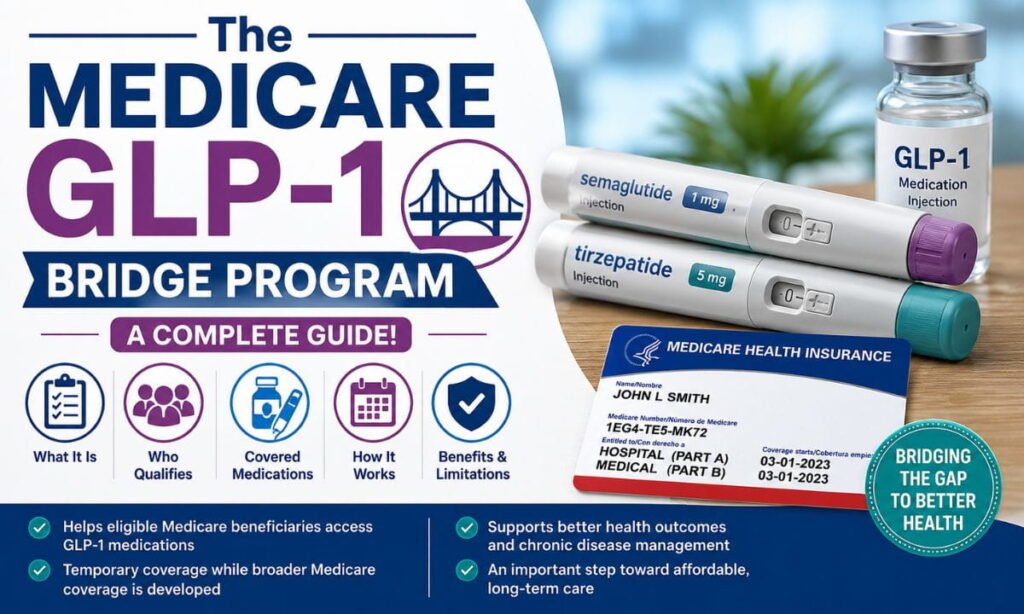
What Is the Medicare GLP-1 Bridge?
The Bridge is a short-term demonstration. It gives eligible Medicare Part D beneficiaries access to certain GLP-1 drugs between July 1, 2026 and December 31, 2027. Three design features matter:
- It sits outside Part D. Part D plan sponsors carry no risk for these drugs and did not have to opt in for beneficiaries to get access.
- One central processor handles everything. CMS uses a single processor for prior authorization, claims and pharmacy payment, which it has identified as Humana, the existing administrator of the LI NET program. This does not enroll you in a Humana plan.
- You do not enroll separately. You stay in your current plan. Your prescriber and pharmacy start the process.
What Does It Cost?
CMS’s launch announcement describes the cost as $50 per month for eligible beneficiaries. The fine print:
- The Part D deductible does not apply.
- The $50 does not count toward your true out-of-pocket (TrOOP) costs, and people with the low-income subsidy (LIS) get no extra help with it.
- Pen needles for Zepbound KwikPen are not covered and must be bought separately.
Which Drugs Are Covered?
Medicare.gov’s current page lists the covered drugs. The Medicare fact sheet says the Bridge covers Foundayo (tablet), Wegovy (injection or tablet), and Zepbound in the KwikPen only. The single-dose Zepbound pen and Zepbound vials are not covered. CMS added Foundayo in April 2026 after its FDA approval.
Diabetes drugs such as Ozempic and Mounjaro are not part of the Bridge. They are covered through Part D for type 2 diabetes.
Who Is Eligible?
Eligibility has three parts.
1. Your coverage
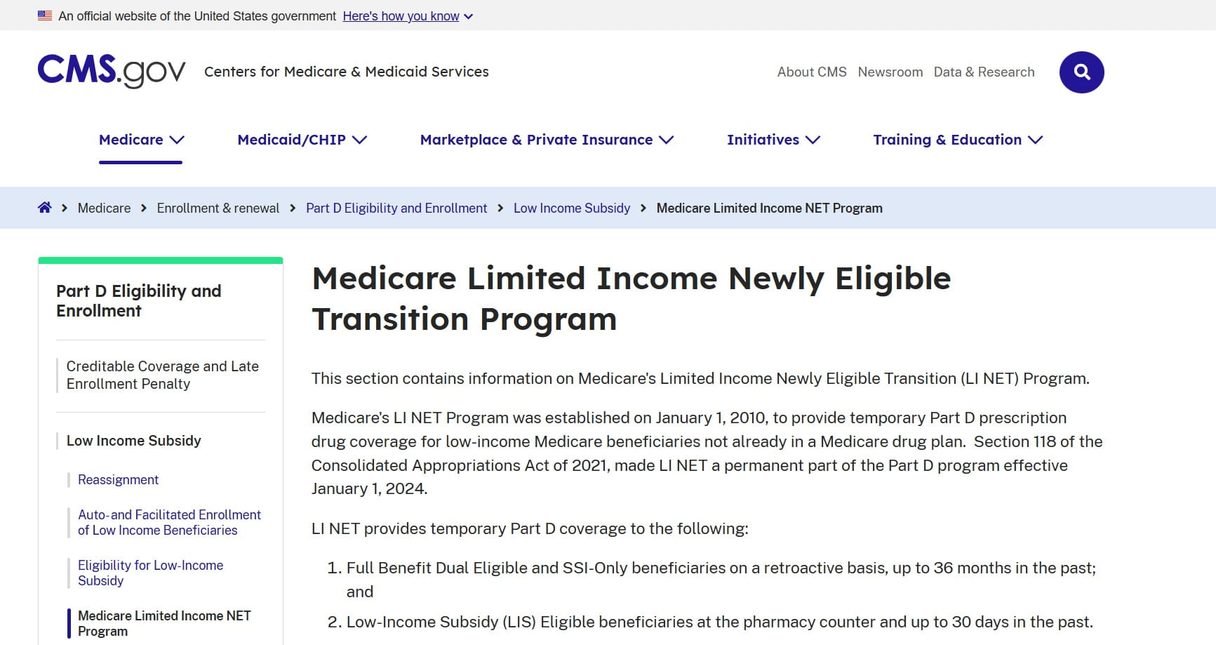
You need Medicare drug coverage in an eligible plan type. That means a standalone prescription drug plan or a Medicare Advantage coordinated care plan (HMO, HMOPOS, or local or regional PPO) with drug coverage. Per CMS’s provider guidance, Special Needs Plans, employer or union group waiver plans and the LI NET program also qualify. Private fee-for-service, cost contract and PACE enrollees generally do not, unless they also have a standalone drug plan.
CMS’s wording on plan types refers to 2026 plans. If you are switching plans for 2027, call 1-800-MEDICARE to confirm your new plan type stays eligible.
2. The reason for the prescription
The Bridge is for weight management only. If you already get a GLP-1 through your Part D plan for another covered purpose, you cannot move to the Bridge. Medicare.gov says if your Medicare drug plan has been paying for your GLP-1, you are not eligible, and you should keep getting it through your plan. CMS lists type 2 diabetes, moderate to severe obstructive sleep apnea and noncirrhotic MASH as Part D-covered uses.
3. Clinical criteria
Your prescriber must attest to one of the following, measured when you started GLP-1 therapy:
| Pathway | Requirement |
| Severe obesity | Age 18 or older and BMI of 35 or higher |
| BMI 30 or higher plus a condition | Heart failure with preserved ejection fraction, uncontrolled hypertension (above 140 systolic or 90 diastolic despite two medicines), or chronic kidney disease stage 3a or above |
| BMI 27 or higher plus a condition | Pre-diabetes, prior heart attack, prior stroke, or symptomatic peripheral artery disease |
Full Social Security at 60: Who Qualifies Under the New Blue Collar Bill?
Why Bitcoin Fell 12% in a Week and Can Bitcoin Fall Below $60,000?
SSDI Payment Dates 2026-27: Your Disability Check Schedule by Birthday, Plus the 3.6% COLA
The starting-BMI rule helps people already on treatment. CMS’s example: someone who began at a BMI of 37 and is now at 34 still qualifies, because the BMI of 35 or higher test was met at initiation. Medicare.gov repeats the point: your BMI may be lower now because of treatment, and Medicare may use the BMI you had when you first started.
How the Process Works?
The order matters, and getting it wrong causes delays.
- Talk to your prescriber. Ask whether a Bridge drug fits and whether you meet the criteria.
- The prescriber sends the prescription to your pharmacy first. CMS says submitting a prior authorization before the pharmacy has filed a claim produces a “patient not found” error.
- The pharmacy submits a claim to the Bridge. A Part D denial is not required first.
- The pharmacy sends a prior authorization request to your prescriber, typically within 24 to 72 hours.
- The prescriber completes the form, electronically if possible, attesting under penalty of perjury. CMS may verify details against Medicare data.
- You get a decision. CMS says decisions go to you by mail and to the prescriber within 72 hours of submission. One AARP report put typical determinations at about 12 hours, but 72 hours is the official figure.
CMS recommends that prescribers include the weight-management diagnosis code and a note directing the prescription to the Bridge. Neither is required, but they help route the claim correctly.
Refills and changes. AARP reported, citing CMS, that once your first prescription is approved, later fills do not need a new prior authorization unless you switch to a different covered drug.
If you are denied: CMS states there is no appeals process under the Bridge. A prescriber can resubmit with corrected or additional information.
Latest Developments
Uptake has been strong, according to reports. The White House said more than 500,000 Medicare beneficiaries enrolled in the first two months, and CMS Administrator Dr. Mehmet Oz put the figure at about 600,000. On its October 29 earnings call, Eli Lilly said more than half a million people had filled a Lilly prescription through the Bridge since July 1.
The eligible pool is large but not universal. An independent KFF analysis estimated about 3.8 million Part D enrollees could qualify, after excluding people with diabetes, sleep apnea or MASH and people already on GLP-1s through Part D. That estimate used 2023 data.
The end date has not changed. Despite calls from the JAMA Summit on Obesity report this month to scale the Bridge if it succeeds, the program is still scheduled to end December 31, 2027.
BALANCE is on hold for Medicare. The Part D side of BALANCE was delayed indefinitely after too few plan sponsors signed on. The Medicaid component continues in participating states and is separate from the Bridge.
Open enrollment is closing. Medicare’s annual enrollment period ends December 7. If you have Medicare but no drug coverage, getting a plan before then is the way to become eligible for 2027.
Medicare.gov points to price-comparison options. For people who do not qualify, Medicare.gov suggests checking the Medicare Prescription Payment Plan and comparing prices, including on TrumpRx.gov. You cannot buy drugs directly through that site.
What Happens After 2027?
Nothing is guaranteed. The Bridge is a demonstration that CMS can change or end, and Part D law still has no standard weight-loss benefit to replace it. Unless CMS extends the Bridge, launches BALANCE in Part D, or Congress changes the law, coverage could lapse in 2028.
Practical steps:
- Treat Bridge coverage as available through the end of 2027, not beyond.
- Ask your prescriber about a plan if coverage ends.
- Check CMS and Medicare.gov regularly, since policy on this program has shifted several times in 2026.
Tips Before You Start
- Confirm your plan type and whether it stays eligible in 2027.
- Get your starting BMI documented. That is the number the form uses.
- Know your pathway. Diabetes, sleep apnea or MASH means your plan covers the drug instead.
- Budget for pen needles if you use Zepbound KwikPen.
- Watch for scams. The Bridge is an official CMS program, not a discount card. Do not pay anyone to “enroll” you, and be wary of unsolicited calls asking for your Medicare number. Call 1-800-MEDICARE if unsure.
Official Sources
Phone numbers from CMS and Medicare.gov
- Beneficiaries: 1-800-MEDICARE (1-800-633-4227); TTY 1-877-486-2048.
- Prescribers: Bridge Call Center, 855-273-0102, Monday to Friday, 8 a.m. to 7 p.m. ET.
Frequently Asked Questions
What is the Medicare GLP-1 Bridge?
A temporary CMS program giving eligible Part D beneficiaries access to certain GLP-1 weight-loss drugs for $50 a month, from July 1, 2026 through December 31, 2027.
Has anything changed recently?
The big change was the extension to December 31, 2027, after BALANCE was delayed in Part D.
How much do I pay?
$50 per month. The deductible does not apply, the amount does not count toward your out-of-pocket threshold, and LIS does not lower it.
Which drugs are covered?
Foundayo (tablet), Wegovy (injection or tablet), and Zepbound KwikPen. Zepbound vials and single-dose pens are not covered.
Do I need to enroll?
No. Your prescriber sends a prescription to your pharmacy and the process runs from there.
Who qualifies?
Adults in eligible drug plans prescribed a covered drug for weight management who met BMI and condition criteria when they started treatment: BMI 35 or higher, BMI 30 or higher with certain conditions, or BMI 27 or higher with certain conditions.
Can I qualify if I started GLP-1 treatment before July 2026?
Yes, if you met the criteria at the time you started, including before you joined Part D.
I have type 2 diabetes. Can I use the Bridge?
No. Diabetes, sleep apnea and MASH uses are covered through your Part D plan.
What if I’m denied?
There is no appeals process. Your prescriber can resubmit with corrected information.
How many people have joined?
The White House reported more than 500,000 in the first two months, and Dr. Oz cited about 600,000. These are reported figures, not a CMS data release.
Also Read :-
Will Your ACA Subsidy End in 2026? State-by-State Marketplace Guide and Premium Tax Credit Updates
Iowa SNAP Junk Food Ban 2026: What Was Banned, Court Update, EBT Rules and Latest Status