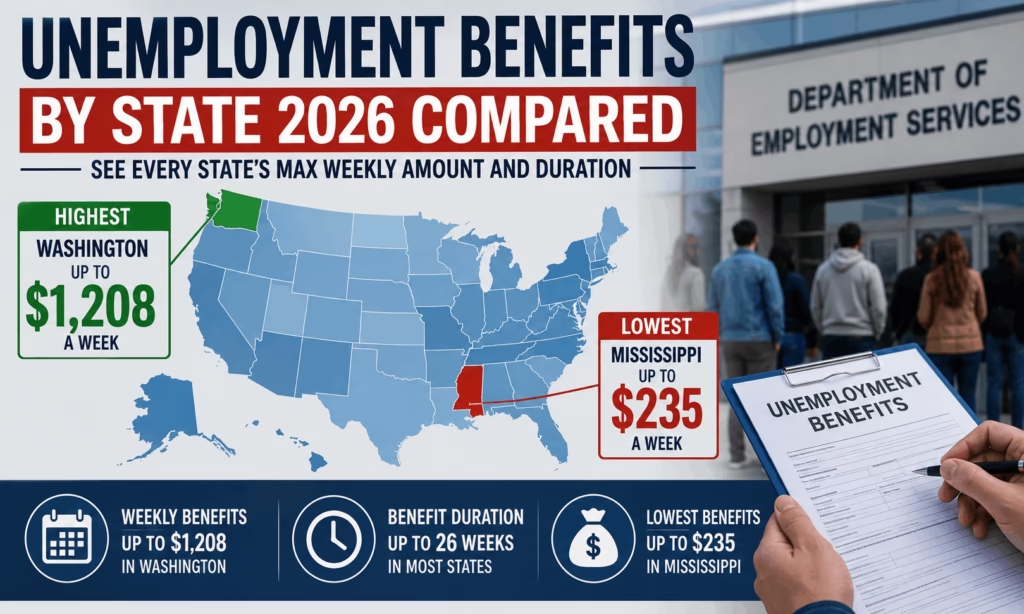
Unemployment Benefits by State 2026: Washington has officially become the most generous state in the country for jobless workers, after the Employment Security Department confirmed the maximum weekly unemployment benefit rose to $1,208 for new claims filed on or after July 5, 2026, an increase of $56 tied directly to the state’s rising average annual wage. At the opposite end of the scale, Mississippi remains locked at just $235 a week, a gap of nearly $1,000 in weekly income replacement between the two states, and roughly $29,850 in total possible benefits once each state’s maximum duration is factored in. This wide swing in unemployment benefits by state is exactly why so many laid-off workers are surprised to learn that where you live, not just how much you earned, determines how much financial support you receive while job searching.
The update comes as several other states also adjusted their unemployment insurance caps this summer. Iowa and Virginia both raised their maximum weekly benefit for claims filed on or after July 5, 2026, following the same wage-indexed reset that most states apply either every January or every July. Massachusetts continues to offer the richest total package when dependent allowances are included, paying up to $1,105 a week plus $25 per dependent for as long as 30 weeks, the longest duration of any state. Below is a complete, state-by-state breakdown of every maximum weekly unemployment benefit currently in effect, along with how each amount is calculated, how long benefits last, and the official portals where you can file a claim. We’ll be updating this article monthly as states release new wage-indexed benefit adjustments.
Key Highlights: State Unemployment Benefits 2026-27
| Detail | Information |
|---|---|
| Highest maximum weekly benefit | Washington, $1,208 (effective July 5, 2026) |
| Highest with dependent allowance | Massachusetts, $1,105 plus $25 per dependent |
| Lowest maximum weekly benefit | Mississippi, $235 |
| National average maximum | Approximately $532 per week |
| Standard benefit duration | 26 weeks in most states |
| Shortest duration | North Carolina, 12 weeks |
| Longest duration | Massachusetts, up to 30 weeks |
| States requiring employee payroll contributions | Alaska, New Jersey, Pennsylvania |
| States that raised benefits in July 2026 | Washington, Iowa, Virginia |
| Federal Extended Benefits triggered | None, as of 2026 |
What Determines Your Unemployment Benefit Amount
Unemployment insurance in the United States is a federal-state partnership. The federal government sets broad guidelines, but each state designs its own unemployment insurance program, sets its own maximum weekly benefit amount, decides how long benefits last, and funds the system primarily through employer payroll taxes. That is why the same lost job and the same salary can produce wildly different weekly checks depending on which state processes your claim.
Most states calculate your weekly benefit amount using a base period, typically the first four of the last five completed calendar quarters before you file. A common formula pays roughly half of your average weekly wage during your highest-earning quarter, up to the state’s maximum cap. Some states, including Alaska, Illinois, Massachusetts, Maine, and Connecticut, also add a dependent allowance on top of the base weekly amount for claimants supporting children or other dependents.
Full State-by-State Maximum Weekly Unemployment Benefit Chart
The table below lists the current maximum weekly benefit amount and maximum duration for all 50 states, the District of Columbia, and Puerto Rico. Figures reflect the most recent wage-indexed adjustments, several of which took effect on July 5, 2026.
| State | Max Weekly Benefit | Max Duration (Weeks) |
|---|---|---|
| Alabama | $275 | 14 to 20 |
| Alaska | $370 (up to $442 with dependents) | 26 |
| Arizona | $320 | 26 |
| Arkansas | $451 | 16 |
| California | $450 | 26 |
| Colorado | $844 | 26 |
| Connecticut | $721 (up to $796 with dependents) | 26 |
| Delaware | $450 | 26 |
| District of Columbia | $444 | 26 |
| Florida | $275 | 12 to 23 |
| Georgia | $365 | 14 to 20 |
| Hawaii | $868 | 26 |
| Idaho | $624 | 26 |
| Illinois | $628 (up to $859 with dependents) | 26 |
| Indiana | $390 | 26 |
| Iowa | $644 (up to $790 with dependents) | 26 |
| Kansas | $637 | 26 |
| Kentucky | $720 | 26 |
| Louisiana | $275 | 26 |
| Maine | $623 (plus $25 per dependent) | 26 |
| Maryland | $430 (includes dependent allowance) | 26 |
| Massachusetts | $1,105 (plus $25 per dependent) | 30 |
| Michigan | $530 (rising to $614 in January 2027) | 26 |
| Minnesota | $914 | 26 |
| Mississippi | $235 | 26 |
| Missouri | $320 | 20 |
| Montana | $698 | 28 |
| Nebraska | $582 | 26 |
| Nevada | $631 | 26 |
| New Hampshire | $427 | 26 |
| New Jersey | $905 | 26 |
| New Mexico | $624 | 26 |
| New York | $869 | 26 |
| North Carolina | $350 | 12 to 20 |
| North Dakota | $815 | 26 |
| Ohio | $647 | 26 |
| Oklahoma | $649 | 26 |
| Oregon | $902 (new claims from June 28, 2026) | 26 |
| Pennsylvania | $605 (plus $8 max dependent allowance) | 26 |
| Puerto Rico | $240 | 26 |
| Rhode Island | $745 (up to $931 with dependents) | 26 |
| South Carolina | $350 | 20 |
| South Dakota | $553 | 26 |
| Tennessee | $275 | 26 |
| Texas | $605 | 26 |
| Utah | $801 | 26 |
| Vermont | $757 | 26 |
| Virginia | $478 (claims from July 5, 2026) | 26 |
| Washington | $1,208 (claims from July 5, 2026) | 26 |
| West Virginia | $662 | 26 |
| Wisconsin | $370 | 26 |
| Wyoming | $651 | 26 |
Employment Insurance (EI) 2026 Rule Changes: What Every Canadian Worker Needs to Know
Empire State Child Credit 2026: $1,000 Per Child Under 4, Full Eligibility & Payment Guide
Oregon Kicker Tax Credit 2026: How To Claim Your Share Of The $1.41 Billion Surplus
California Climate Credit 2026: Payment Timing Just Changed, Here Is What to Expect on Your Bill
Top 10 Highest-Paying States for Unemployment Benefits
Workers in the Pacific Northwest, Northeast, and Upper Midwest generally see the most generous weekly maximums, largely because these regions also carry higher average wages, which most states use to index their benefit ceilings.
- Washington — $1,208 per week
- Massachusetts — $1,105 per week (plus dependent allowance)
- Minnesota — $914 per week
- New Jersey — $905 per week
- Oregon — $902 per week
- New York — $869 per week
- Hawaii — $868 per week
- Colorado — $844 per week
- North Dakota — $815 per week
- Utah — $801 per week
States With the Lowest Maximum Weekly Benefits
At the other end of the spectrum, several southern states continue to cap unemployment benefits well below the national average, a gap that has drawn repeated criticism from worker advocacy groups given the rising cost of housing and everyday expenses in those same states.
Mississippi holds the lowest maximum in the country at $235 per week, followed closely by Alabama, Florida, Louisiana, and Tennessee, all capped at $275 per week. Arizona and Missouri also rank near the bottom at $320 per week each.
How Long Do Unemployment Benefits Last by State?
While the maximum weekly benefit amount gets the most attention, the number of weeks you can collect matters just as much for your total potential payout. Most states cap regular benefits at 26 weeks, but there is meaningful variation.
North Carolina offers the shortest standard duration at 12 weeks, while Massachusetts allows claimants to collect for up to 30 weeks, the longest in the nation. States including Alabama, Georgia, and Florida use a sliding scale that adjusts the number of weeks based on the state’s current unemployment rate, meaning claimants may receive more weeks of support during periods of higher statewide joblessness.
Why Unemployment Benefits Vary So Much From State to State
The size of the gap between the highest and lowest paying states surprises most people the first time they see it side by side. Several factors drive this variation. First, states with a higher cost of living and higher average wages, such as Washington, Massachusetts, and New Jersey, index their benefit formulas to local wage data, which naturally produces higher dollar caps. Second, state legislatures set their own taxable wage base, the amount of each worker’s pay that is subject to unemployment insurance tax, and states with a higher taxable wage base collect more revenue and can afford more generous maximums. Third, political and budgetary priorities differ sharply by state; some legislatures have kept maximum benefits largely frozen for years even as inflation and rent have climbed, which is part of why states like Alabama, Mississippi, and Tennessee have fallen further behind the national average.
Finally, state unemployment insurance trust fund health plays a direct role. When a state’s trust fund is well funded, lawmakers are more willing to raise benefit caps. When the fund is depleted, often after a period of high claims volume such as a recession, states may freeze or even reduce benefit levels to rebuild reserves and avoid borrowing from the federal government. This is one reason benefit maximums can shift unexpectedly from one year to the next, even in states that historically paid generously.
State Unemployment Trust Fund Health and What It Means for You
Every state maintains its own unemployment trust fund, financed by employer payroll taxes under the Federal-State Unemployment Tax Act system. A well-capitalized trust fund allows a state to weather a wave of layoffs without needing an emergency federal loan, while a chronically underfunded trust fund can force a state to raise employer tax rates, cut weekly benefit maximums, or shorten benefit duration. Workers filing a claim generally will not see any daily impact from their state’s trust fund balance, but it is worth understanding as background context for why some states, particularly in the South, have kept benefit maximums flat for extended periods despite rising living costs elsewhere in the country.
Chapter 33 VA Benefits Housing Allowance: How Much Can You Get Per Month
State Farm Dividend: Who Qualifies to Receive Part of the $5 Billion Payout
H-1B Visa Ban Texas Schools: Abbott Wants Exactly Zero Foreign Workers, What Indians Should Know
Trump Halts 50 Percent Tariffs Canada: What the Last Minute Deal With Ottawa Means
Green Card Rule Changes: New Public Charge Test to Assess Age, Health, Family Status and Finances
Which States Require Employees to Pay Into Unemployment Insurance
Unemployment insurance is funded almost entirely through employer payroll taxes across the country, but three states carve out an exception. Alaska, New Jersey, and Pennsylvania require employees to make small payroll contributions toward the state unemployment insurance fund in addition to the employer-paid portion, a detail that surprises many workers filing a claim for the first time.
Are Unemployment Benefits Taxable in 2026?
Yes. Unemployment compensation is federally taxable income and must be reported on your federal tax return using Form 1099-G, which your state agency issues in late January. Claimants can elect to have 10 percent withheld for federal taxes directly from their weekly payment, similar to a regular paycheck.
State-level taxation varies significantly. States such as California, New Jersey, and Pennsylvania do not tax unemployment benefits at the state level, either by law or because they have no state income tax. If your deposit looks smaller than the maximum weekly benefit amount listed above, elected withholding is almost always the reason, since federal and state withholding stack rather than replace one another.
How to File an Unemployment Claim: Step-by-Step
- File online through your state’s official unemployment website as soon as possible after your job ends or your hours are significantly reduced.
- Gather your employment history, including up to 24 months of past employer details, your Social Security number, and direct deposit banking information.
- Report accurate base period wages. Your weekly benefit amount is calculated from your earnings during the base period, so accuracy prevents processing delays.
- Certify weekly or biweekly as required by your state to keep payments on schedule; missing a certification window is one of the most common causes of payment interruptions.
- Choose your payment method, typically direct deposit, a debit card, or a mailed check, with direct deposit generally processing fastest.
Partial Unemployment Benefits for Reduced Hours
If your hours or pay are cut but you remain employed, you may still qualify for a partial unemployment benefit. Rules vary significantly by state. New York, for example, uses a day-based scale rather than an hours cutoff: working zero days in a week pays 100 percent of your benefit, one day worked reduces it to 75 percent, two days to 50 percent, three days to 25 percent, and four or more days worked in a week eliminates that week’s benefit entirely. Pennsylvania and California instead offer Partial Unemployment Benefit Credits that offset a reduced benefit based on part-time earnings.
Claiming Unemployment Across Multiple States
Workers who earned wages in more than one state during their base period can generally file benefits tied to income earned in each state. Best practice is to first exhaust benefits from the state where you earned the most income or lived the longest during your base year, then file in additional states up to their respective maximums if you remain eligible.
Official Unemployment Insurance Resources
| Resource | Purpose | Official Link |
|---|---|---|
| U.S. Department of Labor, Unemployment Insurance | Federal program overview and state comparison data | dol.gov/general/topic/unemployment-insurance |
| CareerOneStop Unemployment Benefits Finder | Locate your state’s official filing portal | careeronestop.org/LocalHelp/UnemploymentBenefits |
| Washington ESD eServices | File a claim and check benefit status (WA) | esd.wa.gov |
| California EDD UI Online | File a claim and check status (CA) | edd.ca.gov |
| New York Department of Labor | File a claim and certify weekly (NY) | dol.ny.gov |
| Texas Workforce Commission | File a claim and check eligibility (TX) | twc.texas.gov |
FAQs
Which state has the highest maximum unemployment benefit in 2026?
Washington currently offers the highest maximum weekly benefit for individuals without dependents at $1,208, effective for claims filed on or after July 5, 2026. When dependent allowances are included, Massachusetts pays the highest total, up to $1,105 plus $25 per dependent.
Which state has the lowest unemployment benefit?
Mississippi has the lowest maximum weekly unemployment benefit in the country at $235, with Alabama, Florida, Louisiana, and Tennessee close behind at $275 per week.
How long can I collect unemployment benefits?
Most states allow up to 26 weeks of regular benefits. North Carolina offers the shortest duration at 12 weeks, while Massachusetts offers the longest at up to 30 weeks.
How is my weekly unemployment benefit amount calculated?
Most states use your earnings during a base period, typically the first four of the last five completed calendar quarters, and pay roughly 50 percent of your average weekly wage up to your state’s maximum cap.
Do I have to pay taxes on unemployment benefits?
Yes, unemployment compensation is taxable at the federal level and must be reported on Form 1040 using your Form 1099-G. Some states also tax these benefits, while others, including California and New Jersey, do not.
Why did Washington’s unemployment benefit increase in July 2026?
Washington resets its minimum and maximum weekly benefit every July based on the state’s average annual wage. Wage growth of nearly 5 percent in 2025 pushed the maximum from $1,152 to $1,208 for new claims.
Can I get unemployment benefits if I work part time?
In most states, yes, through a partial unemployment benefit, as long as your reduced earnings fall below a state-set threshold and you continue meeting weekly certification requirements.
What happens if I move to another state while collecting unemployment?
You generally continue collecting from the state where you filed your original claim, even if you physically relocate, though you must still meet that state’s ongoing work-search and certification requirements.
People Also Ask
How much unemployment will I get in my state? Your weekly amount depends on your base period earnings and your state’s formula, but it cannot exceed your state’s posted maximum, which ranges from $235 in Mississippi to $1,208 in Washington.
Can I collect unemployment if I quit my job? Generally no, unless you quit for good cause connected to your employer, such as unsafe working conditions or a significant unilateral change to your job. Rules and required documentation vary by state.
Do unemployment benefits count as income? Yes, unemployment benefits are considered taxable income at the federal level and must be reported when you file your annual tax return.
What states pay the most unemployment benefits? Washington, Massachusetts, Minnesota, New Jersey, and Oregon currently rank as the top five states for maximum weekly unemployment benefits.
How soon after filing do unemployment payments start? Most states process a first payment within two to four weeks of filing, assuming your application is complete and your former employer confirms your work history without dispute.
Conclusion
The gap in unemployment benefits by state has only widened heading into 2026 and 2027, with Washington’s move to $1,208 a week pulling further ahead of lower-paying states like Mississippi, Alabama, Florida, Louisiana, and Tennessee, all still capped near $275 or below. Because most states reset their maximum weekly benefit annually, either every January or every July, based on their own average wage data, these figures shift regularly and can change mid-year, as seen with Washington, Iowa, and Virginia’s July 2026 adjustments. Anyone filing a claim should confirm the current maximum and duration directly through their state’s official unemployment agency rather than relying on last year’s figures, since even a few weeks’ difference in filing date can change the benefit amount you qualify for. This article will continue to be updated as states announce new wage-indexed benefit adjustments.
Colorado TABOR Refund and PTC Rebate 2026: Who Qualifies and How Much You Can Get
USCIS E-Filing Mandate: New DHS Rule Gives Agency Power To Retire Paper Immigration Forms
Denaturalization Cases Surge As DOJ Files Record 25 Complaints In Just Two Weeks