White House Press Ban: CNN, Politico and MS NOW filed an emergency lawsuit against the Trump administration on Monday, asking a federal judge to immediately restore their reporters’ access to the White House after President Donald Trump barred all three outlets from the grounds. A hearing on the outlets’ request for a temporary restraining order is scheduled for Wednesday in the U.S. District Court in Washington, and the case could produce a ruling within days. We’ll be updating this article monthly as the litigation moves through the courts.
The dispute began on September 18, when Trump wrote on Truth Social that he was banning the three outlets effective immediately, accusing them of reporting “FICTION and LIES” about his administration. By Monday, CNN and MS NOW reporters said they had been physically denied entry to the White House grounds and blocked from using their television camera positions, while CNN was also pulled from its rotation in the White House press pool, the small group of reporters who share coverage duties on behalf of the wider press corps. In response, several major television networks announced they would stop airing live video of Trump’s public events until the dispute is resolved, an unusual show of solidarity across competing newsrooms. The three outlets argue in their filing that the ban violates the First Amendment’s guarantee of a free press and the Fifth Amendment’s due process protections, while the administration has countered in earlier, similar disputes that the president has broad discretion over who is allowed on White House property.
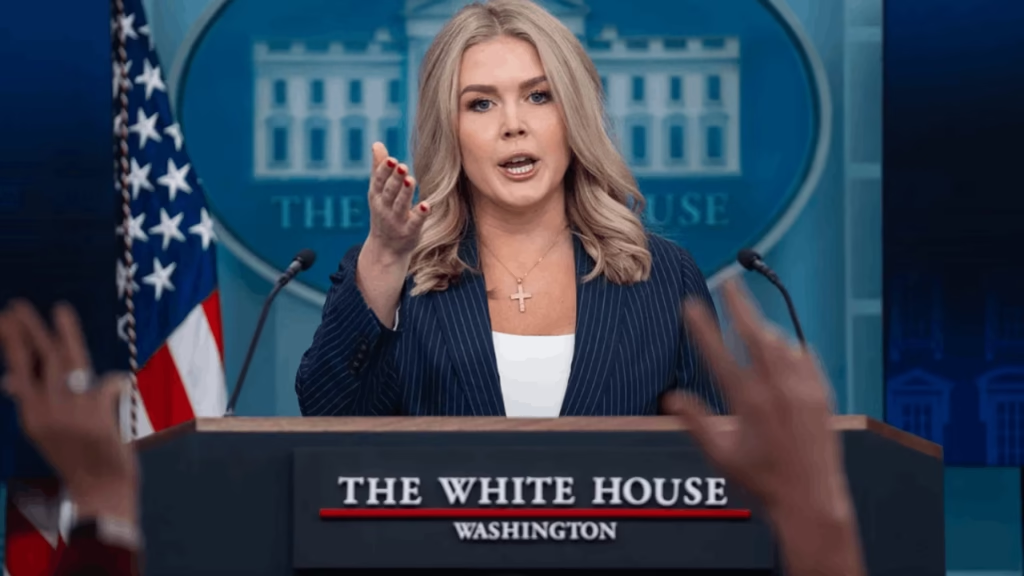
White House Press Ban Key Highlights
| Detail | Status |
|---|---|
| Outlets banned | CNN, Politico, MS NOW |
| Date ban announced | September 18, 2026 |
| Date lawsuit filed | September 21, 2026 |
| Court | U.S. District Court for the District of Columbia |
| Legal claims | First Amendment and Fifth Amendment due process violations |
| Relief sought | Temporary restraining order and preliminary injunction restoring access |
| Hearing date | Scheduled for this week |
| Administration’s stated reason | Accused outlets of “FAKE NEWS” and inaccurate coverage of the president |
| Related dispute | White House-branded app previously flagged by cybersecurity researchers for data sharing and vulnerabilities |
What Triggered the White House Press Ban?
President Trump announced the ban in a Truth Social post on the afternoon of September 18, writing that CNN, MS NOW and Politico “shouldn’t be able to constantly write or report FICTION and LIES” while covering him, his administration or the country. He did not cite a specific story or point to any factual error in the outlets’ reporting when he made the announcement, and when asked directly why he was acting that day, he told reporters simply, “No reason.” Trump also suggested the ban could expand, naming The New York Times and The Washington Post as papers that could “follow,” though he did not take formal action against either at the time.
For the first few days after the post, the practical effect of the ban was unclear. CNN reporters remained in their White House workspace through the evening of September 18, and a CNN crew continued serving as pool reporters traveling with Vice President JD Vance that same day, suggesting the administration had not yet built out a system to enforce what the president had announced. Even some White House staff members, including people inside the press office, said they were caught off guard by the post and were left trying to determine how it would actually be carried out.
That changed heading into the following week. By Monday, September 21, CNN and MS NOW confirmed their journalists could not access their workspaces inside the White House complex and had lost the ability to use their designated television camera locations on the grounds. CNN was also removed from its turn in the pool rotation, the rotating group of outlets that gather material inside spaces too small for the full press corps and share it with everyone else, including wire services, competitors and international broadcasters.
Medicare and ACA Open Enrollment 2027 Dates: Full Calendar, Deadlines and What’s Changing
Medicare 2027 Part D Premium: What’s Confirmed, What’s Still Coming and How Much You Could Pay
Social Security Payroll Tax Rate 2027: How Much Could It Rise?
The Lawsuit and What It Argues?
CNN, MS NOW and Politico jointly filed suit against the Trump administration on September 21, asking the court to act quickly to restore their access while the broader legal fight plays out. The outlets argue the ban amounts to unconstitutional viewpoint discrimination, since it targets specific newsrooms over the content of their coverage rather than any neutral rule that applies evenly to the press corps. Their filing also raises a due process claim, arguing that revoking access without any stated standard or process for appeal denies them a fair opportunity to be heard before losing their credentials.
“This ban could not be a more direct assault on the First Amendment nor a more blatant violation of our most fundamental constitutional principles,” the outlets said in their court filing. Jacqui Heinrich, president of the White House Correspondents’ Association, said the organization “stands in defense of our colleagues at CNN, MS NOW, and Politico who are being singled out for doing their jobs,” adding that the Constitution’s press protections do not bend based on who is in office.
The administration has defended its position by pointing to arguments it made in earlier, similar disputes over press access, asserting that the president holds broad discretion over who is permitted inside the White House and is not constitutionally required to grant credentials to any particular outlet. Trump himself framed the move in blunter terms, telling reporters in the Oval Office that “It’s a very simple ban. I don’t want them in my office. I don’t want them here,” and suggesting it could be lifted if the outlets “could straighten themselves out” and produce coverage he considered more favorable.
How This Compares to Past White House Access Fights?
This is not the first time a White House has tried to restrict a specific outlet’s access, and the pattern gives some indication of how the current case could unfold. During Trump’s first term, the administration revoked the press credentials of a CNN correspondent, prompting a lawsuit that resulted in a federal judge temporarily restoring the reporter’s access on due process grounds before the administration reinstated the credentials permanently and the case was dropped. More recently, the White House briefly barred the Associated Press from certain press events, leading to a separate legal battle in which a court initially ordered the wire service reinstated, though the dispute continued through the appeals process.
What sets the current situation apart is its scope. Rather than targeting a single reporter, the new ban names three full newsrooms at once, covering a cable network, a digital and print outlet, and a competing cable and streaming operation, and it arrives alongside a coordinated response from other television networks that have paused live video coverage of the president in solidarity. Legal analysts tracking the case note that courts have historically been skeptical of access restrictions that appear to be based on the content or tone of an outlet’s coverage rather than a neutral, generally applicable rule, which is likely to be a central question when the judge hears arguments this week.
There is also a practical difference in how quickly this dispute escalated. In earlier access fights, the administration typically revoked one credential at a time and let individual lawsuits play out over weeks or months. This time, three newsrooms lost access within the same several day window, and a coalition of unrelated networks moved almost immediately to suspend their own live coverage rather than wait to see how the litigation unfolds, which is a notably faster and more unified reaction from the industry than in past disputes of this kind.
The White House App and Renewed Privacy Concerns
The press ban has reignited attention on a separate, ongoing controversy involving the official White House app, which cybersecurity researchers began flagging for privacy and security issues earlier this year. Independent reviews of the app’s code found that it shares users’ IP addresses, time zones and other data with third party services without clearly disclosing that sharing to users, and the app initially included location tracking functionality that the White House later removed after the capability drew criticism.
In May, reporting citing internal government communications indicated the administration had directed federal agencies to automatically install the app on employees’ government-issued phones across the executive branch, without requiring any action from the employees themselves, a move that former federal technology officials described as alarming given the app’s documented data sharing practices. A White House spokesperson defended the rollout at the time, saying the app “gives all Americans direct access to White House live streams, breaking news alerts, new policy initiatives, social media posts, and more,” and noting that government-issued devices commonly come preloaded with software intended to support employees’ work. The app controversy is a separate legal and technical matter from the press credential dispute, but both have become part of a broader conversation this year about how the administration manages information, access and communication with both the public and its own workforce.
How to Follow the Case?
Readers who want to track the lawsuit as it develops can watch a few key sources rather than relying on any single outlet’s account, given that the plaintiffs in this case are themselves news organizations.
- Check the U.S. District Court for the District of Columbia’s public docket system for filings and scheduling orders tied to the case.
- Watch statements from the White House Correspondents’ Association, which has taken a formal position defending the banned outlets and regularly updates members on access disputes.
- Follow wire services such as the Associated Press and Reuters, which are not party to the lawsuit and typically provide neutral, fact-first updates on court proceedings.
- Monitor official statements from the White House press office and the banned outlets themselves for their respective characterizations of any ruling.
Social Security COLA 2027 Officially Announcement: New Payment Amounts Revealed
Medicare Part D Premium 2027 New Rates Announced, How Much Will You Pay?
SNAP Payment Dates October 2026: Full EBT Deposit Schedule by State
Court Timeline
A hearing on the outlets’ request for a temporary restraining order was set for this week before a federal judge in Washington. A restraining order, if granted, would restore access on a short-term, emergency basis while the case continues; it would not itself resolve the underlying constitutional questions. Those broader questions, including whether the ban amounts to unlawful viewpoint discrimination and whether the outlets were denied due process, are likely to be argued over a longer timeline through a preliminary injunction motion and, potentially, a full trial if the case is not settled or resolved earlier. Based on how similar disputes have played out in the past, an initial ruling on emergency relief is realistic within days of the hearing, though the broader legal fight could extend for months.
If the judge grants the restraining order, expect CNN, MS NOW and Politico reporters to regain their workspaces and camera positions almost immediately, with the pool rotation question likely addressed separately by the White House Correspondents’ Association rather than the court itself. If the judge denies emergency relief, the outlets are expected to press ahead with the preliminary injunction phase, which typically involves a fuller round of briefing and a more detailed hearing on the constitutional merits, a process that historically takes weeks rather than days. Either outcome is expected to be appealed by the losing side, since a case involving core First Amendment questions and multiple national newsrooms is unlikely to end with a single district court ruling.
Access Status by Outlet
| Outlet | Physical Access | TV Camera Positions | Press Pool Rotation |
|---|---|---|---|
| CNN | Blocked as of September 21 | Blocked | Removed from rotation |
| MS NOW | Blocked as of September 21 | Blocked | Not part of standard rotation |
| Politico | Restricted, per outlets’ joint statement | Not applicable, print and digital outlet | Not part of standard rotation |
White House Press Ban Case Tracker
White House Press Ban Case Tracker
Follow where the CNN, Politico and MS NOW lawsuit against the White House stands, and check the current access status for each outlet.
Current stage: temporary restraining order hearing scheduled. Check official sources for the latest ruling.
CNN: Access blocked
Reporters denied entry to White House workspaces and camera positions as of September 21, 2026. Removed from the press pool rotation.
Party to the pending lawsuit seeking emergency reinstatement.
Case Timeline
- Sep 18President Trump announces on Truth Social that CNN, MS NOW and Politico are banned from the White House, citing what he called inaccurate coverage.
- Sep 18-19Enforcement unclear. CNN reporters remain in their workspace and a CNN crew continues traveling as pool reporters.
- Sep 21CNN and MS NOW confirm reporters are physically blocked from White House grounds and camera positions. CNN removed from pool rotation. Several TV networks pause live coverage of the president in solidarity.
- Sep 21CNN, MS NOW and Politico file a joint lawsuit alleging First and Fifth Amendment violations, seeking a temporary restraining order.
- This weekFederal judge scheduled to hear arguments on the temporary restraining order request.
Official Sources
| Resource | Purpose | Link |
|---|---|---|
| White House Correspondents’ Association | Statements and updates on press access disputes | whca.press |
| U.S. District Court for the District of Columbia | Official case filings and docket | dcd.uscourts.gov |
| White House press office | Administration’s official statements | whitehouse.gov/briefing-room |
| Reporters Committee for Freedom of the Press | Legal analysis of press access cases | rcfp.org |
| Congress.gov | Text and status of any related legislation | congress.gov |
Replace Social Security Card Online for Free: Who Qualifies, Steps, Limits and How Long It Takes
BC PWD Payment September 23: New Deposit Amount And Dates
Social Security COLA and Medicare: How Much Will You Really Get?
FAQs About White House Press Ban
Why did Trump ban CNN, Politico and MS NOW from the White House?
Trump said the outlets were reporting “FICTION and LIES” about him and his administration, but he did not point to a specific story or factual error when he announced the ban, and he told reporters “No reason” when asked directly why he acted that day.
Is the White House press ban legal?
That question is now before a federal court. The banned outlets argue the ban violates the First Amendment and due process protections, while the administration has argued in past similar disputes that the president has broad discretion over White House access. A judge has not yet ruled on the merits.
Can CNN, Politico and MS NOW still cover the White House from outside the grounds?
Yes. The ban affects physical access to the White House complex, workspaces and camera positions, not the outlets’ ability to report on the administration using public information, interviews and coverage from outside the property.
What is a temporary restraining order in this context?
It is emergency, short-term relief a court can grant while a lawsuit is still pending. If granted here, it would restore the outlets’ access on an interim basis without deciding the full constitutional questions raised in the case.
Has a White House press ban like this happened before?
Yes, though usually against a single reporter rather than three full newsrooms at once. A past dispute involving a CNN correspondent’s revoked credentials ended with a court temporarily restoring access on due process grounds before the credentials were permanently reinstated.
Is the White House app connected to this press ban?
They are separate disputes. The app has faced its own scrutiny this year over data sharing and security vulnerabilities identified by independent researchers, and over reports that it was being installed on federal employees’ government phones without their input, but it is not a legal claim in the press access lawsuit itself.
What happens if the outlets lose the lawsuit?
If the court declines to grant emergency relief and ultimately sides with the administration, CNN, MS NOW and Politico could remain barred from White House grounds while continuing to appeal, though any ruling at this stage is likely to be an early step in a longer legal process rather than a final word.
What outlets did Trump ban from the White House?
CNN, MS NOW and Politico were named in the ban Trump announced on September 18, with Trump suggesting other outlets, including The New York Times and The Washington Post, could be added later.
Did other TV networks respond to the CNN ban?
Yes. Multiple major television networks said they would pause live video coverage of Trump’s public appearances in a show of solidarity following the ban and the outlets’ lawsuit.
What is the White House Correspondents’ Association’s position on the ban?
The association has publicly defended the three banned outlets, saying its members “stand in defense” of the affected journalists and describing the ban as inconsistent with First Amendment protections for the press.
Why are cybersecurity researchers concerned about the White House app?
Independent reviews found the app shares user data such as IP addresses and time zones with third party services without clear disclosure, and it briefly included location tracking functionality that was later removed after drawing criticism.
Has the White House commented on the lawsuit?
The administration has previously argued in comparable access disputes that the president has broad authority over who is permitted on White House grounds and is not constitutionally obligated to credential any specific outlet, though it has not issued a detailed public response to this specific complaint at the time of this update.
Conclusion
The fight between the Trump White House and CNN, Politico and MS NOW is now a live legal dispute rather than just a social media announcement, with a federal judge set to weigh in within days on whether the outlets get their access back while the larger constitutional questions are litigated. The case sits alongside a separate, ongoing controversy over the White House’s own app and how it handles data on both the public and federal employees, adding up to a broader story this year about press access, technology and how information moves between the administration, the media and the public. This is a fast-moving legal situation, and the practical status for each outlet could shift again before or shortly after this week’s hearing. Readers following daily developments should treat any single outlet’s characterization of the ruling with some caution, since the plaintiffs themselves are also the ones reporting the story, and should look instead to the court’s own filings or wire services with no stake in the outcome for the most reliable account of what a judge actually decides.
Child Tax Credit Calculator: See Who Qualifies And How Much You Can Claim
Social Security COLA 2027 Projection: How Much Benefits Rise?
US Visa Online Background Vetting From October 1: 3 New Groups Must Go Public