CalFresh Recertification September 2026: Households whose certification period closes this month are running against a hard clock under CalFresh Recertification September 2026 rules, and missing it remains one of the fastest ways a family loses food assistance even while still fully eligible. California’s Department of Social Services mailed recertification packets in August to anyone whose 12-month certification period ends in September, and the completed form is generally due by the 15th day of the final benefit month to avoid a break in EBT deposits. This cycle carries extra weight because it is the first full recertification season where counties are also required to screen households against the new federal work rules that took effect June 1, 2026.
CalFresh, California’s version of SNAP, requires every household to renew eligibility twice within a 12-month cycle, first through a shorter Semi-Annual Report at the six month mark, then through a complete Annual Recertification that reviews income, household composition, and expenses from the ground up, usually paired with an interview. We’ll be updating this article monthly so households always have the current CalFresh Recertification deadlines, documents, and rule changes verified against official CDSS and county sources. This guide walks through exactly what a September recertification requires, which documents to gather before starting, how the new Able-Bodied Adults Without Dependents work screening now applies during recertification itself, what happens if the deadline is missed, and how to check case status or submit paperwork directly through official California channels.
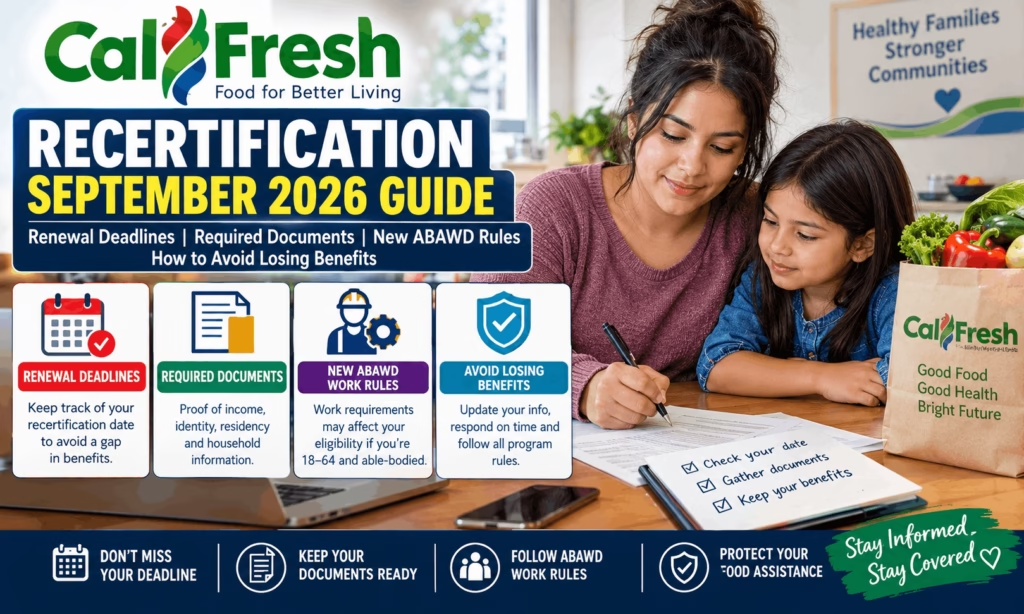
CalFresh Recertification September 2026 Key Highlights
| Item | Details |
|---|---|
| Who this affects | Households with a certification period ending September 2026 |
| Recertification packet mailed | Approximately 60 to 90 days before expiration, typically in July for a September deadline |
| Deadline to submit | By the 15th day of the final month of the certification period |
| Form required | CF 37, Recertification for CalFresh Benefits |
| New rule this cycle | ABAWD work requirement screening applies at recertification starting June 1, 2026 |
| Where to submit | BenefitsCal.com, by mail, or in person at the county office |
| Grace period after missed deadline | Up to 30 days after the SAR7/certification period ends without a full new application |
| Income limits in effect | 200% of Federal Poverty Level, effective October 1, 2025 through September 30, 2026 |
Why the September Deadline Matters More This Cycle?
Every household on a standard 12-month certification cycle has been through this process before, but CalFresh Recertification September 2026 carries more consequence than a routine renewal because of federal changes rolled out earlier this year under H.R. 1, commonly referred to as the One Big Beautiful Bill. Starting June 1, 2026, California began screening CalFresh recipients for Able-Bodied Adults Without Dependents, or ABAWD, work requirements at their next recertification, rather than only at initial application. That means anyone whose certification period lands in September and who falls into the 18 to 64 age range without a qualifying exemption will be screened for the first time during this specific renewal, even if they were never subject to work rules before.
Households should also know that California implemented a fixed statewide ABAWD clock running from January 1, 2026, through December 31, 2028. Anyone found subject to the work requirement and unable to show 20 hours per week of qualifying work, training, or volunteer activity is generally limited to three months of benefits within that 36-month window unless they secure a documented exemption. Getting ahead of this screening before the recertification interview, rather than being caught off guard during it, is the single most important preparation step for households this month.
CalFresh Recertification Deadline September 2026
The recertification cycle follows a predictable sequence set by state regulation. About 60 to 90 days before a household’s certification period ends, CDSS mails a Notice of Expiration along with the CF 37 recertification form. For a household whose certification ends in September 2026, that notice should have already arrived in July. The household must sign, date, and return the completed application, and complete a required interview, before the last day of the certification period. In practice, most counties set the working deadline as the 15th of the final benefit month to leave enough processing time to avoid an interruption in EBT deposits.
Households that submit their CF 37 after the 15th, or whose county cannot finish processing before the certification period ends, risk a gap in benefits even if they are found fully eligible once the case is processed. If a household otherwise qualified and simply turned the paperwork in late, most counties will issue benefits retroactive to the first of the new month once processing is complete, though this creates unnecessary stress and delayed access to food assistance in the meantime.
SSA Ticket to Work Program: How Disability Beneficiaries Can Return to Work Without Losing Benefits
SSA Strategic Plan FY2026-2030: New Goals, Wait Times & Service Targets
SSI Address Change Service Enhancements: SSA’s New Fast-Track Process Explained
IRS Confirms Payments of Up to $8,231: Who Qualifies for the EITC in 2026
Documents Need for CalFresh Recertification 2026
Unlike some renewal steps, recertification is not automatic and does require a fresh look at the household’s full financial and household picture. While CDSS notes that documentation is not always mandatory to submit alongside the CF 37, providing it upfront meaningfully speeds up processing and reduces the chance of a request for additional proof mid-review. Households preparing for September should gather:
Proof of identity for the head of household, such as a driver’s license, state ID, or passport. Proof of income for every working household member, including recent pay stubs, a self-employment ledger, or an award letter for Social Security, SSI, unemployment, or disability benefits. Proof of California residency, such as a utility bill or lease agreement. Proof of any shelter costs being claimed as a deduction, including rent or mortgage statements and utility bills. Documentation of childcare or dependent care expenses if applicable. For anyone subject to the new ABAWD screening, proof of qualifying work hours, enrollment in an approved education or training program, or documentation supporting a claimed exemption such as pregnancy, a medical condition, or caregiving responsibility for a child under 14.
All submitted documentation must show the applicant’s full legal name to be accepted, and mismatched names on paperwork are one of the more common reasons a county requests resubmission.
How to Apply for CalFresh Recertification 2026?
The fastest and most reliable way to complete a September recertification is through BenefitsCal, California’s statewide online portal. Households log into their account, locate the Things to Do section on the dashboard, and select Start Your Recertification once the option appears. The online system walks through a Recertification Summary page broken into sections covering household composition, income, expenses, and any changes since the last certification, and it allows documents to be uploaded directly from a phone or computer. Once every section is complete, the household reviews a summary screen, signs electronically by typing their name and checking a confirmation box, and submits, receiving an immediate confirmation receipt.
Households that prefer paper can still complete the CF 37 mailed with their notice and return it by mail to their county social services office, though mailed forms carry a higher risk of delay or loss compared to submitting online. A limited number of counties also accept in-person drop-off or scheduled office appointments for households needing extra help completing the form or gathering documentation.
Processing Time After Submission
Once a completed CF 37 is submitted, the county generally schedules a recertification interview, which can happen by phone in most counties rather than requiring an in-person visit. Processing typically completes within the remaining days of the certification period when the form is submitted on time and with reasonably complete documentation, allowing benefits to continue without interruption into the next certification cycle. When documentation is incomplete or a household is being screened for the new ABAWD work rules for the first time, processing can take longer while the county requests and reviews additional verification. Households that miss the SAR7 or certification deadline generally have up to 30 days after the due date to submit late paperwork before being required to file an entirely new application from scratch, which resets the process and can create a longer gap in benefits.
IRCC Tightens Citizenship by Descent: What the New 1,095-Day Presence Test Rules Mean for Applicants
September 2026 Refund Payments: All the Real Deposits You Could Actually Get This Month
Social Security Proposals in Congress: What Changes Could Affect Your SSI and SSDI Benefits
What Happens If You Miss Your Deadline
Failing to submit a completed and signed recertification before the end of the certification period results in CalFresh benefits being discontinued, and the household must reapply as a new applicant rather than simply resuming an existing case. This is one of the most common and preventable reasons households experience a sudden interruption in food assistance, often triggered by something as simple as a missed notice because of an outdated mailing address. Reporting an address change within 10 days of moving is one of the required changes every CalFresh household must report, and it is frequently the difference between receiving a recertification notice on time and missing it entirely.
If a household submits its recertification after the deadline but within the short grace window most counties allow, and is found eligible, benefits are typically issued retroactively to the first of the month once the case is processed, rather than starting fresh from the processing date. Households that miss even that grace window must submit a brand new CalFresh application and may experience a longer gap before benefits resume, along with needing to meet current eligibility standards under the income limits in effect for federal fiscal year 2026.
Income Limits and Eligibility for the Current Certification Cycle
The income standards used during any September 2026 recertification reflect the figures effective October 1, 2025 through September 30, 2026. A single-person household must have gross monthly income at or below $2,610 and net monthly income at or below $1,305 to qualify, with the gross income limit rising by household size, up to $5,360 for a household of four and $6,276 for a household of five, plus additional amounts for each further member. These figures represent 200 percent of the federal poverty level, which is higher than the standard federal SNAP threshold because California uses Broad Based Categorical Eligibility to extend coverage to more low and moderate income households. Households with a member who is elderly, age 60 or older, or has a disability are evaluated against the net income limit rather than the gross income limit, and may qualify for additional medical expense deductions not available to other households.
The New ABAWD Work Rule and What It Means at Recertification
This is the change generating the most questions this cycle, and it deserves plain explanation. Able-Bodied Adults Without Dependents are CalFresh recipients between ages 18 and 64 who are physically and mentally able to work and do not have a dependent child in the household. Under the time limit rule, an ABAWD who does not meet a work or training requirement, and does not qualify for an exemption, can receive only three months of CalFresh benefits within a fixed 36-month period. The federal One Big Beautiful Bill expanded who counts as an ABAWD and removed several previous exemption categories, and California began applying the rule to new applications on June 1, 2026, with current recipients screened at their next recertification on or after that date rather than immediately.
To meet the work requirement, an ABAWD generally needs at least 20 hours per week, or roughly 80 hours per month, of qualifying activity, which can include paid work, an approved job training or education program, volunteering, or workfare. Recognized exemptions include being under 18 or over 64, being medically certified as unfit for work, caring for a child under 14 in the household, being pregnant, or living in one of the small number of California counties still covered by a temporary ABAWD waiver through October 31, 2026. Households recertifying in September whose members fall into the 18 to 64 range without an obvious exemption should expect the county to actively screen for this during the recertification interview, and providing documentation of work hours or an exemption basis upfront can prevent a processing delay.
Special Situations: Elderly, Disabled, and Shortened Certification Periods
Not every household follows the standard 12-month cycle, and September recertifications can look different depending on who is in the home. Households consisting only of elderly or disabled members with no earned income may be placed on certification periods as long as 24 or even 36 months, meaning a September deadline this year might not repeat again until 2027 or later for those households. Households with an elderly or disabled member but some earned income typically fall on a 24-month cycle instead. Any household consisting only of Supplemental Security Income applicants or recipients has the added option of applying for CalFresh recertification directly at a Social Security Administration office rather than only through the county, which can simplify the process for seniors already managing an SSI case there.
Households should also know that a Transitional Nutrition Benefit exists for certain SSI households moving between programs, and CDSS mails the relevant TNB Form 4 on a rolling basis tied to each household’s individual renewal month rather than a single fixed date. Anyone unsure which certification track applies to their household, or who receives a notice that looks unfamiliar compared to a standard CF 37, should call their county office directly rather than guessing, since submitting the wrong form or missing a program-specific requirement can cause the same kind of processing delay as a late submission.
Reporting Changes Between Now and Your Next Certification
Recertification is not the only point where a household’s information needs updating. Every CalFresh case has an Income Reporting Threshold, or IRT, listed on the household’s approval or renewal notice, and any household whose total monthly income rises above that threshold must report the change within 10 days of when the increase becomes known, regardless of where the household sits in its certification cycle. Households whose income stays below their IRT generally do not need to report the change until their next scheduled SAR7 or recertification. Address changes carry the same 10-day reporting window and matter just as much as income changes, since a missed recertification notice because of an outdated address remains one of the most common and entirely avoidable reasons households lose benefits. Keeping contact information current in BenefitsCal, including enabling email or text alerts where available, is one of the simplest steps a household can take to make sure this September’s notice, and every notice after it, actually reaches them on time.
Payment Schedule After Recertification Is Approved
Once a recertification is approved without a gap, CalFresh benefits continue to load onto the household’s existing EBT card according to the same staggered monthly issuance schedule already in place, based on the last digit of the case number, with no separate application needed for continued monthly deposits. Households that experienced a break in benefits because a recertification was submitted late will generally see their first post-approval deposit issued once processing completes, with any retroactive amount owed for the gap included if the household was found eligible for that period. There is no separate fee or payment required from the household to complete a recertification itself.
TPS Terminations 2026: Complete Tracker for Somalia, Ethiopia, South Sudan, Syria, Haiti, and Yemen
USCIS Ukraine TPS EAD Extension: Work Permits Automatically Extended Through October 19, 2026
BC PNP Entrepreneur Immigration Draw Invites 16 Business Candidates in Latest Round
Official Government Resources
| Resource | Official Link |
|---|---|
| BenefitsCal (apply, recertify, upload documents) | benefitscal.com |
| CDSS CalFresh program overview | cdss.ca.gov/food-nutrition/calfresh |
| CF 37 Recertification form | cdss.ca.gov/cdssweb/entres/forms/english/cf37.pdf |
| CalFresh income and eligibility limits FFY 2026 | cdss.ca.gov (CalFresh Outreach income charts) |
| CalFresh ABAWD work requirement information | cdss.ca.gov/inforesources/cdss-programs/calfresh/able-bodied-adults-without-dependents |
| County social services office locator | cdss.ca.gov/county-offices |
| CalFresh hotline | 1-877-847-3663 |
FAQs About CalFresh Recertification September 2026
When is my CalFresh recertification due in September 2026?
If your certification period ends in September 2026, your completed CF 37 and required interview generally need to be finished by the 15th day of September to avoid an interruption in benefits.
What documents do I need for CalFresh recertification?
You generally need proof of identity, proof of income for all working household members, proof of California residency, and proof of any shelter or dependent care expenses you are claiming as deductions, along with ABAWD work or exemption documentation if it applies to your household.
What happens if I miss my CalFresh recertification deadline?
Your benefits will be discontinued and you will need to submit a new application, though most counties allow roughly 30 days after the deadline to submit late paperwork before a full new application is required.
Do I need an interview for CalFresh recertification?
Yes, a recertification interview is required in most cases, though many counties conduct it by phone rather than requiring an in-person office visit.
Are ABAWD work rules new for September 2026?
The federal rule itself took effect June 1, 2026, but many CalFresh recipients are being screened for it for the first time only when their individual recertification comes due, which for some households falls in September 2026.
Can I complete my recertification online?
Yes, BenefitsCal allows you to complete the entire recertification process online, including document upload and electronic signature, from a phone or computer.
How do I check the status of my recertification?
You can check your recertification status and deadline directly on your BenefitsCal dashboard under the Things to Do section, or by calling your county social services office.
H-1B Spouse Work Permit at Risk: How Trump’s Latest Move Could Cut Family Incomes in Half
80% to 100% VA Disability: Why the Final Jump Is the Hardest One Veterans Face
FY2027 Government Shutdown Risk: Congress Races the September 30 Funding Cliff
People Also Ask
How often do you have to recertify for CalFresh?
Most CalFresh households recertify annually, though households with only elderly or disabled members and no earned income may be certified for up to 36 months before recertification is required again.
What is the difference between SAR7 and recertification?
The SAR7 is a shorter Semi-Annual Report due at the six month mark of a certification period, while recertification is a full review of income, household composition, and expenses required at the end of the full 12-month cycle.
Can I still get CalFresh if I lose my job?
Yes, losing a job or having income decrease can make a household newly eligible or eligible for a higher benefit amount, and this should be reported to the county as soon as possible rather than waiting for the next scheduled report.
What counts as income for CalFresh?
Countable income generally includes wages, self-employment earnings, Social Security, SSI, unemployment benefits, and most other regular sources of money coming into the household, before certain allowable deductions are applied.
Will I lose CalFresh if I do not meet ABAWD work requirements?
An ABAWD who does not meet the 20 hour per week work or training requirement and does not qualify for an exemption is generally limited to three months of CalFresh benefits within a 36-month period.
Conclusion
CalFresh Recertification September 2026 carries higher stakes than a typical renewal cycle because it is one of the first full months where the new federal ABAWD work screening is actively applied at recertification for households that were never previously subject to it. Households whose certification period ends this month should confirm their CF 37 has been received, gather income and residency documentation early, and be prepared to discuss work hours or an exemption basis if any household member falls between ages 18 and 64. Submitting through BenefitsCal remains the fastest way to avoid a processing delay, and reporting an address change immediately remains one of the simplest ways to make sure the recertification notice actually arrives in the first place. We will keep updating this guide every month as CDSS and individual counties confirm new deadlines, income limits, and work requirement details heading into the rest of federal fiscal year 2026.
Florida Minimum Wage Reaches $15/Hour: The Final Step of a Six-Year Countdown Arrives September 30
IRS Seize Bank Accounts, Vehicles and Property From Taxpayers Who Ignore This Final Notice
Manitoba EIA Payment and CDB Exemption: What Changes and What Stays Protected in 2026