IRS Seize Bank Accounts, Vehicles and Property From Taxpayers: A headline spreading across social media and finance sites this week claims the IRS confirmed it will nationwide seize the bank accounts, vehicles, properties, and all the assets of people who have postponed dealing with their tax debt. The framing sounds like a brand new nationwide crackdown, but the underlying process it describes is not new at all. It is the IRS’s long-standing legal collection tool known as a levy, and the agency has always had this authority once a taxpayer ignores a Final Notice of Intent to Levy. What has changed is how loudly this routine enforcement step is being reported right now, as unresolved tax debt climbs and the IRS leans harder on automated collection to work through its backlog. We’ll be updating this article monthly as new IRS collection data and notice figures become available.
Here is what taxpayers actually need to know. The IRS asset seizure power described in the viral claim is real, but it only applies to people with an unresolved tax debt who received repeated warning notices and did not respond, appeal, or set up a payment arrangement. It is not a blanket nationwide action against anyone who has simply postponed an unrelated task, and it does not happen without notice. This guide separates the confirmed facts from the exaggeration, walks through exactly how the Final Notice of Intent to Levy works, and explains the concrete steps that stop a levy before it starts.
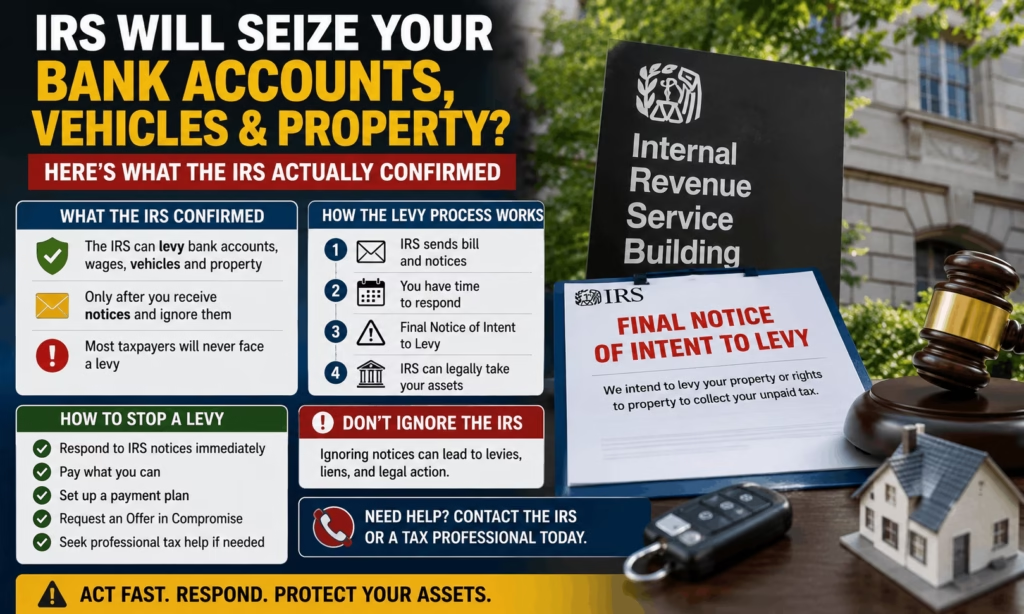
IRS Seize Bank Accounts, Vehicles and Property Key Highlights
| Topic | Confirmed Detail |
|---|---|
| Claim being spread | IRS will nationwide seize bank accounts, vehicles, property and assets of people who postponed this procedure |
| What is actually true | The IRS has always had levy authority under existing tax law once a Final Notice of Intent to Levy goes unanswered |
| Trigger notice | CP90, Letter 1058, LT11, or CP297, all titled Final Notice of Intent to Levy and Notice of Your Right to a Hearing |
| Response window | 30 days from the notice date to request a Collection Due Process hearing using Form 12153 |
| Assets that can be levied | Bank accounts, wages, vehicles, real estate, retirement accounts, Social Security benefits, state tax refunds, business receivables |
| 2026 exempt household property limit | $11,980 under Internal Revenue Code Section 6334(a)(2) |
| 2026 exempt tools of trade limit | $5,990 under Internal Revenue Code Section 6334(a)(3) |
| 2026 minimum wage exemption threshold | $5,300 annually before wage garnishment applies under Section 6334(d) |
| Enforcement system used | Automated Collection System, which can also route levies through the Federal Payment Levy Program |
| How to stop it | Pay in full, set up an installment agreement, request Currently Not Collectible status, file an Offer in Compromise, or request a CDP hearing within 30 days |
What the IRS Actually Confirmed?
The claim circulating online is built around a real IRS enforcement mechanism, but it overstates both the scope and the novelty of it. The IRS has not announced a new nationwide seizure campaign aimed at everyone who has fallen behind on any government process. What it has reaffirmed, through its own published guidance and taxpayer notices, is that the levy process described in Internal Revenue Code Section 6331 remains active and is being used against taxpayers who owe back taxes and have ignored the agency’s final warning.
A levy is different from a lien. A tax lien is simply the government’s legal claim against a taxpayer’s property when a debt goes unpaid, and it does not by itself take anything away. A levy is the actual seizure, whether that means draining a bank account, garnishing wages, or physically taking and selling a car, boat, or piece of real estate. The IRS has held this authority for decades, and nothing about the underlying law changed this year. What has intensified is the pace at which the agency is issuing final notices as it works through a larger backlog of unresolved accounts built up over the past several filing seasons.
Manitoba EIA Payment and CDB Exemption: What Changes and What Stays Protected in 2026
The Final Notice of Intent to Levy Explained
Before any levy can happen, the law requires the IRS to walk through a defined sequence of steps, and the Final Notice of Intent to Levy is the last one before enforcement begins.
How the Process Unfolds
- The IRS assesses a tax debt after processing a return or an audit adjustment, and sends an initial bill.
- If the balance goes unpaid, the IRS sends a series of escalating reminder notices, commonly labeled CP501, CP503, and CP504.
- CP504 warns that the IRS may seize a state tax refund and signals that further collection action is coming.
- If the debt is still unresolved, the IRS sends the Final Notice of Intent to Levy, which arrives as CP90, CP297, Letter 1058, or LT11, depending on the type of debt and whether a business or individual is involved.
- This final notice also includes a Notice of Your Right to a Hearing, giving the taxpayer 30 days from the date on the notice to request a Collection Due Process hearing using Form 12153.
- If the 30-day window passes with no request filed and no resolution reached, the IRS may proceed with the levy, which can include freezing a bank account, garnishing wages, or seizing physical property.
A taxpayer who requests a CDP hearing within the 30-day window generally pauses further collection action on that tax period while the hearing is pending, and preserves the right to later petition the US Tax Court if they disagree with the outcome. Missing that window does not end every option, but it does remove the automatic pause and the formal appeal rights that come with a timely request.
What Assets the IRS Can and Cannot Take?
The viral claim lists bank accounts, vehicles, and properties as targets, and all three are accurate categories the IRS can pursue once a levy is in effect. The IRS’s own guidance confirms it can levy wages, bank accounts, business assets, personal assets including a car or home, retirement accounts such as a Thrift Savings Plan balance, state tax refunds, rental income, accounts receivable, and even Social Security benefits up to the amount owed.
However, federal law also protects a specific list of property from levy under Internal Revenue Code Section 6334, and these protections are frequently left out of the viral version of this story.
Property Exempt From Levy 2026
| Protected Category | 2026 Limit or Rule |
|---|---|
| Household fuel, provisions, furniture, and personal effects | Exempt up to $11,980 in value |
| Books and tools necessary for a trade, business, or profession | Exempt up to $5,990 in value |
| Wearing apparel and school books necessary for the taxpayer or family | Fully exempt regardless of value |
| Unemployment benefits | Fully exempt |
| Certain judgments for child support | Exempt to the extent required by the court order |
| Minimum wage, salary, or other income | Exempt amount tied to $5,300 in annual deductions before garnishment applies |
| Primary residence in small-deficiency cases | Exempt if the levy amount is $5,000 or less |
| Principal residence in larger cases | Requires a federal district court judge’s written approval before seizure |
Seizing a family’s primary home is treated as a last resort under IRS internal procedures, and it generally requires written approval from a federal judge, not just an internal agency decision. This detail is one of the biggest gaps between the alarming version of the claim spreading online and the actual legal process taxpayers face.
Florida Minimum Wage Reaches $15/Hour: The Final Step of a Six-Year Countdown Arrives September 30
FY2027 Government Shutdown Risk: Congress Races the September 30 Funding Cliff
How to Apply for Relief Before a Levy Happens?
Taxpayers who receive a Final Notice of Intent to Levy are not without options, and the IRS actively encourages resolving the debt before enforcement begins.
Steps to Respond
- Read the notice carefully and confirm the deadline printed on it, since the 30-day clock starts from the date on the letter, not the date it is opened.
- Decide whether to pay the balance in full if possible, which immediately stops further collection action.
- If full payment is not possible, apply for an IRS installment agreement, which allows monthly payments toward the balance while collection activity is paused.
- If income and expenses show the debt genuinely cannot be paid right now, request Currently Not Collectible status, which temporarily suspends collection without erasing the debt.
- For taxpayers who may be able to settle for less than the full balance, consider filing an Offer in Compromise, which the IRS evaluates based on ability to pay, income, expenses, and asset equity.
- To formally contest the levy or negotiate terms with an independent reviewer, file Form 12153 to request a Collection Due Process hearing within the 30-day window.
- Taxpayers who qualify for free assistance, particularly those with lower incomes, can contact a Low Income Taxpayer Clinic or the Taxpayer Advocate Service for help navigating the notice.
Processing Time for Levy Relief Requests
Response times vary depending on which option a taxpayer chooses. A Collection Due Process hearing request filed on time generally pauses levy action while the case is assigned and reviewed by the IRS Independent Office of Appeals, though wait times for an assigned hearing officer can run from several weeks to a few months depending on current caseloads. Installment agreement requests submitted online through the IRS’s payment plan tool are often approved within minutes for straightforward balances under certain thresholds, while more complex agreements involving higher balances or business debt can take several weeks of review. Offers in Compromise typically take several months to a year for a full determination, since the IRS evaluates detailed financial disclosures before accepting, rejecting, or countering an offer.
Payment Schedule Options Once a Resolution Is in Place
| Resolution Type | Typical Payment Schedule |
|---|---|
| Full payment | One-time payment, collection stops immediately |
| Short-term payment plan | Balance paid within 180 days, no formal installment agreement fee |
| Long-term installment agreement | Monthly payments, generally over a period of up to 72 months depending on balance |
| Currently Not Collectible status | No required payments while status is active, though interest and penalties continue to accrue |
| Offer in Compromise, lump sum | One payment or up to five payments within five months of acceptance |
| Offer in Compromise, periodic payment | Monthly payments over the remaining life of the collection statute while the offer is under review |
Why This Story Is Spreading Now
Two ordinary factors explain why a decades-old IRS power is suddenly framed as breaking news. First, the IRS has been working through a larger-than-usual backlog of unresolved accounts this year, a byproduct of staffing reductions and two separate government funding lapses that slowed correspondence and case review earlier in 2026. As the backlog clears, more Final Notices of Intent to Levy are going out in a shorter window than usual, which naturally increases how often taxpayers and tax professionals encounter and discuss CP90 notices. Second, financial content sites frequently repackage standard IRS collection procedures using dramatic, urgent headlines because that framing performs well in search and social feeds, even when the underlying process has not changed. Readers should treat any headline claiming a brand new nationwide seizure order with caution and check the notice type and date on their own account before assuming a new policy is in effect.
80% to 100% VA Disability: Why the Final Jump Is the Hardest One Veterans Face
H-1B Spouse Work Permit at Risk: How Trump’s Latest Move Could Cut Family Incomes in Half
What Happens After a Levy Is Issued?
Understanding what comes after a levy notice takes effect helps explain why acting during the 30-day window matters so much. Once a bank levy is served, the bank is required to hold the funds in the account for a waiting period, typically 21 days, before sending the money to the IRS. That waiting period exists specifically so a taxpayer has one final chance to contact the IRS, prove a hardship, or reach an agreement before the funds are actually transferred. This detail is frequently missing from viral versions of this story, which tend to describe a levy as instant and irreversible the moment it happens.
For wage garnishment, the process works differently. Rather than a one-time freeze, the IRS sends a continuous levy to an employer, and a portion of each paycheck is withheld and sent to the IRS until the debt is paid, released, or otherwise resolved. Because this type of levy stays in place until the IRS formally releases it, taxpayers facing wage garnishment often need to actively negotiate a resolution rather than wait for the levy to expire on its own.
Physical property seizures, such as a vehicle or business equipment, follow yet another track. The IRS must provide written notice of the seizure, generally allow a period for the taxpayer to redeem certain property before sale, and follow specific public notice requirements before an asset is auctioned. These procedural safeguards are part of why the IRS itself describes property seizure as rare compared with bank levies and wage garnishments, which are far more common because they do not require the same logistical steps.
How to Tell if a Notice You Received Is Legitimate
Because this topic is trending, scammers have also started sending fake letters designed to look like a Final Notice of Intent to Levy in order to pressure people into wiring money or sharing bank details. A few checks can help confirm whether a notice is genuine. Legitimate IRS notices always include a notice number in the corner, such as CP90 or CP504, along with a taxpayer’s partially masked Social Security number and a specific dollar amount owed. The IRS will never demand immediate payment over the phone using gift cards, wire transfers, or cryptocurrency, and it will never threaten immediate arrest for failing to pay. Anyone who receives a notice that feels rushed, threatening, or unusually informal should log into their own IRS Online Account directly at irs.gov to confirm whether a balance and notice actually exist on file, rather than calling any phone number printed on the letter itself.
Official Resources Table
| Resource | Purpose | Link |
|---|---|---|
| Understanding Your CP90 Notice | Official explanation of the Final Notice of Intent to Levy | irs.gov/individuals/understanding-your-cp90-notice |
| Form 12153, Request for a Collection Due Process Hearing | File to appeal and pause a levy within 30 days | irs.gov/forms-pubs/about-form-12153 |
| Levy and Seizure of Assets, Taxpayer Advocate Service | Plain-language roadmap of the levy process and taxpayer rights | taxpayeradvocate.irs.gov/notices/levy-seizure-of-assets |
| IRS Online Payment Agreement Tool | Apply for an installment agreement | irs.gov/payments/online-payment-agreement-application |
| Offer in Compromise Pre-Qualifier | Check eligibility to settle a tax debt for less than owed | irs.gov/payments/offer-in-compromise |
| Low Income Taxpayer Clinics | Free or reduced-cost help for qualifying taxpayers facing collection | irs.gov/individuals/low-income-taxpayer-clinics |
| IRS Online Account | View notices, balances, and payment history | irs.gov/account |
$150 Canada Disability Benefit Top-Up: What the New September 2026 Payment Means for You
FAQs
Did the IRS really confirm it will seize bank accounts and property nationwide?
The IRS confirmed that its existing levy authority remains active for taxpayers with unresolved tax debt who ignore a Final Notice of Intent to Levy. It did not announce a new nationwide seizure campaign targeting the general public.
What notice will I receive before the IRS levies my assets?
You will receive a Final Notice of Intent to Levy, which arrives as CP90, CP297, Letter 1058, or LT11, and it gives you 30 days to request a Collection Due Process hearing.
Can the IRS take my house?
Seizing a primary residence is treated as a last resort and generally requires written approval from a federal district court judge, except in small-deficiency cases where the levy amount is $5,000 or less.
How much of my wages can the IRS garnish?
A portion of wages remains exempt from levy based on filing status and dependents, with the 2026 exempt amount tied to $5,300 in annual deductions before garnishment applies to the remainder.
How do I stop an IRS levy before it happens?
Pay the balance in full, set up an installment agreement, request Currently Not Collectible status, file an Offer in Compromise, or submit Form 12153 within 30 days of the Final Notice of Intent to Levy.
Does the IRS give any warning before freezing a bank account?
Yes. A bank levy only follows the CP501, CP503, CP504, and Final Notice of Intent to Levy sequence, giving the taxpayer multiple opportunities to respond before funds are taken.
What happens if I miss the 30-day deadline on my Final Notice of Intent to Levy?
The IRS may proceed with the levy, and while a taxpayer can still request an equivalent hearing later, it does not pause collection or preserve the right to petition the Tax Court the way a timely request does.
Is this claim a scam?
The underlying legal process is real, but the viral framing exaggerates it into a new nationwide policy. Anyone unsure about a specific notice should verify it through their own IRS Online Account rather than relying on a social media headline.
People Also Ask
Can the IRS take money directly from my bank account? Yes, through a bank levy, the IRS can order a bank to freeze and eventually turn over funds in an account to satisfy an unpaid tax debt, but only after the required notice sequence has been completed.
How long does the IRS have to wait before seizing property? The IRS must generally wait at least 30 days after a Final Notice of Intent to Levy before enforcing a levy, giving the taxpayer time to request a hearing or resolve the debt.
What is the difference between an IRS lien and an IRS levy? A lien is a legal claim against your property that does not itself take anything, while a levy is the actual seizure of money or property to satisfy a tax debt.
Can the IRS seize my car for unpaid taxes? Yes, a vehicle can be seized and sold at auction as a last resort if a tax debt remains unresolved after the required notices and hearing rights have been exhausted.
What should I do if I receive a Final Notice of Intent to Levy? Read the deadline on the notice, decide whether you can pay in full, and if not, apply for a payment plan or file Form 12153 within 30 days to request a Collection Due Process hearing.
Conclusion
The claim that the IRS confirmed a nationwide seizure of bank accounts, vehicles, and property is rooted in a real and long-standing enforcement tool, but the dramatic framing overstates what actually changed. Nothing new gives the IRS broader seizure power this year. What remains true, and what every taxpayer with an unresolved balance should take seriously, is that ignoring a Final Notice of Intent to Levy for 30 days does open the door to a levy on wages, bank accounts, or property. The safest response to any notice like this is the same one that has always worked: read the deadline, respond before it passes, and use one of the IRS’s established relief options rather than waiting until enforcement has already begun.
2027 VA Disability COLA Increase: How Much Could Benefits Rise Under the Latest Projection
$1000 Trump Account Deposit 2026 Eligibility & Form 4547 Guide