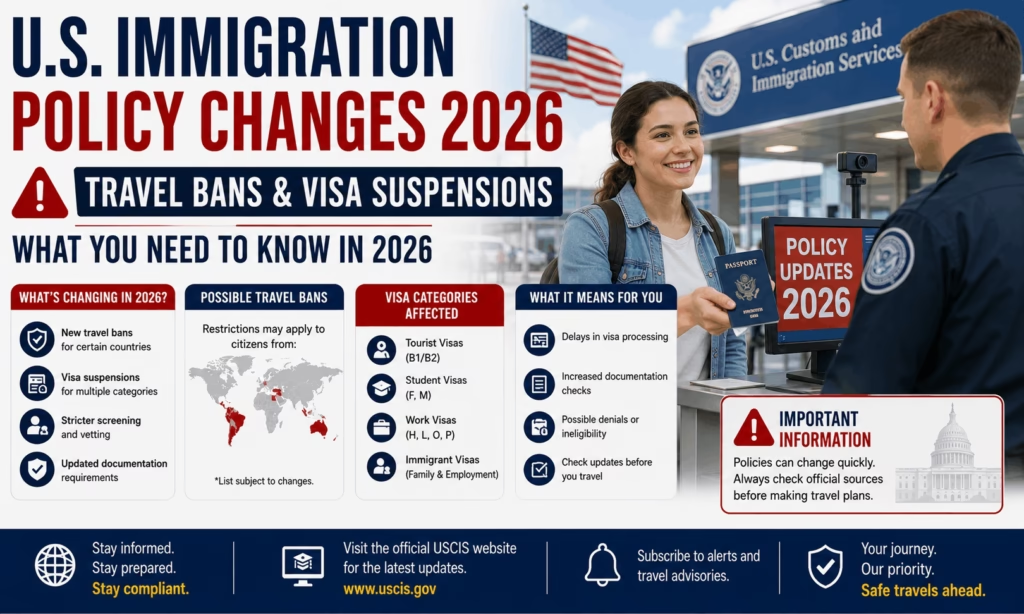
The US Visa Bulletin September 2026 landed with a warning attached. The State Department confirmed that final action dates for the employment-based categories are holding steady from August, but it flagged that EB-1 India, EB-2 for all countries, and the unreserved EB-5 category could become unavailable entirely before the fiscal year closes on September 30, 2026, if demand keeps pace with the numbers being used. For applicants tracking a green card priority date, that single sentence buried in the bulletin’s fine print matters more than almost anything else in this month’s release.
Family-sponsored applicants got better news. Several family categories moved forward meaningfully this month, with the F1 category advancing roughly seven and a half months, F2B moving about eight months, F3 jumping nearly 20 months, and F4 pushing forward more than 16 months for most countries. USCIS confirmed that family-sponsored applicants filing adjustment of status inside the United States should use the more generous Dates for Filing chart in September, while employment-based applicants must use the stricter Final Action Dates chart. We will be updating this article monthly as the Department of State and USCIS confirm new cutoff dates and category movement heading into fiscal year 2027. This guide breaks down every family-sponsored and employment-based category in this month’s bulletin, explains which chart applies to your case, walks through what the EB-1 India and EB-2 unavailability warning actually means for pending applicants, and covers how to apply, how long processing typically takes, and where to check your case status directly through official government resources.

US Visa Bulletin September 2026 Key Highlights
| Category | September 2026 Status | What Changed |
|---|---|---|
| Family-sponsored (Dates for Filing) | F1, F2B, F3, F4 advance significantly for most countries | Meaningful forward movement across nearly all categories |
| Family-sponsored (Final Action Dates) | F2A remains current worldwide except Mexico’s exempt numbers | Small movement in F1, F3, F4 final action dates |
| Employment-based (Final Action Dates) | Unchanged from August across EB-1, EB-2, EB-3, EB-5 | No forward or backward movement this month |
| EB-2 India | Remains unavailable (marked U) | State Department warns of continued unavailability risk |
| EB-1 India, EB-2 worldwide, EB-5 Unreserved | Currently open but at risk | May become unavailable before September 30, 2026 |
| USCIS chart guidance | Family: Dates for Filing. Employment: Final Action Dates | Confirmed by USCIS for the September 2026 filing period |
| Diversity Visa (DV-2026) | Final month of eligibility | All DV-2026 status ends September 30, 2026 |
Which Chart Should You Use This Month
This is the single most important US Visa Bulletin September 2026 question, and it trips up more applicants than any other part of the bulletin. USCIS confirmed that for September 2026, all family-sponsored preference categories should use the Dates for Filing chart to determine when an adjustment of status application can be submitted, while all employment-based preference categories must use the stricter Final Action Dates chart instead. This distinction matters enormously. The Dates for Filing chart is generally more generous, allowing applicants to submit paperwork earlier even though final approval still depends on a visa number becoming available later. The Final Action Dates chart, by contrast, only allows filing once a visa number is actually ready to be issued. Applicants filing from outside the United States through consular processing always follow the Final Action Dates chart regardless of what USCIS decides for domestic adjustment of status filers.
SSA Ticket to Work Program: How Disability Beneficiaries Can Return to Work Without Losing Benefits
SSA Strategic Plan FY2026-2030: New Goals, Wait Times & Service Targets
SSI Address Change Service Enhancements: SSA’s New Fast-Track Process Explained
IRS Confirms Payments of Up to $8,231: Who Qualifies for the EITC in 2026
Family-Sponsored Final Action Dates for September 2026
The Final Action Dates chart determines when a family-based immigrant visa can actually be approved and issued, whether the applicant is filing through consular processing abroad or has already reached the final approval stage domestically.
| Category | All Chargeability Areas | China (mainland) | India | Mexico | Philippines |
|---|---|---|---|---|---|
| F1 (unmarried sons/daughters of US citizens) | January 22, 2020 | January 22, 2020 | January 22, 2020 | January 1, 2008 | May 1, 2013 |
| F2A (spouses/children of permanent residents) | August 22, 2026 | August 22, 2026 | August 22, 2026 | August 22, 2025 | August 22, 2026 |
| F2B (unmarried sons/daughters 21+, of permanent residents) | August 22, 2019 | August 22, 2019 | August 22, 2019 | February 15, 2009 | June 1, 2013 |
| F3 (married sons/daughters of US citizens) | October 22, 2014 | October 22, 2014 | October 22, 2014 | July 1, 2001 | February 22, 2006 |
| F4 (siblings of adult US citizens) | October 22, 2011 | October 22, 2011 | November 1, 2006 | April 8, 2001 | August 22, 2007 |
For F2A specifically, numbers exempt from the per-country limit are authorized for applicants from all countries with priority dates earlier than August 22, 2025, while F2A numbers subject to the per-country limit apply to applicants from every country except Mexico, with priority dates between August 22, 2025 and August 22, 2026.
Family-Sponsored Dates for Filing September 2026
This is the chart USCIS confirmed family-based applicants inside the United States should use this month to submit Form I-485.
| Category | All Chargeability Areas | China (mainland) | India | Mexico | Philippines |
|---|---|---|---|---|---|
| F1 | February 1, 2020 | February 1, 2020 | February 1, 2020 | December 1, 2008 | April 22, 2015 |
| F2A | Current | Current | Current | Current | Current |
| F2B | September 1, 2019 | September 1, 2019 | September 1, 2019 | May 15, 2010 | October 1, 2013 |
| F3 | November 1, 2014 | November 1, 2014 | November 1, 2014 | July 15, 2001 | August 8, 2006 |
| F4 | November 1, 2011 | November 1, 2011 | December 15, 2006 | April 30, 2001 | March 22, 2008 |
Employment-Based Final Action Dates September 2026
Employment-based applicants filing adjustment of status inside the United States this month must use this Final Action Dates chart, since USCIS did not authorize the more generous Dates for Filing chart for employment categories in September.
| Category | All Chargeability Areas | China (mainland) | India | Mexico | Philippines |
|---|---|---|---|---|---|
| EB-1 (priority workers) | Current | July 1, 2023 | October 15, 2022 | Current | Current |
| EB-2 (advanced degree/exceptional ability) | Current | September 1, 2021 | Unavailable | Current | Current |
| EB-3 (skilled workers/professionals) | September 1, 2024 | January 1, 2022 | January 1, 2014 | September 1, 2024 | August 1, 2023 |
| EB-3 Other Workers | April 1, 2022 | May 1, 2019 | January 1, 2014 | April 1, 2022 | December 1, 2021 |
| EB-4 (certain special immigrants) | December 15, 2022 | December 15, 2022 | December 15, 2022 | December 15, 2022 | December 15, 2022 |
| EB-5 Unreserved | Current | December 1, 2016 | Unavailable | Current | Current |
| EB-5 Rural, High Unemployment, Infrastructure set-asides | Current | Current | Current | Current | Current |
Employment-Based Dates for Filing September 2026
Even though USCIS is not using this chart for domestic employment-based filings in September, it remains relevant for consular processing planning and for tracking how much room exists ahead of the Final Action Dates.
| Category | All Chargeability Areas | China (mainland) | India | Mexico | Philippines |
|---|---|---|---|---|---|
| EB-1 | Current | December 1, 2023 | December 1, 2023 | Current | Current |
| EB-2 | Current | January 1, 2022 | January 15, 2015 | Current | Current |
| EB-3 | Current | January 8, 2022 | January 15, 2015 | Current | January 1, 2024 |
| EB-3 Other Workers | August 1, 2022 | October 1, 2019 | January 15, 2015 | August 1, 2022 | August 1, 2022 |
| EB-4 | January 1, 2023 | January 1, 2023 | January 1, 2023 | January 1, 2023 | January 1, 2023 |
| EB-5 Unreserved | Current | March 1, 2017 | May 1, 2024 | Current | Current |
Why EB-1 India, EB-2 Worldwide, and EB-5 Unreserved Could Close Before September 30
This is the development driving most of this month’s attention, and it is worth explaining plainly rather than burying it in legal language. The State Department’s own bulletin text warns that high demand and heavy number use in the EB-1 India category may force it to become entirely unavailable in the coming weeks if India’s prorated annual limit is reached before the fiscal year ends on September 30, 2026. If that happens, no further EB-1 India approvals would occur until new numbers open up under the FY2027 allocation on October 1, 2026.
The same warning applies to EB-2 across all countries, not just India, where sufficient demand and increased number use could force the category to retrogress its final action date or become unavailable entirely before year end. EB-2 India is already marked unavailable this month, a status that has persisted for some time, and the bulletin notes that increased demand elsewhere could tighten availability further for other countries in EB-2 as well.
The unreserved portion of EB-5, the investor visa category, carries an identical warning. Sufficient demand and number use could force retrogression or full unavailability before the fiscal year closes. The State Department attributes part of this year’s tighter movement to reduced immigrant visa issuance rates for nationals of certain countries, tied to recent presidential proclamations restricting entry for national security and public safety reasons, along with processing slowdowns tied to those same policy changes. To offset that reduced usage elsewhere, dates for filing and final action dates were advanced across several categories earlier in the fiscal year, which is part of why some categories now face a real risk of hitting their annual ceiling before September 30.
IRCC Tightens Citizenship by Descent: What the New 1,095-Day Presence Test Rules Mean for Applicants
September 2026 Refund Payments: All the Real Deposits You Could Actually Get This Month
Social Security Proposals in Congress: What Changes Could Affect Your SSI and SSDI Benefits
Diversity Visa (DV-2026) Deadline
September marks the final month of eligibility for the DV-2026 diversity visa lottery. All DV-2026 status, including for spouses and children accompanying or following to join a principal applicant, expires permanently on September 30, 2026, regardless of whether visa numbers remain available. The annual DV-2026 limit was reduced to approximately 52,101 after required deductions tied to the Nicaraguan and Central American Relief Act and the National Defense Authorization Act. Applicants should not assume their allocation cutoff number guarantees a visa through the end of the month, since regional numbers can be exhausted before September 30.
How to Apply Based on the Visa Bulletin
Applicants already inside the United States who are eligible to adjust status file Form I-485 with USCIS once their priority date meets the applicable chart described above. Family-sponsored filers use the Dates for Filing chart this month, while employment-based filers must use the Final Action Dates chart. Applicants outside the United States go through consular processing instead, working with the National Visa Center once their priority date becomes current on the Final Action Dates chart, regardless of which chart USCIS is using domestically that month. The National Visa Center will contact documentarily qualified applicants directly to begin assembling required civil documents once their case is ready to move forward.
Processing Time After Filing
Once a Form I-485 adjustment of status application or an immigrant visa application through the National Visa Center is filed, processing timelines vary widely by service center, consulate, and category, typically ranging from several months to well over a year for high demand categories like EB-2 and EB-3 India and China. Employment authorization and advance parole applications filed alongside a pending I-485 are generally processed faster and provide interim work and travel authorization while the underlying green card case remains pending. Because visa numbers are allocated monthly and category by category, an application that was properly filed while a chart date was current can still face delays if the category later retrogresses, though a properly filed and accepted case is not automatically rejected simply because the cutoff date moves backward in a later month.
Payment Schedule and Fees
There is no recurring monthly payment tied to the Visa Bulletin itself, but applicants should budget for USCIS filing fees tied to Form I-485 and any accompanying applications for employment authorization or advance parole, along with National Visa Center processing fees for consular cases. Fee amounts and any applicable waivers should always be confirmed directly on the official USCIS fee schedule before filing, since amounts are periodically updated and vary depending on the specific combination of forms submitted together.
How the Visa Bulletin Categories Actually Work
Understanding the structure behind the US Visa Bulletin September 2026 makes the monthly numbers far less confusing. Family-sponsored preference visas are capped at 226,000 worldwide per fiscal year, split across four numbered categories. F1 covers unmarried sons and daughters of US citizens, F2A and F2B together cover spouses, children, and unmarried adult sons and daughters of permanent residents, F3 covers married sons and daughters of US citizens, and F4 covers siblings of adult US citizens. Employment-based preference visas are capped at 186,317 worldwide, split across five numbered categories ranging from EB-1 priority workers to EB-5 investors, with EB-5 further divided into reserved set-asides for rural areas, high unemployment areas, and infrastructure projects, plus an unreserved pool for everyone else.
Every country is also subject to a per-country limit, set at seven percent of the combined annual family and employment totals, which works out to 28,862 for fiscal year 2026 before accounting for certain carryover provisions. This per-country cap is exactly why applicants born in China, India, Mexico, and the Philippines, the four countries that consistently exceed their share of demand, see separate and often much older cutoff dates than applicants from every other country combined. A citizen of, say, Brazil or Nigeria with the same priority date as an applicant born in India will often see their case move forward years earlier, simply because Brazil and Nigeria are not oversubscribed chargeability areas this year.
What Drove This Month’s Family Category Movement
The scale of forward movement in the family-sponsored Dates for Filing chart this month is unusually large, and the State Department’s own bulletin text explains why. Immigrant visa issuance rates for nationals of certain countries have declined this year because of recent presidential proclamations restricting entry on national security and public safety grounds, along with related processing slowdowns at some diplomatic posts. To keep total visa usage within the annual worldwide limits Congress sets each year, the Department of State has been advancing dates for filing and final action dates in other categories throughout the year to make sure the full allotment of visas gets used rather than left on the table when the fiscal year closes. That is the direct cause behind F3 jumping nearly 20 months and F4 advancing more than 16 months in a single monthly bulletin, a pace that would be highly unusual in an ordinary year. The bulletin is explicit that this advancement could reverse in future months if demand from qualified applicants increases or if the underlying policies driving reduced issuance in certain countries are changed or rescinded.
TPS Terminations 2026: Complete Tracker for Somalia, Ethiopia, South Sudan, Syria, Haiti, and Yemen
USCIS Ukraine TPS EAD Extension: Work Permits Automatically Extended Through October 19, 2026
BC PNP Entrepreneur Immigration Draw Invites 16 Business Candidates in Latest Round
Official Government Resources
| Resource | Official Link |
|---|---|
| Full September 2026 Visa Bulletin (Department of State) | travel.state.gov/content/travel/en/legal/visa-law0/visa-bulletin.html |
| USCIS Adjustment of Status Filing Chart guidance | uscis.gov/green-card/green-card-processes-and-procedures/visa-availability-priority-dates/adjustment-of-status-filing-charts-from-the-visa-bulletin |
| Form I-485, Application to Register Permanent Residence | uscis.gov/i-485 |
| USCIS Case Status Online | egov.uscis.gov/casestatus |
| National Visa Center information | travel.state.gov/content/travel/en/us-visas/immigrate/national-visa-center.html |
| USCIS filing fee calculator | uscis.gov/feecalculator |
FAQs About US Visa Bulletin September 2026
Which chart should I use to file in September 2026?
Family-sponsored applicants filing adjustment of status inside the United States should use the Dates for Filing chart, while employment-based applicants must use the Final Action Dates chart this month, according to USCIS guidance.
Is EB-2 India current in September 2026?
No. EB-2 India remains marked unavailable this month, and the State Department has warned that increased demand elsewhere could tighten EB-2 availability for other countries as well before the fiscal year ends.
Will EB-1 India become unavailable before October?
It is possible. The State Department specifically warned that high demand and number use could force EB-1 India to become unavailable in the coming weeks if India’s prorated annual limit is reached before September 30, 2026.
What happens to my case if a category becomes unavailable?
If a category becomes unavailable before your case is approved, you generally must wait until new visa numbers become available in the next fiscal year, which begins October 1. A properly filed and accepted case is not automatically rejected simply because the cutoff date later moves backward.
When does the DV-2026 program end?
All DV-2026 eligibility, including for derivative spouses and children, ends permanently on September 30, 2026, regardless of whether an applicant’s regional numbers were fully used.
Do applicants outside the United States use the same chart as domestic filers?
No. Applicants filing through consular processing outside the United States always use the Final Action Dates chart, regardless of which chart USCIS authorizes for domestic adjustment of status filers that month.
How often does the Visa Bulletin update?
The Department of State publishes a new Visa Bulletin every month, typically in the second or third week of the preceding month, and USCIS separately confirms which chart applies for domestic filings shortly after.
People Also Ask
What is a priority date in the Visa Bulletin?
A priority date is generally the date a relative or employer properly filed an immigrant visa petition on an applicant’s behalf, or the date a required labor certification was accepted for processing by the Department of Labor.
Why did some family categories move forward so much this month?
The State Department advanced several dates for filing and final action dates earlier in the fiscal year to help offset reduced visa issuance for nationals of certain countries tied to recent immigration policy changes, which created room for faster movement in categories like F3 and F4.
What does Current mean on the Visa Bulletin?
Current, shown as C on the chart, means visa numbers are authorized for issuance to all qualified applicants in that category and country regardless of priority date.
What does Unavailable mean on the Visa Bulletin?
Unavailable, shown as U, means no visa numbers are currently authorized for issuance in that category for that country, and applicants must wait until availability resumes in a future month or fiscal year.
Can EB-3 be faster than EB-2 for some applicants?
Yes, in certain months and countries EB-3 final action dates can actually be more current than EB-2 for the same country, which is why some applicants strategically consider downgrading a pending EB-2 petition to EB-3 when it works in their favor.
Conclusion
The US Visa Bulletin September 2026 closes out fiscal year 2026 with a mixed picture. Family-sponsored applicants are seeing genuinely encouraging forward movement across the Dates for Filing chart, while employment-based final action dates held flat from August, all under the shadow of a formal State Department warning that EB-1 India, EB-2 across all countries, and EB-5 Unreserved could still become unavailable before the fiscal year ends on September 30. Applicants with a pending case in any of those three categories should watch official channels closely through the end of the month, since a retrogression or full unavailability could arrive with little additional notice once annual limits are reached. As always, the safest way to confirm exactly where a specific case stands is checking USCIS Case Status Online or contacting the National Visa Center directly rather than relying on general category trends. We will keep updating this bulletin breakdown every month as new final action dates, filing dates, and USCIS chart guidance are confirmed for fiscal year 2027.
H-1B Spouse Work Permit at Risk: How Trump’s Latest Move Could Cut Family Incomes in Half
80% to 100% VA Disability: Why the Final Jump Is the Hardest One Veterans Face
FY2027 Government Shutdown Risk: Congress Races the September 30 Funding Cliff
Florida Minimum Wage Reaches $15/Hour: The Final Step of a Six-Year Countdown Arrives September 30
IRS Seize Bank Accounts, Vehicles and Property From Taxpayers Who Ignore This Final Notice
Manitoba EIA Payment and CDB Exemption: What Changes and What Stays Protected in 2026