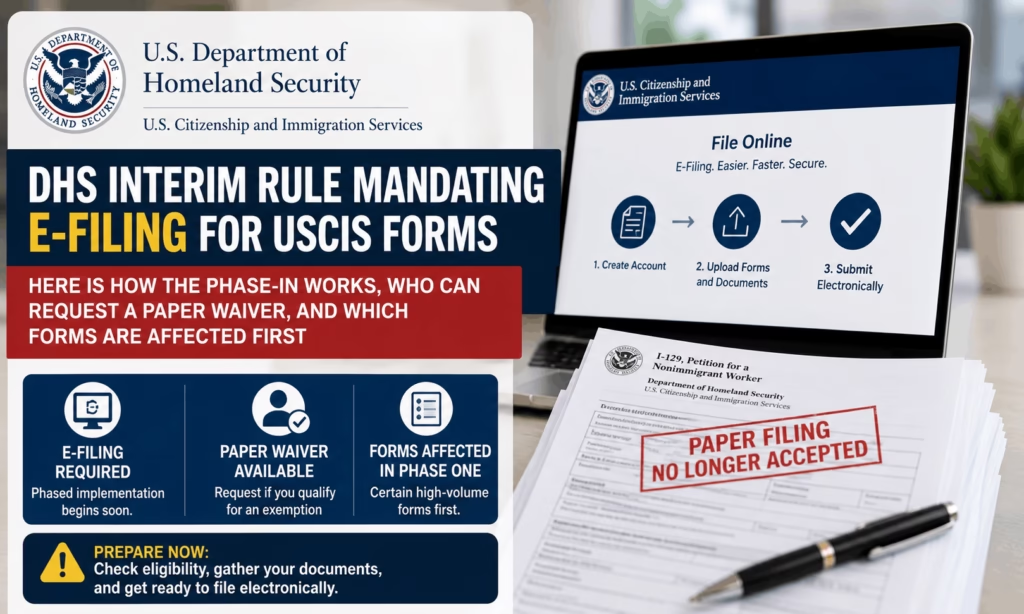
DHS Interim Rule Mandating E-Filing For USCIS Forms: Millions of people who deal with U.S. Citizenship and Immigration Services every year are facing the end of an era in which mailing a paper application was always an option. The Department of Homeland Security published an interim final rule on August 11, 2026 that gives USCIS the authority to require electronic filing for specific immigration forms, marking one of the most significant procedural shifts at the agency since online accounts were first introduced. The rule does not switch every form to online-only overnight, but it builds the legal framework USCIS needs to retire paper filing form by form, starting with anything that has already been available to file electronically for at least 180 days.
For applicants, petitioners, employers, and immigration attorneys, the practical significance is immediate even though no specific form has been mandated online-only yet. USCIS confirmed the rule will eventually eliminate the agency’s reliance on the U.S. Treasury’s physical lockbox mail intake system entirely, a process that handled more than a million paper filings last fiscal year alone. The agency also created a brand new form, Form I-936, specifically so people who genuinely cannot file online have a documented path to request an exception. We’ll be updating this article monthly as USCIS names specific forms for the online-only mandate and as the public comment period plays out.
What the DHS Interim Final Rule Actually Does
The rule, formally titled Mandatory Electronic Filing (E-Filing), amends existing DHS regulations to give USCIS three specific powers. First, the agency may require mandatory electronic filing of certain benefit requests rather than leaving e-filing as an optional convenience. Second, it establishes the exact process USCIS must follow before it can require any particular form to be e-filed. Third, it creates a formal waiver process for individuals who are unable to file electronically for legitimate reasons.
DHS has been explicit that this interim final rule, often abbreviated IFR, took effect immediately upon publication rather than waiting through a standard notice-and-comment period first. That is a legally distinct category from a typical proposed rule, meaning the framework is already active even while the public comment window remains open. According to USCIS, the goal is to move the agency from what has historically been a mostly paper-based intake process to a fully electronic one, which officials say will improve processing efficiency, cut operational costs, strengthen fraud detection, and enhance national security screening by making immigration data easier to search, cross-reference, and analyze.
Key Dates and Numbers to Know
| Detail | Information |
|---|---|
| Rule published | August 10, 2026 |
| Rule became effective | August 11, 2026 |
| Public comment deadline | October 13, 2026 |
| Federal Register docket number | USCIS-2026-0232 |
| Forms eligible for a future mandate | Any form available for e-filing at least 180 days |
| Required public notice before a form goes online-only | At least 60 days |
| New waiver form | Form I-936, Request for Waiver of E-Filing Requirement |
| Waiver filing fee | $25 (fee waivers available for limited humanitarian categories) |
| Typical waiver validity period | 30 days from approval, tied to one specific form |
| Paper filings rejected by USCIS in fiscal year 2025 | More than 1 million |
| Forms already available for online filing as of the rule’s publication | 22 forms |
Why USCIS Says This Change Is Necessary
USCIS has framed the shift primarily around national security and fraud detection rather than simple modernization for its own sake. The agency’s official announcement, titled USCIS To Require Electronic Filing of Forms: Strengthening National Security, argues that digital filings are far easier to search, analyze, and cross-reference against other government databases than paper records sitting in a filing cabinet, which the agency says makes it easier to spot suspicious filing patterns and potential fraud rings operating across multiple applications.
There is also a straightforward operational motivation behind the change. Today, most paper applications still route through a USCIS lockbox, a mail intake facility that the U.S. Department of the Treasury operates on the agency’s behalf, where staff manually process checks and Form G-1450 credit card payment authorizations by hand. Eliminating that physical lockbox system entirely and shifting all fee payments online is expected to deliver what DHS describes as substantial cost savings and greater efficiency for the federal government going forward.
Direct Express Card Transition to Fifth Third Bank: What 3.6 Million Cardholders Need to Know
Federal Fuel Excise Tax Suspension: Ford Pushes Carney to Extend Relief Past Labour Day
USCIS Restored Power To Deny Without RFE: Here Is What Policy Alert PA-2026-05 Actually Changes
IEEPA Tariff Refund Process: How Businesses Are Claiming Their Share of $166 Billion
50% US Tariffs on Canadian Goods: Full List and What Changes
How the Form-by-Form Rollout Will Actually Work
One detail immigration attorneys are emphasizing to clients is that the rule taking effect on August 11 does not, by itself, make any particular form mandatory to file online. Instead, it sets the legal groundwork USCIS must follow for every future mandate. A form only becomes eligible once it has already been available for electronic filing for at least 180 days. From there, USCIS must post a formal notice on its website at least 60 days before that form becomes online-only, giving filers and their attorneys time to prepare and, if needed, to request a hardship waiver before the deadline hits.
That two-step structure, the 180 day eligibility window followed by a separate 60 day advance notice, means the earliest any specific form could realistically become mandatory online-only is sometime in the fall of 2026, and DHS has not yet announced which forms will be first. Commonly filed forms already available through a USCIS online account include Form N-400 for naturalization, Form I-90 to replace a green card, and Form I-130 for family-based petitions, among 22 forms total that were online-eligible as of the rule’s publication, making these strong candidates for an early mandate once USCIS starts issuing form-specific notices.
Requesting a Waiver: How Form I-936 Works
For people who genuinely cannot file electronically, whether due to lack of reliable internet access, a disability that makes online filing impractical, or another documented barrier, the rule creates Form I-936, Request for Waiver of E-Filing Requirement. An applicant must name the specific benefit form they intend to file on paper and submit supporting evidence explaining why they cannot reasonably comply with the electronic filing requirement, and USCIS must approve that waiver before the related paper application can be accepted.
USCIS has stated it will decide each request case by case, weighing factors such as geographic location, socioeconomic circumstances, and access to public technology resources such as libraries or community centers. Importantly, the rule specifically states that simply being unfamiliar with the online system, or not currently having a personal internet connection, will not by itself establish undue hardship. Applicants in that situation may be expected to explain why alternatives like a public library, a community center, or help from friends or family are not reasonably available to them either. DHS has projected that roughly 249,000 people may seek this kind of waiver annually once the rule is in broader use.
Waiver Fees and Who Qualifies for an Exception
| Waiver Detail | Information |
|---|---|
| Filing fee for Form I-936 | $25 |
| Categories eligible for fee waivers | Certain VAWA self-petitioners, T and U nonimmigrant status applicants, certain battered spouses, and TPS-related filings |
| Scope of an approved waiver | Applies only to the one specific benefit form named in the approval |
| Duration of an approved waiver | Generally 30 days from the date of approval |
| Attorneys, accredited representatives, and businesses | Generally less likely to qualify, though each case is assessed individually |
What This Means for Applicants, Employers, and Attorneys
For most people already using a USCIS online account, this change will feel like a formalization of something they are already doing rather than a dramatic shift, since electronic filing has been common for many forms for years. The bigger practical risk sits with applicants who are used to mailing paper applications, particularly older applicants, rural filers with limited broadband access, and people relying on a friend, family member, or community organization to help them navigate government paperwork.
Employers filing employment-based petitions on behalf of workers should pay close attention to USCIS’s website notices once the agency begins naming specific forms for the mandate, since a paper petition filed after a form’s online-only deadline risks outright rejection rather than a routine processing delay. Immigration attorneys are already advising clients to confirm the current filing method required for their specific form directly on uscis.gov before mailing anything, rather than assuming a paper option will remain available simply because it has been in the past.
Borrower Defense Student Loans: How to Apply for a Full Discharge?
IRS Business Tax Account New Features Give Small Businesses More Ways to Skip the Phone Line
SSA Payroll Information Exchange and New SSI Improvement Office: What the Report Actually Changes
Official USCIS and DHS Resources
| Resource | Purpose | Link |
|---|---|---|
| USCIS Newsroom Alert on the E-Filing Rule | Official USCIS announcement and background | https://www.uscis.gov/newsroom/alerts/uscis-to-require-electronic-filing-of-forms-strengthening-national-security |
| Federal Register, Mandatory Electronic Filing Rule | Full legal text of the interim final rule | https://www.federalregister.gov/documents/2026/08/11/2026-16313/mandatory-electronic-filing-e-filing |
| myUSCIS Online Account Portal | Create an account and file eligible forms electronically | https://my.uscis.gov |
| USCIS Case Status Online | Check the status of a pending filing | https://egov.uscis.gov/casestatus |
| Regulations.gov, Docket USCIS-2026-0232 | Submit a public comment on the interim final rule | https://www.regulations.gov |
FAQs
Does the DHS interim rule mandating e-filing mean I have to file everything online right now?
No. The rule took effect on August 11, 2026, but it does not immediately make any specific USCIS form online-only. It simply gives USCIS the legal authority to require e-filing for individual forms in the future, with public notice posted at least 60 days before each mandate takes effect.
Which USCIS forms will become online-only first?
USCIS has not yet announced which specific forms will be mandated first. Any form that has already been available for electronic filing for at least 180 days is eligible, which includes commonly filed forms such as Form N-400, Form I-90, and Form I-130 among the 22 forms already available online as of the rule’s publication.
How do I request permission to file on paper if I cannot file online?
You must file Form I-936, Request for Waiver of E-Filing Requirement, name the specific benefit form you want to file on paper, and provide evidence supporting why electronic filing would cause you undue hardship. USCIS decides these requests case by case and charges a $25 fee, though limited fee waivers exist for certain humanitarian filing categories.
Conclusion
The DHS interim rule mandating e-filing for USCIS forms marks a clear signal of where immigration paperwork is heading, even though the transition is deliberately staged rather than immediate. With no specific form yet named for a mandatory online-only switch, applicants and employers have a window right now to get comfortable with their USCIS online accounts and to understand the narrow, evidence-based process required to request a paper waiver if they genuinely need one. As USCIS begins posting form-specific notices in the months ahead, staying current on official guidance will matter more than ever, since missing a 60 day notice window could mean a rejected paper filing and lost processing time. We’ll be updating this article monthly as USCIS names the first forms subject to the mandate and as the public comment process concludes.