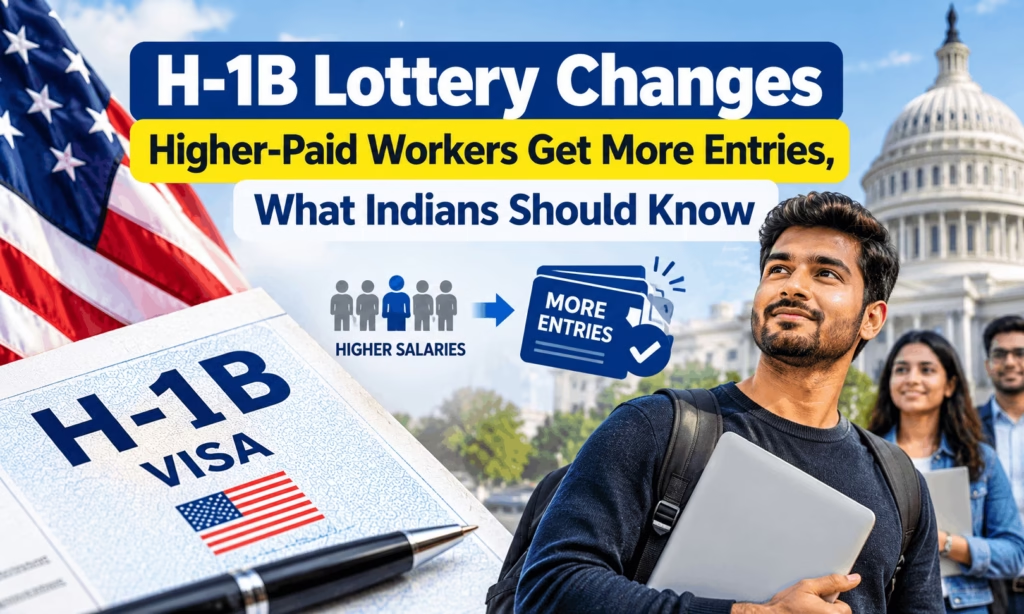
The H-1B lottery changes are about to become real for thousands of workers, because October 1, 2026 is the first day the wage-weighted selection process produces actual jobs. The rule itself took effect on February 27, 2026, and it governed the March registration round for fiscal year 2027. Under it, an employer that offers a Level IV wage gets four entries in the selection pool, Level III gets three, Level II gets two and Level I gets one. USCIS said only 211,600 registrations were properly submitted this year, down 38.5 percent from 343,981 a year earlier, and 71.5 percent of the people selected hold a U.S. advanced degree, up from 57 percent. Just 17.7 percent of selected registrations were at Level I, the lowest wage tier. The agency has confirmed the 85,000 cap is filled, so there will be no second lottery. Anyone not selected must wait for the spring 2027 round. We’ll be updating this article monthly.
The bigger story for Indian applicants is the price tag hanging over the program. On September 18, 2026, the White House extended a $100,000 payment policy for certain new H-1B petitions through September 21, 2027, and signed a separate executive order on H-1B program integrity. A federal court in Massachusetts had vacated the fee in June, and an appeals court refused in July to pause that ruling, so the fee is not being collected right now. Meanwhile, the Department of Homeland Security has proposed a different charge of $103,265 for every cap-subject petition, with public comments that closed on September 24. Nothing in that proposal is final. This report walks through what changed, who wins and loses, how the numbers look for Indian students and IT professionals, and what to do before the next registration window opens.
H-1B Lottery Changes Key Dates and Highlights
Use this table as a quick reference. Every date below comes from USCIS, the Federal Register or court and agency updates published this year.
| Item | Detail |
|---|---|
| Weighted selection rule published | December 29, 2025, Federal Register |
| Rule effective date | February 27, 2026 |
| FY 2027 registration window | March 4 to March 19, 2026 |
| Registration fee | $215 per beneficiary |
| Entries by wage level | Level IV: 4, Level III: 3, Level II: 2, Level I: 1 |
| Cap petition filing period | April 1 to June 30, 2026 |
| Registrations properly submitted | 211,600 (down from 343,981) |
| Selected with U.S. advanced degree | 71.5 percent (57 percent last year) |
| Selected at Level I | 17.7 percent |
| Cap reached announcement | July 17, 2026, no second lottery |
| Earliest start date for FY 2027 H-1B workers | October 1, 2026 |
| $100,000 payment proclamation extended | Through September 21, 2027, but blocked by a court order |
| Proposed $103,265 cap petition fee | Comments closed September 24, 2026, not final |
| Next registration season (FY 2028) | Expected spring 2027 |
How Does the New Weighted H-1B Lottery Work?
For years the H-1B lottery was a coin flip with the same odds for everyone who registered. Roughly 30 percent of registrations were picked on average, whether the job paid $60,000 or $300,000. The new rule changes that by counting each registration more than once when the offered salary is higher. The counting is based on the wage levels that the Department of Labor publishes for every occupation and location, a system known as OEWS.
When an employer registers a worker, it must state the occupation code, the area of work and the highest wage level that the offered salary meets or exceeds. A salary that matches or beats the Level IV wage earns four entries. A Level III salary earns three, Level II earns two, and anything at Level I, including pay that sits below Level I, earns one. Every worker still counts once toward the 85,000 cap. The weighting only changes the chance of being drawn.
DHS published estimates of what this means for selection odds. Based on earlier registration patterns, it projected roughly 61 percent for Level IV, about 46 percent for Level III, about 31 percent for Level II and about 15 percent for Level I. Some independent analysts think Level I could be even lower than the DHS figure and Level IV even higher, since employers change behaviour once the rules are known. This year’s early results support that direction, because fewer entry-level registrations were filed and fewer of them were selected.
The master’s cap still exists. Candidates with a U.S. master’s degree or higher can be considered in the 20,000 advanced degree pool as well as the regular pool, which is one reason so many of this year’s selected workers hold U.S. advanced degrees.
Why Some SSI Recipients Get Two Payments in October 2026?
$2400 Social Security Increase: What the Proposed $200 Monthly Boost Really Means
Social Security Payment Dates October 2026: Full Schedule By Birthday, SSI Quirk and COLA Update
Express Entry Reform 2026: FSW, FST and CEC Merger Into One Federal High-Skilled Class
H-1B Lottery Odds by Wage Level Free Calculator
The default wage numbers are made up for the example. Use real figures from the Department of Labor. The analyst ranges come from one law firm’s early modeling and are not official. Multi-year odds assume the same chance each year and independent draws. This is an estimate, not legal advice.
| Wage level for registration | Level 2 |
|---|---|
| Lottery entries | 2 |
| DHS estimated chance in one year | 31 percent |
| Old random lottery average | 29.59 percent |
| Chance of at least one selection in 3 year(s) | 67.1 percent |
| Same period under the old system | 65.1 percent |
| Next step up | You need $5,000 more per year to reach Level 3. |
Odds are DHS estimates based on earlier registration patterns and the 4, 3, 2, 1 entry system. Real odds depend on how many people register at each level in a given year. The multi-year figure assumes the same odds each year and does not include the extra chance from the master’s cap. This is not legal advice.
FY 2027 H-1B Lottery Results: What the Numbers Show
USCIS has been slow to release full data, but the numbers it has shared paint a clear picture. Properly submitted registrations fell from 343,981 to 211,600. That is a drop of 38.5 percent, and it follows a sharp decline the year before. Employers appear to have filed fewer speculative registrations, especially for entry-level jobs, once each registration cost more in terms of risk and the new $100,000 debate made offshore hiring look expensive.
The mix of winners also moved. Among selected foreign nationals, 71.5 percent hold a U.S. advanced degree, compared with 57 percent last year. Only 17.7 percent of selected registrations were at Level I. Before the change, DHS said about 28 percent of petitions over the past five years were at Level I and about 55 percent were at Level II. Only 5 percent were at Level IV. That means the pool has been tilting toward better-paid roles, exactly as the rule intended.
USCIS announced on July 17 that it had received enough petitions to fill the 85,000 slots and that no second selection round would take place. Registrations that were not chosen do not carry over. If an employer wants to try again for the same worker, it has to register again in spring 2027.
What Indians Should Know About the H-1B Lottery Changes
Indian nationals have historically received about seven in ten approved H-1B petitions in recent years, according to government data, so any change to selection odds lands hardest on them. Three groups are affected in different ways.
Indian students on F-1 OPT and STEM OPT
Graduates of U.S. universities are in the strongest position. A U.S. master’s degree opens the extra advanced degree pool, and graduate degrees often lead to jobs at higher wage levels. Students already inside the country who change status from F-1 to H-1B are generally not subject to the $100,000 payment, unless the case is converted to consular notification. Employers should still confirm this with counsel, since the rules have been moving. If your OPT clock is running, plan your registration early and ask your employer which wage level it intends to use.
Indian IT professionals and outsourcing firms
Many IT services and consulting firms have relied on Level I and Level II wages for large numbers of registrations. The weighted lottery hits that model hardest. To keep the same odds, a company must raise offered salaries or accept fewer selections. Workers at these firms should expect more conversations about pay bands, job titles and whether a role truly qualifies for a higher level, since USCIS can check that the wage level used at registration matches the petition later.
Indian professionals abroad
People living in India face the biggest cost risk because the $100,000 proclamation applies to new petitions for beneficiaries outside the United States. That fee is blocked by a court order for now, but the administration has extended the policy, and USCIS has said it plans to collect it if the order is lifted. Anyone abroad who is selected in a future lottery should ask the employer in writing how it plans to handle that cost before signing an offer.
$100000 Social Security Benefits Per Year: How Married Couples Actually Reach It in 2026
Medicare Part D Premium 2027 New Rates Announced, How Much Will You Pay?
2027 Social Security COLA Forecast: Latest 3.6% Estimate and How Much Retirees Could Get
US New Visa Restrictions Targeting Commercial Birth Tourism Networks
Supreme Court Voter Database Ruling: What Changes for American Voters Now
Is the $100,000 H-1B Fee Being Collected Right Now?
As of this week, no. A federal court in Massachusetts vacated the government’s implementation of the fee on June 8, 2026, calling it a tax the executive branch had no authority to impose. The First Circuit refused on July 24 to pause that ruling while the appeal continues. USCIS has said it will follow the court order. The September 18 proclamation extends the policy for another year, and at least one law firm has warned USCIS may argue that the new proclamation is separate from the court order. Others read the extension as still blocked. Because this can change quickly, check the USCIS H-1B page before you file anything.
The fee, when it applies, covers new petitions for people outside the United States who do not hold a valid H-1B visa, and some petitions that request consular or port of entry notification. It does not apply to extensions, amendments or changes of employer for people already in H-1B status in the country.
Proposed $103,265 H-1B Cap Petition Fee: What Employers Should Watch
A second and separate proposal could matter even more for the lottery. On August 25, 2026, DHS published a notice proposing a $103,265 fee for every cap-subject H-1B petition, including those in the advanced degree pool. DHS says the amount reflects about $8.78 billion in costs across several federal agencies, divided by 85,000 expected cap petitions. Cap-exempt petitions from universities and nonprofit research groups would not pay it, and neither would extensions or employer changes.
The comment period closed on September 24. DHS now has to read the comments and decide whether to finalize, change or withdraw the rule. Legal challenges are widely expected. Analysts differ on timing. If the rule is finalized quickly, it could touch the spring 2027 season for fiscal year 2028. Others think the fiscal year 2029 season in 2028 is the first realistic one. For now, nobody owes this fee, and it does not affect the FY 2027 workers starting on October 1.
How to Apply for the H-1B Lottery?
An individual cannot register alone. Only a U.S. employer, or an agent acting for it, can enter you in the lottery. The process for the next round is likely to follow the same pattern as this year.
First, find an employer willing to sponsor you and confirm the job qualifies as a specialty occupation. Second, the employer creates a USCIS organizational account and, in the March window, registers you as a beneficiary. It must give your passport details, the occupation code, the area of employment and the wage level tied to the offered salary. Third, the employer pays the $215 registration fee. Fourth, USCIS runs the weighted selection and posts results in the online accounts of the employers. Fifth, if you are selected, the employer files the full H-1B petition during the filing window, which lasts at least 90 days. That step includes a labor condition application and proof of the wage level used at registration. Sixth, after approval, you either change status inside the United States or apply for the visa at a U.S. consulate.
Two practical points matter for Indians. Use the same passport for registration and for travel, since a mismatch can invalidate the entry. And insist on a real, supportable wage level. USCIS will not accept a drop to a lower level after selection, though small changes within the same level are allowed.
How to Check H-1B Registration and Case Status
Your employer sees the registration result in its USCIS organizational account. Once a petition is filed, the receipt number can be used on the USCIS case status page. Ask your employer or its lawyer to share the receipt number and the approval notice as soon as they arrive.
H-1B Processing Time After Selection
Selection is only the first step. The petition filing window for this year ran from April 1 to June 30, and the petition itself takes additional time. Standard processing can run for several months. Employers can pay for premium processing, which requires USCIS to act within 15 business days, and the premium fee was $2,965 as of March 1, 2026. Extra time may be needed if USCIS asks for more evidence. For students on OPT, the cap-gap rules can keep work authorization going while the petition is pending. Those on a consular path should also allow time for the visa appointment in India, which varies by city and season.
The earliest start date for this year’s approved workers is October 1, 2026. If your petition is approved but you are outside the United States, you cannot enter earlier than ten days before the start date shown on your approval.
H-1B Fees and Payment Schedule: What Gets Paid and When
The government fees for a standard H-1B case are paid by the employer in stages. Federal rules bar employers from passing certain fees on to the worker, so ask early who is paying what. The table below shows the usual sequence, using figures reported by immigration law firms. Actual amounts depend on employer size and type.
| Stage | Fee or payment | When it is due |
|---|---|---|
| Registration | $215 per beneficiary | March registration window |
| Basic petition filing | About $780 for most employers | When the petition is filed, April 1 or later |
| Fraud prevention and detection | $500 | With the petition |
| Training fee (ACWIA) | $750 for small employers, $1,500 for larger ones | With the petition |
| Asylum program fee | $300 to $600 depending on employer | With the petition |
| Extra fee for large H-1B or L-1 employers | $4,000 where the rules apply | With the petition |
| Premium processing, optional | $2,965 | With the petition or later |
| Proclamation payment, if enforced | $100,000 for covered new petitions | Before filing, through pay.gov |
| Proposed cap fee, not final | $103,265 | At filing, only if a final rule takes effect |
| First paycheck | Salary at or above the wage level registered | From the start date, October 1, 2026 at the earliest |
Why the H-1B Lottery Changes Matter for Wages and Hiring
DHS says the goal is to protect American workers by steering visas toward higher-paid, higher-skilled jobs. It estimates that the rule will push wages up over time as employers offer more to improve their odds. Supporters call it a fairer use of a limited program. Critics say it could squeeze out entry-level graduates, small companies and startups that cannot match large employers on pay, and they say the wage levels do not always reflect real skill. There is also a legal debate. Some observers expect challenges arguing that DHS cannot change the selection method without Congress, though no major case has yet stopped the rule.
The September 18 executive order adds another layer. It directs agencies to coordinate more closely on H-1B enforcement and to consider employer layoffs in decisions. Employers with recent layoffs may face more questions. Workers should keep job descriptions, pay records and work locations accurate and up to date.
What Indian H-1B Hopefuls Should Do Before the Next Lottery
Registration opens again in spring 2027, and USCIS is expected to announce the dates at least 30 days ahead. That gives you the winter to prepare. Start by asking your employer what wage level it plans to register you at, and use the calculator above with your own Department of Labor wage numbers. If you are close to the next level, a modest raise could increase your odds materially.
Consider a U.S. master’s degree if you only hold a bachelor’s degree, since the advanced degree pool and higher pay levels both help. Look at cap-exempt employers such as universities and research nonprofits, which are outside the lottery altogether. Keep a backup plan such as an O-1 or L-1 visa, employment in another country, or a job at a company with an office in Canada or elsewhere. Read every offer letter carefully for language about who pays fees. And follow only official sources, since fake agents targeting Indian applicants are common around every lottery.
Social Security COLA 2027 by State: These 10 States Could See the Biggest Dollar Increase
H-1B Visa Fraud Crackdown: What Workers and Employers Must Know
Full Social Security at 60: Who Qualifies Under the New Blue Collar Bill
Official H-1B Websites and Links
Use these official sources for registration, login, status checks and rules. Do not pay anyone who promises to guarantee selection.
| Resource | What it is for | Official link |
|---|---|---|
| USCIS H-1B electronic registration | Registration rules, dates, fees and updates | uscis.gov H-1B registration page |
| myUSCIS account (login and registration) | Employer and representative accounts, registration results, online filing | my.uscis.gov |
| USCIS case status | Check a petition using the receipt number | egov.uscis.gov case status |
| USCIS H-1B overview | Specialty occupation rules and forms | uscis.gov/h-1b |
| Federal Register weighted selection rule | Full text of the final rule | federalregister.gov rule |
| Proposed $103,265 fee notice | Text of the proposed rule | federalregister.gov proposed fee |
| Foreign Labor Certification Data Center | Find OEWS wage levels I to IV for your job and area | flcdatacenter.com |
| U.S. Department of State visas | Visa appointments and consular guidance | travel.state.gov |
| Pay.gov | Official payment site, used for proclamation payments | pay.gov |
| USCIS Contact Center | General questions | 1-800-375-5283 |
FAQs About the H-1B Lottery Changes
What are the H-1B lottery changes?
The random lottery has been replaced by a weighted one. Registrations with higher wage levels get more entries: four for Level IV, three for Level III, two for Level II and one for Level I.
When did the new H-1B lottery rules start?
The final rule took effect on February 27, 2026, and it was used for the March 2026 registration for fiscal year 2027. October 1, 2026 is when those selected workers can start.
Does the weighted lottery guarantee selection at a high wage level?
No. Level IV has the best estimated odds, at about 61 percent, but nobody is guaranteed a spot. Every wage level keeps some chance of selection.
How many H-1B visas are available each year?
The cap is 85,000 a year, made up of 65,000 regular visas and 20,000 for people with a U.S. master’s degree or higher.
Can I register for the H-1B lottery myself?
No. A U.S. employer or its agent must register you and pay the fee. You should confirm that your employer has done so, and ask which wage level it used.
Is there a second H-1B lottery for FY 2027?
No. USCIS said on July 17 that it received enough petitions to fill the cap, so no further selection round will take place this year.
Do not-selected registrations carry over to next year?
No. Employers must register the worker again in spring 2027 to take part in the fiscal year 2028 lottery.
Will the $103,265 fee apply to me?
Not now. It is only a proposal. If it becomes final, it would apply to employers filing cap-subject petitions, and existing H-1B holders would not pay it.
What is the chance of getting H-1B in 2026?
Under the old system the average was about 30 percent. Under the new one, DHS estimated about 15 percent at Level I, 31 percent at Level II, 46 percent at Level III and 61 percent at Level IV.
Is H-1B still worth it for Indians?
It can be, especially for people with a U.S. graduate degree and a strong salary offer. Entry-level applicants face longer odds and should keep other options ready.
What is a Level 1 wage in H-1B?
It is the lowest of four Department of Labor wage tiers for an occupation in a given area. It roughly reflects entry-level pay.
How can I increase my H-1B lottery chances?
Ask for a salary that reaches a higher wage level, earn a U.S. master’s degree, and make sure your employer registers you accurately.
Is the $100,000 H-1B fee paid by the employee?
The payment is required from the employer, not the worker, and it applies only to certain new petitions. It is currently blocked by a court order.
Can H-1B be filed after the lottery is over?
Cap-subject petitions cannot. Cap-exempt jobs, such as those at many universities, and extensions or transfers for current H-1B holders can still be filed.
What happens if my H-1B is not selected?
You can be registered again next spring. In the meantime, you may explore other visas or a different employer.
Do H-1B changes affect people already in the United States on H-1B?
The lottery rule does not. Extensions, amendments and changes of employer are not part of the cap lottery.
Conclusion: What the H-1B Lottery Changes Mean Going Forward
The H-1B lottery changes have turned a game of luck into a contest that rewards pay and education. This year’s first weighted round produced fewer registrations, more advanced degree holders and far fewer Level I winners, and it has lifted the pressure on employers to justify every wage level they claim. For Indians, the message is practical. Aim for the highest wage level your role can honestly support, consider a U.S. graduate degree, and keep a backup route in case selection does not come.
The bigger unknown is cost. The $100,000 payment is extended on paper but blocked in court, and the proposed $103,265 fee is still only a proposal. Neither changes the workers who start on October 1. Watch USCIS and the Federal Register for updates before the spring 2027 window opens, and we will refresh this guide as the rules develop.
2027 COLA: How Much Will Your Social Security Check Increase?
Social Security October 2026 Payments: Why SSI Gets Two Checks?
$255 Social Security Death Benefit: Who Actually Qualifies and How to Apply?
Social Security Cuts by State 2032: Which States Face the Biggest Economic Impact
States That Tax Social Security Benefits in 2026: Full List, Income Limits and Free Calculator