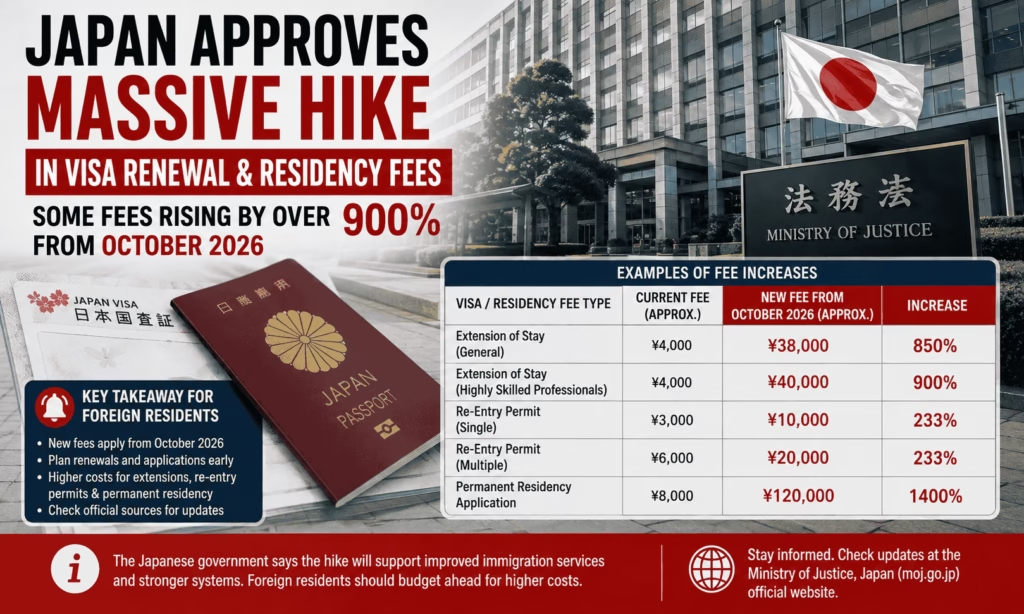
Japan Visa Renewal Fee Increase 2026: Japan’s government has given final approval to one of the steepest fee increases in the history of its immigration system, and the change lands on foreign residents in a matter of weeks. Under an ordinance adopted this week, the flat 6,000 yen fee that residents currently pay to renew or change their residency status will be replaced with a tiered structure that climbs as high as 75,000 yen, a jump of more than 1,150 percent for the longest renewal periods. For a large slice of applicants, particularly those renewing a three to five year residency status, the fee rises from 6,000 yen to 64,000 yen, an increase of 967 percent. Permanent residency applications, meanwhile, will jump from 10,000 yen to 200,000 yen once the new rules take effect on October 1, 2026.
The scale of the increase has caught many long-term residents off guard, even though the government first flagged the plan earlier this year. Officials say the goal is to bring Japan’s immigration costs closer to what residents pay in the United States, Germany, and other Western countries, and to fund the systems needed to support a foreign resident population that hit a record 4.13 million people at the end of 2025. For students, workers, spouses of Japanese nationals, and long-term residents alike, the practical question now is simple: how much will this cost, when does it start, and is there any way to lock in the current lower fee before it disappears. We’ll be updating this article monthly as more details, exemptions, and implementation guidance are released by the Immigration Services Agency.
What Changed: The Latest Update
On Tuesday, the Japanese government formally adopted the cabinet ordinance that sets the new fee schedule for residency renewals, status changes, and permanent residency applications. This follows the revised Immigration Control and Refugee Recognition Act, which was enacted back in May 2026 and gave the government legal authority to raise the statutory fee ceiling far above the old 10,000 yen cap. The ordinance confirms the exact figures that had circulated in draft form over the summer, and it locks in an effective date of October 1, 2026.
This is separate from, but related to, an earlier fee change that already took effect on July 1, 2026, which raised the cost of single-entry and multiple-entry visas issued at Japanese embassies and consulates abroad. That visa fee change pushed the single-entry visa fee from 3,000 yen to 15,000 yen and the multiple-entry visa fee from 6,000 yen to 30,000 yen. Together, the two rounds of increases represent the first major overhaul of Japan’s visa and residency fee structure in roughly 48 years.
Japan Visa Renewal Fee Increase Key Highlights
| Item | Current Fee | New Fee (From October 1, 2026) | Percentage Increase |
|---|---|---|---|
| Residency extension, up to 3 months | 6,000 yen | 10,000 yen | 67 percent |
| Residency extension, 1 year | 6,000 yen | 33,000 yen | 450 percent |
| Residency extension, 3 to under 5 years | 6,000 yen | 64,000 yen | 967 percent |
| Residency extension, 5 years or more | 6,000 yen | 75,000 yen | 1,150 percent |
| Permanent residency application | 10,000 yen | 200,000 yen | 1,900 percent |
| Single-entry visa (from July 1, 2026) | 3,000 yen | 15,000 yen | 400 percent |
| Multiple-entry visa (from July 1, 2026) | 6,000 yen | 30,000 yen | 400 percent |
Note: Online applications previously carried a slightly lower fee of 5,500 yen compared with the 6,000 yen counter fee. The new tiered fees apply regardless of whether the application is filed online or in person, based on the length of the approved residency period.
Canada Pension Plan Payment September 2026: Who Will Receive CPP Benefits and How Much?
OAS Payment Increase September 2026: Confirmed Amounts, Payment Date, and the Annual GIS Reset !
Why Japan Is Raising Visa and Residency Fees Now
For nearly five decades, Japan kept its visa and residency-related charges largely frozen while comparable countries steadily raised theirs. Officials argue that a flat 6,000 yen fee, unchanged since the 1970s, no longer reflects the actual administrative cost of processing applications, screening documents, and running the immigration system at a time when the foreign resident population has grown dramatically. The Ministry of Justice has pointed out that a similar residency renewal in the United States can cost between 420 and 470 US dollars, while Germany charges the equivalent of roughly 93 to 98 euros for comparable procedures. By that comparison, Japan’s previous fees were far below international norms.
The government has said the additional revenue collected from the new fee schedule will be funneled into processing capacity for the Immigration Services Agency, expanded Japanese language education programs for foreign residents, and broader reforms tied to Japan’s evolving immigration policy. Japan’s foreign resident population reached 4.13 million people as of the end of 2025, according to Immigration Services Agency data, a record high driven by labor shortages across construction, caregiving, hospitality, and manufacturing sectors. That growth has placed pressure on immigration offices nationwide, with processing backlogs and long wait times becoming a common complaint among applicants.
Who Will Be Affected by the Fee Hike?
The new fee structure touches almost every category of foreign resident in Japan who needs to renew or change their residency status. This includes:
International students renewing their student residency status each year or transitioning to a work visa after graduation.
Skilled workers and specialists renewing work-based residency statuses such as Engineer, Specialist in Humanities, Highly Skilled Professional, and Specified Skilled Worker categories.
Dependents and spouses extending family-based residency statuses tied to a working or studying resident.
Long-term residents and permanent residency applicants, who face the steepest jump of all, from 10,000 yen to 200,000 yen.
Employers and HR departments that sponsor foreign staff and often cover or reimburse visa-related costs as part of employment packages.
Because the fee scales with the length of the residency period being granted, someone approved for a longer residency period, such as five years, will pay noticeably more than someone approved for a shorter one, such as three months, even though the underlying application process is similar.
Humanitarian Exemptions Added After Public Comment
One development that emerged only after the government opened a public comment period on the draft rules is a widened humanitarian exemption. Under the finalized ordinance, foreign nationals who are the sole caregiver of a biological child holding Japanese nationality or special permanent residency status may now qualify for a fee exemption or reduction. The exemption can also apply in broader cases where the government determines that denying a status change or extension purely on cost grounds would be considered inhumane.
Japan’s special permanent resident category covers people, largely of Korean and Taiwanese descent, who lived in the country before the end of the Second World War and lost their Japanese citizenship afterward, along with their descendants. Advocacy groups had raised concerns during the comment period that steep fee increases could disproportionately burden low-income single parents and long-settled resident communities, and the widened exemption appears to be a direct response to that feedback.
CPP, OAS & GIS September 2026 Payment: New Amounts, 1.2% Increase & Full Payment Details
CalFresh Payment September 2026: Here’s When Your Food Stamps Will Be Loaded
How to Apply Before the Fee Increase Takes Effect?
Foreign residents whose current residency status is due to expire around the October cutover have a narrow window to secure the lower fee. According to guidance published alongside the ordinance, the fee that applies is determined by the date an application is accepted by the Immigration Services Agency, not the date the application is approved or the date a new residency card is issued or collected.
This means an application submitted on or before September 30, 2026 will be charged under the current, lower fee schedule, even if the actual approval or card issuance happens after October 1. Immigration lawyers and relocation advisors are recommending that residents whose renewal window is open, applications can typically be filed up to three months before the current residency period expires, submit as early as possible to lock in the old rate.
Steps to renew before the deadline
- Check your residency card expiration date and confirm you are within the eligible application window, generally up to three months before expiry.
- Gather required documents, including your passport, residency card, proof of continued eligibility such as an employment contract or enrollment certificate, and any category-specific paperwork.
- Submit the application at your Regional Immigration Services Bureau counter or through the Online Residence Application System before September 30, 2026.
- Pay the applicable revenue stamp fee at the time of filing or when notified of approval, depending on the office’s process.
- Track your application status through the Immigration Services Agency’s online tracking tool or by contacting your regional bureau directly.
Processing Time and Payment Schedule
Processing times for residency status extensions and changes in Japan typically range from two weeks to two months, depending on the complexity of the case, the regional bureau’s workload, and the residency category involved. Straightforward renewals for long-term workers or students with no change in circumstances tend to move faster, while first-time status changes, permanent residency applications, and cases requiring additional document verification can take considerably longer.
Payment is generally made using a revenue stamp, known as shunyu inshi, purchased at the immigration office or a nearby post office, and it is typically paid once the application has been approved and the applicant is notified to collect their new residency card. For permanent residency applications, processing has historically taken anywhere from six months to over a year in some regional bureaus, and applicants should expect that timeline to continue even as the fee for that category rises sharply to 200,000 yen.
Employers who sponsor foreign staff should factor the new payment schedule into HR budgeting, since fee increases of this scale can materially affect the cost of maintaining a foreign workforce, particularly for companies sponsoring dozens or hundreds of employees across multiple visa categories.
Broader Immigration Reforms Tied to the Fee Increase
The fee increase is not an isolated policy. It sits within a wider package of immigration reforms Japan has been rolling out through 2026, including a new electronic travel authorization system known as JESTA, expected to launch in 2028 for travelers from visa-waiver countries, similar in concept to the United States ESTA or Europe’s planned ETIAS system. The government has also been tightening screening for certain visa categories, including proposed stricter terms for the Business Manager visa used by foreign entrepreneurs, and expanding pre-arrival checks aimed at reducing irregular immigration.
Taken together, these changes reflect a broader shift in Japanese immigration policy: welcoming continued growth in the foreign resident population needed to fill labor shortages, while simultaneously funding a more robust administrative system to manage that growth and tightening control over certain entry pathways.
Official Resources for Foreign Residents
| Resource | Purpose | Link |
|---|---|---|
| Immigration Services Agency of Japan (ISA) | Main official portal for immigration rules, news, and procedures | https://www.isa.go.jp/en/ |
| Residence Card Renewal Procedure | Official guidance on applying for renewal of residence card validity | https://www.moj.go.jp/isa/applications/procedures/nyuukokukanri10_00011.html?hl=en |
| Online Residence Application System | Login and registration for filing residency applications online | https://www.moj.go.jp/isa |
| Residence Card Validity Check | Tool to check the validity of a residence card or special permanent resident certificate | https://www.isa.go.jp/en/ |
| Portal Site for Foreign Residents | Support information and guidebooks for daily life in Japan | https://www.moj.go.jp/isa/support/portal/index.html |
| Ministry of Foreign Affairs Visa Information | Details on visa types, application procedures, and eligible countries | https://www.mofa.go.jp/j_info/visit/visa/index.html |
Applicants should always confirm current fees, forms, and office hours directly through these official channels, since regional bureaus may have slightly different procedures or appointment systems.
H-1B Crackdown Employer Warning Now Covers OPT, PERM and J-1 Hiring Practices
Meta Safety Changes on Instagram and Facebook: What Teens and Parents Need to Know Right Now
FAQs
How much is the new visa renewal fee in Japan?
From October 1, 2026, residency renewal fees range from 10,000 yen for extensions of up to three months to 75,000 yen for extensions of five years or more, replacing the previous flat fee of 6,000 yen.
When does the Japan visa fee increase start?
The new residency renewal and status change fees take effect on October 1, 2026. A related increase to embassy-issued visa fees already began on July 1, 2026.
Can I still pay the old fee if I apply before October?
Yes. Applications accepted by the Immigration Services Agency on or before September 30, 2026 will be charged under the current, lower fee schedule, even if approval or card issuance occurs after October 1.
Why is Japan increasing visa and residency fees?
The government says the increase brings Japan’s fees closer to those charged in the United States and Germany, and the additional revenue will fund immigration processing capacity and Japanese language programs for a foreign resident population that reached 4.13 million by the end of 2025.
How much will permanent residency applications cost after the change?
The permanent residency application fee will rise from 10,000 yen to 200,000 yen once the new ordinance takes effect.
Is there an exemption from the new fees?
Yes. A humanitarian exemption applies to sole caregivers of biological children who hold Japanese nationality or special permanent residency status, and in other cases where refusing a status on cost grounds would be considered inhumane.
How long does a residency renewal take to process in Japan?
Processing generally takes between two weeks and two months for straightforward renewals, though permanent residency and complex status changes can take significantly longer.
Conclusion
Japan’s decision to raise visa and residency fees by as much as 967 to 1,150 percent marks the most significant change to its immigration cost structure in nearly half a century. For the millions of foreign residents living, working, and studying in Japan, the practical impact will vary widely depending on residency category and the length of status being renewed, but almost everyone will pay noticeably more starting October 1, 2026. Residents with renewals coming due around that date have a genuine incentive to file early and lock in the current, lower fee, while those planning to apply for permanent residency should budget for a cost that is now twenty times higher than before. As the Immigration Services Agency releases further implementation details, exemption criteria, and regional guidance in the coming weeks, this remains a fast-moving story worth tracking closely for anyone with a stake in Japan’s immigration system.
H-1B FY2027 Cap Reached: What Happens Next for Applicants?
H-1B Visa Ban Texas Schools: Abbott Wants Exactly Zero Foreign Workers, What Indians Should Know