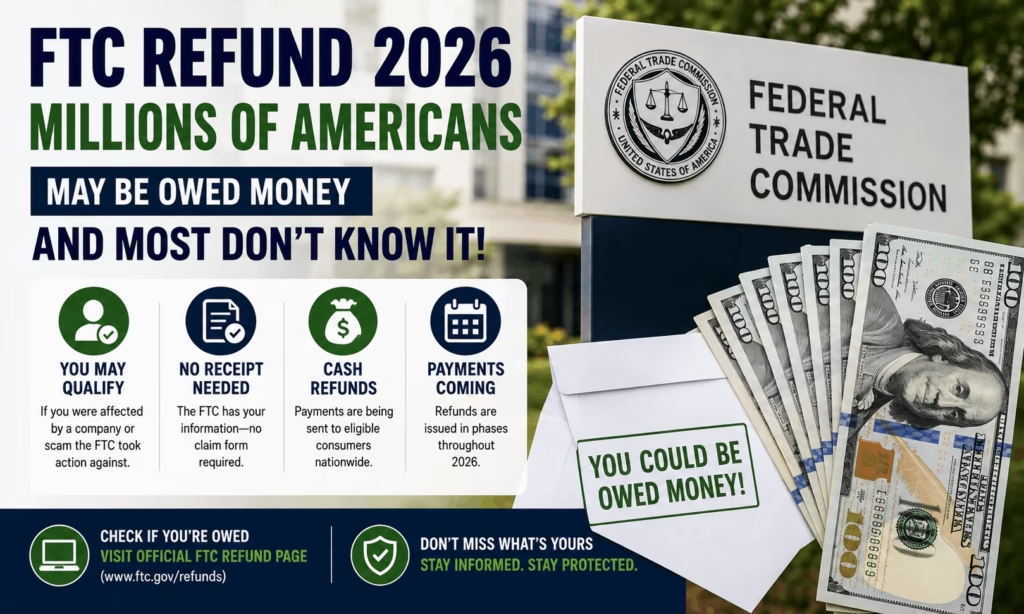
FTC Refund 2026: The Federal Trade Commission is in the middle of one of its busiest refund years on record, and a growing number of Americans are discovering they qualify for money they never applied for. The agency’s ongoing distribution from its historic $2.5 billion settlement with Amazon over Prime enrollment practices alone touches tens of millions of customers, while smaller but equally real refund programs, covering everything from deceptive office supply scams to fake business compliance mailers, continue landing in mailboxes and bank accounts across the country every single month. For anyone wondering about FTC refund 2026 eligibility, the honest answer is that there is no single program to check, but a constantly updating list of active cases that could include a company you have done business with.
What makes this year different is the sheer scale of enforcement activity. FTC actions in 2026 are concentrated heavily in technology, retail, healthcare, and financial services, and settlements are generating new refund distributions almost every month rather than as isolated one-off events. The Amazon Prime case, the largest consumer refund action in the agency’s history, set a July 27, 2026 deadline for customers who did not receive an automatic payment to file a claim, while dozens of smaller cases continue processing refunds on a rolling basis throughout the year. Because most FTC refunds are never announced with the fanfare of a stimulus check, the agency estimates a meaningful share of eligible consumers never realize money is waiting for them. We will be updating this article monthly as new FTC refund programs open and existing ones reach their claim deadlines.
How FTC Refund Programs Actually Work?
Unlike a single nationwide stimulus payment, an FTC refund is tied to a specific enforcement case against a specific company. When the FTC successfully sues a business for deceptive or unfair practices, whether that means unauthorized charges, hidden fees, or fraudulent income claims, any money recovered through the settlement or court judgment gets returned to the consumers who were harmed. There is no single universal eligibility standard across all FTC refunds. Each enforcement action defines its own class of affected consumers based on what the company did and who it targeted.
The FTC generally uses one of two methods to identify who gets paid. In most cases, the court order requires the company being sued to hand over a list of customers along with their contact information and how much each person paid, letting the FTC mail checks or send electronic payments directly without requiring any action from the consumer. In cases where no reliable customer list exists, the agency instead runs a claims process, meaning affected consumers must proactively apply to receive a refund, often within a specific filing window.
USCIS Restored Power To Deny Without RFE: Here Is What Policy Alert PA-2026-05 Actually Changes
IEEPA Tariff Refund Process: How Businesses Are Claiming Their Share of $166 Billion
50% US Tariffs on Canadian Goods: Full List and What Changes
Key FTC Refund 2026 Programs and Deadlines
| Case | Refund Amount | Claim Type | Key Date |
|---|---|---|---|
| Amazon Prime settlement | Up to $51 per eligible subscriber | Automatic for some; claims process for others | Claims deadline July 27, 2026; payments expected late 2026 |
| Multi-level marketing income claims settlement | Varies by participant | Claims process, mailed forms | Ongoing in 2026 |
| Office supply telemarketing scam refunds | Averaging around $525 per victim | Automatic, mailed checks | Checks must be cashed within 60 days of mailing |
| Labor law poster deceptive mailer scheme | Averaging around $41 per victim | Automatic, mailed checks | Checks must be cashed within 60 days of mailing |
| 2024 impersonation scam case | Averaging around $47 per consumer | Automatic, mailed in January 2026 | Already distributed |
Am I Eligible for an FTC Refund in 2026
Because eligibility depends entirely on the specific case, the most reliable way to determine whether you personally qualify is to check the FTC’s own refund database rather than relying on rumors or social media posts. Generally, you may be eligible for an FTC refund if you did business with a company that was later sued by the FTC for deceptive practices during the specific time period covered by that case, and if you meet the exact criteria outlined for that particular settlement.
For the Amazon Prime case specifically, eligibility requires meeting three conditions: being an Amazon Prime customer in the United States, having signed up through what the FTC calls a challenged enrollment flow, such as the universal Prime decision page or single-page checkout, or having tried and failed to cancel through Amazon’s online cancellation process, generally within the window running from June 2019 through June 2025.
For most other active cases, the FTC or its designated refund administrator will have already mailed or emailed eligible consumers directly if the agency had access to a reliable customer list. If you never received a notice but believe you may qualify for a specific case, checking the official case page is the only way to confirm.
How to Check for an FTC Refund You May Be Owed
The single most reliable starting point is the FTC’s own refund programs page at ftc.gov/refunds, which lists every active case along with eligibility details, deadlines, and whether the program is automatic or claims-based. The process takes only a few minutes and does not require creating an account or submitting any personal information just to browse.
Start by scrolling through the list of active refund programs to look for any company you have done business with in recent years. If you find a match, click through to review the specific eligibility requirements and deadline for that case. Some refunds are entirely automatic, meaning eligible consumers do not need to do anything beyond cashing a check or accepting an electronic payment when it arrives. Others require submitting a claim before a specific cutoff date, after which no further payments will be issued to that group.
How FTC Refund Payments Are Actually Sent
The FTC distributes refunds through several methods depending on the case, including mailed paper checks, direct deposit, PayPal, Zelle, and prepaid debit cards. For PayPal payments specifically, the agency sends an email confirmation from an address ending in .gov before payment, and PayPal separately notifies the recipient once the transfer has been made.
Mailed checks generally come with a specific expiration window, commonly 60 or 90 days from the date of issue, and recipients are strongly encouraged to deposit or cash them promptly, since uncashed checks eventually get redirected. If a check goes uncashed and a recipient’s information later needs updating, the FTC has a process for correcting contact details and reissuing payment, though this adds additional time to receiving the money.
Borrower Defense Student Loans: How to Apply for a Full Discharge?
IRS Business Tax Account New Features Give Small Businesses More Ways to Skip the Phone Line
SSA Payroll Information Exchange and New SSI Improvement Office: What the Report Actually Changes
How to Avoid FTC Refund Scams in 2026
The growing number of legitimate FTC refund programs running in 2026 has created an equally active environment for scammers impersonating the agency. The FTC has been explicit and consistent on one point: it never requires consumers to pay any fee, provide a Social Security number, or share bank account information in order to receive or cash a legitimate refund check.
If you receive an unsolicited email, text message, or phone call claiming you are owed an FTC refund and asking you to click a link, pay a processing fee, or verify sensitive personal information before receiving payment, that is a scam, not a real refund notice. Genuine FTC communications about refunds come through official channels tied to a specific, verifiable case, and consumers can independently confirm any refund notice by checking the corresponding case directly on ftc.gov/refunds rather than trusting a phone number or link provided in an unsolicited message.
Anyone who suspects they have encountered a scam impersonating an FTC refund program should report it directly to the agency through its official fraud reporting portal rather than responding to the suspicious message.
What to Do If You Missed a Refund Deadline
Missing a claims-based refund deadline generally means forfeiting eligibility for that specific distribution, since the FTC and its administrators typically finalize the list of paid recipients once a claims window closes. However, some cases include multiple distribution rounds if additional funds remain after an initial payment cycle, or if previously uncashed checks are redirected back into a pool for reissue.
Consumers who believe they missed a deadline for a case they were genuinely eligible for should still check the specific case page on ftc.gov/refunds, since some programs note whether a supplemental distribution is planned. There is no guarantee a missed window will reopen, which is part of why financial consumer advocates recommend checking the FTC refund list periodically rather than waiting for a mailed notice that may never arrive if the agency lacked complete contact information for every eligible consumer.
FAQs
How do I know if I’m eligible for an FTC refund in 2026?
Check the FTC’s official refund programs page at ftc.gov/refunds and look for any company you have done business with. Each case lists its own specific eligibility criteria, since there is no single universal standard across all FTC refunds.
Is the FTC refund process free?
Yes. The FTC never charges a fee to receive or process a refund. Any message asking for payment or sensitive personal information in exchange for a refund is a scam.
How much money can I get from an FTC refund?
The amount varies significantly by case, ranging from small average refunds around $40 to $50 in some settlements up to $51 per subscriber in the Amazon Prime case, and much larger individual amounts in select cases depending on how much a specific consumer was overcharged.
Do I need to file a claim to get an FTC refund?
It depends on the case. Most FTC cases do not require a claim if the agency has a reliable list of customer contact information, in which case checks or electronic payments are sent automatically. Other cases require consumers to actively submit a claim by a specific deadline.
What happens if I don’t cash my FTC refund check in time?
Most FTC refund checks expire 60 to 90 days after issue. If a check is not cashed within that window, it may be redirected, and recipients may need to contact the refund administrator listed on the check to request reissue.
How can I tell if an FTC refund notice is a scam?
Legitimate FTC refund notices never ask for upfront payment, your Social Security number, or bank account login details. Verify any refund notice directly through the case listed on ftc.gov/refunds rather than clicking links or calling numbers provided in an unsolicited message.
Official Resources
| Resource | Purpose | Official Link |
|---|---|---|
| FTC refund programs list | Check all active FTC refund cases and eligibility | ftc.gov/refunds |
| FTC Amazon Prime refund page | Amazon Prime settlement details and claim status | ftc.gov/enforcement/refunds/amazon-refunds |
| FTC refund programs FAQ | Common questions about how FTC refunds work | ftc.gov/enforcement/recent-ftc-cases-resulting-refunds/refund-programs-frequently-asked-questions |
| Report FTC refund scams | Report suspected refund-related fraud | reportfraud.ftc.gov |
| Consumer.ftc.gov | General consumer protection information | consumer.ftc.gov |
Conclusion
FTC refund 2026 activity is running at one of its highest levels in years, driven largely by the record-breaking Amazon Prime settlement alongside a steady stream of smaller enforcement actions covering scams, deceptive billing, and fraudulent business schemes. Because there is no single centralized notification system and eligibility varies completely by case, the only reliable way to know whether money is waiting for you is to check the FTC’s own refund programs page directly and compare it against companies you have actually done business with. Staying alert to scams impersonating these legitimate programs is just as important as checking eligibility in the first place. This article will be updated monthly as new FTC refund programs open and existing cases reach their claim and payment deadlines.
Direct Express Card Transition to Fifth Third Bank: What 3.6 Million Cardholders Need to Know
Federal Fuel Excise Tax Suspension: Ford Pushes Carney to Extend Relief Past Labour Day