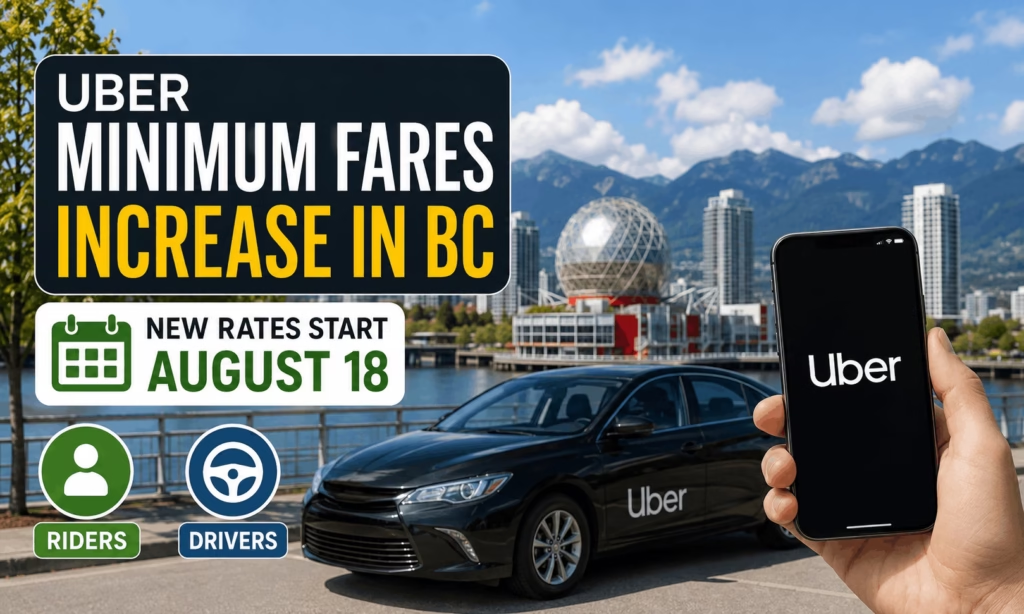
Uber Minimum Fares Increase in BC: Every ride-hail trip booked in British Columbia from Monday, August 18, 2026 onward will cost more at the bottom end, as new provincially mandated minimum fares kick in across all five passenger transportation regions. The Uber minimum fares increase in BC was confirmed by the Passenger Transportation Board on February 18, 2026, giving companies exactly six months to prepare, and the scale of the jump varies dramatically depending on where a trip starts, with Metro Vancouver’s minimum rising from $3.40 to $6.03, a jump of nearly 78 percent.
This is not a fare change Uber or Lyft chose to make on their own. It comes from an independent regulator, the Passenger Transportation Board, which sets the floor price ride-hail companies are legally allowed to charge in each of B.C.’s five defined regions, reviewed annually using the previous year’s transit fare and trip data. For riders used to the occasional ultra-cheap short hop, and for drivers who have watched short trips barely cover their costs, this update changes the economics of the shortest, lowest-value rides across the province starting this week. This guide breaks down the new region-by-region rates, why the Board sets them this way, and what it actually means for riders and drivers. We’ll be updating this article monthly as any further rate reviews are announced.
New BC Ride-Hail Minimum Fares by Region
The Passenger Transportation Board regulates minimum fares separately for taxis and for transportation network services, the formal regulatory term for ride-hail platforms like Uber and Lyft. The following table shows the confirmed rate change effective August 18, 2026.
| Region | Covers | Previous Minimum Rate | New Minimum Rate (Aug 18, 2026) |
|---|---|---|---|
| Region 1 | Metro Vancouver, Fraser Valley, Squamish-Lillooet | $3.35 | $4.43 |
| Region 2 | Capital Regional District (Greater Victoria) | $3.40 | $6.03 |
| Region 3 | Vancouver Island (Cowichan Valley, Nanaimo, Comox Valley and surrounding areas), Central Coast | $3.40 | $3.94 |
| Region 4 | Okanagan, Kootenay, Cariboo, Thompson-Nicola and surrounding interior areas | $3.50 | $3.95 |
| Region 5 | Northern B.C., Sunshine Coast, Islands Trust, Stikine Region | Not previously set | $3.80 |
The steepest jump lands in the Capital Regional District, covering Greater Victoria, where the minimum rate is climbing from $3.40 to $6.03, an increase of roughly 77 percent. Metro Vancouver, the province’s busiest ride-hail market, sees a smaller but still significant rise from $3.35 to $4.43, an increase of about 32 percent. Region 5, covering much of Northern B.C. and the Sunshine Coast, gets a formal minimum rate for the first time under this update, at $3.80.
Why the Passenger Transportation Board Sets These Minimums
Unlike a taxi meter’s flag rate, a ride-hail minimum fare does not represent what a rider typically pays. It is a floor price beneath which a company legally cannot go, even during off-peak periods when dynamic pricing would otherwise push fares lower to attract more riders. The Board calculates each region’s minimum using the higher of two figures: one derived from regional public transit fare data, and one derived from the province’s ride-hail trip database, which all licensed operators are required to submit monthly.
This dual-calculation method reflects two deliberate policy goals. The first is protecting public transit ridership and the significant public investment behind it, by keeping ride-hail minimums above average transit fares so that transit remains the cheaper baseline option for short trips. The second is guarding against predatory pricing and market instability, ensuring larger, better-capitalized ride-hail companies cannot simply undercut fares to a point that squeezes out smaller competitors or destabilizes the broader for-hire vehicle market.
The Board reviews these minimum rates annually, using data from the previous calendar year to make sure the figures reflect current market conditions rather than becoming stale. This is why the rate landscape shifts meaningfully most years rather than staying fixed indefinitely.
Canada FMCSP Study Permit: 2,970 Spots Open August 26, See Eligibility, PR Pathway & How to Apply?
Direct Express Card Transition to Fifth Third Bank: What 3.6 Million Cardholders Need to Know
Federal Fuel Excise Tax Suspension: Ford Pushes Carney to Extend Relief Past Labour Day
USCIS Restored Power To Deny Without RFE: Here Is What Policy Alert PA-2026-05 Actually Changes
IEEPA Tariff Refund Process: How Businesses Are Claiming Their Share of $166 Billion
How Minimum Fares Interact With Dynamic Pricing
Ride-hail companies in B.C. continue to set their own fares above the regulated minimum using dynamic, or surge, pricing, which adjusts costs up during high-demand periods to attract more available drivers, and down during quieter periods to attract more riders. The regulation does not touch this system directly. What it does is set an absolute floor that a rider’s upfront or estimated fare cannot fall below, regardless of how quiet the market is at that moment.
In practice, this means the new minimum rates matter most for the shortest, lowest-value trips, the kind that would previously have been priced right at or near the old minimum during slow periods. Longer trips, or any trip during a period of elevated demand, were typically priced well above the old minimums already and may see comparatively little change from this specific update.
What This Means for BC Ride-Hail Riders and Drivers
For riders, the most noticeable impact will be on very short trips, particularly in the Capital Regional District, where the price floor for even the shortest ride is now meaningfully higher than it was a week earlier. A rider who previously relied on a sub-$4 ride-hail trip for a short hop around Greater Victoria should now expect a minimum charge closer to $6, before any distance, time, or surge pricing is even factored in.
For drivers, a higher minimum fare on short trips can mean better compensation for pickups that previously barely covered fuel and vehicle wear. This regulatory change sits alongside B.C.’s existing gig-worker protections introduced under earlier provincial legislation, which separately guarantee a minimum hourly wage for engaged time and a per-kilometre vehicle allowance, distinct from the fare itself.
Both riders and drivers should be aware that these regulated minimums apply specifically to ride-hail, or TNS, services. Taxi minimum fares are set through a related but separate mechanism, based on regional flag rates and, in some regions, newly implemented rate bands the Board has been rolling out since late 2025.
ICE Detained Military Families: AP Finds 50+ Spouses and Parents Held
Key BC Ride-Hail Rate Updates
| Update | Detail | Date |
|---|---|---|
| New minimum rates announced | Board confirms updated TNS minimums for all five regions | February 18, 2026 |
| New rates take effect | Region 1 through 5 minimums apply provincewide | August 18, 2026 |
| Region 2 sees the largest increase | Capital Regional District minimum rises from $3.40 to $6.03 | Effective August 18, 2026 |
| Region 5 gets a formal minimum for the first time | Northern B.C. and Sunshine Coast minimum set at $3.80 | Effective August 18, 2026 |
| Annual review cycle continues | Board to reassess rates again using the following year’s data | Ongoing |
How to Check Current Rates and File a Complaint
- Review the Passenger Transportation Board’s published rate table to confirm the current minimum fare for your specific region before booking or comparing prices.
- Use the Uber or Lyft app’s upfront pricing screen to see your estimated fare before confirming a trip, since this reflects the actual price you will be charged, inclusive of the regulated minimum.
- If you believe a ride-hail company charged below the legal minimum for your region, you can file a complaint directly with the Passenger Transportation Board.
- Drivers who have questions about how the new minimums interact with B.C.’s separate gig-worker minimum wage and vehicle allowance rules can contact the Board or the Ministry of Labour directly for clarification.
- Check the Board’s news and updates page periodically, since rate reviews and regional rule changes are published there throughout the year, not only during the annual review cycle.
Official BC Ride-Hail Resources
| Resource | What It’s For | Official Link |
|---|---|---|
| Ride-Hail (TNS) Rates | Full official minimum rate table by region | ptboard.bc.ca/ride-hail-rates |
| Passenger Transportation Regions | Map and definitions of all five regions | ptboard.bc.ca/passenger-transportation-regions |
| File a Complaint | Report a ride-hail or taxi service issue | ptboard.bc.ca/public-safety |
| News and Updates | Ongoing Board announcements and rate changes | ptboard.bc.ca/news-and-updates |
| Contact the Passenger Transportation Board | Direct enquiries about rates or licensing | ptboard.bc.ca/contact |
FAQs About Uber Minimum Fares Increase in BC
When do the new Uber minimum fares start in BC?
The new minimum rates take effect on August 18, 2026, across all five of British Columbia’s passenger transportation regions, as confirmed by the Passenger Transportation Board on February 18, 2026.
Which BC region has the biggest ride-hail fare increase?
Region 2, covering the Capital Regional District and Greater Victoria, sees the largest jump, with the minimum rate rising from $3.40 to $6.03, an increase of roughly 77 percent.
Does this rate change apply to Lyft as well as Uber?
Yes. The regulation applies to all licensed transportation network services operating in British Columbia, which includes both Uber and Lyft, not a single company specifically.
Why does British Columbia set a minimum ride-hail fare at all?
The Passenger Transportation Board sets minimum rates to protect public transit ridership by keeping ride-hail priced above average transit fares, and to prevent predatory pricing that could destabilize the broader for-hire vehicle market.
Will this make every Uber ride in BC more expensive?
Not necessarily. The change primarily affects the shortest, lowest-value trips that would previously have been priced near the old minimum during quiet periods. Longer trips and rides during high-demand periods are typically priced well above the minimum already through dynamic pricing.
How often does BC review ride-hail minimum fares?
The Passenger Transportation Board reviews minimum rates annually, using trip and transit fare data from the previous calendar year to ensure the figures reflect current market conditions.
Is this the same as BC’s minimum wage for gig workers?
No. This regulation sets a minimum fare that ride-hail companies must charge riders. B.C.’s separate gig-worker rules guarantee drivers a minimum hourly wage for engaged time and a per-kilometre vehicle allowance, which is a different regulatory mechanism entirely.
Conclusion
The Uber minimum fares increase in BC taking effect August 18, 2026 is a straightforward regulatory update on paper, but its real-world impact varies sharply by region, from a modest adjustment in the B.C. interior to a near 80 percent jump in Greater Victoria. Because the Passenger Transportation Board reviews these figures every year using fresh trip and transit data, riders and drivers alike should expect this table to shift again in future cycles rather than treating the current rates as permanent. Anyone regularly booking short ride-hail trips in a region seeing a steep increase, particularly the Capital Regional District, should budget for a noticeably higher floor price starting this week, even if their typical longer trips see little change.
2027 Social Security COLA: 3.6% Estimate Beats Medicare Hike
2027 HSA Contribution Limits Announced: IRS Confirms $4,500 and $9,000 Caps
FTC Refund 2026: Millions of Americans May Be Owed Money and Most Don’t Know It