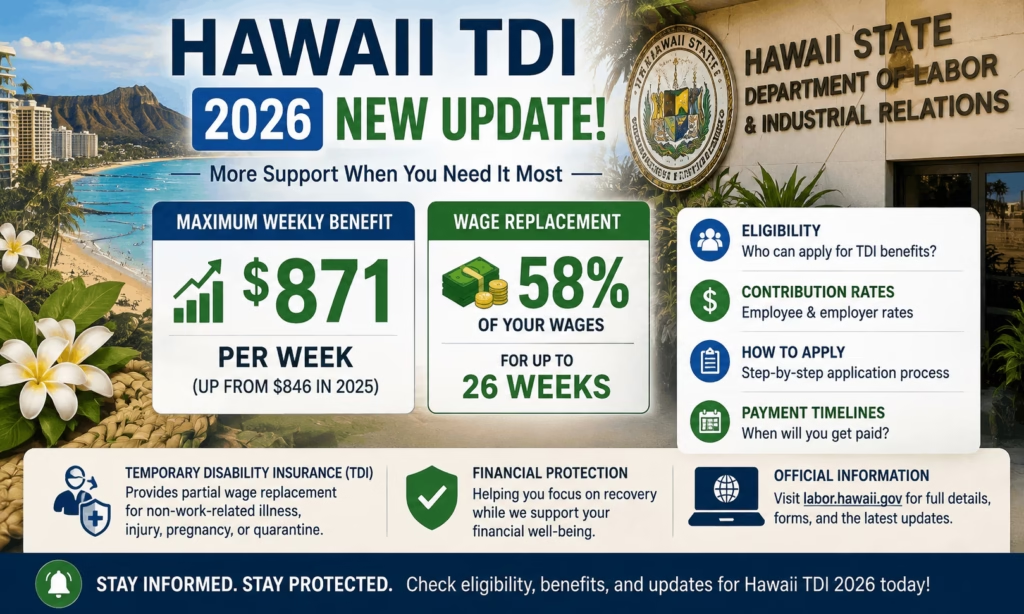
Hawaii TDI 2026: Hawaii workers filing a disability claim in 2026 are seeing a real jump in their weekly paycheck replacement. The state’s Disability Compensation Division confirmed that the Hawaii Temporary Disability Insurance maximum weekly benefit rose to $871 per week starting January 1, 2026, up from $837 in 2025. The benefit still replaces 58 percent of an employee’s average weekly wage, but because the wage base used to calculate that percentage climbed to $1,500.21 a week, more people are qualifying for the full maximum than in previous years. For anyone facing a non-work-related injury, illness, or pregnancy that keeps them out of work, this update changes exactly how much income they can expect to receive during their time away from a job.
The updated numbers come directly from the Hawaii Department of Labor and Industrial Relations, which publishes new TDI figures every December for the following calendar year. Along with the higher weekly benefit, the maximum employee contribution also increased, moving from $7.21 per week in 2025 to $7.50 per week in 2026, capped at $390 for the full year. Hawaii is one of the few states that never built a state-run disability fund, so nearly every private employer must either buy TDI coverage from an approved carrier or run an equivalent self-insured plan. This guide walks through what changed for 2026, who actually qualifies, how to file a claim, and when the payments arrive. We will be updating this article monthly as Hawaii’s Disability Compensation Division releases new guidance through the year.
Hawaii TDI 2026 Key Highlights
| Detail | 2026 Figure | 2025 Figure |
|---|---|---|
| Maximum weekly benefit | $871/week | $837/week |
| Benefit rate | 58% of average weekly wage | 58% of average weekly wage |
| Maximum weekly wage base | $1,500.21 | $1,441.72 |
| Maximum employee contribution | $7.50/week ($390/year) | $7.21/week |
| Employee contribution rate | 0.5% of wages, or half the premium, whichever is less | Same formula |
| Minimum weekly benefit | $14/week (if average wage under $26) | $14/week |
| Maximum leave duration | 26 weeks | 26 weeks |
| Unpaid waiting period | 7 calendar days | 7 calendar days |
| State-run fund available? | No, private or self-insured plans only | No |
| Administering agency | Hawaii Disability Compensation Division (DCD) | Same |
What Is Hawaii Temporary Disability Insurance (TDI) 2026?
Hawaii Temporary Disability Insurance is a wage replacement program for employees who cannot work because of a non-work-related injury, illness, or pregnancy. Unlike workers’ compensation, which covers job-related injuries, TDI exists specifically for disabilities that happen away from the workplace, a car accident on the weekend, a surgery, a serious illness, or the physical recovery period after childbirth.
What makes Hawaii’s approach unusual compared to most other states is that there is no state-administered fund at all. Every employer in Hawaii with at least one employee working 20 or more hours a week and earning at least 86.67 times the state’s prevailing minimum wage in a calendar quarter must either purchase a private TDI insurance policy through an approved carrier or set up a self-insured plan that the Disability Compensation Division has approved as meeting or exceeding the statutory minimum benefits. That means the exact claims process an employee experiences often depends on which private carrier or self-insurance arrangement their employer selected.
For 2026, an eligible employee who becomes disabled can receive 58 percent of their average weekly wage, calculated from wages earned before the disability began, up to the new $871 weekly maximum. If someone’s average weekly wage is under $26, the benefit instead equals their full average weekly wage, capped at $14 a week, a rule aimed at very low-wage or part-time workers.
$1,636 ODSP and Canada Disability Benefit Now Stack Fully in Ontario, No Clawback on Either Payment
$4427 EITC Payment: How to Know If You Qualify and When Will You Get It?
Why the Hawaii TDI Maximum Weekly Benefit Increased for 2026
The maximum weekly benefit under Hawaii TDI is not a fixed number set once and left alone. It is recalculated every year based on the state’s average annual wage, which the Department of Labor and Industrial Relations tracks through unemployment insurance wage data. As average wages across Hawaii rise, the maximum weekly wage base used in the TDI formula rises with it, and the resulting maximum weekly benefit increases as well.
For 2026, the maximum weekly wage base moved from $1,441.72 to $1,500.21, a direct reflection of rising average wages statewide. Applying the 58 percent benefit rate to that new wage base produces the $871 maximum, an increase of $34 a week over the 2025 figure. This adjustment happens automatically each December for the following January, so employees and employers should expect a similar recalculation heading into 2027 based on updated wage data later this year.
Hawaii TDI Eligibility Criteria for 2026
To qualify for Hawaii TDI benefits, an employee generally needs to meet the following conditions established under state law.
An employee must have worked at least 14 weeks for one or more employers in Hawaii during each of which they worked 20 hours or more and earned wages, in the four completed calendar quarters immediately before the disability began, sometimes referred to as the base period. They must also have earned wages of at least $400 in the base period. The disability itself must be certified by a licensed physician or authorized healthcare provider and must prevent the employee from performing their regular or customary work.
Certain categories of workers are excluded from TDI coverage under Hawaii law, including federal government employees, certain agricultural and domestic workers under specific thresholds, insurance and real estate agents paid solely by commission, and a handful of other narrowly defined categories listed in the statute. Self-employed individuals are not automatically covered either, since TDI is an employer-provided benefit rather than a program individuals can buy into directly.
One detail that often surprises new applicants is that Hawaii TDI does not include any job protection on its own. Being approved for TDI benefits pays a portion of lost wages, but it does not guarantee reinstatement to the same position the way New York’s family leave program or the federal FMLA does. Employees may gain job protection through the federal Family and Medical Leave Act or the Hawaii Family Leave Law if they separately qualify for those programs, but TDI eligibility and job protection eligibility are two different things entirely.
Contribution and Benefit Rate Changes 2026
Hawaii TDI is funded through a shared cost model rather than a pure employer or pure employee system. Employers can choose to pay the full cost of coverage themselves, or they can share the cost with employees, but the law caps how much can be passed on to workers.
For 2026, an employer may withhold no more than 0.5 percent of an employee’s weekly wages, or half the total premium cost, whichever amount is smaller, and the weekly withholding can never exceed $7.50. Multiplied across a full year, that puts the maximum an employee could pay toward TDI premiums at roughly $390 for 2026, up from $375 the year before. Employers who choose to cover the full premium themselves are not required to withhold anything from employee paychecks at all.
| Program Detail | 2025 | 2026 | Change |
|---|---|---|---|
| Maximum weekly benefit | $837 | $871 | Increased by $34 |
| Maximum weekly wage base | $1,441.72 | $1,500.21 | Increased |
| Maximum employee contribution (weekly) | $7.21 | $7.50 | Increased |
| Maximum employee contribution (annual) | Approx. $375 | Approx. $390 | Increased |
| Benefit rate | 58% of average weekly wage | 58% of average weekly wage | Unchanged |
| Minimum weekly benefit | $14 | $14 | Unchanged |
How to Apply for Hawaii TDI Benefits in 2026
Filing a Hawaii TDI claim involves a few clear steps, though the exact forms can vary slightly depending on which insurance carrier or self-insured plan administrator your employer uses.
The first step is notifying your employer as soon as possible after the disability begins, since your employer needs to confirm your employment details and identify which insurance carrier or self-insured plan covers you. Next, you will need to obtain the correct disability claim form, generally the TDI-45 form used across Hawaii’s private carriers, and have the attending physician or authorized healthcare provider complete the medical certification section confirming the nature and expected duration of the disability. Once the form is complete, submit it directly to your employer’s TDI insurance carrier or self-insurance plan administrator, not to the state itself, since Hawaii does not run its own claims-processing office for TDI the way it does for unemployment insurance. Keep a copy of everything submitted and note the date, since the seven-day unpaid waiting period begins from the first day of disability, not from the date the claim is filed. After submission, follow up with the carrier if you have not received a written decision within a reasonable window, and be prepared to provide additional medical documentation if the carrier requests it before making a determination.
Hawaii TDI Processing Time 2026
Because TDI in Hawaii is administered entirely through private insurance carriers or approved self-insured employer plans rather than a single state office, processing timelines can vary somewhat from one carrier to another. Most carriers aim to review a complete claim, meaning one with a fully filled-out medical certification and verified employment information, within roughly two to three weeks of receipt.
Claims missing required physician certification, incomplete wage history from the employer, or unclear diagnosis information are the most common reasons for processing delays. Employees can speed up the process by confirming with their employer’s HR or payroll department exactly which carrier handles their TDI coverage before symptoms even require missing work, so there is no scramble to identify the right claim form once a disability actually occurs.
Employment Insurance (EI) 2026 Rule Changes: What Every Canadian Worker Needs to Know
Empire State Child Credit 2026: $1,000 Per Child Under 4, Full Eligibility & Payment Guide
Hawaii TDI Payment Schedule 2026: When Do Benefits Arrive?
Once a Hawaii TDI claim is approved, benefits typically begin from the eighth day of disability, following the mandatory seven-day unpaid waiting period. Payments are generally issued on a biweekly basis by the insurance carrier or self-insured plan, mirroring how most employer payroll cycles run, though the exact payment day can differ by carrier.
Direct deposit is commonly offered and tends to be the fastest way to receive funds once a claim is approved, while some carriers still default to mailed paper checks unless an employee specifically requests electronic payment. Because Hawaii TDI benefits can run for up to 26 weeks, employees on longer-term disability claims should confirm with their carrier exactly how ongoing medical recertification works, since most plans require updated physician documentation at set intervals to continue payments beyond the initial approval period.
It is also worth understanding how Hawaii TDI benefits are taxed. In many cases, a portion of TDI benefits may be subject to federal income tax depending on how the premium was funded, meaning whether the employer or employee paid the contributions, so checking with your specific carrier or a tax professional before filing your annual return is the safest approach.
Official Hawaii TDI Resources
| Resource | What It’s For | Link Type |
|---|---|---|
| Hawaii Disability Compensation Division (DCD) | Official TDI law, guidelines, and annual benefit updates | Official government website |
| Hawaii Department of Labor and Industrial Relations | Statewide labor law information including TDI oversight | Official government website |
| Approved private TDI carriers (MetLife, Prudential, Guardian, and others) | Claim filing, forms, and status tracking | Registration and claimant login |
| Employer HR or payroll department | Confirming which carrier or self-insured plan covers you | Direct employer contact |
Search “Hawaii Disability Compensation Division TDI” or “labor.hawaii.gov DCD” to reach the current official state guidance pages, since claimant portal logins vary by the private carrier or self-insured plan your specific employer uses.
FAQs About Hawaii TDI 2026
What is the maximum Hawaii TDI benefit for 2026?
The maximum weekly TDI benefit for 2026 is $871, up from $837 in 2025, based on 58 percent of an employee’s average weekly wage up to the new $1,500.21 wage base.
How long can someone receive Hawaii TDI benefits?
Eligible employees can receive Hawaii TDI benefits for up to 26 weeks per disability claim, following a mandatory seven-day unpaid waiting period at the start of the disability.
Does Hawaii TDI cover pregnancy and childbirth recovery?
Yes, pregnancy and the physical recovery period following childbirth are treated as a qualifying disability under Hawaii TDI, subject to the same benefit rate and duration rules as any other non-work-related disability.
Who pays for Hawaii TDI coverage?
Employers can cover the full cost of TDI premiums themselves or share the cost with employees, but employee contributions cannot exceed 0.5 percent of weekly wages or $7.50 per week in 2026, whichever is lower.
Does Hawaii TDI provide job protection?
No, Hawaii TDI itself does not guarantee job reinstatement. Employees may gain separate job protection through the federal Family and Medical Leave Act or the Hawaii Family Leave Law if they independently qualify for those programs.
Is there a state-run Hawaii TDI fund?
No, Hawaii does not operate a state-administered TDI fund. Employers must purchase coverage from an approved private insurance carrier or maintain a state-approved self-insured plan.
How do I check the status of my Hawaii TDI claim?
Claim status is typically checked directly through the private insurance carrier or self-insured plan administrator your employer uses, usually via an online claimant portal or by phone.
Can self-employed workers get Hawaii TDI?
No, Hawaii TDI is an employer-provided benefit, and self-employed individuals or independent contractors are not automatically eligible to purchase coverage for themselves under the program.
How much can my employer deduct for TDI in 2026?
Employers can withhold up to 0.5 percent of an employee’s weekly wages, capped at $7.50 per week, translating to a maximum annual contribution of roughly $390 in 2026.
Conclusion
Hawaii’s 2026 Temporary Disability Insurance update reflects the state’s yearly adjustment process, with the maximum weekly benefit climbing to $871 and the wage base used to calculate benefits rising to $1,500.21. While the 58 percent benefit rate has stayed consistent, the higher wage ceiling means more employees can now reach the full maximum payout than under the 2025 figures. Because Hawaii relies entirely on private insurance carriers and approved self-insured employer plans rather than a state-run fund, the exact claims process, forms, and processing timelines can vary depending on your specific employer’s coverage arrangement. Anyone anticipating a non-work-related disability, illness, or pregnancy-related leave in 2026 should confirm their employer’s TDI carrier ahead of time, keep physician documentation current, and check directly with that carrier for the most accurate forms and payment timelines specific to their workplace.
Oregon Kicker Tax Credit 2026: How To Claim Your Share Of The $1.41 Billion Surplus
California Climate Credit 2026: Payment Timing Just Changed, Here Is What to Expect on Your Bill
$145.83 BC Family Benefit First Child Payment Confirmed as Income Phase-Out Shifts to $96,562
Trump Halts 50 Percent Tariffs Canada: What the Last Minute Deal With Ottawa Means
Green Card Rule Changes: New Public Charge Test to Assess Age, Health, Family Status and Finances