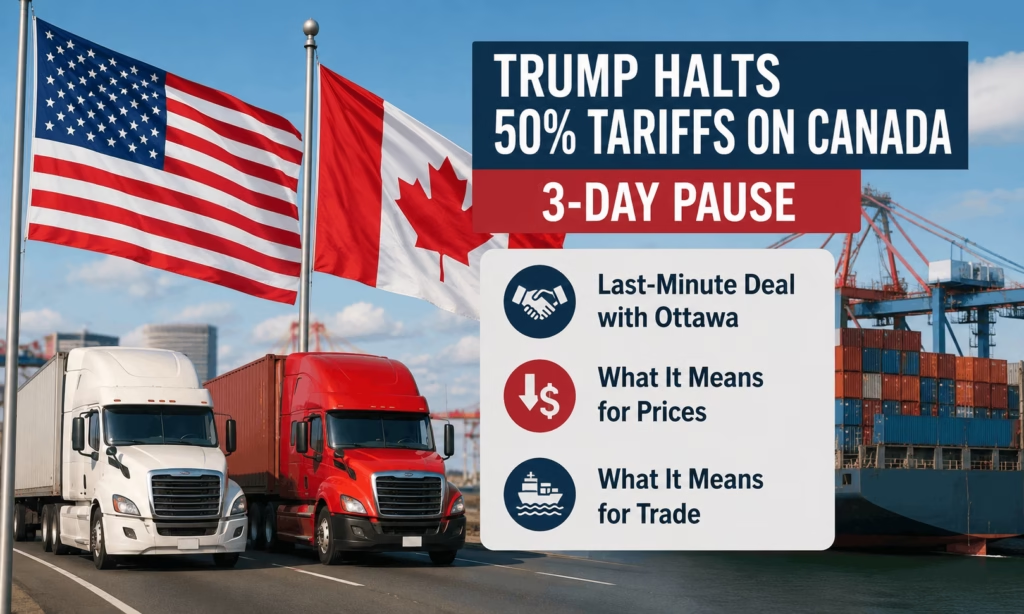
Trump Halts 50 Percent Tariffs Canada: President Donald Trump announced late Tuesday that he is putting a temporary hold on the steep 50 percent tariffs that were set to hit a wide range of Canadian goods at 12:01 a.m. Wednesday, saying the United States and Canada have reached a deal after weeks of tense negotiations. The move came just hours before duties on products like beer, cheese, wine, cement and hockey sticks were due to take legal effect, and it hands both countries a short but critical window to finalize the terms of a broader trade agreement. We’ll be updating this article monthly as new details of the US Canada trade deal are confirmed.
Trump made the announcement on Truth Social on August 18, 2026, writing that he had paused the tariffs against Canada for a three day period based on the fact that the two countries, subject to finalization of documents, have a deal. Canadian Prime Minister Mark Carney confirmed shortly afterward that Washington had agreed to suspend the tariffs until August 22, while cautioning that substantial progress has been made but important work still remains. The reprieve pulls both economies back from the edge of a fresh trade standoff just months before the US midterm elections, at a moment when American consumers are already sensitive to rising prices.
What Triggered the 50 Percent Tariff Threat?
The tariffs trace back to July 20, 2026, when the White House signed proclamations under Section 338 of the Tariff Act of 1930, a rarely used provision from nearly a century ago that lets a president impose duties of up to 50 percent on a country accused of discriminating against US commerce. The administration argued that Canada was treating American dairy, alcohol and automotive exports unfairly, pointing to Ottawa’s dairy import quota system, which charges tariffs of up to 300 percent on shipments that exceed set caps. The tariffs, covering roughly 20 billion dollars worth of Canadian imports, were scheduled to take effect at 12:01 a.m. Eastern time on August 19, 2026.
Why Trump Paused the Tariffs at the Last Minute?
Trump and Carney held two rounds of phone talks in the days leading up to the deadline, described by Carney’s office only as ongoing negotiations. Trade officials on both sides said talks were intense and delicate, with US Trade Representative Jamieson Greer and Commerce Secretary Howard Lutnick meeting Canadian officials for nearly two hours on Monday. A source close to the US side told reporters the two countries were very close and that finalizing a deal would take days rather than months.
Trump linked the breakthrough to a revival of the Keystone XL Pipeline, writing on Truth Social that the pipeline, long stalled after President Biden revoked a key permit in 2021, may be awoken from the grave as part of the arrangement. The pipeline, which was designed to carry roughly 830,000 barrels of crude oil a day from Alberta to Nebraska, has been a point of contention between the two countries for more than a decade.
Trump Halts 50 Percent Tariffs Canada Key Facts and Dates
| Detail | Information |
|---|---|
| Tariffs announced | July 20, 2026, under Section 338 of the Tariff Act of 1930 |
| Original effective date | 12:01 a.m. ET, August 19, 2026 |
| Pause announced | Late evening, August 18, 2026 |
| Length of pause | Three days, until August 22, 2026 |
| Products covered | Beer, wine, cheese and dairy, cement, hockey sticks, automobiles and other goods |
| Value of trade affected | Approximately 20 billion dollars in Canadian imports |
| Products exempt | Goods compliant with the United States Mexico Canada Agreement, USMCA |
| Linked side deal | Possible revival of the Keystone XL Pipeline |
| Status of USMCA | Under annual review after the US declined to renew it last month |
How the Trade Standoff Affects Everyday Prices?
Even a short delay matters to businesses and consumers on both sides of the border. Trade economists at the National Bank of Canada estimated that while a 50 percent tariff is severe, it would apply to roughly 5 percent of US imports from Canada, since around 85 percent of Canada US trade already moves duty free under USMCA. Still, industry groups warned that sectors like lumber, wine and dairy were vulnerable to job losses and business closures if the tariffs had gone into effect as planned. The Canadian Chamber of Commerce said businesses have been holding off on hiring and investment for over a year while the uncertainty dragged on, and the three day delay offers only limited relief until a final agreement is signed.
What the Broader US Canada Deal Could Include?
According to a statement from the US Trade Representative’s office, the emerging agreement is expected to include comprehensive market access for American goods, economic security commitments and digital trade alignment, alongside provisions the administration says will continue to protect American workers and markets. Carney’s office described the goal as addressing outstanding trade issues while delivering greater certainty and real benefits for Canadian businesses, workers, farmers and families. Neither leader has released the full text of the agreement, and officials on both sides say the coming days will determine whether the deal holds.
What Happens if a Final Deal Is Not Signed by August 22?
If Washington and Ottawa cannot finalize documents within the three day window, the 50 percent tariffs are expected to take effect as originally planned, reviving the risk of retaliatory measures from Canada. Ottawa had previously matched earlier US tariff actions with its own 25 percent duties on American steel, aluminum and auto imports, which have been in place since September 2025. Trade experts caution that a breakdown in talks could also complicate the ongoing annual review of USMCA, the trilateral agreement that underpins most tariff free trade between the two countries.
Why Dairy Became the Center of the Fight?
Even though dairy trade between the two countries is a small slice of overall commerce, it has consumed an outsized share of the negotiations. Under the additional duties, products such as whey, milk protein concentrates, lactose, casein and caseinates, and various milk powders were named for the new tariffs, while cheese, butter, yogurt, fluid milk, cream, sour cream and ice cream were left off the list. American dairy exports to Canada climbed from 855 million dollars in 2021 to about 1.3 billion dollars in 2025, while US dairy imports from Canada rose from roughly 252 million dollars to 433 million dollars over the same period, according to figures from the US Department of Agriculture.
The dispute centers on how Canada runs its tariff rate quota system for dairy. Under USMCA, Canada agreed to let a set volume of American dairy products enter the country duty free each year. Once that ceiling is reached, imports face steep tariffs that can run as high as 250 to 300 percent. American negotiators say the real problem is not the size of the quota but who gets to use it. Canada reserves most of that duty free access for its own processors rather than retailers, distributors or food service companies that would actually be motivated to bring in American products, which US trade officials argue effectively nullifies market access that was promised when USMCA took effect in 2020.
Canadian dairy groups, including Dairy Farmers of Canada and the Dairy Processors Association of Canada, have pushed back on that characterization, insisting Ottawa continues to uphold its USMCA commitments and warning against giving up control over the country’s food supply management system as part of any new deal. The two sides have already fought this out once in a formal USMCA dispute panel, with the United States winning an early ruling on the quota allocation issue and Canada prevailing in a later round in 2023, leaving the underlying disagreement unresolved heading into the tariff standoff.
2027 Social Security COLA: 3.6% Estimate Beats Medicare Hike
2027 HSA Contribution Limits Announced: IRS Confirms $4,500 and $9,000 Caps
The USMCA Review Adds Pressure to the Timeline
The tariff fight is unfolding alongside a separate and equally consequential process, the six year review of USMCA itself. The United States, Canada and Mexico are required to formally revisit the trade agreement, and Washington has already indicated it will not automatically renew the pact in its current form, triggering a series of annual reviews that leave the treaty’s long term future uncertain. That backdrop has raised the stakes of the tariff talks considerably, since a breakdown over dairy or autos could bleed into the broader renegotiation and complicate a deal that underpins thirteen million American jobs tied to trade with Canada and Mexico, according to figures cited by the US Chamber of Commerce.
Trade groups on both sides have been blunt about what is riding on the outcome. Neil Herrington of the US Chamber of Commerce said new tariffs of this size would damage both economies, drive up costs for American families and disrupt supply chains that businesses depend on. Candace Laing of the Canadian Chamber of Commerce echoed that concern, saying Canadian businesses have spent well over a year in a holding pattern, delaying hiring and investment while the dispute dragged on. Even with the three day reprieve, she said, the pause offers only partial relief until a comprehensive agreement is actually signed.
A Year of Escalating Trade Tension: Timeline
The latest standoff is the product of a much longer trade dispute that has run through most of 2025 and 2026. Understanding that timeline helps explain why both governments were willing to go right up to a midnight deadline before stepping back.
- February 2025: Trump initially paused threatened tariffs on Canadian and Mexican imports for 30 days after phone calls with the countries’ leaders, tying the delay to border security and fentanyl enforcement commitments.
- June 2025: Trump and Prime Minister Mark Carney met on the sidelines of the G7 summit in Kananaskis, Alberta, and agreed to pursue a trade deal within 30 days, marking the first firm deadline either side had set.
- July 2025: Trump raised the threat of a 35 percent tariff on Canadian goods not covered by USMCA, citing what he described as vital but incomplete progress on fentanyl enforcement.
- September 2025: Canada’s own retaliatory tariffs on US steel, aluminum and auto imports, set at 25 percent, took effect after Carney said Canada had matched earlier American tariff actions.
- July 20, 2026: The White House signed three proclamations under Section 338 of the Tariff Act of 1930, setting the 50 percent tariff in motion and targeting automobiles, alcohol and dairy products specifically.
- Early August 2026: Washington confirmed it would not automatically renew USMCA, opening a formal annual review process that added a second layer of uncertainty to the tariff talks.
- August 17 to 18, 2026: Carney and Trump held back to back phone calls, and senior officials including USTR Jamieson Greer and Commerce Secretary Howard Lutnick met Canadian counterparts for nearly two hours in a final push before the deadline.
- August 18, 2026: Trump announced the three day pause on Truth Social, citing a deal subject to finalization of documents, with the tariffs now due to take effect on August 22, 2026 if no final agreement is signed.
Industry and Consumer Impact if the Tariffs Return
Trade economists have tried to put the scale of the threat in perspective. Analysts at the National Bank of Canada noted that because roughly 85 percent of Canada US trade already qualifies for duty free treatment under USMCA, the 50 percent tariff would technically apply to only about 5 percent of total US imports from Canada. But that narrower slice still touches an estimated 20 billion dollars in goods, concentrated in politically sensitive sectors such as dairy, lumber, wine, cement and automobiles, where price increases tend to be felt quickly by ordinary shoppers and small businesses.
For American consumers, economists warn that tariffs of this size are typically absorbed first by importers and distributors before being passed along through higher shelf prices, particularly for products with few easy substitutes, such as specialty cheeses or Canadian softwood lumber used in home construction. For Canadian exporters, the bigger risk is losing shelf space and long term contracts with American buyers who may shift toward other suppliers if the tariff dispute drags on or resurfaces again after this latest deadline.
Denaturalization Cases Surge As DOJ Files Record 25 Complaints In Just Two Weeks
Backdoor Roth IRA 2027: What’s Actually Changing For High Earners As Two Separate Rules Collide
What Businesses and Consumers Should Watch For Next?
Companies that import or export goods between the two countries are being advised to treat the next few days as a genuine planning window rather than a settled outcome. Import compliance specialists point out that tariff proclamations issued under Section 338 include detailed annexes listing precise Harmonized Tariff Schedule codes and special rules for the affected goods, so businesses should confirm exactly which codes apply to their shipments rather than assuming an entire product category is covered or exempt. Importers with shipments in transit around the August 22 deadline face particular uncertainty, since the applicable tariff rate can depend on the exact date goods are entered for consumption at the border.
For everyday consumers, the immediate financial impact of the pause is limited, since the tariffs never actually took effect before being delayed. Shoppers are unlikely to see price changes on Canadian wine, cheese, lumber or vehicles in the next few days purely because of this announcement. The bigger question is what happens after August 22. If the two governments sign a final agreement, most analysts expect the current tariff structure, including the USMCA exemptions, to remain in place with only targeted adjustments in sectors like dairy. If talks collapse, the 50 percent tariffs are expected to take effect on the affected 20 billion dollars in goods almost immediately, which trade groups warn could show up in retail prices within weeks given how quickly duties are typically passed through the supply chain for perishable and semi-perishable goods such as dairy and produce.
Financial markets have so far treated the pause as a modestly positive signal rather than a resolution. Currency strategists noted only a modest reaction in the Canadian dollar following the announcement, reflecting the market’s view that a short pause with unfinished paperwork is not the same as a durable trade agreement. Analysts covering companies with heavy cross-border exposure, including automakers and building materials firms, said they would be watching for the actual signed text of any deal before adjusting earnings forecasts, since verbal assurances about a deal being close have preceded breakdowns in negotiations before during this multi-year dispute.
Official Resources for Tracking the Trade Deal
| Resource | Purpose | Official Link |
|---|---|---|
| Office of the United States Trade Representative | Official USTR statements and trade deal updates | ustr.gov |
| White House | Presidential proclamations and Section 338 tariff actions | whitehouse.gov |
| Prime Minister of Canada | Official statements from PM Mark Carney’s office | pm.gc.ca |
| Global Affairs Canada | Canada’s trade policy and tariff response updates | international.gc.ca |
| US Customs and Border Protection | Tariff schedules and import duty guidance | cbp.gov |
| Canada Border Services Agency | Import and export tariff information for Canadian businesses | cbsa-asfc.gc.ca |
FAQs About Trump Halts 50 Percent Tariffs Canada
What products were affected by the 50 percent Canada tariff?
The tariffs targeted a range of Canadian goods including beer, wine, cheese and other dairy products, cement, hockey sticks and certain automobiles, while goods compliant with USMCA remained exempt.
How long is the pause on the Canada tariffs?
Trump announced a three day pause on August 18, 2026, pushing the effective date to August 22, 2026, subject to both countries finalizing the terms of their agreement.
Why did Trump link the tariff pause to the Keystone XL Pipeline?
Trump suggested the pipeline could be revived as part of the broader trade arrangement with Canada, though officials have not confirmed specific pipeline commitments in the written agreement.
Will Canada face tariffs again if the deal falls apart?
Yes. If the two countries do not finalize the agreement within the three day window, the original 50 percent tariffs are expected to take effect, and Canada has signaled it could respond with further retaliatory measures.
Does the tariff pause affect USMCA compliant goods?
No. Products that already qualify as USMCA compliant have remained exempt from the new Section 338 tariffs throughout the dispute.
Why is dairy such a big sticking point in the US Canada trade talks?
US officials argue Canada restricts duty free dairy quotas to its own processors rather than retailers or distributors, which limits how much American dairy actually reaches Canadian consumers even though the quota technically exists under USMCA.
Is USMCA still in effect during this tariff dispute?
Yes, USMCA remains in force, but it is currently undergoing a mandated six year review, and Washington has said it will not automatically renew the agreement in its current form, adding uncertainty to the outcome of both the tariff talks and the treaty itself.
Conclusion
The last minute pause gives Washington and Ottawa a narrow but important opportunity to lock in a broader trade agreement before steep new tariffs take hold. For now, the three day window keeps prices steady on the affected goods and offers a moment of relief for businesses that had been bracing for higher costs. Whether that relief becomes permanent depends on what happens before the clock runs out on August 22, and both governments have signaled that the coming days will be decisive.
Green Card Rule Changes: New Public Charge Test to Assess Age, Health, Family Status and Finances
Colorado TABOR Refund and PTC Rebate 2026: Who Qualifies and How Much You Can Get